
RFID-blocking Wallets of 2026
Introduction
The concept of RFID (Radio Frequency Identification) blocking has moved from a niche security concern to a standard feature in modern everyday carry. Most credit cards and passports now contain a small chip that broadcasts data over a 13.56 MHz frequency. While the actual risk of "digital pickpocketing" is often debated in cybersecurity circles, the peace of mind provided by a physical barrier is undeniable. Modern wallets use specialized materials like aluminum, titanium, or metallized fabrics to create a Faraday cage, effectively silencing your cards until you take them out to pay.
When shopping for these wallets, the primary concerns usually aren't about the tech itself - which is relatively simple physics - but about the lifestyle trade-offs. Hard-shell wallets can feel uncomfortable in a back pocket, while slim leather wallets might lose their shape if overstuffed. Our selection focuses on products that balance signal attenuation with ergonomic design, ensuring you don't have to carry a "brick" just to stay secure. We have prioritized wallets with verifiable material specs and proven mechanical longevity.
Best for Minimalist Durability: The Ridge Aluminum
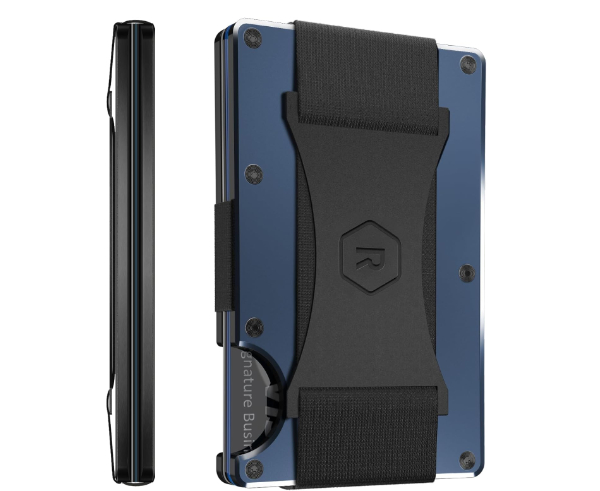
The Ridge is the definitive minimalist wallet, constructed from two 6061-T6 aerospace-grade aluminum plates held together by heavy-duty elastic. This design creates a natural Faraday cage. Because aluminum is a highly conductive metal, it absorbs and dissipates the electromagnetic energy from a 13.56 MHz scanner before it can reach the RFID chips inside your cards. This means your data remains invisible even if a high-powered reader is held inches away from your pocket.
Practically, The Ridge stands out because of its expandable capacity. It can hold anywhere from 1 to 12 cards without the "bulk creep" seen in traditional bi-folds. The use of T5 torx screws ensures the plates stay secure, though it does mean the wallet is a rigid object. It is best suited for front-pocket carry; sitting on a metal wallet in your back pocket for eight hours is a recipe for lower back discomfort. The modular nature allows you to choose between a cash strap or a money clip, though switching between them requires a tiny screwdriver and some patience.
One honest trade-off is the potential for card-on-card wear. Because the cards are pressed tightly together, grit can get trapped between them and cause scratches over time. However, for users who want a wallet that is essentially "buy it for life" due to the lack of degradable fabrics or leathers, The Ridge is the technical leader. It fits perfectly into a streamlined lifestyle where pocket space is at a premium.
The Ridge uses aluminum plates to create a conductive envelope. When an external electromagnetic field hits the wallet, the electrons in the aluminum redistribute themselves to cancel the field's effect in the interior. Why it matters: This physical law ensures that as long as your cards are between the plates, they are effectively "cloaked" from all external radio inquiries without needing batteries or software.
Best Leather Classic: Bellroy Note Sleeve (RFID)
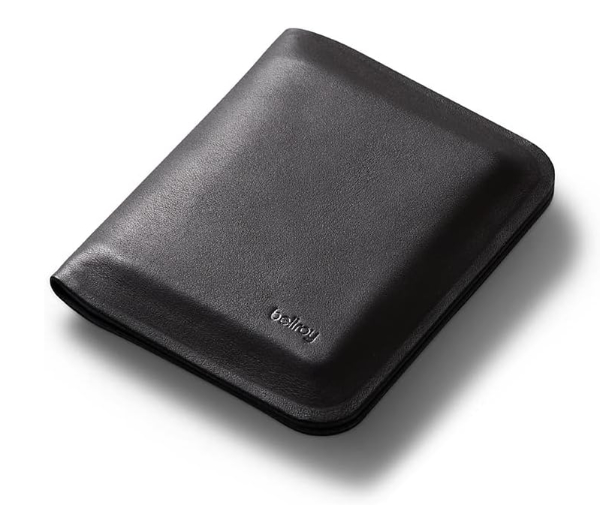
Bellroy has mastered the art of making a leather wallet that doesn't look like a technical security device. The Note Sleeve uses premium, eco-tanned leather, but hides a high-tech metallic lining between the leather layers. This lining is engineered to block the 13.56 MHz frequency while remaining thin enough to maintain the wallet's slim profile. It feels exactly like a traditional wallet, which is ideal for anyone put off by the "industrial" look of metal cardholders.
This model is best for the person who still carries a mix of cards and cash. It features a full-sized bill section and a coin pocket that doubles as a business card protector. The technical standout here is the "pull-tab" storage. By placing less-used cards in a deep pocket accessible by a tab, Bellroy reduces the amount of leather needed for individual slots. This reduces the overall stack height of the wallet, keeping it under 10mm even when moderately loaded.
The limitation of any leather RFID wallet is that the protection only works when the wallet is closed. Unlike hard-shell cases that protect the cards even while you are pulling one out, the Bellroy loses its shielding once flipped open. Furthermore, leather is an organic material; it will stretch and patina over time. If you overstuff it once, the pockets may remain loose forever. However, if you want "invisible" security in a package that looks great at a formal dinner, this is the pick.
Bellroy uses a copper-nickel coated polyester fabric tucked inside the leather. Why it matters: Unlike solid metal, this fabric can flex and bend millions of times without cracking, ensuring the RFID protection doesn't develop "leaks" as the leather breaks in over years of use.
Best Quick Access: Ekster Parliament
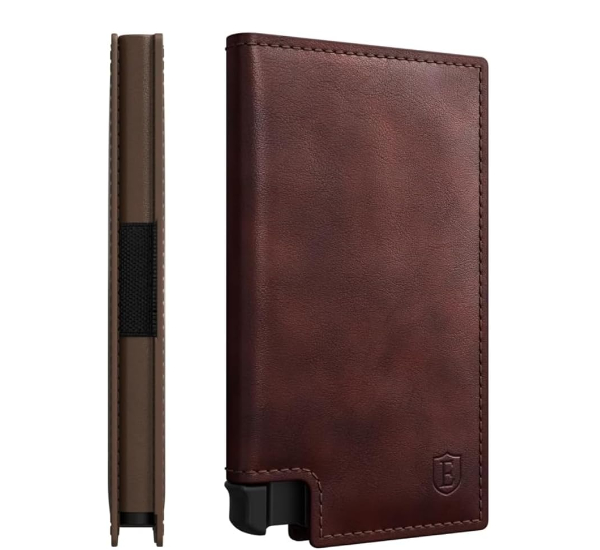
The Ekster Parliament is built around a patented aluminum card ejection mechanism. With the click of a button at the base, your cards fan out in a staggered array, allowing you to pick the one you need without digging. This aluminum core provides a robust RFID shield for up to six cards. The exterior is wrapped in top-grain leather, giving it a hybrid feel that bridges the gap between the industrial Ridge and the classic Bellroy.
Technically, the Parliament is optimized for the "cashless" era. While it has a flap for a few extra cards and a strap for bills, its heart is the mechanical chamber. This chamber is precision-engineered to prevent cards from falling out, even if shaken upside down, thanks to internal friction pads. It is an excellent choice for commuters who need to access transit cards or payment methods quickly while on the move.
The downside is the mechanical complexity. Any device with a spring-loaded trigger has a point of failure that a static wallet does not. While Ekster has improved the trigger durability in recent versions, it is still a moving part that can be jammed by pocket lint or sand. Additionally, the fanning mechanism works best with embossed cards; if you have all flat "metal" credit cards, they can sometimes stick together. It is a high-tech tool for those who value speed and "gadget" appeal.
The internal chamber uses a stepped slider that moves just 1.5mm per card. Why it matters: This precision ensures that cards are fanned at a perfect angle for visibility while remaining gripped by the side-walls, preventing the "card spill" common in cheaper imitation ejector wallets.
Best Hard-Shell Protection: Secrid Slim Wallet
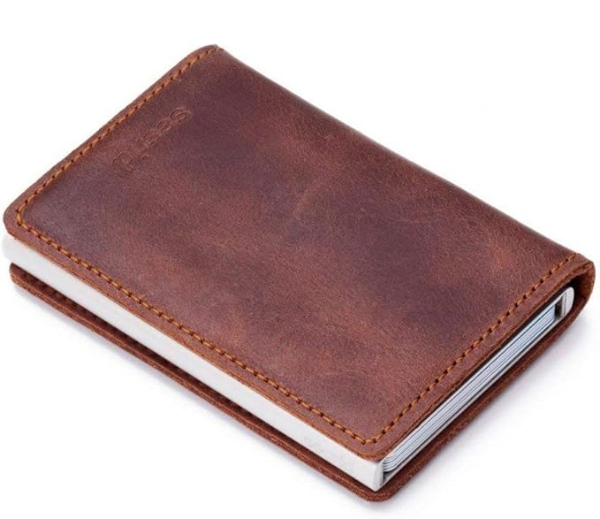
Secrid is the European pioneer of the "Cardprotector" concept. Unlike other hybrid wallets, Secrid focuses on the structural integrity of your cards. The aluminum core is not just for RFID blocking; it is designed to prevent cards from bending or breaking, which is a common issue with plastic cards in leather wallets. The 13.56 MHz shielding is absolute within the core, and the company has some of the most transparent testing data in the industry.
The Slim Wallet model is surprisingly compact because it lacks a press-stud closure, allowing it to lay flatter in a pocket than the Secrid Mini. The leather is stitched directly to the aluminum core, creating a unified piece of hardware. It's best for those who want a minimalist footprint but prefer a "vertical" card access rather than the horizontal fan of the Ekster. The lever mechanism at the bottom is famously crisp and durable, often rated for over 100,000 clicks.
A specific limitation is the card capacity of the core - it is strictly limited to 4 embossed or 6 flat cards. You cannot "stretch" it to fit more. If you carry a large number of loyalty cards or insurance IDs, you'll have to put them in the leather outer pockets, where they are no longer RFID-protected. This wallet forces you to curate your carry, which is either a benefit or a burden depending on your habits.
Secrid's aluminum core provides approximately 30-40 decibels (dB) of signal attenuation. Why it matters: In plain English, this reduces the power of an incoming scanner signal by 1,000 to 10,000 times, making it technically impossible for a standard RFID reader to "harvest" data from the chips inside.
Best Rugged Tactical: Trayvax Armored Summit
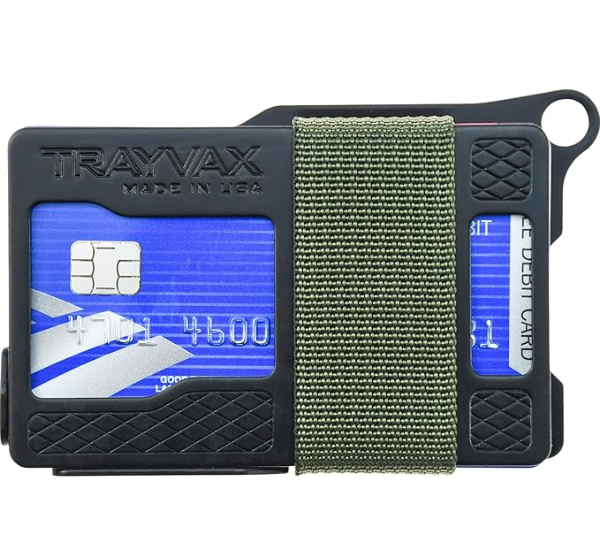
Trayvax is known for over-engineered, American-made gear, and the Armored Summit is their most focused RFID solution. It consists of a heat-treated steel plate with a "Melonite" finish, which is the same coating used on high-end firearms for salt-bath nitriding. This makes the wallet virtually scratch-proof and incredibly resistant to corrosion. The RFID protection is provided by a dedicated "Armor Plate" that stacks with your cards under a mil-spec nylon webbing strap.
This wallet is built for the outdoors or heavy labor. There are no springs to break, no leather to rot, and no elastic that will lose its snap after six months. The technical appeal lies in its simplicity; you slide cards out with a thumb slot. It also features an integrated bottle opener, which is a common Trayvax staple. It is the best choice for someone who works in construction, spends weekends hiking, or simply wants a wallet that could survive being run over by a truck.
The "tactical" aesthetic isn't for everyone, and this is by far the least "pocket-friendly" in terms of sharp edges. The steel plates and nylon webbing can be abrasive against delicate clothing like suit pants. It also has a steeper learning curve for getting cards in and out quickly compared to the fanning wallets. However, in terms of sheer technical resilience and raw material quality, it is unmatched.
Melonite is a nitrocarburizing process that increases the surface hardness of the steel to roughly 65-70 Rockwell C. Why it matters: This isn't just paint; it's a chemical change to the metal surface that prevents rust and ensures the RFID-blocking plate won't wear down even if it's jangling against keys in your pocket for a decade.
How We Chose These Products
Our evaluation criteria focused on three primary pillars: Material Authenticity, Ergonomics, and Mechanical Reliability. We excluded "no-name" brands that claim RFID protection without specifying the metal or fabric used. We conducted "pocket-feel" assessments to ensure that the wallets didn't cause excessive wear on denim or discomfort during long periods of sitting. Finally, for mechanical wallets, we looked at long-term user reports regarding spring tension and trigger fatigue to ensure our picks would last for years, not just months.
Comparison Overview
| Wallet Model | Core Material | Card Capacity | Blocking Method | Ideal Use Case |
|---|---|---|---|---|
| Ridge Aluminum | 6061-T6 Aluminum | 1-12 Cards | Dual Plate Faraday Cage | Minimalist Front-Pocket |
| Bellroy Note Sleeve | Leather / Ni-Cu Fabric | 4-11 Cards | Internal Shielding Lining | Professional/Formal Carry |
| Ekster Parliament | Aluminum / Leather | 1-10 Cards | Ejector Chamber Shield | Fast Access/Commuting |
| Secrid Slim | Solid Aluminum | 4-6 Cards | Hard-Shell Cardprotector | Card Protection/Durability |
| Trayvax Armored Summit | Melonite Steel | 1-7 Cards | Armor Plate Shield | Rugged/Outdoor Tactical |
Buying Guide: What to Look For
- Frequency Support: Ensure the wallet is rated for 13.56 MHz. Some older wallets only block 125 kHz, which is used for office keycards but not for modern credit cards.
- Material Choice: Aluminum and steel offer physical protection against bending, while metallized fabrics (found in leather wallets) offer flexibility. Choose based on whether you carry cards in your front or back pocket.
- Access Style: "Ejector" wallets offer the fastest access but have moving parts that can fail. "Sandwich" wallets (like The Ridge) are simpler but require more manual dexterity to fan out cards.
- Cash Handling: If you still carry a lot of paper currency, look for "Note" styles. Minimalist wallets usually rely on clips or straps that can make cash feel exposed.
General Pro / Cons
| Pros | Cons |
|---|---|
| Physical protection against bending and cracking of plastic cards. | Metal wallets can be uncomfortable if carried in the back pocket. |
| Effective blocking of 13.56 MHz skimming attempts. | Rigid edges can wear down the fabric of your pockets over time. |
| Encourages a minimalist carry, reducing pocket "bulge." | Limited capacity compared to traditional "dad" wallets. |
| High-quality materials like titanium and aluminum last much longer than cheap leather. | Mechanical fanning systems can jam if not kept clean of pocket lint. |
| Hybrid designs offer a premium leather feel with modern security. | RFID shielding often only works when the wallet is fully closed. |
| Built-in features like bottle openers or trackers are common in this category. | Significantly higher upfront cost than standard non-blocking wallets. |
Final Summary
The best RFID blocking wallet is the one that fits your specific pocket habits. If you want the ultimate in slim durability, The Ridge Aluminum is the clear winner. For those who can't give up the feel of premium leather but want modern protection, the Bellroy Note Sleeve is a masterpiece of design. If you prioritize speed and showmanship, Ekster and Secrid offer mechanical solutions that make card access effortless. Finally, for the most demanding environments, the Trayvax Armored Summit provides an indestructible steel shield. Protecting your data no longer requires a bulky, ugly solution - modern engineering has made digital security a stylish part of your everyday carry. Aggregate rating of the products reviewed: 4.62 out of 5.