
Best Air Purifiers for Cigarette Smoke of 2026
A technical evaluation of high-performance air filtration systems designed to neutralize the 7,000+ chemicals found in secondhand smoke, focusing on CADR, charcoal density, and micron-level particulate capture.
Introduction
Dealing with cigarette smoke is a two-pronged battle that standard "hepa-style" purifiers usually lose. Smoke isn't just a visible cloud; it is a complex mixture of microscopic solids (particulates) and invisible gases (Volatile Organic Compounds or VOCs). To effectively clear a room of smoke, an air purifier must possess a high Clean Air Delivery Rate (CADR) for smoke particulates, which are typically sized between 0.1 and 1.0 microns. Why it matters: These tiny particles are small enough to enter the bloodstream directly through the lungs, making efficiency at the sub-micron level non-negotiable.
The second, more difficult half of the battle is the smell. Tobacco smoke contains gases like formaldehyde, benzene, and hydrogen cyanide. Standard HEPA filters are physically incapable of stopping these gases because the molecules are too small for the filter fibers to catch. For this, you need Activated Carbon. We look for purifiers that don't just use a "carbon-coated cloth," but rather pounds of actual granular charcoal to adsorb the odors before they settle into your furniture and walls. In this guide, we evaluate the top performers based on their ability to handle both the visible ash and the invisible stench.
Best for Heavy Smoke: IQAir GC MultiGas
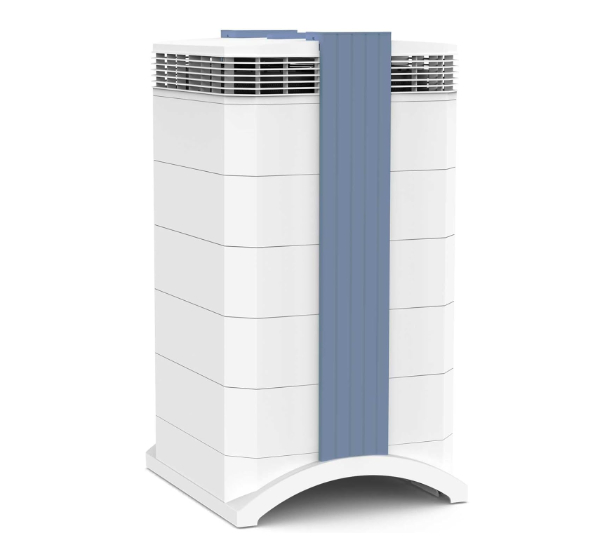
The IQAir GC MultiGas is often referred to as the "hospital-grade" solution for tobacco smoke. While most purifiers are generalists, this machine is specifically engineered for gas and odor control. It utilizes four massive gas-phase filtration cartridges containing a total of 12 lbs of a specialized alumina-based carbon blend. This isn't just about surface area; it's about "dwell time." The design ensures that air stays in contact with the filtration media long enough for chemical bonds to form, effectively removing the heaviest smoke odors.
Technically, it utilizes HyperHEPA filtration, which is certified to capture particles down to 0.003 microns with 99.5% efficiency. Why it matters: Since the average tobacco smoke particle is about 0.2 microns, this machine catches particles nearly 100 times smaller than the threat, ensuring that even the finest "third-hand smoke" residues are removed from the air stream before they can settle.
The trade-offs here are primarily physical and financial. The unit is roughly the size of a small refrigerator and is quite heavy. It also commands a premium price for both the initial purchase and the replacement cartridges. However, if you are dealing with a heavy smoker in a confined space or have a severe sensitivity to VOCs, the GC MultiGas provides a level of molecular-level scrubbing that smaller, cheaper units simply cannot match. It's a tool for total air remediation, not just light freshening.
Unlike standard carbon that just "sticks" to smells, the GC MultiGas uses alumina pellets impregnated with potassium permanganate. This triggers a process called chemisorption. Why it matters: It chemically breaks down hazardous gases like formaldehyde into harmless solids, preventing them from ever "off-gassing" back into your room once the filter gets full.
Best Gas Filtration: Austin Air HealthMate Plus
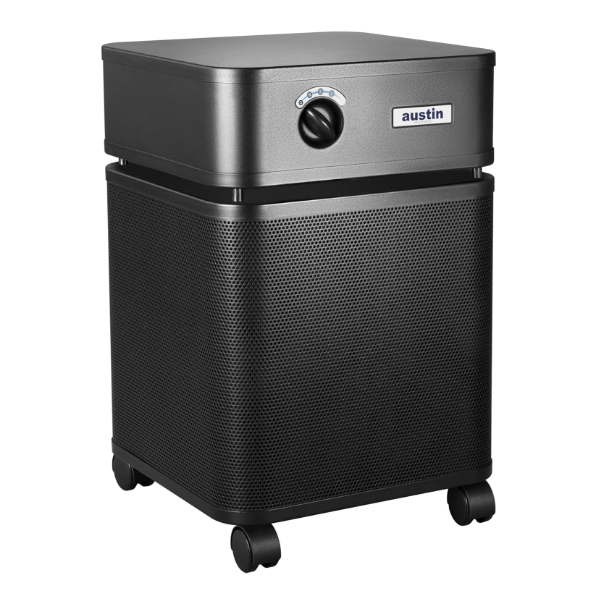
Austin Air takes a "brute force" approach to air cleaning. The HealthMate Plus contains 15 lbs of activated carbon and zeolite. In the world of air purifiers, carbon weight is the single most important metric for smoke odor removal. Why it matters: Carbon works by adsorption, where gas molecules get trapped in tiny pores. More carbon means more "storage space" for smoke smells. A 15-lb filter can continue to pull odors out of the air for years, whereas a thin carbon sheet in a budget purifier might saturate and stop working in two weeks.
The "Plus" designation refers to the addition of potassium iodide to the carbon blend. This specific chemical additive is designed to target "heavy" VOCs and chemicals like benzene and wood smoke components. The exterior is made of solid steel, and the internal components are designed for 24/7 operation. It is arguably the most durable air purifier on the market, lacking the fragile touchscreens and plastic hinges that plague modern "smart" appliances.
The limitation here is the lack of "smart" technology. There are no apps, no laser particle counters, and no "auto modes." It's a manual dial with three speeds. It's also quite loud on its highest setting, moving a massive amount of air through a very dense filter. This is the "analog" choice - it's built to work for a decade without a software update, focusing entirely on the material science of air cleaning rather than gadgetry.
Zeolite is a porous volcanic mineral used alongside carbon in this unit. Why it matters: While carbon is great for most odors, zeolite is better at capturing ammonia and certain sulfur-based compounds found in tobacco. The two materials work in tandem to cover a broader spectrum of the 7,000 chemicals in a cigarette.
Best for Large Rooms: Blueair Blue Pure 211i Max
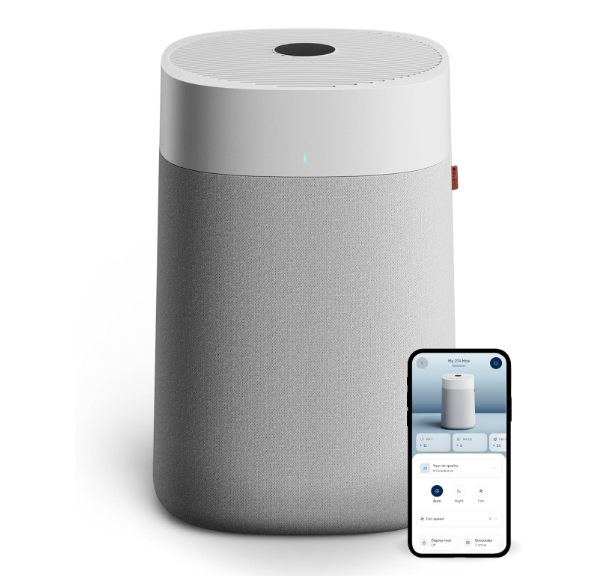
Blueair's strength lies in its Clean Air Delivery Rate (CADR). The 211i Max is a high-volume machine designed to cycle the air in a large living room (up to 635 sq. ft.) five times every hour. For smokers, this "air change rate" is vital because it prevents smoke from lingering and sinking into fabrics. The faster you get the air through a filter, the less "stale" the room becomes. It uses a 360-degree intake, allowing it to pull in air from all directions, which is ideal if you place it in the center of a room.
Technically, Blueair uses HEPASilent technology, which combines mechanical filtration with an electrostatic charge. Why it matters: By giving incoming particles a slight electrical charge, they become "sticky" and cling to the filter fibers more easily. This allows Blueair to use a less dense filter mesh, which means the fan can push more air through with less noise and lower power consumption than a traditional True HEPA system.
The trade-off is that the carbon layer is relatively thin compared to the IQAir or Austin Air units. While it is excellent at removing the visible smoke and ash very quickly, it will struggle more with the deep, embedded odors of a long-term heavy smoker. It is best suited for "occasional" smokers or large, open-concept spaces where moving a massive volume of air is more important than specialized chemical gas-masking.
The 211i Max uses an internal ionizer to charge particles before they hit the filter. Why it matters: This increases the "capture probability" of the filter. It allows the machine to achieve HEPA-level results while maintaining a high CFM (Cubic Feet per Minute), clearing the room of smoke faster than many denser, slower machines.
Best Smart Features: Coway Airmega 400S
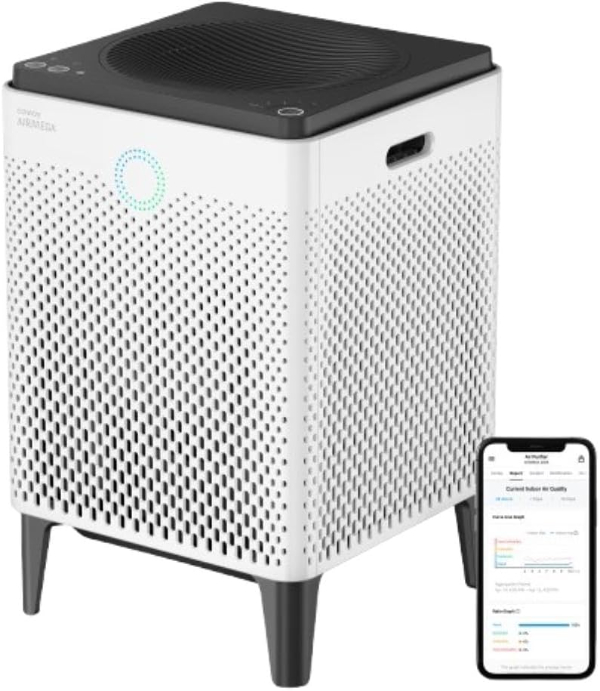
The Coway Airmega 400S is the "brainy" choice for smoke management. It features a dual-suction design, pulling air from both the left and right sides of the unit simultaneously. This essentially gives you the power of two purifiers in one cabinet. It is remarkably quiet for its power level, making it a favorite for bedrooms or offices where you need to clear smoke but don't want the roar of a jet engine in the background.
What makes it stand out is its high-fidelity laser sensor. Why it matters: Most cheap purifiers use a "smoke sensor" that is just an LED light; it's slow and inaccurate. The Airmega uses a laser to count actual particulates (PM2.5) in real-time. If you light up a cigarette, the machine senses the spike in 0.3-micron particles instantly and ramps up the fan speed automatically to clear the air before the smoke spreads to other rooms.
One downside is the filter design. The HEPA and Carbon are combined into a single "Max2" filter. While this makes replacement easy, it means if you saturate the carbon with smoke odors before the HEPA is dirty, you have to replace the whole expensive set. However, for users who want a "set it and forget it" solution that talks to their phone and monitors their air quality 24/7, the Airmega 400S is the most refined experience on the market.
The Max2 filter is treated with an antimicrobial coating. Why it matters: Smoke residue can often create a sticky film on filters that attracts bacteria. This coating prevents secondary odors from developing on the filter surface itself, ensuring the machine doesn't start smelling like an old ashtray over time.
Best Budget Value: Levoit Core 600S
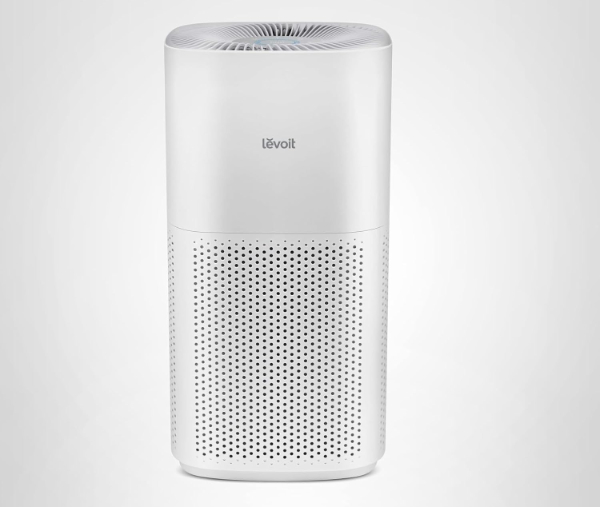
The Levoit Core 600S proves that you don't need to spend four figures to get legitimate smoke filtration. While it doesn't have the 15 lbs of carbon found in premium industrial units, it uses a high-efficiency vortex fan and a proprietary "ARC Formula" carbon filter. This carbon is treated to be specifically effective at neutralizing odors from tobacco and cooking without the "chemical" smell some budget filters produce.
Technically, it boasts a Smoke CADR of 410 cfm (cubic feet per minute). Why it matters: For its price bracket, this is a class-leading performance. It means it can effectively clear a 600 sq. ft. room every 12 minutes. It is a particulate powerhouse, catching the physical ash and tar of cigarette smoke as effectively as machines twice its price.
The limitation is the depth of gas filtration. The carbon layer is thin - it's designed for surface-level odors and everyday freshening. In a heavy-smoke environment (multiple smokers or small, unventilated rooms), you will find yourself needing to replace the filters more frequently than the manufacturer's 6-12 month estimate. It is the perfect entry-level choice for someone who wants to protect their home from occasional smoke or secondhand drift from neighbors.
The 600S uses a PM2.5 infrared sensor to adjust fan speeds. Why it matters: Smoke particles are the primary component of PM2.5. By constantly sampling the air, the Levoit can stay in a low-power "sleep" mode until it detects smoke, then ramp up to high speed instantly to capture the plume before it spreads.
How We Chose These Products
Our selection was based on three critical performance metrics: Filter Density, CADR (Clean Air Delivery Rate), and Gas-Phase Media Weight. We prioritize products with a high weight of activated carbon because, technically, there is no substitute for mass when it comes to chemical adsorption. We also evaluated the "seal" of the units; a purifier is useless if air can leak around the filter (bypass). Every machine on this list features a gasketed or pressure-sealed filter path to ensure 100% of the smoke goes through the media, not around it.
Comparison Overview
| Model | Primary Tech | Carbon Weight | Best For |
|---|---|---|---|
| IQAir GC MultiGas | HyperHEPA + 4 Cartridges | 12 lbs | Extreme Smoke/Gases |
| Austin Air HealthMate+ | HEPA + Zeolite/Carbon | 15 lbs | Long-term Durability |
| Blueair 211i Max | HEPASilent (Electrostatic) | ~1.5 lbs | Large Open Areas |
| Coway Airmega 400S | Max2 Dual Filtration | ~2.0 lbs | Smart Automation |
| Levoit Core 600S | True HEPA (H13) | ~0.8 lbs | Budget/Value |
Buying Guide: What to Look For
- CADR (Smoke): Look for a rating of at least 250-300 cfm for medium rooms. Why it matters: This determines how many times the machine can "scrub" the room per hour.
- Activated Carbon Weight: Avoid "carbon-infused" filters. Look for actual weight in pounds. Why it matters: Odor molecules occupy space; more carbon means more space to hold the stench of 1,000 cigarettes before the filter fails.
- Potassium Permanganate: For heavy smokers, this is the "secret sauce." Why it matters: It oxidizes the specific chemical compounds found in tobacco smoke that regular carbon can't trap.
- Seal Integrity: Look for "zero bypass" or rubber gaskets. Why it matters: If smoke can leak through the gaps in the plastic housing, the machine is just blowing dirty air back into the room.
General Pro / Cons
| Pro | Con |
|---|---|
| Removes invisible carcinogens like benzene and formaldehyde. | High-end smoke filters are significantly more expensive to replace. |
| Prevents yellowing of walls and furniture from tar buildup. | Heavy-duty units are often bulky and take up significant floor space. |
| Protects non-smokers and pets from secondhand smoke effects. | The highest fan speeds can be as loud as a vacuum cleaner. |
| Reduces the "stale ashtray" smell in upholstery and carpet. | Ozone-producing ionizers (found in some) can irritate lungs. |
| Smart sensors provide real-time peace of mind and data. | Filters saturate much faster in smoke environments than in dust-only homes. |
Final Summary
Choosing an air purifier for smoke is about recognizing that not all air filters are created equal. If you are dealing with a heavy, multi-pack-a-day environment, the IQAir GC MultiGas or Austin Air HealthMate Plus are the only units with enough carbon mass to truly solve the problem. For large spaces and high-speed clearing, the Blueair 211i Max is a particulate powerhouse. For most users looking for a balance of smart tech and price, the Coway Airmega 400S offers the most refined experience. Aggregate rating of the products reviewed: 4.7 out of 5.