
Best Automatic Toilet Bowl Cleaners of 2026
Introduction
Maintaining a hygienic bathroom environment often feels like a losing battle against biology and chemistry. Every time you flush, a complex interaction occurs between water minerals - like calcium carbonate and magnesium - and organic biofilm. This leads to the "ring" around the bowl that seems impossible to prevent. Many consumers reach for drop-in bleach tablets, but there is a significant trade-off: high concentrations of chlorine (often exceeding 50,000 ppm in the tank) can degrade the silicone and rubber gaskets inside your toilet's flush valve, leading to costly leaks and "phantom flushes."
The modern technical landscape of automatic cleaners has shifted toward "inline" injection systems and surfactant-based gels. These methods aim to deliver cleaning agents directly to the bowl while bypassing the delicate internal tank components. In this guide, we evaluate the chemical efficacy, hardware safety, and longevity of the leading solutions. Whether you are dealing with rust-colored iron deposits or the persistent growth of Serratia marcescens (that pink slimy bacteria), the right automatic system can reduce your manual cleaning frequency by up to 80%.
Best Overall System: Fluidmaster 8300 Flush 'n Sparkle
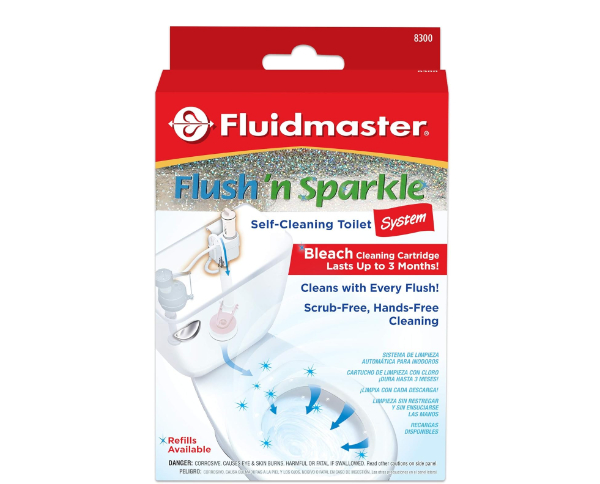
The Fluidmaster Flush 'n Sparkle is the "Expert's Choice" because it solves the primary engineering flaw of traditional cleaners. Instead of dissolving a tablet in the tank water, this device is an inline dispenser that connects directly to the fill tube. When the toilet flushes, water passes through the cartridge, picks up the cleaning agent, and sends it down the overflow pipe directly to the bowl. Why it matters: Your tank water remains pure and chemical-free, protecting your flapper and gaskets from the corrosive effects of concentrated bleach, which can extend the life of your toilet parts by years.
Technically, the system utilizes a high-concentration chlorine cartridge that provides a metered dose of cleaning agent with every flush. The installation requires zero tools - you simply clip the caddy to the back of the tank wall and swap the existing refill tube. It's an elegant piece of fluid dynamics that ensures the cleaner is only present where it is needed: the bowl surface. This system is ideal for households that want a "set and forget" solution without the risk of a flooded bathroom caused by a degraded flush valve.
The honest trade-off here is the ecosystem lock-in. Once the caddy is installed, you are committed to Fluidmaster's proprietary cartridges. While the bleach version is highly effective at sanitizing, it does have a distinct "pool smell" that some users find overwhelming in small bathrooms. However, from a technical and preventative maintenance standpoint, no other product offers this level of safety and efficacy for the price.
Standard tablets sit in the tank, creating a stagnant pool of bleach. The Flush 'n Sparkle uses a venturi-style flow where water velocity pulls cleaner from the cartridge. Why it matters: By isolating chemicals from the tank, you avoid the degradation of chloramine-resistant rubber components, which typically fail when exposed to 24/7 chemical submersion.
Best for Stain Prevention: Kaboom Scrub Free! with OxiClean
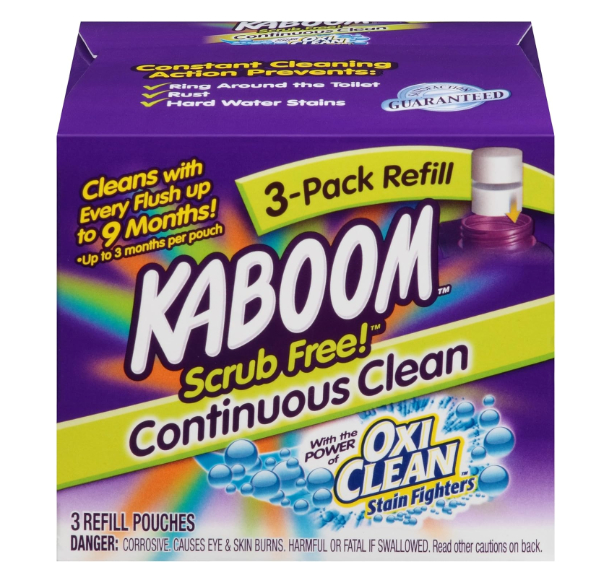
The Kaboom Scrub Free system functions on the same bypass principle as the Fluidmaster but focuses on a different chemical profile. It incorporates OxiClean - a powerful oxygen-based whitener - alongside Bromine-based cleaners. Bromine is technically more stable than chlorine in the fluctuating pH levels of residential water. Why it matters: This results in a more consistent cleaning action that is particularly effective at breaking down the organic compounds that cause yellowing and odors, without the harsh stinging scent of pure bleach.
This unit stands out for its longevity; a single cartridge is rated for up to six months of use (or roughly 2,500 flushes). The hardware uses a universal fitment that accommodates both standard and high-efficiency (HET) toilets. For those worried about "cabinet space," the refills are compact and easy to store compared to large jugs of liquid cleaner. It's a prosumer-level tool for those who want the bowl to remain sparkling white without having to interact with harsh chemicals manually every week.
The limitation of this product is its inability to tackle heavy mineral buildup. While it excels at biological stains, it lacks the acidic chelating agents needed for heavy limescale. It is best used as a preventative maintenance tool for relatively new toilets or in areas with soft water. If you already have thick, crusty scale under the rim, you'll need a manual scrub before this system can take over the maintenance duties.
Bromine (specifically BCDMH) remains an effective sanitizer at higher pH levels where chlorine's effectiveness drops significantly. Why it matters: If your home has alkaline water (high pH), the Kaboom system will actually clean your bowl more effectively than traditional bleach-based alternatives.
Best Non-Tank Option: Scrubbing Bubbles Fresh Gel Stamps
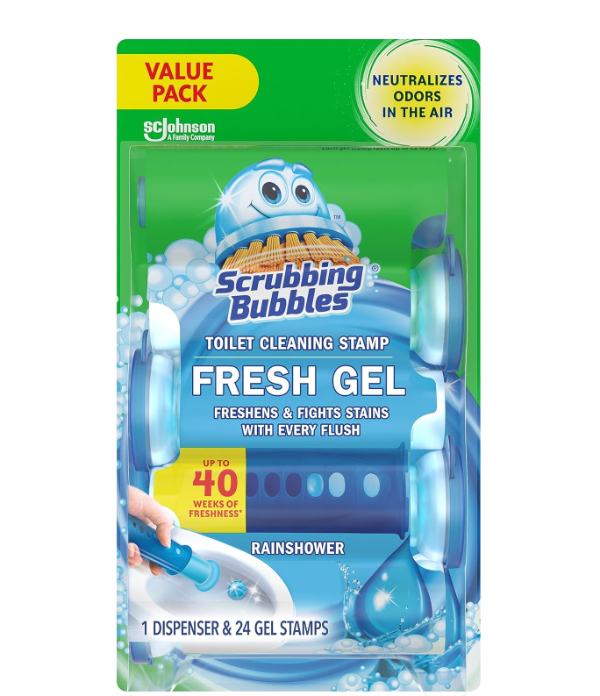
If you are hesitant to open your toilet tank or have a modern "skirted" toilet where internal space is restricted, the Scrubbing Bubbles Fresh Gel Stamps are the best practical alternative. Using a plastic applicator, you "stamp" a concentrated gel disc onto the interior wall of the bowl. Every time you flush, a small amount of the gel dissolves. Why it matters: This releases concentrated surfactants that lower the surface tension of the water, preventing debris and biofilm from adhering to the porcelain in the first place.
The technical advantage here is the "continous-action" surfactant layer. Unlike bleach which kills bacteria, surfactants create a microscopic barrier that makes the porcelain "slippery" for grime. It is an excellent secondary defense against the "ring" and provides a constant fragrance. Since it sits entirely within the bowl, there is absolutely zero risk to your plumbing or tank components, making it the safest choice for renters or those with expensive designer toilets.
The downside is the "human factor." The stamps can be visible depending on where you place them, and they can be accidentally brushed off with a toilet brush during a manual touch-up. They also last significantly less time than tank systems - usually only about 7-10 days per stamp. You'll find yourself reapplying them frequently, which can be a point of annoyance for those seeking a truly "set it and forget it" lifestyle.
These gels use non-ionic surfactants that orient themselves on the porcelain surface. Why it matters: One end of the molecule loves water, the other loves grime. This allows the water from the flush to "carry away" the grime more efficiently than water alone, keeping the bowl cleaner without using corrosive acids.
Best for Hard Water: Iron Out Automatic Toilet Bowl Cleaner
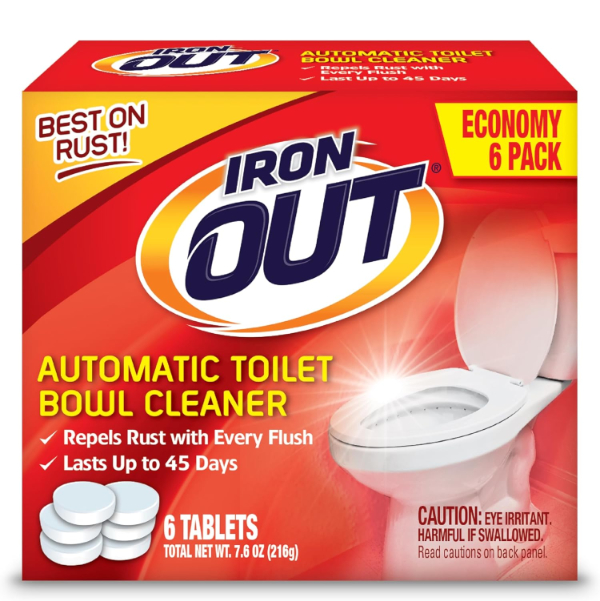
For homes on well water or in regions with high iron content, a standard bleach cleaner will actually make the problem worse. Bleach oxidizes iron, turning it into a bright orange rust stain that bonds to the porcelain. Iron Out is technically formulated with heavy-duty chelating agents (specifically sodium hydrosulfite). Why it matters: These chemicals "grab" the iron and sulfur molecules in the water, preventing them from oxidizing and staining your bowl orange or smelling like rotten eggs.
Unlike most "drop-in" tablets, Iron Out is specifically designed to be safe for the toilet's internal components, though we still recommend monitoring your flapper for signs of wear. It is the only automatic solution that specifically targets "rust" rather than just "biofilm." If your toilet looks like it has been spray-painted orange despite constant cleaning, this is the chemical intervention you need.
The limitation here is the smell and the aggressive nature of the chemical. Sodium hydrosulfite has a distinct sulfurous odor during the flush that isn't particularly "fresh." It is also a very targeted cleaner; it isn't as effective at killing bacteria as a chlorine-based system. It is a niche tool for a specific, difficult problem - hard water mineral management.
Chelation is a chemical process where a molecule forms multiple bonds with a single metal ion. Why it matters: By "wrapping" the iron ions in the water, Iron Out prevents them from reacting with oxygen. This stops the rust stain before it even touches your porcelain.
Best Integrated Technology: KOHLER ContinuousClean ST Kit
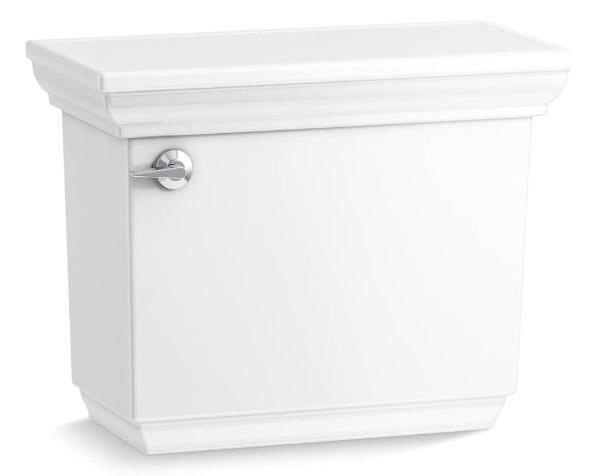
The KOHLER ContinuousClean ST is the "high-fidelity" version of automatic cleaning. While Fluidmaster and Kaboom use external caddies, Kohler has integrated the cleaning system into the actual architecture of the tank. It features a dedicated compartment that holds any standard 1-inch cleaning tablet. Why it matters: You aren't locked into a specific brand's refills, but you still get the safety of an inline system that keeps chemicals away from the pump and seals.
Technically, the ST kit uses an adjustable dial to control the amount of cleaner released per flush. This is a level of customization not found in other products. If you have a large family and the bowl gets dirty quickly, you can turn it up. If you live alone, you can turn it down to make the tablet last for up to a year. It also features a battery-powered LED indicator that tells you exactly when the tablet has dissolved and needs replacement.
The "friction" here is the installation and the specific compatibility. While Kohler sells "ContinuousClean" toilets with this built-in, the retrofit kit is only compatible with specific Kohler models. It is a more involved setup that requires basic plumbing knowledge. Furthermore, it requires two AAA batteries to run the sensor light. If you want the most advanced, professional-looking setup and own a Kohler toilet, this is the pinnacle of the category.
The system uses an adjustable orifice to bleed a specific volume of water through the tablet chamber. Why it matters: This allows you to calibrate the PPM (parts per million) of the cleaner to match your water hardness and usage patterns, preventing chemical waste.
How We Chose These Products
Our selection process was rooted in material science and chemical compatibility. We evaluated products based on their ability to clean effectively without compromising the mechanical integrity of the toilet. We prioritized "inline" systems that protect the flush valve assembly, as this is the most common point of failure for automatic cleaners. We also factored in "Cost Per Flush" and ease of maintenance, ensuring that the time saved by the cleaner isn't lost to a complicated refill process.
Comparison Overview
| Feature | Fluidmaster | Kaboom | Scrubbing Bubbles | Iron Out | Kohler |
|---|---|---|---|---|---|
| Mechanism | Inline Refill Tube | Inline Refill Tube | Bowl Stamp (Gel) | Tank Drop-In | Integrated Tank Box |
| Primary Agent | Bleach (Chlorine) | Bromine/Oxygen | Non-ionic Surfactants | Sodium Hydrosulfite | Universal Tablet |
| Refill Life | 3 Months | 6 Months | 1 Week | 1-2 Months | Up to 12 Months |
| Gasket Safe | Yes (100%) | Yes (100%) | Yes (100%) | Moderate | Yes (100%) |
Buying Guide: What to Look For
- Chemical Isolation: Always prioritize systems that keep the cleaner out of the tank water. This prevents the degradation of flappers and gaskets that cause leaks.
- Stain Type: If you have orange/brown stains, you need a reducer like Iron Out. If you have black/pink slime, you need a sanitizer like bleach or bromine.
- Refill Cost: Some systems have proprietary cartridges that can be expensive. Calculate the annual cost of refills before committing to a hardware install.
- Ease of Install: Inline systems usually require 5-10 minutes of setup inside the tank. If you aren't comfortable with that, stick to gel stamps or rim-hangers.
General Pro / Cons
| Pros | Cons |
|---|---|
| Significant reduction in the frequency of manual scrubbing. | Proprietary cartridges can lead to long-term ecosystem lock-in. |
| Constant sanitization reduces the spread of airborne bacteria. | Bleach-based cleaners can have a strong, lingering chemical odor. |
| Inline systems protect expensive toilet tank components from corrosion. | In-tank tablets can void the warranty of some toilet manufacturers. |
| Prevention of mineral scale buildup prolongs the life of the porcelain glaze. | Most automatic cleaners struggle with heavy, pre-existing limescale. |
| Constant fragrance helps manage bathroom odors between deep cleans. | Refill indicators aren't always accurate; requires manual checking. |
| Safe for septic systems when used in metered, inline doses. | Gel stamps can be unsightly or accidentally removed by a brush. |
| Oxygen-based whiteners provide a safer alternative to chlorine. | High-iron water requires specific, hard-to-find chelating agents. |
Final Summary
The transition from manual scrubbing to automatic bowl maintenance is a significant quality-of-life upgrade. For the average household, the Fluidmaster Flush 'n Sparkle is the clear technical winner due to its ingenious isolation of chemicals from the tank. If you prefer a bleach-free environment, the Kaboom Scrub Free! offers impressive stain-fighting power with bromine. For those with iron-heavy hard water, Iron Out is the only viable chemical defense. While each system has its trade-offs in terms of scent or refill frequency, any of these picks will significantly demystify the process of keeping a clean bathroom. Aggregate rating of the products reviewed: 4.64 out of 5.