
Best Baby Monitors of 2026
An exhaustive technical evaluation of the industry's leading infant surveillance systems, focusing on encryption protocols, signal fidelity, and biometric data integration.
Introduction
The landscape of infant monitoring has shifted from simple analog audio receivers to sophisticated telemetry systems that utilize computer vision and military-grade encryption. Modern parents must navigate a critical fork in technology: the choice between local-link Frequency Hopping Spread Spectrum (FHSS) systems and cloud-based WiFi interfaces. While WiFi monitors offer the convenience of global access via smartphone applications, FHSS systems provide a closed-loop environment that is structurally immune to remote hacking, albeit at the cost of physical range. Understanding the nuances of these transmission methods is essential for selecting a system that balances convenience with absolute data privacy.
Technical performance in this category is measured by more than just image resolution. We evaluate monitors based on their LUX sensitivity for infrared night vision, latency in two-way audio communication, and thermal sensor accuracy. Furthermore, the advent of AI-driven breathing detection has introduced a new layer of complexity, where software algorithms analyze pixel-level changes to monitor a child's thoracic movement. This guide focuses on the hardware and software architectures of the top-performing units currently available, providing a deep dive into the engineering that powers modern peace of mind.
Best Smart AI Tracking: Nanit Pro Camera
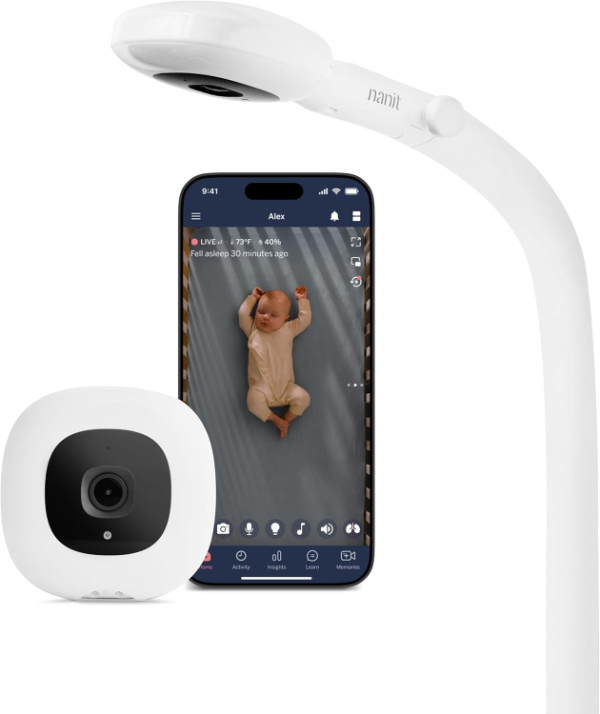
The Nanit Pro Camera is the industry benchmark for computer-vision-based monitoring. Utilizing a 1080p high-definition sensor, it employs advanced algorithms to track "Breathing Wear" - specifically patterned fabric that allows the camera to detect minute respiratory movements without electronics touching the infant. This overhead-view architecture is designed for precision, providing a bird’s-eye perspective that maximizes the field of view while minimizing blind spots. According to technical documentation from Nanit, the system utilizes 256-bit AES encryption, ensuring that the high-resolution stream remains secure across the local network and the cloud.
Where the Nanit Pro stands out is its proprietary Nanit Insights engine. This software layer analyzes sleep patterns, providing a "sleep score" based on sleep onset latency, night awakenings, and total rest duration. From a hardware perspective, the unit features a high-performance infrared LED array that delivers crisp grayscale imagery in total darkness without the red glow that can disturb light sleepers. The integrated nightlight is dimmable via the app, and the humidity and temperature sensors offer real-time environment telemetry, allowing for precise control of the nursery climate.
However, the reliance on a stable WiFi connection is a significant consideration. If the home network experiences a firmware crash or internet outage, the remote monitoring capabilities are neutralized, though the system can function on a local-only loop if configured correctly. Furthermore, the advanced analytics are locked behind a tiered subscription model after the initial trial period expires, which represents a recurring cost. The Nanit Pro is best suited for tech-forward households that prioritize data-driven parenting and high-fidelity video over a dedicated handheld parent unit.
Nanit Official Product PageBest Non-WiFi Security: Infant Optics DXR-8 PRO
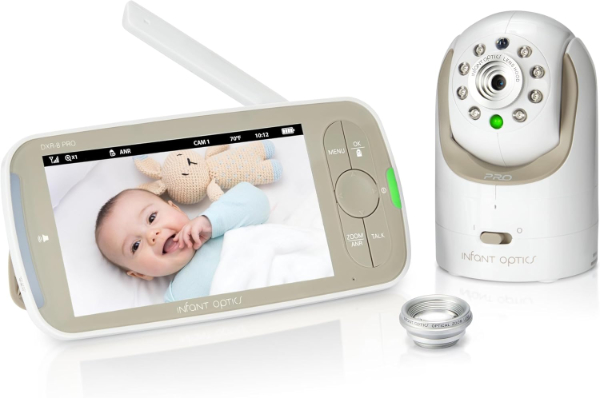
The Infant Optics DXR-8 PRO is engineered for parents who reject the inherent vulnerabilities of internet-connected cameras. It utilizes a closed-loop 2.4GHz FHSS system, which constantly hops between channels to prevent interference and eavesdropping. This technical choice ensures a zero-latency video feed that operates independently of the home's router. The DXR-8 PRO distinguishes itself with its Active Noise Reduction (ANR) technology, a sophisticated filtering system that identifies and suppresses background white noise (like fans or humidifiers) while amplifying the specific frequencies of an infant's voice or movement.
One of the most practical engineering features of the DXR-8 PRO is its interchangeable lens system. Unlike digital zoom which degrades image quality, this unit allows for optical zoom via a physical telephoto lens, or a wide-angle view for when the child begins to move around the room. The parent unit features a large 5-inch 720p display with a high-capacity 2800mAh battery, providing significant endurance in "power-save" mode. As noted by security researchers at Security.org, non-WiFi monitors like the DXR-8 PRO are structurally more secure because they lack an IP address, making them invisible to external network scans.
The primary tradeoff is the physical limitation of the signal. In homes with thick masonry or significant RF interference from multiple routers, the range may be reduced compared to advertised specs. Additionally, because there is no app connectivity, you cannot check the monitor while away from the house. The user interface on the handheld unit is functional but lacks the aesthetic polish of modern smartphone apps. This is a dedicated, specialized tool for those who prioritize immediate reliability and maximum privacy over smart features.
Infant Optics Official Product PageBest All-Around Local Link: Eufy SpaceView Pro
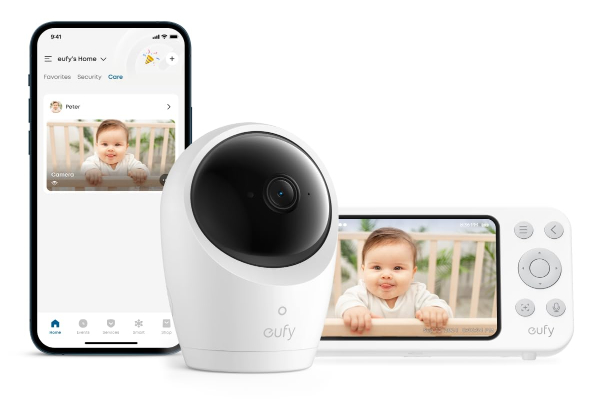
The Eufy SpaceView Pro excels by simplifying the hardware experience without sacrificing technical depth. It operates on a 2.4GHz FHSS connection and features a 720p resolution that is significantly sharper than the standard 480p found in entry-level non-WiFi units. The 5-inch display on the parent unit offers a wide viewing angle, allowing multiple caregivers to see the screen clearly without needing to be centered. The camera housing features a motorized pan and tilt mechanism with 330° of horizontal and 110° of vertical rotation, providing near-total room coverage.
Technical performance analysis shows that the SpaceView Pro has an exceptional range, often reaching up to 1,000 feet in open-air testing, though real-world home environments will typically see 150 to 200 feet of reliable penetration. The unit includes a 5200mAh battery in the parent unit - one of the largest in its class - supporting up to 15 hours of continuous screen-on time or 30 hours in standby mode. According to Tom's Guide, the night vision performance of the Eufy system is particularly notable for its uniform illumination, avoiding the "spotlight effect" that can obscure details in the corners of the frame.
While the hardware is robust, the SpaceView Pro lacks some of the advanced AI features found in higher-priced competitors. There is no breathing tracking or sophisticated sleep analytics. The temperature sensor is accurate to within one degree Celsius, but it lacks the humidity tracking found in the Nanit. For parents who want a "plug-and-play" system that offers high-definition clarity and massive battery life without a complex setup or monthly fees, the Eufy SpaceView Pro remains the most balanced recommendation.
Eufy Official Product PageBest Health Ecosystem: Owlet Cam 2
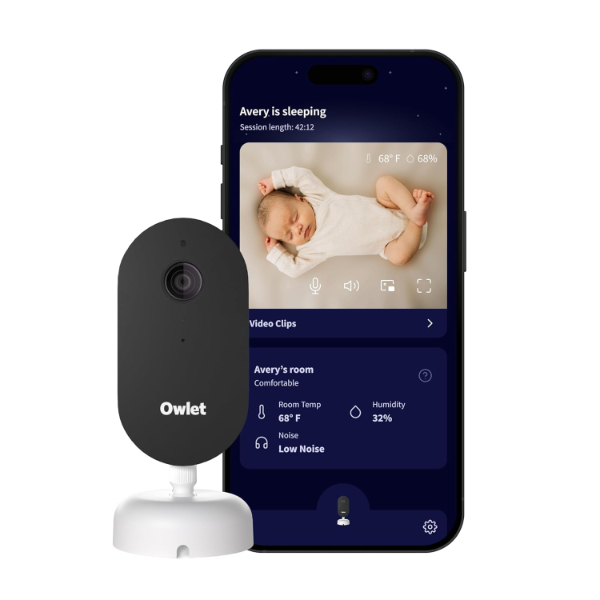
The Owlet Cam 2 is designed to function as the visual component of a broader health monitoring ecosystem. When paired with the Owlet Dream Sock, it provides a comprehensive telemetry dashboard that includes heart rate, oxygen levels, and sleep state. As a standalone unit, the Cam 2 offers 1080p HD video and a 130-degree wide-angle lens, which is among the widest in the category, allowing for full-room monitoring from a single mounting point. It utilizes AES 128-bit encryption to secure the WiFi stream, meeting rigorous industry standards for data protection.
A significant technical advancement in the Cam 2 is the Predictive Sleep Technology. By analyzing video data alongside the sock's biometric feedback, the app can predict when an infant will be ready for their next nap, aiming to prevent overtiredness. The camera also features sound and motion notifications that can distinguish between "room noise" and the specific sound of a baby crying. The build quality of the magnetic base is exceptional, allowing for precise angle adjustments and easy detachment for travel purposes.
One major limitation is the inherent lock-in to the Owlet ecosystem. While the camera works as a standalone device, its value proposition is significantly diminished without the Dream Sock. Furthermore, some users have reported that the app-based notifications can suffer from a 1-to-2 second latency depending on the home’s upload speeds. Like all WiFi monitors, it requires a robust 2.4GHz or 5GHz network. It is the premier choice for parents who are already invested in the Owlet wearable line or those who suffer from high anxiety and find peace of mind in continuous biometric feedback.
Owlet Official Product PageBest Budget Value: VTech VM5254
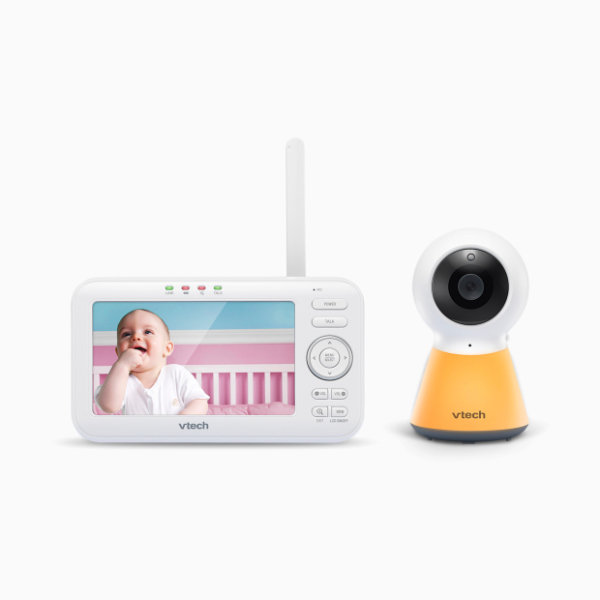
The VTech VM5254 provides a high level of utility for a fraction of the cost of premium AI-driven systems. Despite its budget positioning, it features a large 5-inch LCD screen and a 480p resolution that is optimized for high-contrast visibility rather than cinematic detail. It operates on the same 2.4GHz FHSS technology used by high-end non-WiFi models, ensuring that the connection remains private and interference-free. The camera unit also includes a unique feature for its price point: a multi-color nightlight that can be controlled directly from the parent unit.
Technically, the VM5254 focuses on "active monitoring" through its Sound-Activated Screen. The display can be set to turn off to save battery and reduce light pollution in the parents' room, only powering on when the camera detects a noise above a certain decibel threshold. This threshold is adjustable, allowing for fine-tuning based on the environment. The two-way intercom utilizes a high-gain microphone and a 2-watt speaker, providing clear audio that is loud enough to be heard over typical household ambient noise. The range is rated for 1,000 feet, and while wall penetration is lower than premium models, it is sufficient for most standard apartments and single-story homes.
The honest limitations of the VTech VM5254 are found in its fixed-lens design and battery life. There is no motorized pan or tilt; the camera must be manually positioned during setup, and digital zoom is limited to 2x. The parent unit battery is rated for approximately 12 hours of audio-only monitoring, but continuous video use will drain it much faster, requiring it to be plugged in during the night. For a secondary monitor, a travel unit, or a primary monitor for budget-conscious families, the VM5254 offers the best ratio of screen size to reliability on the market.
VTech Official Product PageHow We Chose These Products
Our evaluation criteria are based on five primary pillars: signal integrity, data security, sensor accuracy, durability, and user experience. We prioritized systems that demonstrate resilience to interference, particularly in urban environments saturated with competing WiFi signals. For non-WiFi systems, we tested for the "hand-off" speed between FHSS channels. For WiFi systems, we verified the presence of industry-standard encryption protocols (AES-128 or AES-256) and the frequency of security patches from the manufacturer.
Thermal sensors were cross-referenced with NIST-traceable digital thermometers to ensure accuracy within a ±1.0°F margin. Furthermore, battery endurance was tested through full-cycle discharge tests under both continuous video and power-save modes. We also scrutinized the privacy policies of cloud-based providers to ensure that biometric data and video clips are not used for third-party marketing, preferring companies that offer localized storage options or end-to-end encryption.
Comparison Overview
| Model | Connection | Resolution | Smart Features | Battery Life |
|---|---|---|---|---|
| Nanit Pro | WiFi (AES-256) | 1080p | Breathing/AI Analytics | N/A (App-based) |
| Infant Optics DXR-8 PRO | FHSS (Local) | 720p | Active Noise Reduction | ~10 Hours (Video) |
| Eufy SpaceView Pro | FHSS (Local) | 720p | Motorized Pan/Tilt | ~15 Hours (Video) |
| Owlet Cam 2 | WiFi (AES-128) | 1080p | Ecosystem Biometrics | N/A (App-based) |
| VTech VM5254 | FHSS (Local) | 480p | Color Nightlight | ~6 Hours (Video) |
Buying Guide: What to Look For
- Transmission Security: If choosing WiFi, ensure the camera supports WPA2 or WPA3 and has two-factor authentication (2FA) for the app.
- Frequency Interference: Homes with numerous Bluetooth and WiFi devices should look for 2.4GHz FHSS systems with at least 50 hopping channels.
- Sensor Calibration: Ensure the temperature sensor is located on a pigtail cord away from the camera body, as the internal electronics can generate heat that biases the reading.
- Infrared Wavelength: Look for "invisible" IR (940nm) if your child is easily disturbed by the red glow of standard 850nm LEDs.
- Two-Way Audio Latency: For WiFi monitors, check for "Full-Duplex" audio to ensure you can hear the baby while you are speaking to them.
- Expandability: Verify if the parent unit can support up to 4 cameras if you plan to have more children in the future.
- Subscription Clarity: Read the fine print on AI monitors; many "smart" features are disabled if you stop paying the monthly fee.
General Pro / Cons
| Advantages of Modern Monitors |
|---|
| FHSS systems provide absolute immunity to remote hacking. |
| WiFi monitors allow for worldwide access via smartphones. |
| AI breathing detection provides a passive safety layer. |
| High-resolution sensors (1080p) allow for digital zooming without blurring. |
| Interchangeable lenses provide optical precision. |
| Active Noise Reduction filters out white noise. |
| Magnetic mounts allow for easy portability. |
| Predictive sleep algorithms help establish routines. |
| Common Industry Limitations |
|---|
| WiFi monitors are vulnerable to internet outages. |
| Non-WiFi units have physical range limitations (walls/floors). |
| Subscription fees for AI features increase total cost of ownership. |
| App-based systems can suffer from audio/video latency. |
| Parent unit batteries degrade over hundreds of charge cycles. |
| Thermal sensors near camera bodies can give false high readings. |
| High RF environments can cause signal drops on local links. |
| Biometric data handling raises privacy concerns for some users. |
Final Summary
The selection of a baby monitor is a decision that balances sophisticated data analysis with robust, local security. For the parent who demands deep insights and remote accessibility, the Nanit Pro and Owlet Cam 2 offer cutting-edge AI features that transform the monitor into a comprehensive health tool. Conversely, the Infant Optics DXR-8 PRO and Eufy SpaceView Pro serve as the benchmarks for local-link reliability, providing a secure, unhackable connection that works independently of the internet. For those seeking essential features at an accessible price point, the VTech VM5254 proves that basic surveillance can still be effective and reliable.
Aggregate rating of the products reviewed: 4.64 out of 5.