
Best Backpacking Tents of 2026
An authoritative guide to the most reliable, lightweight, and weather-resistant shelters for the modern wilderness explorer.
Introduction
Selecting a backpacking tent is a critical decision that balances the competing demands of weight, protection, and comfort. In the modern outdoor market, the "big three" (shelter, sleep system, and pack) represent the most significant opportunities to shed pounds. However, as noted by technical researchers at Switchback Travel and CleverHiker, stripping away too much weight often results in fragile fabrics or cramped interior volumes that can compromise a multi-day trek. The ideal tent must act as a reliable fortress against unpredictable high-alpine winds and driving rain while remaining light enough to vanish into your pack during the day.
Recent advancements in material science have introduced proprietary fabrics like OSMO and HyperBead, which solve long-standing issues such as nylon sagging when wet. These technological leaps allow for "freestanding" designs that are easier to pitch on rocky or compacted soil where stakes are difficult to secure. Our selection focuses on five distinct models that represent the pinnacle of current engineering, ranging from specialized trekking-pole-supported ultralight shelters to robust, high-volume tents designed for those who prioritize a good night's sleep over absolute minimalism.
Best Overall Performance: Big Agnes Copper Spur HV UL2
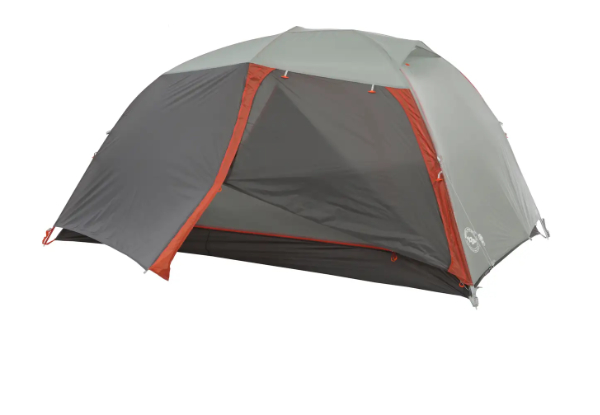
The Big Agnes Copper Spur HV UL2 has long been the benchmark for the "all-around" backpacking category. It strikes a nearly perfect balance between a trail weight of approximately 2 lbs. 11 oz. and a high-volume (HV) pole architecture that creates vertical walls. This design prevents the "coffin" feel common in ultralight tents, allowing two hikers to sit up comfortably. The integration of TipLok Tent Buckles simplifies the setup process by combining pole-tip capture, rainfly attachment, and tensioning into a single hardware component.
Technically, the Copper Spur stands out due to its proprietary HyperBead double-ripstop nylon, which is engineered to increase tear strength without adding bulk. The inclusion of awning-style vestibules allows users to expand their living space using trekking poles, providing a shaded porch for cooking or gear maintenance. According to testing from GearJunkie, the tent remains remarkably stable in moderate winds despite its airy weight, thanks to the 4-way high-volume hub design.
The primary limitation is the fragility of its 15D and 20D fabrics. While high-tech, these materials require a footprint (sold separately) to ensure longevity against sharp rocks or roots. Additionally, while it is marketed for two people, the tapered floor plan (52 inches at the head, 42 inches at the foot) means it is best suited for close partners or solo hikers who want extra room.
Big Agnes Official Product PageBest Interior Livability: NEMO Dagger OSMO 2P
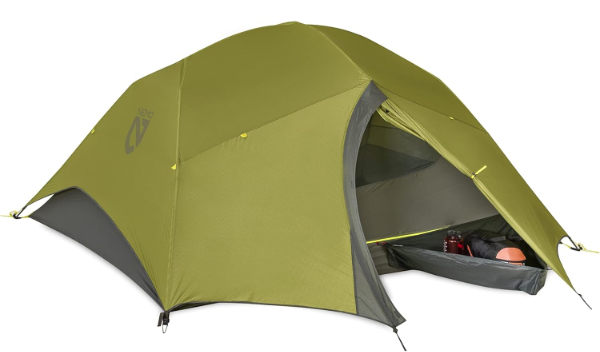
The NEMO Dagger OSMO 2P is designed for backpackers who refuse to sacrifice comfort. Its standout feature is the OSMO fabric—a proprietary poly-nylon blend that claims to have 4x better water repellency and 3x less stretch when wet compared to standard nylon. This is significant because it prevents the rainfly from sagging and touching the inner mesh during a downpour, a common cause of condensation transfer.
Practically, the Dagger offers more floor space (30.6 sq. ft.) and more massive vestibules (12.1 sq. ft. per side) than the Copper Spur. It includes the Landing Zone storage tub, which keeps gear off the ground and dry within the vestibule area. As noted by CleverHiker, the Dagger is one of the few "backpacking" tents that feels spacious enough to wait out a full day of rain without feeling claustrophobic.
The tradeoff is weight; at a minimum trail weight of 3 lbs. 5 oz., it is notably heavier than pure ultralight options. It is an ecosystem-focused product, meaning it works best with NEMO's Divvy Cube stuff sack, which allows for easy weight splitting between two hikers. For those who prioritize durability and internal volume over the lowest possible gram count, the Dagger is the superior choice.
NEMO Official Product PageBest Ultralight Value: Durston X-Mid 2
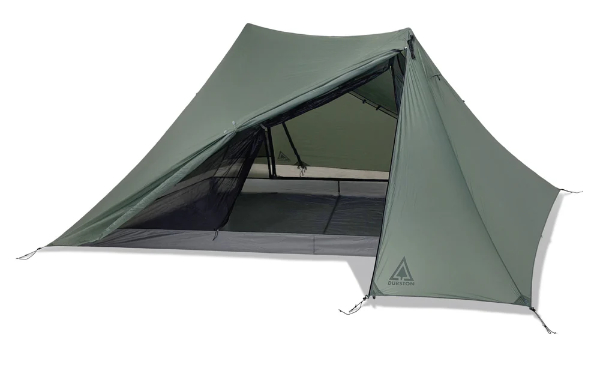
The Durston X-Mid 2 has disrupted the backpacking market by offering an ultralight, double-wall shelter that does not require the premium price tag of Dyneema. This is a trekking-pole-supported tent, meaning it uses your hiking poles for structure instead of dedicated tent poles. Its patented geometry involves a rectangular base with two offset poles, which creates a massive 33.2 sq. ft. of floor space and exceptional headroom for a tent weighing only about 2 lbs. 2 oz.
Technically, the use of 20D SilPoly (silicone-coated polyester) is its greatest asset. Unlike nylon, polyester does not absorb water or sag, ensuring the tent stays taut throughout the night. Switchback Travel highlights its ease of setup, noting that it requires only four stakes to achieve a basic pitch, a rarity among trekking pole tents which often require complex guying.
The downsides are inherent to its design: it is not freestanding. You cannot pitch this on a wooden platform or solid rock without significant creativity or additional hardware. Furthermore, its large footprint (83 x 100 inches) can make finding a suitable "flat spot" in dense forests or rocky terrain more challenging than with a compact freestanding model.
Durston Gear Official Product PageBest for Bad Weather: MSR Hubba Hubba LT 2
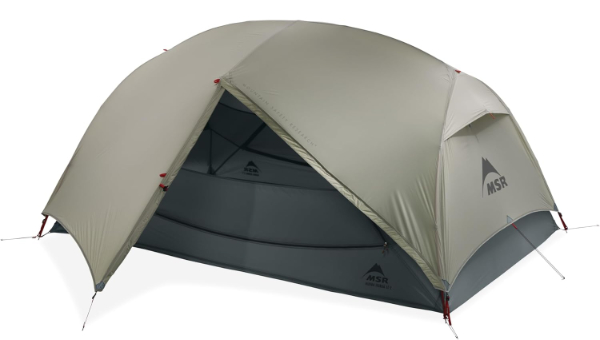
The MSR Hubba Hubba LT 2 is the latest evolution of a legendary line known for its storm-worthiness. It features Easton Syclone poles made from advanced composite materials that are virtually unbreakable in high winds, flex where aluminum might snap. The LT (Light) version brings the weight down to an even 3 lbs. while maintaining a true rectangular floor (88 x 52 inches) that allows for head-to-toe sleeping configurations.
What distinguishes MSR is the DuraShield waterproof coating, which is applied to the 20D ripstop nylon. This coating is designed to last significantly longer than traditional PU coatings, which can become tacky or peel over time. The "StayDry" doors include built-in rain gutters to ensure that when you open the vestibule during a storm, water doesn't drip directly onto the tent floor or your gear.
While it is a "quiver-killer" tent, it is also one of the more expensive options. The focus on durability and weather protection means it isn't as light as the Copper Spur or X-Mid. However, for backpackers venturing into high-exposure areas where high-speed winds and sudden storms are the norm, the peace of mind provided by the composite poles and robust coating is worth the investment.
MSR Official Product PageBest Budget Versatility: REI Co-op Half Dome 2 Plus
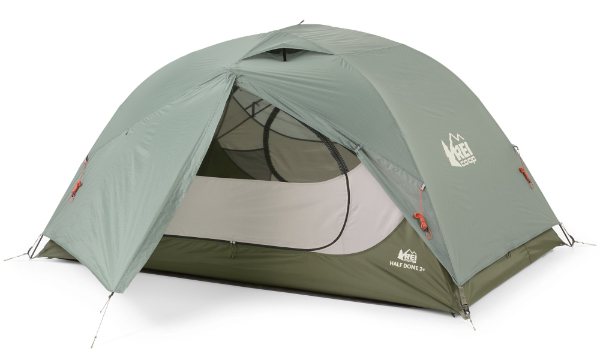
The REI Co-op Half Dome 2 Plus is the definitive choice for entry-level backpackers or those who want a single tent for both backcountry treks and car camping. The "Plus" designation indicates an oversized floorplan (92 x 56 inches), which is significantly larger than any of our other picks. This extra width and length make it the only tent on this list that can comfortably fit two large adults plus a dog or extra-wide sleeping pads without touching the sidewalls.
Technically, it uses heavier but more durable 75D polyester for the floor and a 40D nylon rainfly. While this adds weight (packaged weight is roughly 6 lbs. 3 oz.), it also means the tent is far more puncture-resistant and less reliant on delicate handling. The HubCheck technology allows users to visually verify that the poles are fully seated in the hubs, making it one of the most user-friendly setups for beginners.
The limitation here is strictly weight. At over 6 pounds, it is more than double the weight of the Durston X-Mid 2. However, REI includes the footprint in the purchase price, which increases the overall value. For short-distance backpacking trips or weekend camping, the massive interior volume and lower price point make it an unbeatable value proposition.
REI Official Product PageHow We Chose These Products
Our evaluation process prioritized a combination of real-world reliability and technical specifications. We analyzed data from prominent outdoor laboratories and expert reviewers at Switchback Travel and GearJunkie, focusing on three primary pillars:
- Weight-to-Volume Ratio: We selected tents that maximize interior livability for every ounce carried. High-volume hub designs and offset geometries were favored over traditional "wedge" shapes.
- Weather Resistance: We looked for tents with high hydrostatic head ratings (at least 1,200mm) and fabrics that minimize sag when saturated.
- Ease of Use: We prioritized tents with color-coded poles, intuitive hub systems, and "dry-entry" vestibules that protect the interior during entry and exit in the rain.
Comparison Overview
| Model | Min. Trail Weight | Floor Area | Peak Height | Primary Strength |
|---|---|---|---|---|
| Big Agnes Copper Spur UL2 | 2 lbs. 11 oz. | 29 sq. ft. | 40 in. | Balanced performance |
| NEMO Dagger OSMO 2P | 3 lbs. 5 oz. | 30.6 sq. ft. | 43 in. | Vestibule storage / Dryness |
| Durston X-Mid 2 | 2 lbs. 2 oz. | 33.2 sq. ft. | 48 in. | Ultralight / Value |
| MSR Hubba Hubba LT 2 | 3 lbs. 0 oz. | 32 sq. ft. | 40 in. | Storm-proof poles |
| REI Half Dome 2 Plus | 5 lbs. 8 oz. | 38.1 sq. ft. | 42 in. | Interior space / Price |
Buying Guide: What to Look For
When investing in a high-quality backpacking tent, consider these technical factors beyond just the price:
- Freestanding vs. Non-Freestanding: Freestanding tents (Copper Spur, Dagger) can be set up anywhere, while non-freestanding (X-Mid) require trekking poles and stakes. The latter are lighter but less versatile on rocky terrain.
- Denier (D) Rating: This measures fabric thickness. Lower numbers (15D-20D) are lighter but require careful handling; higher numbers (40D-75D) are more puncture-resistant.
- Double-Wall vs. Single-Wall: All our picks are double-wall (separate mesh body and rainfly), which is superior for managing condensation in most climates.
- Floor Geometry: A "Plus" or non-tapered floor is essential if you plan on using two 25-inch wide sleeping pads side-by-side.
- Solution Dyeing: Look for "solution-dyed" fabrics (found in the MSR and NEMO models), which are more UV-resistant and environmentally friendly than traditional batch-dyeing.
General Pro / Cons
| Strengths (Pros) | Weaknesses (Cons) |
|---|---|
| Extreme weight savings for long-distance hiking | Ultralight fabrics are prone to tearing |
| Advanced ventilation systems reduce condensation | Freestanding models often have a higher price point |
| Modern geometries allow for vertical sidewalls | Non-freestanding models are difficult to pitch on rock |
| Proprietary coatings (OSMO/HyperBead) stay taut | Small vestibules can limit gear storage |
| Color-coded components make setup fast | Tapered floor plans can be cramped for two people |
| High-quality aluminum or composite poles are durable | Footprints are rarely included and add weight/cost |
Final Summary
Finding the right backpacking tent depends on where you fall on the spectrum of weight versus comfort. For the majority of hikers, the Big Agnes Copper Spur HV UL2 offers the most refined balance of features and portability. If you frequently hike in humid or rainy environments, the NEMO Dagger OSMO 2P or the MSR Hubba Hubba LT 2 provide superior fabric technology and structural resilience. Meanwhile, ultralight enthusiasts will find the Durston X-Mid 2 to be a geometric marvel that maximizes space without the weight. Regardless of your choice, investing in a modern, high-volume tent is one of the most effective ways to enhance your enjoyment of the backcountry.
Aggregate rating of the products reviewed: 4.7 out of 5.