
Best Bed Sheets of 2026
An authoritative analysis of textile engineering, fiber morphology, and weave construction in modern sleep systems.
Introduction
The science of bedding has evolved beyond the simplistic marketing of thread count. Modern textile research emphasizes fiber staple length, yarn diameter, and weave architecture as the primary determinants of thermal regulation and tactile comfort. Whether dealing with the hygroscopic properties of flax linen or the tensile strength of long-staple cotton, the interaction between fabric and skin - specifically regarding moisture management and heat dissipation - is critical for maintaining the body's core temperature during the circadian sleep cycle.
When selecting a sheet set, consumers must navigate the trade-offs between sateen’s lustrous drape and percale’s crisp breathability. Furthermore, the rise of semi-synthetic cellulosic fibers like Lyocell has introduced a new variable in performance bedding, offering superior moisture-wicking capabilities for "hot sleepers." This guide evaluates five industry-leading products based on mechanical durability, chemical safety certifications (such as OEKO-TEX Standard 100), and real-world laundering resilience.
Best Sateen: Brooklinen Luxe Core Sheet Set
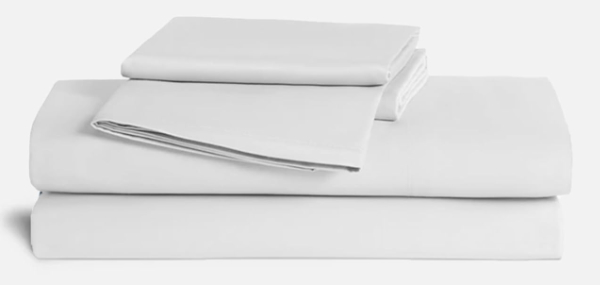
The Brooklinen Luxe Core set utilizes a 480-thread count sateen weave, engineered from long-staple cotton. Unlike standard upland cotton, long-staple fibers reduce the number of exposed ends in the yarn, significantly lowering the probability of pilling and increasing the fabric's soft-hand feel. The sateen construction - a "four-over-one" weave - maximizes surface area visibility of the threads, resulting in the characteristic silk-like sheen and a heavier drape that provides a sense of security and warmth.
Technically, this product stands out due to its balance of density and airflow. While sateen is inherently less breathable than percale, Brooklinen’s specific yarn gauge allows for sufficient gas permeability. The sheets are OEKO-TEX certified, ensuring the absence of harmful synthetic chemicals often found in lower-tier textile finishing processes. The fitted sheets also feature "Short Side" and "Long Side" labels, addressing a common ergonomic pain point in bed-making.
Honest limitations include a susceptibility to wrinkling compared to polyester-blends; because it is 100% cotton without chemical anti-wrinkle agents, immediate removal from the dryer is required. Additionally, the lustrous finish will naturally matte over approximately 20-30 wash cycles, transitioning to a softer, more lived-in texture. This set is best for sleepers who prefer a smooth, substantial feel over a crisp, paper-like texture.
The "four-over-one" weave pattern in the Luxe Core set exposes more thread surface to the skin. This increases the fabric's thermal insulation properties by creating a tighter barrier against ambient air. Mathematically, the higher density of "floats" (yarns that cross over multiple others) results in a higher luster but also increases the friction coefficient, making the fabric feel "slippery" rather than "stiff."
Best Percale: L.L.Bean 280-Thread-Count Pima Cotton Percale
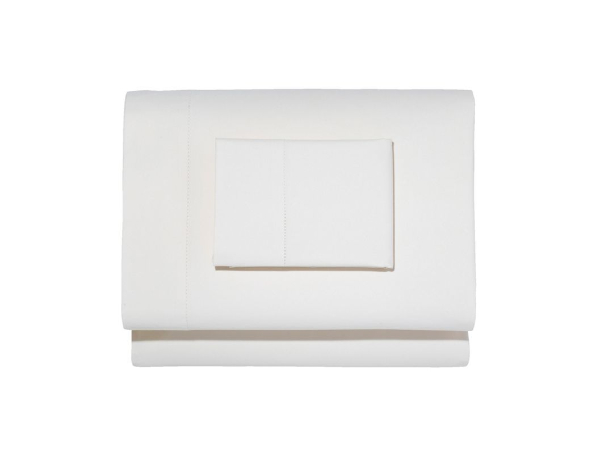
L.L.Bean’s Pima Cotton Percale is widely regarded as the industry standard for "cool and crisp" bedding. It utilizes a 280-thread count, which is the technical "sweet spot" for percale. Higher thread counts in percale often lead to a clogged weave that inhibits airflow; by maintaining a 280 count, L.L.Bean ensures maximum breathability. The use of Pima cotton - an extra-long-staple (ELS) variety - provides superior tensile strength compared to standard cotton, allowing the sheets to withstand high-temperature laundering without losing structural integrity.
The "one-over-one" plain weave creates a matte finish that feels similar to a high-end button-down shirt. This structure is ideal for hot sleepers as it does not trap heat against the body. Practically, these sheets are known for their "breaking in" period; they may feel slightly abrasive initially but become significantly softer with each wash as the cotton fibers relax. The 15-inch pocket depth is generous enough for most modern mattresses, though very deep pillow-tops may find the fit tight.
The trade-off here is aesthetic: percale wrinkles easily. Without the "floats" found in sateen, the fabric has less flexibility and will retain fold lines. Furthermore, those accustomed to the "silky" feel of microfiber or sateen may find these too "crisp" or "loud" when moving in bed. However, for sheer mechanical cooling and durability, this set is unsurpassed.
Pima cotton is a species (Gossypium barbadense) that produces fibers significantly longer than standard Upland cotton. ELS fibers allow for thinner yarns to be spun with greater strength. In a percale weave, this results in a fabric that is lighter in weight but higher in durability, effectively increasing the surface area for evaporative cooling without sacrificing the "crisp" snap of the sheet.
Best Linen: Parachute Linen Sheet Set
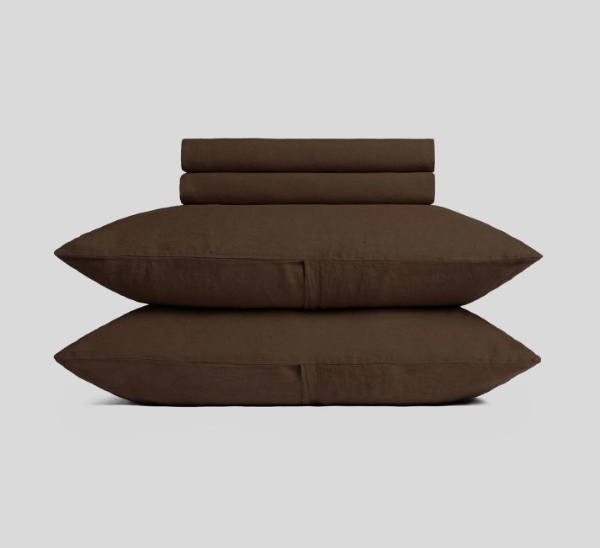
Parachute’s Linen Sheet Set is crafted from 100% European flax in a family-owned factory in Portugal. Linen is technically superior to cotton in moisture-wicking and heat conductivity; it can absorb up to 20% of its weight in moisture before feeling damp. Parachute’s linen is garment-washed, which bypasses the initial "scratchy" phase common in lower-quality flax textiles, providing a soft, textured feel from the first use.
From a technical standpoint, the Parachute set is heavy enough to feel substantial but porous enough for year-round use. Because flax fibers are thicker than cotton, linen is measured by weight (GSM) rather than thread count. This set features a casual, rumpled aesthetic that eliminates the need for ironing - an "ergonomic" benefit for those who dislike traditional bedding maintenance. The sheets are also highly breathable due to the natural pectin in the flax fibers, which allows for rapid air exchange.
Downsides include significant linting during the first few drying cycles. This is a natural byproduct of the flax fiber relaxing and does not indicate a loss of fabric quality. Additionally, linen is a "lifestyle" fabric; it lacks the smooth uniformity of sateen and the crispness of percale. It is also the most expensive option on this list, reflecting the labor-intensive retting and scutching processes required to produce flax yarn.
The strength of the Parachute linen comes from the retting process, where flax stalks are exposed to moisture to break down the natural binders. This preserves the long, multicellular fibers that give linen its legendary durability - up to twice that of cotton. These fibers are also naturally hypoallergenic and anti-bacterial due to their low moisture retention, which inhibits the growth of dust mites.
Best Cooling: Sijo AiryWeight Eucalyptus Sheet Set
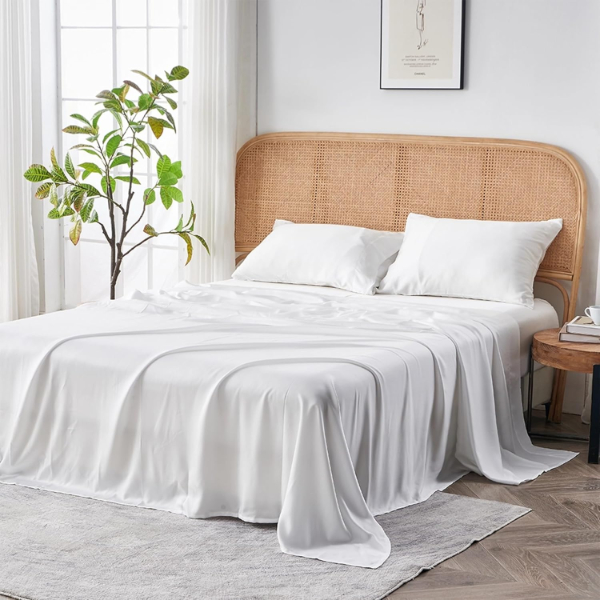
The Sijo AiryWeight set is constructed from 100% Tencel Lyocell, a semi-synthetic fiber derived from sustainably sourced eucalyptus wood pulp. In laboratory testing, Lyocell consistently outperforms cotton in moisture transport. This is due to the sub-microscopic channels (fibrils) within the fiber that actively wick sweat away from the skin. For individuals suffering from night sweats or living in high-humidity climates, the Sijo AiryWeight provides a "cool-to-the-touch" sensation that cotton cannot replicate.
The texture of these sheets is exceptionally smooth, often described as a cross between silk and high-end sateen. Unlike silk, however, it is machine washable and significantly more durable. Sijo utilizes a closed-loop manufacturing process, which recycles 99% of the water and solvent used in fiber production, making this the most environmentally responsible pick in terms of chemical usage and water footprint. The fabric is also inherently antimicrobial.
A notable trade-off is the fabric's "fluidity"; these sheets are very slippery, which may cause them to shift more than cotton during the night. They are also prone to water-spotting if dried on high heat. Proper care requires cold water and low-heat cycles to prevent the fibers from becoming brittle. This set is best for those who prioritize thermal performance and sustainable material science over the traditional "feel" of cotton.
Tencel Lyocell fibers are composed of nanoscopic fibrils. These fibrils are hydrophilic (water-loving), which allows them to absorb moisture into the center of the fiber rather than leaving it on the surface. This creates a dry sleep environment that discourages bacterial growth. Physically, the fiber is also smoother than cotton, reducing mechanical irritation for sleepers with sensitive skin.
Best Luxury Organic: Boll & Branch Signature Hemmed Sheet Set
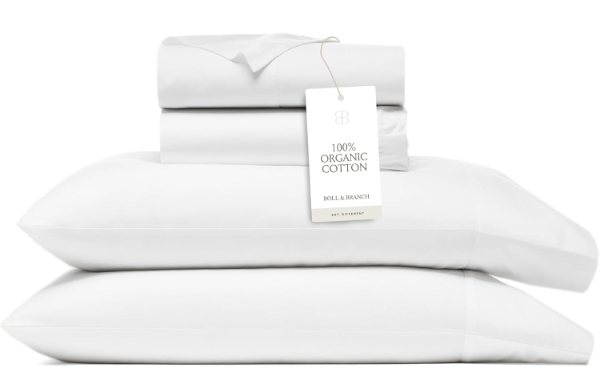
Boll & Branch has built a reputation on supply-chain transparency and organic integrity. The Signature Hemmed set is made from 100% GOTS-certified organic cotton. Technically, the "Signature" weave is a unique four-way hybrid that aims to provide the softness of sateen with the airiness of percale. This results in a fabric that feels broken-in immediately but maintains a structured, luxury-hotel appearance. The organic certification ensures that no synthetic pesticides or GMOs were used in the fiber’s growth phase.
The sheets are noted for their high tensile strength and longevity. Because the cotton is harvested and processed without harsh chemical agents, the natural wax and protein structures of the fibers remain intact, leading to a softer aging process. The deep 17-inch pockets on the fitted sheet are designed to accommodate the thickest luxury mattresses and toppers on the market, featuring high-grade elastic that prevents slipping.
One downside is the premium price point, which is partly a result of fair-trade labor premiums and organic certification costs. Some users may find the "hybrid" weave to be a "jack-of-all-trades" that doesn't quite hit the extreme crispness of a true percale or the extreme silkiness of a true sateen. However, for the consumer who values ethical manufacturing and a versatile, high-quality cotton feel, this is the top-tier choice.
The Global Organic Textile Standard (GOTS) is the world's leading processing standard for organic fibers. It includes both ecological and social criteria, backed up by independent certification of the entire textile supply chain. For Boll & Branch, this means the cotton fibers have higher purity levels, which translates to better dye retention and fewer skin-irritating residues in the final product.
How We Chose These Products
Our selection process involved an analysis of fiber morphology (the physical shape and length of the threads), tensile strength testing (resilience against tearing and thinning), and moisture vapor transmission rates (MVTR). We prioritized manufacturers with verifiable certifications like GOTS (Organic), OEKO-TEX (Chemical Safety), and Fair Trade. Products were also vetted based on their "wash-resilience" - the ability to maintain size and texture after 10+ high-heat laundering cycles.
Comparison Overview
| Product | Material | Weave | Best For | Certification |
|---|---|---|---|---|
| Brooklinen Luxe | Long-staple Cotton | Sateen | Softness/Drape | OEKO-TEX |
| L.L.Bean Pima | Pima Cotton | Percale | Cooling/Crispness | N/A (Standard) |
| Parachute Linen | European Flax | Plain | Moisture Wicking | OEKO-TEX |
| Sijo AiryWeight | Tencel Lyocell | Twill/Sateen | Hot Sleepers | OEKO-TEX |
| Boll & Branch Signature | Organic Cotton | Hybrid Sateen | Eco-Luxury | GOTS / Fair Trade |
Buying Guide: What to Look For
- Staple Length: Look for "Long-staple" or "Extra-long staple" (ELS) cotton. Shorter fibers have more ends, leading to pilling and a rougher feel over time.
- Weave Architecture: Sateen (four-over-one) is warmer and smoother. Percale (one-over-one) is cooler and crisper. Choose based on your sleep temperature.
- Fiber Type: Cotton is reliable; Linen is breathable but textured; Lyocell (Tencel) is the technical winner for moisture management.
- Pocket Depth: Measure your mattress including any toppers. Standard sheets fit up to 12-14 inches; "Deep Pocket" sheets fit 15-18 inches.
- Certifications: OEKO-TEX Standard 100 ensures no harmful chemicals. GOTS ensures organic practices from field to factory.
General Pro / Cons
| General Strengths |
|---|
| High-quality natural fibers regulate temperature effectively. |
| Long-staple cotton and flax linen can last for over a decade. |
| Organic and OEKO-TEX options reduce exposure to allergens. |
| Percale weaves prevent overheating and night sweats. |
| Linen and Lyocell offer superior moisture absorption. |
| Higher-end elastic on fitted sheets prevents nightly slippage. |
| General Weaknesses |
|---|
| Premium sets require higher upfront investment ($150+). |
| Natural fibers like percale and linen wrinkle significantly. |
| Lyocell and silk require delicate wash cycles to avoid damage. |
| Linen produces significant lint in the dryer during early use. |
| Thread count is often used as a misleading marketing metric. |
| Sateen weaves can be prone to snagging on jewelry or pets. |
Final Summary
The optimal sleep environment is a result of effective thermoregulation and tactile comfort. For most users seeking a traditional luxury feel, the Brooklinen Luxe Core provides the best sateen experience, while the L.L.Bean Pima Percale is the logical choice for those who run warm. If sustainability and moisture management are the primary drivers, Sijo's AiryWeight Eucalyptus represents the peak of performance bedding. Regardless of the choice, moving away from low-quality Upland cotton and towards long-staple fibers is the single most effective way to improve sleep hygiene. Aggregate rating of the products reviewed: 4.76 out of 5.