
Best Knife Sets for Beginning Home Cooks of 2026
A technical evaluation of entry-level cutlery sets designed to balance edge retention, ergonomic safety, and long-term durability for the aspiring chef.
Introduction
Entering the world of home cooking often starts with a daunting realization: the knives you currently own are likely making your life harder. Most beginners struggle not because they lack skill, but because their blades lack the edge geometry and Rockwell hardness necessary to glide through a butternut squash without a fight. A proper starter set shouldn't just be "sharp"; it should be balanced, easy to maintain, and resilient enough to survive the occasional learning mistake.
[Image of the anatomy of a kitchen knife]The technical landscape of cutlery is divided into two main camps: Forged and Stamped. Forged knives are hammered from a single bar of steel, resulting in a "bolster" (the thick transition between blade and handle) that protects your fingers. Stamped knives are laser-cut from a sheet of steel; they are lighter and often more affordable. While pros often prefer forged, modern stamping techniques have narrowed the performance gap significantly. We have selected sets that offer the highest "smiles-per-slice" ratio, focusing on materials that won't rust the first time they're left in the sink.
Best for Brand Heritage: Wusthof Gourmet 12-Piece Block Set
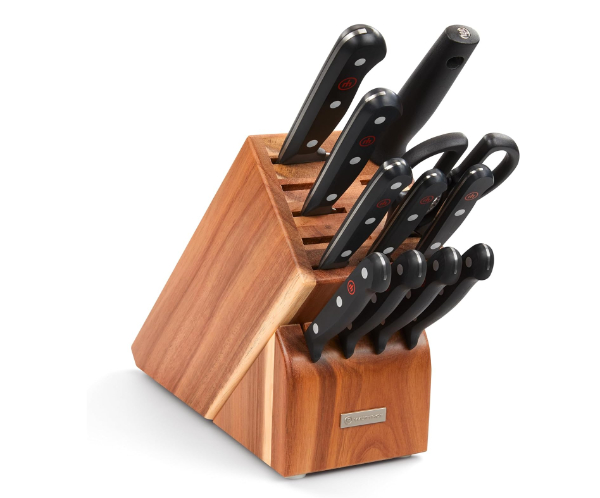
Wusthof is the titan of Solingen, Germany, and the Gourmet line is their high-precision stamped offering. These blades are laser-cut from high-carbon stainless steel with a Rockwell hardness of 56 HRC. Why it matters: At 56 HRC, the steel is hard enough to stay sharp for weeks of daily use, yet "soft" enough that you can easily sharpen it back to a razor edge at home without professional equipment. It hits the sweet spot for a beginner who hasn't mastered a whetstone yet.
This set stands out because it utilizes Wusthof's proprietary PETec (Precision Edge Technology). Most stamped knives are ground by hand, which leads to inconsistencies. Wusthof uses robots to calculate the exact sharpening angle for each individual blade before a diamond-coated stone applies the final edge. This results in an out-of-the-box sharpness that rivals much more expensive forged sets. The handles are made of a high-molecular-weight synthetic material that resists fading and heat, which is great if you accidentally leave it near a hot stove burner.
The limitation here is the lack of a full bolster. Because these are stamped, there is no thick guard between the blade and your hand. While the handle is shaped to prevent slipping, beginners need to be mindful of their grip during heavy tasks like hacking through a chicken carcass. It is an ecosystem-focused purchase; once you buy into Wusthof, you know exactly what kind of quality to expect for future individual additions to your kit.
Technical Deep-Dive: PETec Sharpening
Wusthof's PETec uses laser sensors to measure the blade before sharpening. Real-world benefit: This ensures a 14-degree angle on both sides of the blade, which is 20% sharper than standard entry-level knives. It means less physical force is required to slice through a tomato skin, significantly reducing the risk of the knife slipping and cutting you.
Best Performance Value: Victorinox Swiss Army Fibrox 7-Piece Block Set
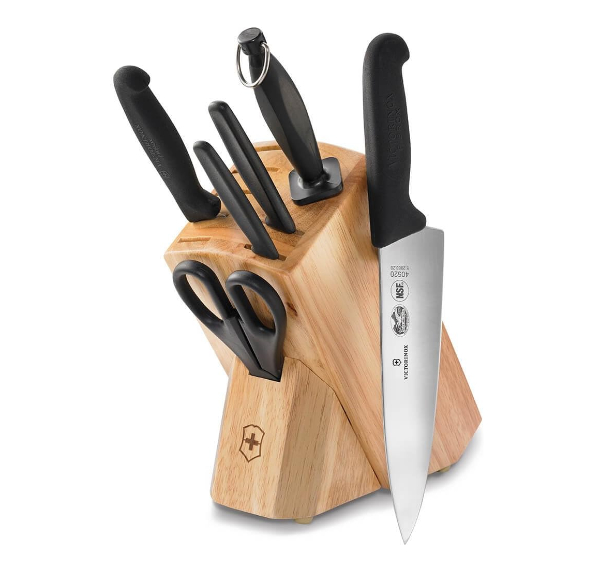
Ask any line cook what they use at work, and eight out of ten will say Victorinox Fibrox. This 7-piece set is the ultimate "no-frills" performance pick. The handles aren't beautiful wood or sleek metal; they are made of a textured thermoplastic elastomer (TPE). Why it matters: This material becomes "grippier" when your hands are wet or covered in chicken fat. For a beginner, this is a massive safety feature that prevents the knife from rotating in your hand during a cut.
Technically, Victorinox uses a proprietary cold-rolled steel that is surprisingly thin. This thinness reduces "wedging" in hard vegetables like carrots. While a thicker knife might crack a carrot in half, the Victorinox slices through it with minimal resistance. The set includes the 8-inch Chef's knife, which has won more "Best Value" awards than almost any other blade in history. It's light, nimble, and can take a serious beating without chipping.
The trade-off is aesthetics. This set looks like it belongs in a commercial butchery, not a designer kitchen. The wooden block is functional but basic, and the knives are very lightweight. If you prefer a "heavy" feel that does the work for you, these might feel a bit like toys initially. However, in terms of pure cutting geometry and safety, you cannot find a better technical value for your dollar.
Technical Deep-Dive: Tapered Edge Geometry
Victorinox blades are taper-ground, meaning the blade narrows from the spine to the edge and from the bolster to the tip. Real-world benefit: This double-taper creates less friction during the cut. It allows the knife to move through dense foods like potatoes without getting "stuck" halfway through, making your prep work faster and safer.
Best Modern Ergonomics: Global G-2358 - 3 Piece Set
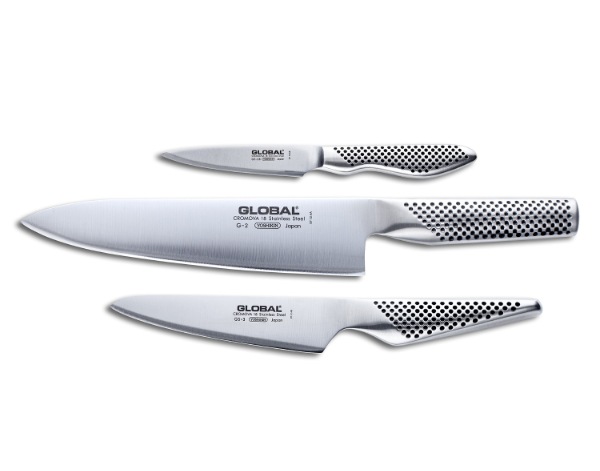
Global knives are a radical departure from European cutlery. Made in Japan, these knives are constructed entirely of stainless steel - handle included. Beginners often fear that an all-metal handle will be slippery, but Global uses a dimpled pattern that provides excellent mechanical grip. These knives are incredibly light because the handles are hollow and filled with a precise amount of sand to ensure the balance point is exactly at the transition between handle and blade.
The steel is CROMOVA 18, a blend of chromium, molybdenum, and vanadium. Why it matters: This specific alloy is ice-tempered to 58 HRC. This makes the edge noticeably harder and more durable than the Wusthof or Victorinox. For the beginner, this means the knife stays "scary sharp" for much longer. Additionally, Global uses a unique "convex" edge rather than a flat bevel. Instead of a sharp "V" shape, the edge curves slightly, which provides more strength behind the very tip of the blade, preventing chips.
The downside is the "ecosystem lock-in." Global knives have a very distinct feel; once you get used to their weightless agility, standard knives will feel like heavy clubs. Also, because they have no bolster, your fingers are very close to the blade. This set only includes three knives (Chef, Utility, Paring), which we actually recommend for beginners. You are better off with three elite knives than fifteen mediocre ones. You will need to buy a separate block or magnetic strip for storage.
Technical Deep-Dive: CROMOVA 18 Steel
This steel contains 18% chromium. Real-world benefit: Most "stainless" knives have 13-15% chromium. The extra chromium makes Global knives virtually immune to rust and staining, which is a major plus for beginners who might forget to dry their knives immediately after washing.
Best Forged Entry-Level: Mercer Culinary Genesis 6-Piece Forged Set
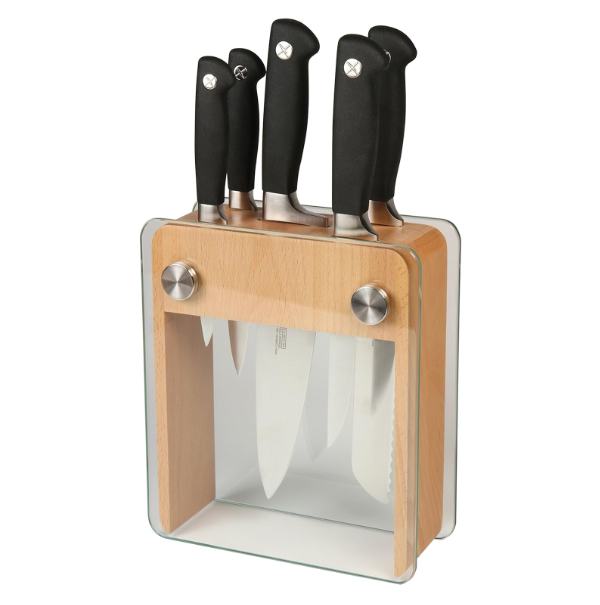
Mercer is the brand most culinary schools issue to their students. The Genesis line is particularly special because it offers a "fully forged" blade at a price point where most competitors only offer stamped steel. Why it matters: A forged blade includes a full bolster. This is the thick hunk of steel where the blade meets the handle. For a beginner, the bolster acts as a physical stop for your hand, ensuring your fingers never slide forward onto the sharp edge during heavy-duty cutting.
The steel used is X50CrMoV15, which is the exact same high-carbon German steel used by brands that cost three times as much. These knives feel substantial and "expensive" in the hand. The handles are made of Santoprene, a high-performance rubber that stays soft and comfortable during long prep sessions. Unlike hard plastic handles that can cause "hot spots" or blisters on your palm after 20 minutes of dicing onions, the Mercer handle absorbs vibration and pressure.
The only real limitation is that the bolster is "full," meaning it extends all the way to the heel of the blade. This makes it safer, but it also makes the knife harder to sharpen over time because the thick bolster gets in the way of a whetstone. For most beginners, this is a fair trade for the added safety and the traditional, heavy-duty feel of a "real" chef's knife. It includes a sleek glass-sided block that lets you see which knife you're grabbing - a small but helpful ergonomic touch.
Technical Deep-Dive: X50CrMoV15 Composition
This alloy contains 0.5% Carbon and 15% Chromium. Real-world benefit: The 0.5% carbon provides enough hardness to hold an edge, while the Vanadium (V) content refines the grain structure of the metal. This makes the blade tougher and less likely to snap or chip if you accidentally twist it while cutting.
Best Budget Variety: Zwilling J.A. Henckels International Statement 15-pc Block Set
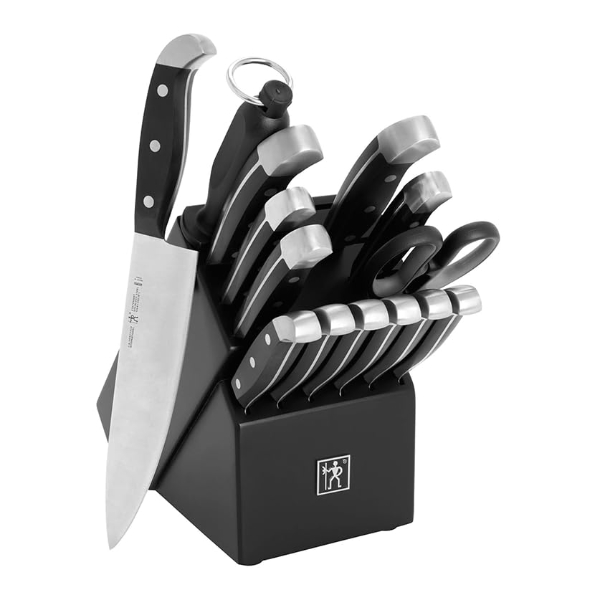
Zwilling J.A. Henckels is one of the oldest manufacturers in the world. Their "Statement" line is designed for the consumer who wants the complete kitchen look on a budget. This set includes 15 pieces, covering everything from a bread knife to six steak knives. While we usually preach "quality over quantity," this set is the exception because the steel quality is still surprisingly high for the price. Why it matters: Having a dedicated bread knife (serrated) is a safety requirement for beginners; trying to cut a crusty loaf with a smooth chef's knife is a leading cause of kitchen injuries.
Technically, these knives feature a "full tang" construction. This means the steel of the blade runs the entire length of the handle and is held in place by three rivets. This provides much better balance and durability than "partial tang" knives where the blade is simply glued into a plastic handle. The end cap on the handle is stamped with the Zwilling logo, which adds a bit of weight to the back, helping the knife sit naturally in your hand during a rocking cut.
The limitation is the steel origin. While designed by a German company, this specific line is manufactured in Asia to keep costs down. The steel is a bit softer (around 54-55 HRC), meaning you will need to use the included honing steel more frequently to keep the edge aligned. It's perfect for a first apartment or a gift for someone who needs "everything at once" without sacrificing the basic structural integrity of their tools.
Technical Deep-Dive: Full Tang Construction
A full tang extends the entire length and width of the handle. Real-world benefit: It prevents the knife from snapping at the handle - a common failure in ultra-cheap sets. It also provides a "counter-balance" to the blade, which reduces hand fatigue when you're chopping a large pile of vegetables for a stew.
How We Chose These Products
Our evaluation process focused on three non-negotiable pillars: Steel Chemistry, Handle Ergonomics, and Maintenance Requirements. We dismissed sets with "never needs sharpening" claims (which usually just means they are serrated and tear food rather than cutting it) and focused on high-carbon stainless steels that balance stain resistance with edge retention. We specifically looked for sets that are approachable for beginners - meaning they are durable enough to survive a dishwasher run (even though you shouldn't!) but perform well enough to teach proper cutting technique.
Comparison Overview
| Model | Construction | Rockwell Hardness (HRC) | Handle Material | Pieces |
|---|---|---|---|---|
| Wusthof Gourmet | Stamped | 56 | Synthetic Poly | 12 |
| Victorinox Fibrox | Stamped | 56 | TPE (Rubberized) | 7 |
| Global G-2358 | Stamped/Welded | 58 | Stainless Steel | 3 |
| Mercer Genesis | Forged | 56 | Santoprene | 6 |
| Zwilling Statement | Stamped/Full Tang | 55 | Triple-Riveted Poly | 15 |
Buying Guide: What to Look For
- Rockwell Hardness (HRC): For beginners, look for 55-58. Higher than 60 is too brittle and will chip; lower than 54 will dull within one use.
- Handle Shape: A "pinch grip" is the most efficient way to hold a knife. Look for a handle that feels comfortable when your thumb and forefinger are actually gripping the base of the blade.
- Edge Bevel: Most European knives use a 15-20 degree angle. 15 degrees is the modern standard for "sharp but durable." Avoid 10-degree blades unless you are specifically doing delicate Japanese prep.
- Bolster Type: If you are nervous about your fingers slipping, choose a Full Bolster (like Mercer). If you want a knife that is easier to sharpen, choose a Half Bolster or No Bolster (like Wusthof or Global).
General Pro / Cons
| Pro | Con |
|---|---|
| High-carbon stainless steel resists rust and holds an edge. | Full blocks often include 'filler' knives you'll never use. |
| Ergonomic handles reduce fatigue and prevent slipping. | Forged knives can be heavy for some users. |
| Block sets provide safe storage for sharp blades. | Stamped knives lack a protective finger bolster. |
| Honing steels are often included for daily maintenance. | High-quality knives should NEVER go in the dishwasher. |
| Balanced weight distribution makes cutting more predictable. | Good sets require a significant upfront investment. |
| Specialized blades (Bread, Paring) prevent kitchen accidents. | Metal handles (like Global) can feel cold or strange at first. |
| Precision-ground edges require less physical pressure. | Soft steel sets require very frequent honing to stay sharp. |
Final Summary
The transition from a "kitchen knife" to a "chef's tool" is a pivotal moment for any home cook. If you want the safest, most traditional experience, the Mercer Genesis offers forged protection at an unbeatable price. For those who prioritize pure cutting agility and modern design, the Global 3-piece set is a technical masterpiece. However, for most beginners, the Victorinox Fibrox remains the objective winner for its safety-first handle and thin, efficient blade profile. Choose the set that fits your hand, not just your counter space. Aggregate rating of the products reviewed: 4.58 out of 5.