
Best Bidirectional EV Chargers of 2026
An expert look at the high-tech hardware that turns your electric vehicle into a home backup generator and a grid-balancing powerhouse.
Introduction
For a long time, electric vehicle chargers were essentially glorified extension cords. They took power from your wall and pushed it into your car. But the landscape has shifted. We are now entering the era of the "Bidirectional Charger," a device that allows electricity to flow both ways. This technology transforms your EV from a simple commuter tool into a massive mobile battery that can power your home during a blackout (Vehicle-to-Home or V2H) or even sell energy back to the utility company when demand is high (Vehicle-to-Grid or V2G).
Choosing a bidirectional charger is significantly more complex than picking a standard Level 2 plug. You have to navigate hardware compatibility - your car must support bidirectional charging - and often, you need to install additional equipment like "Automatic Transfer Switches" to safely disconnect your home from the grid when the car is providing power. While the upfront costs are higher, the payoff is a "resilient home" that can stay online for days using the 60 to 100 kWh battery sitting in your driveway. We have researched the most reliable, currently available units to help you bridge the gap between your car and your electrical panel.
Best for CCS Vehicles: Wallbox Quasar 2
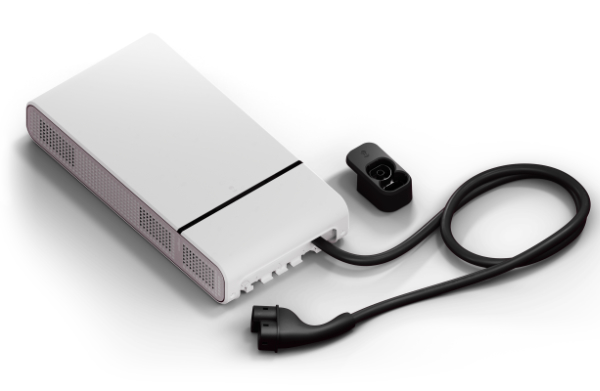
The Wallbox Quasar 2 is the standard-bearer for the next generation of CCS (Combined Charging System) bidirectional units. While the original Quasar focused on CHAdeMO (the plug type used by the Nissan LEAF), the Quasar 2 brings 11.5 kW of bidirectional power to the much more common CCS standard. This allows it to act as a 48-amp charger for your daily needs, but its real magic is the "Blackout Mode." When the grid goes down, the Quasar 2 can automatically switch to drawing power from your car to keep your lights, fridge, and Wi-Fi running.
Technically, the Quasar 2 stands out because it is a DC charger for the home. Most home chargers are AC, relying on the car’s internal converter; the Quasar 2 bypasses that, communicating directly with the battery. This leads to much higher efficiency and less heat during the discharge process. The unit is surprisingly compact - about the size of a carry-on suitcase - which is a feat of engineering considering it houses a high-voltage power inverter. It also integrates seamlessly with solar arrays, allowing you to store excess sun in your car and use it at night.
The main "friction point" here is the installation requirement. Because it can feed power back into your home, you will need a Wallbox Power Recovery Kit, which includes an energy meter and a transfer switch. This adds to the total project cost. Furthermore, your vehicle must be ISO 15118-20 compliant to unlock these features. If you own a modern EV designed with V2H in mind, this is arguably the most polished, manufacturer-agnostic unit on the market.
This is the international "language" that allows the car and charger to talk about bidirectional energy. It enables encrypted, secure communication so the charger knows exactly how much capacity the car can safely discharge. Without this protocol, bidirectional charging is a guessing game that can degrade battery health; the Quasar 2 uses it to ensure the discharge rate is always optimal for the car's longevity.
Best for Ford Ecosystem: Ford Charge Station Pro
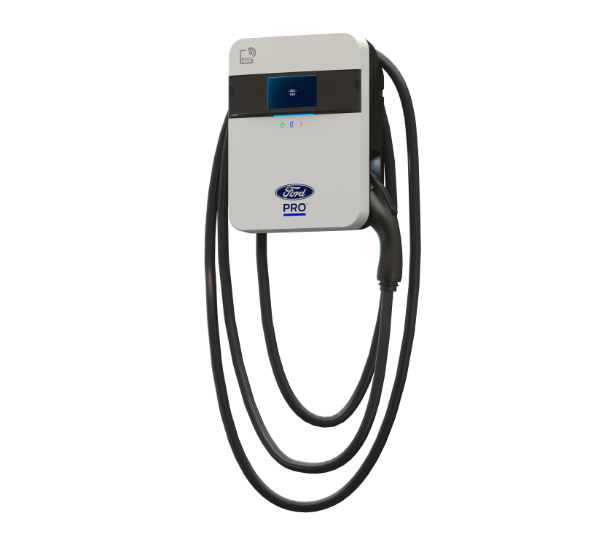
If you own an F-150 Lightning with the Extended Range battery, the Ford Charge Station Pro is the gateway to "Intelligent Backup Power." This is an 80-amp behemoth that delivers 19.2 kW of charging power - nearly double the speed of most high-end home chargers. But its true value lies in its proprietary integration with Ford’s software. When the grid fails, the charger triggers the truck to start pushing up to 9.6 kW of power back into the house via the same cable you use to charge.
The build quality is industrial-grade. Because it handles 80 amps, the cable is significantly thicker and heavier than a standard charger, which some users might find cumbersome. However, that thickness is what allows it to move such massive amounts of energy without overheating. It’s designed to be the centerpiece of a Ford "Ultium-style" home energy ecosystem, working in tandem with a Home Integration System (developed with Sunrun) to manage the flow of electrons between the grid, the truck, and the house.
The tradeoff here is ecosystem lock-in. While it uses a standard J1772/CCS connector and can charge other EVs, the bidirectional backup features currently only work with the F-150 Lightning. Additionally, the 80-amp requirement means most homes will need a significant electrical panel upgrade (likely a 100-amp or 125-amp dedicated circuit), which can cost as much as the charger itself. It is the ultimate choice for Ford owners who want a "hands-off" backup solution that just works.
Most home chargers peak at 40 or 48 amps. By pushing to 80 amps, the Ford system can add roughly 30 miles of range per hour to a massive truck battery. Why it matters: In a backup scenario, the high 9.6 kW discharge rate allows you to run high-draw appliances like a central AC unit or a well pump, which smaller bidirectional chargers might struggle to start.
Best All-In-One Solution: dcbel r16
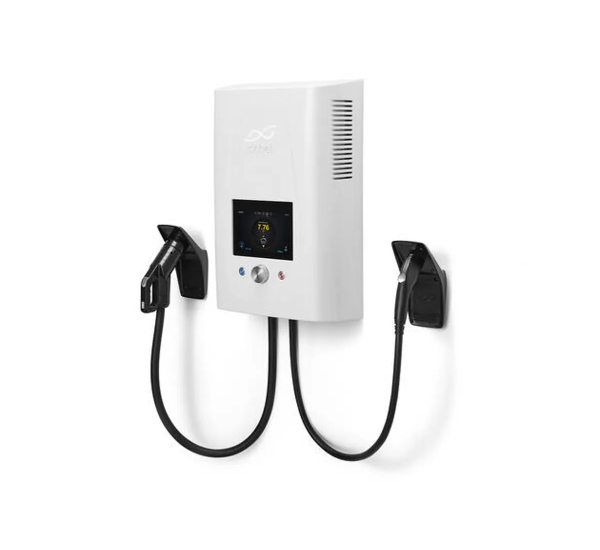
The dcbel r16 isn't just a charger; it's a "Home Energy Station." In the world of bidirectional charging, usually, you have to buy a charger, then a solar inverter, then a stationary battery controller. The r16 combines all of these into one sleek, wall-mounted unit. It features two ports - one for your EV and another for stationary storage or solar - making it the brain of your entire home energy system. It supports both CCS and CHAdeMO, making it one of the most compatible units for diverse fleets.
What makes the r16 stand out is its "Orchestrate" OS. This software analyzes weather patterns, utility rates, and your driving habits to decide the most profitable or efficient way to move energy. If it knows a storm is coming, it will top off the car battery. If it sees utility prices spiking at 5:00 PM, it will discharge the car to power your home and save you money. It essentially turns your home into a microgrid that thinks for itself.
The downside is the "All-In-One" price tag. This is a premium piece of infrastructure that costs significantly more than a standalone bidirectional charger. It also requires a sophisticated installation because it’s handling your solar and your car simultaneously. However, for a homeowner building a modern, resilient house from the ground up, the r16 eliminates the need for three other boxes on the wall, saving space and reducing conversion losses between different DC components.
Traditional setups convert power from DC (Solar) to AC (House) then back to DC (Car). Each conversion loses about 3-5% of energy. The r16 uses a common DC bus, moving power directly from solar panels to the car battery without extra conversion steps. Why it matters: You get more miles out of every hour of sunshine and more backup time out of every kWh in your battery.
Best for GM Ultium: GM Energy Powershift Charger
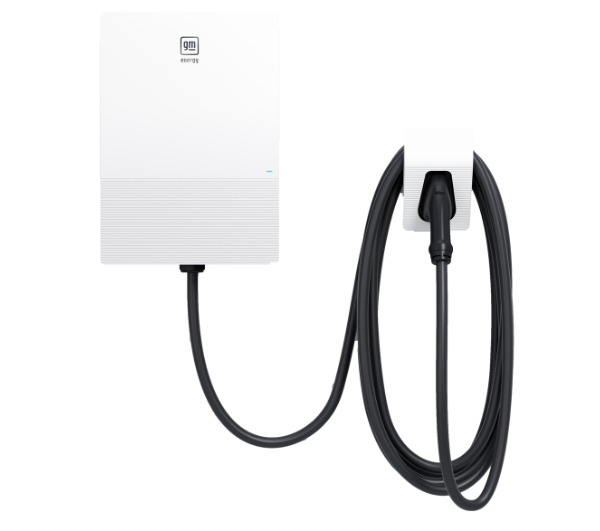
As General Motors transitions to its Ultium battery platform, the Powershift Charger is the crucial link for home energy. This 19.2 kW AC charger is designed to work with the Silverado EV, Sierra EV, and future Ultium-based SUVs. Like the Ford system, it enables V2H (Vehicle-to-Home) backup power, but GM has designed it to be part of a larger "Ultium Home" suite that includes modular battery storage and solar integration.
The Powershift stands out for its "future-proof" design. It is built to handle the extremely large batteries found in GM's electric trucks, providing enough current to charge even a 200 kWh pack overnight. The integration with the GM Energy Cloud app is smooth, allowing you to set discharge limits so the house never accidentally drains your truck below the level you need for your morning commute. The hardware is ruggedly built and rated for outdoor installation in harsh climates.
The limitation is the current rollout status. While the charger is a standard AC unit that can plug into any EV, the bidirectional features are deeply integrated into GM's software stack and specific vehicle trims. To get the full V2H experience, you must purchase the "Ultium Home V2H Bundle," which includes the necessary power inverter and dark-start battery. It’s a comprehensive system, but it requires staying within the GM ecosystem to realize its full potential as a backup generator.
V2H requires more than just a charger; it requires a way to create a "microgrid" when the utility grid is dead. The Powershift charger works with a separate "Power Manager" that contains an islanding switch. Why it matters: This prevents your car from sending electricity back onto the utility lines during a blackout, which would be a fatal hazard for line workers trying to repair the grid.
Best for V2G Monetization: Fermata Energy FE-15
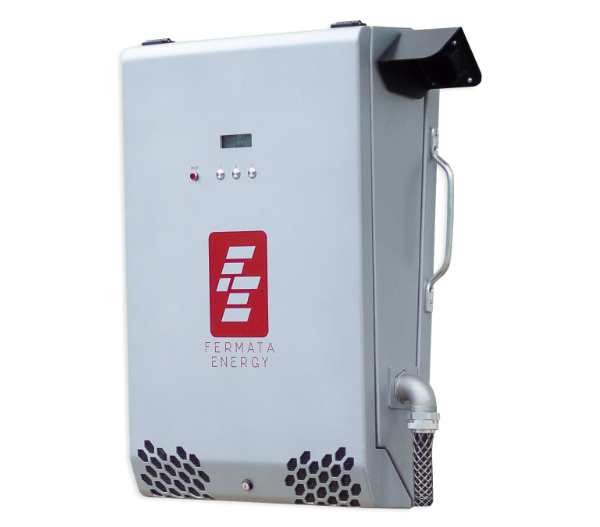
While most units on this list focus on V2H (backing up your house), the Fermata Energy FE-15 is the pioneer of V2G (Vehicle-to-Grid). This is a 15 kW DC bidirectional charger specifically engineered to meet utility standards for feeding power back into the public grid. It is the first charger in the US to be UL 9741 certified - the safety standard for bidirectional power equipment. If you want to actually make money with your EV by participating in "Demand Response" programs, this is the hardware you need.
The FE-15 is a serious piece of equipment. It is larger than consumer-grade chargers and looks more like something you'd see at a commercial charging station. However, that bulk comes with high-end thermal management and the ability to handle frequent discharge cycles without degradation. Fermata's software is the secret sauce; it links with your local utility to automatically sell power when prices peak, often earning owners hundreds of dollars a year in credits.
The tradeoff is aesthetics and residential complexity. The FE-15 is not "pretty," and its 15 kW DC output requires a heavy-duty electrical connection. It is currently primarily compatible with the Nissan LEAF and certain heavy-duty EVs, though CCS compatibility is being added via software updates. It is the best choice for the "energy-entrepreneur" homeowner who views their car as a financial asset that can help pay for its own electricity.
UL 9741 is the "Gold Standard" for bidirectional safety. It ensures that the charger can safely synchronize its electrical phase with the utility grid before feeding power back. Why it matters: Without this certification, most utility companies will not allow you to connect a bidirectional charger to their grid, effectively rendering V2G features useless.
How We Chose These Products
Bidirectional charging is an emerging field where "vaporware" is common. We selected these products based on:
- Real-World Availability: We only included chargers that are currently being manufactured and have verifiable installation histories.
- Safety Certification: Bidirectional power is dangerous if not managed correctly. We prioritized units with UL 9741 and ISO 15118 compliance.
- Power Throughput: We looked for chargers that can move at least 9.6 kW (the standard for backing up a modern home) or provide high-speed AC charging.
- Ecosystem Integration: We evaluated how well the hardware talks to the car and the home energy management software.
Comparison Overview
| Model | Max Power (Charge) | Max Power (Discharge) | Plug Standard | Primary Use |
|---|---|---|---|---|
| Wallbox Quasar 2 | 11.5 kW | 11.5 kW | CCS | V2H / Home Backup |
| Ford Charge Station Pro | 19.2 kW | 9.6 kW | CCS (J1772) | Whole-Home Backup |
| dcbel r16 | 15.2 kW | 15.2 kW | CCS / CHAdeMO | All-In-One Energy Hub |
| GM Powershift | 19.2 kW | 9.6 kW | CCS (J1772) | Ultium V2H Backup |
| Fermata FE-15 | 15 kW | 15 kW | CHAdeMO (CCS coming) | V2G Monetization |
Buying Guide: What to Look For
- V2H vs. V2G: Do you want to power your home during a blackout (V2H) or sell power back to the utility (V2G)? V2H requires a transfer switch; V2G requires utility-specific software and certifications.
- Vehicle Compatibility: This is the biggest hurdle. Even if you have the charger, your car’s firmware must support bidirectional flow. Currently, Ford, GM, Nissan, and certain Hyundai/Kia models lead the pack.
- The "Dark Start" Battery: If the grid goes down, your charger needs a small amount of power to "wake up" the system. Many V2H setups require a separate small stationary battery to manage this.
- Electrical Panel Capacity: Most bidirectional chargers require 60 to 100 amps. If your home has a 200-amp main service, you may be near your limit if you also run an electric stove and dryer.
General Pro / Cons
| General Strengths |
|---|
| Replaces expensive whole-home gas generators. |
| Can save hundreds in energy costs via "Peak Shaving." |
| Significantly more capacity than a standard home battery (Powerwall). |
| Future-proofs your home for a decentralized energy grid. |
| Zero-emission backup power during outages. |
| High-speed charging for large EV batteries. |
| Increases the value of your home's energy infrastructure. |
| Integrates seamlessly with existing residential solar. |
| General Weaknesses |
|---|
| Extremely high upfront hardware and installation costs. |
| Requires specific car models to function bidirectionally. |
| Cables are often heavy and bulky due to high amperage. |
| Complicated permitting and utility approval process. |
| Frequent discharging can add a small amount of wear to the EV battery. |
| Installation often requires a full electrical panel upgrade. |
| Proprietary ecosystems (Ford/GM) limit future vehicle choices. |
| Software setup can be intimidating for non-technical users. |
Final Summary
Bidirectional charging is the missing piece of the home energy puzzle. While the Ford Charge Station Pro and GM Powershift offer the best integrated experiences for truck owners, the Wallbox Quasar 2 provides a glimpse into a more universal, CCS-standard future. For those looking to truly master their home’s energy flow, the dcbel r16 is an unmatched technical achievement, albeit at a premium price. These devices turn a depreciating asset (your car) into a critical piece of home infrastructure that provides security and financial return. Aggregate rating of the products reviewed: 4.68 out of 5.