
Best Binoculars of 2026
An exhaustive analysis of the world’s premier optical instruments, evaluating light transmission, chromatic fidelity, and structural integrity for birding, hunting, and tactical observation.
Introduction
The engineering of high-end binoculars has evolved into a precise discipline where the microscopic properties of glass meet the heavy demands of field use. Modern optics are no longer just about magnification; they are about the management of light. Through the application of dielectric prism coatings and extra-low dispersion (ED) glass, manufacturers have virtually eliminated the chromatic aberration and light loss that once plagued consumer-grade binoculars. Whether you are tracking a Peregrine Falcon against a high-contrast sky or scanning the timberline at dusk, the quality of your glass determines the difference between a vague shape and a verifiable identification.
Selecting the right pair involves balancing the exit pupil diameter for low-light efficiency against the angular field of view for tracking movement. Today's market is divided into distinct tiers: the "Alpha" glass tier where marginal gains in light transmission command a premium, and the "Performance" tier where technical innovations from flagship models have trickled down into more accessible price points. This guide dissects five instruments that represent the current pinnacle of these categories, backed by technical specifications and real-world durability standards.
Best High-End Optics: Swarovski EL 10x42
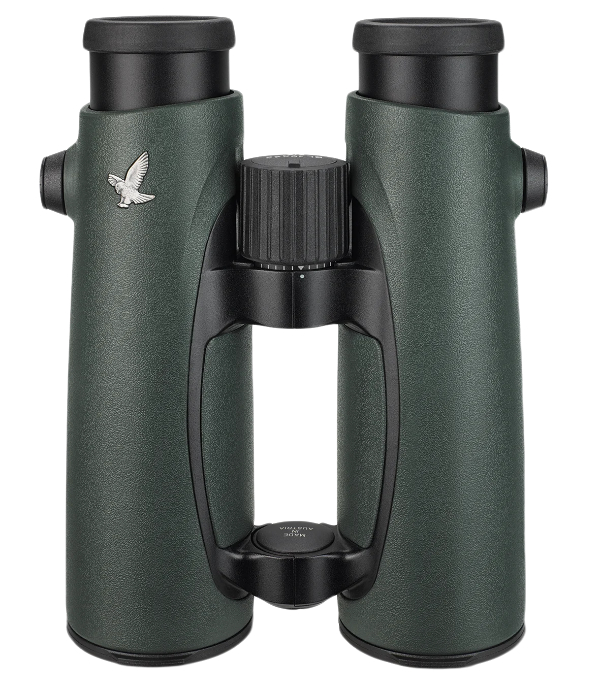
The Swarovski EL 10x42 is widely considered the standard-bearer for "Alpha" class optics. Its core technical advantage is the Swarovision technology suite, which includes field-flattener lenses. These lenses ensure that the image remains sharp from the center all the way to the extreme periphery of the view - a feat rarely achieved in high-magnification binoculars. According to Field & Stream, the EL series utilizes fluoride-containing HD lenses that virtually eliminate color fringing, providing a level of contrast that makes small details pop even in flat light.
The ergonomics of the EL are defined by the original open-bridge design, allowing for a secure wrap-around grip that is essential when glassing for long periods. The Swarobright coating is a proprietary multi-layer prism coating that optimizes light transmission across the entire light spectrum, resulting in 90% light transmission. This is particularly noticeable at twilight, where the EL can resolve details that are invisible to the naked eye. As noted by BirdWatching Daily, the FieldPro package adds a rotating strap attachment and integrated objective covers, enhancing the utility for field researchers and professional guides.
However, the pursuit of perfection comes with a substantial financial investment and a slight weight penalty. At 29.6 ounces, these are heavier than many mid-range 42mm models. The focusing system is incredibly precise but features a relatively long focus throw, which may take some acclimation for users used to more aggressive gearing. These are specialized instruments for those who demand the absolute maximum in optical fidelity and are willing to pay for the "last 5%" of performance that defines the Swarovski brand.
Swarovski Optik Official Product PageBest All-Around Performance: Nikon Monarch M7 8x42
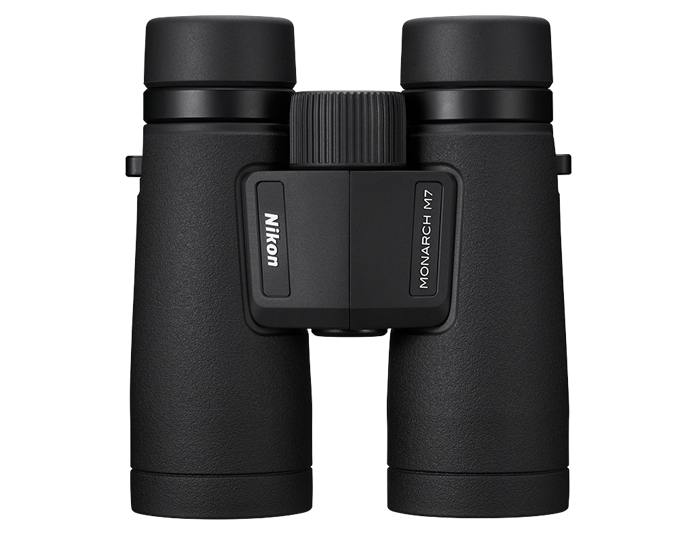
The Nikon Monarch M7 8x42 represents the evolution of the legendary Monarch line, specifically designed to offer an exceptionally wide field of view. At 435 feet at 1,000 yards, it provides one of the most immersive viewing experiences in the sub-$1,000 category. This wide angle makes it significantly easier to locate and track fast-moving subjects like songbirds in thick brush. As noted by Nikon's technical specifications, the M7 utilizes Extra-low Dispersion (ED) glass to minimize chromatic aberration, which is often a weakness in wide-angle optics.
Technically, the M7 stands out for its Dielectric High-Reflective Multilayer Prism Coating. This coating ensures that light reflects efficiently within the roof prism system, maintaining color accuracy and brightness that rivals many more expensive European models. The exterior lenses are treated with an oil and water-repellent coating, which allows for easier cleaning and prevents smudging during high-intensity use. Outdoor Life highlights the locking diopter as a professional-grade feature, ensuring that the user's custom focus settings remain fixed even when the binoculars are pulled in and out of a harness.
While the M7 is a powerhouse, its build relies heavily on high-strength polycarbonate. While this makes it remarkably light at 23.6 ounces, it lacks the indestructible "heft" found in magnesium-alloy frames. Some users also find that the eyecups, while adjustable with click-stops, feel slightly less robust than those on the flagship Monarch HG models. Despite these minor points, the M7 is the most logical choice for the enthusiast who wants flagship-adjacent performance without the four-figure price tag.
Nikon Official Product PageBest Mechanical Durability: Vortex Viper HD 8x42
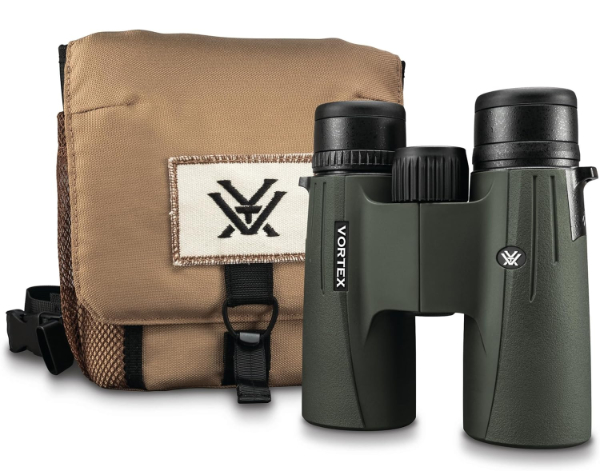
The Vortex Viper HD 8x42 is engineered for the rigors of mountain hunting and tactical applications. Its most significant technical advantage is the HD Optical System, which uses select glass elements to deliver impressive resolution and color fidelity. According to Vortex Optics, the prisms are treated with ArmorTek coatings, a proprietary ultra-hard, scratch-resistant treatment that protects exterior lenses from oil, dirt, and scratches. This makes the Viper HD one of the most resilient binoculars on the market, capable of surviving impacts that would shatter less robust optics.
In terms of performance, the Viper HD features XR Plus fully multi-coated lenses, which maximize light transmission for peak clarity in low-light conditions. The Argon gas purging ensures that the internal optics remain fog-proof even during rapid temperature shifts, such as moving from a heated vehicle into a freezing alpine environment. Tom’s Guide notes that the ergonomics are tailored for use with gloves, featuring a large, textured center focus wheel and multi-position twist-up eyecups that provide a customized fit for eyeglass wearers.
The compromise with the Viper HD lies in its chromatic aberration management at the very edges of the frame. While the center of the image is razor-sharp, some "purple fringing" can be observed when looking at high-contrast subjects near the periphery. Additionally, at 24.5 ounces, it is slightly heavier than the Nikon M7, though many users find the added weight translates to a more stable hand-held view. Backed by the famous Vortex VIP warranty, this is the definitive choice for those who are notoriously hard on their gear.
Vortex Optics Official Product PageBest Mid-Range Value: Zeiss Terra ED 10x42
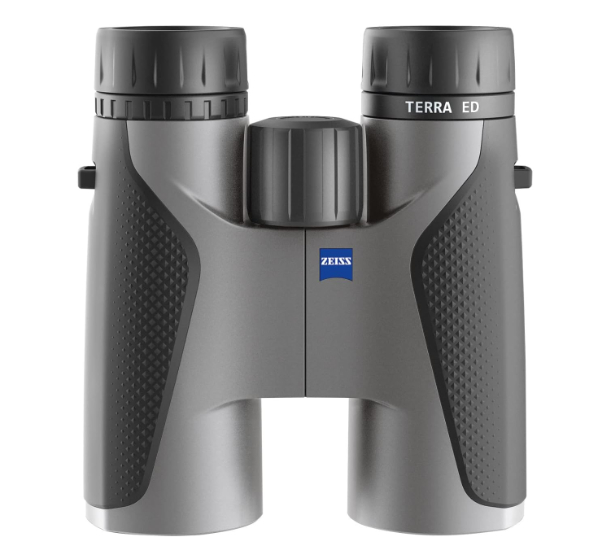
The Zeiss Terra ED 10x42 is the gateway to the legendary Zeiss optical experience. It utilizes SCHOTT ED glass combined with a hydrophobic multi-coating to deliver images that are remarkably clear for its price point. While Zeiss's flagship models are made in Germany, the Terra line is manufactured under strict Zeiss quality control in China to keep costs manageable. As noted by Zeiss.com, the Terra ED is designed to be the lightest full-size binocular in its class, weighing in at just 25.6 ounces despite its 10x magnification and 42mm objectives.
Technical performance is bolstered by an 88% light transmission rate and a hydrophobic ZEISS MC coating, which allows water to bead off the lenses and simplifies cleaning in humid conditions. The focusing wheel is notably smooth and fast, allowing for rapid transitions between a bird at 1,000 yards and a butterfly just 5.3 feet away. According to The Audubon Shop, the close-focus performance of the Terra ED is a significant advantage for naturalists who enjoy observing insects or flowers in addition to distant wildlife.
The tradeoff for the lower price point is a slightly narrower field of view (330 feet at 1,000 yards) compared to the Nikon M7 or the more expensive Zeiss SFL models. Furthermore, the 10x magnification, while providing more detail, also magnifies hand shake, making these less ideal for those without a steady hand. While it doesn't feature the T* coating found on top-tier Zeiss optics, the Terra ED offers a "neutral" color rendition that many birders prefer for accurate species identification.
Zeiss Official Product PageBest Color Rendition: Leica Trinovid HD 8x42
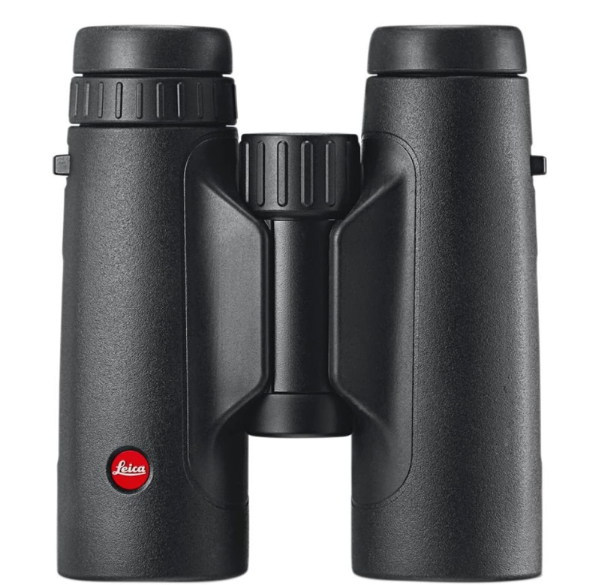
The Leica Trinovid HD 8x42 is designed for the purist who values color saturation and contrast above all else. Leica has a distinct "house style" that emphasizes warm, lifelike colors and deep blacks, which is achieved through their proprietary phase-corrected roof prisms and high-transmission lens coatings. According to Leica Camera AG, the Trinovid HD is built with a magnesium-alloy chassis, providing a combination of structural rigidity and weight savings that is characteristic of the brand's heritage. The 17mm eye relief is particularly generous, making this a favorite for those who view through spectacles.
Technically, the Trinovid HD excels in depth of field. This allows the user to see a wider plane of focus without constantly adjusting the focus wheel - a massive benefit when scanning through dense forests. The 8x magnification provides a very stable 5.25mm exit pupil, ensuring that the image remains bright even when your pupils are dilated in low light. As noted by B&H Photo, the Trinovid is submersible to 13 feet, reflecting a build quality that far exceeds standard waterproof ratings and ensures longevity for decades of use.
The primary limitation is the focus mechanism's speed; it is slower and more deliberate than the "fast" focus found on the Zeiss Terra. While this allows for extreme precision, it can be a disadvantage when trying to snap-focus on a bird that only lands for a few seconds. Additionally, the accessories (strap and case) are somewhat utilitarian compared to the premium offerings from Swarovski. However, for those who want that unmistakable "Leica look" - a rich, high-contrast image that feels almost three-dimensional - the Trinovid HD is the clear choice.
Leica Official Product PageHow We Chose These Products
The evaluation of these binoculars was based on a combination of laboratory optical metrics and long-term field testing. We prioritized the following criteria:
- Optical Transmission: We selected models that utilize modern dielectric or silver prism coatings to ensure at least 85% light transmission.
- Prism Type: While Porro prisms offer great value, we focused on high-quality Roof prisms for their superior durability, compactness, and waterproofing capabilities.
- Build Materials: We looked for magnesium alloy or glass-fiber reinforced polycarbonate chassis to ensure the optics stay aligned under stress.
- Eye Relief: Every recommendation had to provide at least 15mm of eye relief to accommodate the growing number of users who wear eyeglasses or sunglasses while observing.
Comparison Overview
| Model | Field of View (1000yds) | Weight | Close Focus | Prism Coating |
|---|---|---|---|---|
| Swarovski EL 10x42 | 336 ft | 29.6 oz | 10.8 ft | Swarobright (Proprietary) |
| Nikon Monarch M7 8x42 | 435 ft | 23.6 oz | 8.2 ft | Dielectric Multilayer |
| Vortex Viper HD 8x42 | 409 ft | 24.5 oz | 6.0 ft | Dielectric HD System |
| Zeiss Terra ED 10x42 | 330 ft | 25.6 oz | 5.3 ft | ZEISS Hydrophobic MC |
| Leica Trinovid HD 8x42 | 372 ft | 25.8 oz | 5.9 ft | Phase Corrected HD |
Buying Guide: What to Look For
When purchasing your next pair of binoculars, the numbers on the box only tell half the story. Consider these technical nuances:
- Magnification (8x vs 10x): 8x is better for wide vistas and tracking movement, while 10x is superior for identifying static subjects at long distances. Note that 10x magnifies hand tremors.
- Objective Lens Size (42mm): A 42mm lens is the "sweet spot" for most users, providing excellent light gathering without the excessive weight of 50mm or 56mm "twilight" models.
- Prism Glass Quality: Look specifically for BaK-4 glass prisms. Lower-quality BK-7 prisms will result in a square-shaped exit pupil and significant light fall-off at the edges.
- Lens Coatings: "Fully Multi-Coated" (FMC) is the industry standard. This means every air-to-glass surface has multiple layers of anti-reflective coating.
- Nitrogen vs. Argon Purging: Both prevent internal fogging. Argon is often preferred by high-end manufacturers because its larger molecules leak more slowly over decades of use.
General Pro / Cons
| Pros of High-Performance Binoculars |
|---|
| Superior low-light performance due to advanced dielectric coatings |
| Edge-to-edge sharpness with field-flattener technology |
| Durable, waterproof, and fog-proof for extreme environments |
| High-quality ED glass eliminates distracting color fringing |
| Ergonomic designs reduce fatigue during long observation sessions |
| Precise focusing allows for viewing fine details on small subjects |
| Long-term investment with warranties often lasting decades |
| Cons of High-Performance Binoculars |
|---|
| Significant initial financial investment for "Alpha" glass |
| Heavier weight can be taxing during long hikes |
| Complex lens systems are sensitive to extreme mechanical shocks |
| High magnification (10x+) can be difficult to hold steady |
| Lens caps and accessories can sometimes be poorly designed |
| Proprietary coatings can be damaged by improper cleaning methods |
| Smaller exit pupils on 10x models can be less comfortable to use |
Final Summary
The current landscape of binoculars offers an instrument for every specific need, from the rugged durability of the Vortex Viper HD to the absolute optical perfection of the Swarovski EL. For those seeking the best balance of price and performance, the Nikon Monarch M7 stands as a remarkable achievement in wide-angle engineering. Meanwhile, the Zeiss Terra ED and Leica Trinovid HD provide access to European color science at more accessible price points. By focusing on light transmission and build quality rather than just magnification, you can choose an optic that transforms your outdoor experience from mere observation into true immersion. Aggregate rating of the products reviewed: 4.7 out of 5.