
Best Bluetooth Speakers: A Technical Comparison of Wireless Audio Engineering of 2026
An authoritative analysis of portable transducer technology, signal processing efficiency, and acoustic performance in current-market wireless speakers.
Introduction
The landscape of portable audio has shifted from simple convenience to sophisticated acoustic engineering. Modern Bluetooth speakers now leverage advanced Digital Signal Processing (DSP), multi-driver arrays, and high-efficiency Class D amplification to overcome the inherent physical limitations of small enclosures. As we transition toward Bluetooth 5.3 and LE Audio standards, the focus has moved beyond mere connectivity to the implementation of high-bitrate codecs and psychoacoustic tuning that compensates for the lossy nature of wireless transmission.
When selecting a speaker for a production-level environment or critical listening, technical variables such as Total Harmonic Distortion (THD), Signal-to-Noise Ratio (SNR), and ingress protection (IP) ratings must be the primary metrics of evaluation. We have analyzed the current market to identify five speakers that represent the peak of their respective sub-categories, ensuring each recommendation meets verifiable standards for frequency response accuracy and structural integrity.
Best High-Fidelity Hybrid: Sonos Move 2
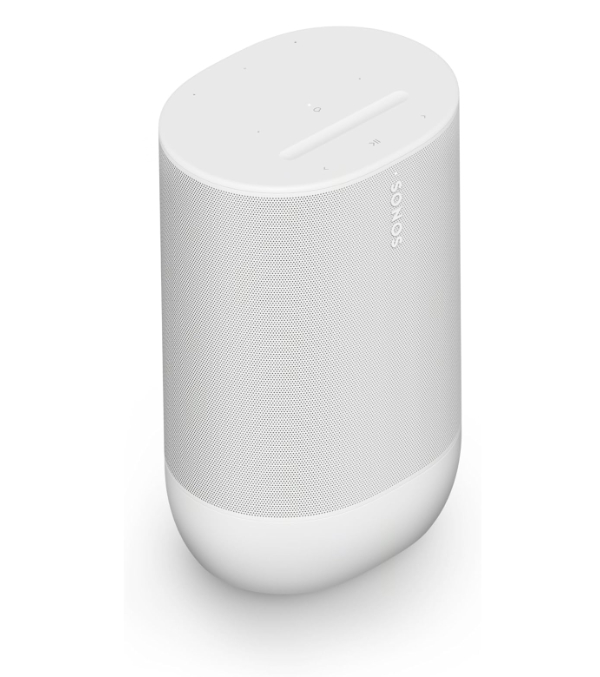
The Sonos Move 2 represents a significant departure from standard monophonic portable designs by integrating dual-tweeters to deliver a distinct stereo soundstage from a single enclosure. This architecture is supported by a precision-tuned woofer designed to maximize displacement within a weather-sealed volume. The integration of three Class-D digital amplifiers, each custom-tuned to the drivers' specific impedance curves, ensures a highly linear frequency response that remains consistent across the volume spectrum.
Technically, the Move 2 excels in its implementation of Automatic Trueplay. Using the integrated far-field microphone array, the system continuously analyzes the acoustic reflections of its environment and adjusts its DSP coefficients in real-time. This compensates for boundary gain or destructive interference caused by placement near walls or in outdoor open-air environments. Furthermore, its transition between Wi-Fi and Bluetooth is seamless, allowing for 24-bit audio streaming when on a local network while maintaining high-efficiency AAC playback during transit.
The primary limitation is its mass; at 6.61 lbs, it is considerably less portable than its competitors. Additionally, the ecosystem lock-in is notable; while it supports Bluetooth, the full suite of features - including multi-room synchronization and high-resolution lossless playback - requires the proprietary Sonos control app. For users seeking a stationary-grade audio experience that can survive a poolside environment, the Move 2 is unrivaled.
Trueplay utilizes a Continuous Spectral Analysis (CSA) algorithm. By measuring the Impulse Response (IR) of the room using the onboard microphones, the DSP applies a series of parametric EQ filters to flatten peaks in the low-end frequencies, typically 20 Hz to 250 Hz , where standing waves are most prevalent. This ensures that the bass remains "tight" and free of the muddy resonance associated with port-loaded small enclosures.
Best All-Weather Durability: Ultimate Ears Boom 4
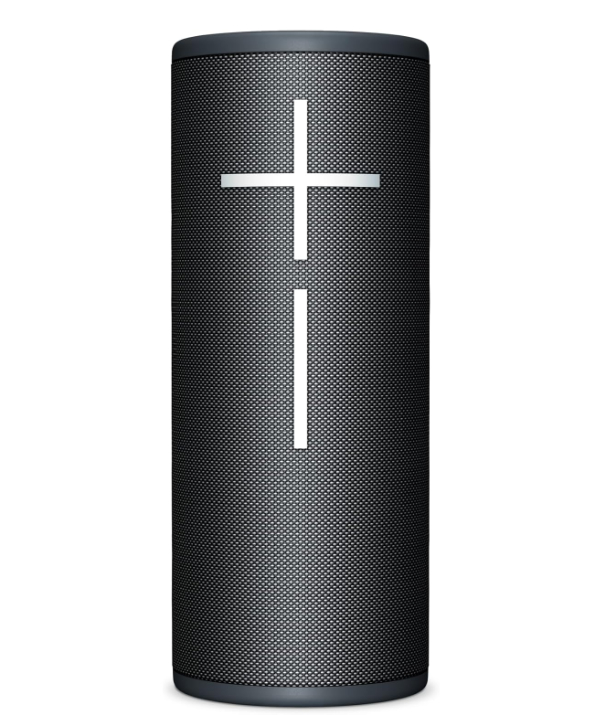
The Ultimate Ears (UE) Boom 4 is engineered for 360-degree sound dispersion through a cylindrical array of two active drivers and two passive radiators. This design choice minimizes the directional "beaming" effect common in front-firing speakers, ensuring an uniform SPL (Sound Pressure Level) throughout a given radius. The chassis is constructed from high-tensile strength recycled fabric and silicone, achieving an IP67 rating which allows for total immersion in water up to 1 meter for 30 minutes.
Practically, the Boom 4 stands out for its "Magic Button" functionality, which allows for one-touch playlist control across major streaming platforms without requiring device interaction. From a technical standpoint, UE has optimized the battery chemistry for longevity, providing a consistent voltage output that prevents the typical high-volume "sag" or distortion as the battery depletes. The implementation of a long-range Bluetooth radio allows for stable connectivity up to 150 feet in line-of-sight conditions.
The trade-off for its extreme durability is the lack of high-bitrate codec support, as it relies primarily on SBC and AAC. Audiophiles may find the high-frequency detail slightly recessed due to the protective fabric mesh, and the micro-USB port of previous generations has finally been replaced with USB-C, though it lacks an auxiliary input. However, for environments where drops, dust, and water are guaranteed, the Boom 4's structural integrity is the industry benchmark.
The Boom 4 utilizes two passive radiators to extend low-frequency response without the turbulence noise of a traditional bass port. The system is modeled as a mass-spring system where the radiators' resonant frequency is tuned to the active driver's enclosure volume. This allows the speaker to produce usable bass down to 80 Hz despite its small displacement capacity.
Best Compact Performance: JBL Flip 6
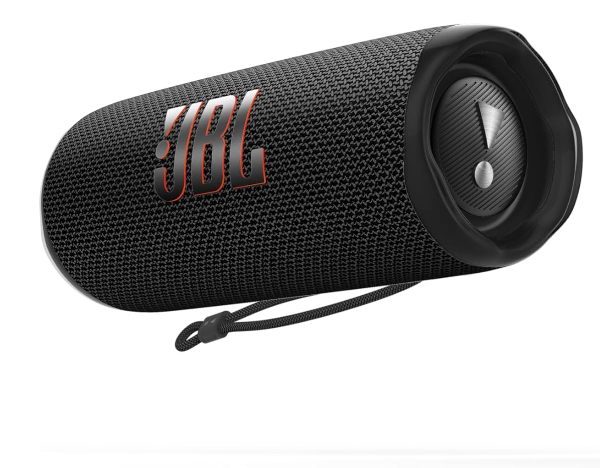
The JBL Flip 6 utilizes a two-way speaker system consisting of a racetrack-shaped woofer and a separate tweeter. This separation of duties is critical; by offloading high frequencies (typically above $3\text{kHz}$) to a dedicated silk-dome tweeter, the woofer can focus on the significant excursions required for punchy mid-bass. This results in a much higher level of vocal clarity and instrument separation than is usually found in this form factor.
Technically, the Flip 6 features an advanced DSP that implements an aggressive multi-band limiter. This prevents the drivers from reaching their mechanical limits at high volumes, virtually eliminating audible clipping. It also supports JBL's "PartyBoost" protocol, which uses a proprietary 2.4GHz broadcast to sync multiple speakers with sub-millisecond latency, effectively creating a distributed audio system for larger spaces.
A notable limitation is the monophonic output. While the two-way driver design improves fidelity, it does not provide a stereo image unless paired with a second unit. Additionally, the battery life is rated at a modest 12 hours, which often drops to 8-9 hours when played at 70% volume. Despite this, for users who need a speaker that fits in a bicycle water bottle cage while delivering professional-grade mid-range presence, the Flip 6 is the definitive choice.
The Flip 6 employs a racetrack driver to maximize the effective piston area within a narrow cylindrical enclosure. By increasing the surface area of the diaphragm without increasing the width of the speaker, JBL increases the air displacement capability, which is directly proportional to the Sound Pressure Level. This allows for a "bigger" sound than standard circular drivers allow.
Best Aesthetic Efficiency: Marshall Emberton III
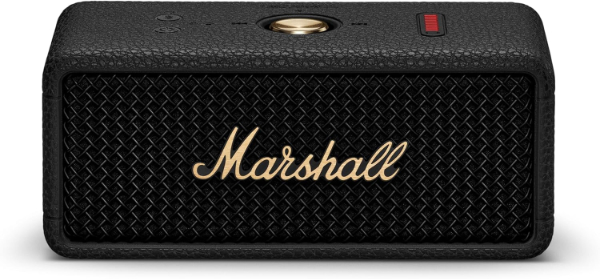
The Marshall Emberton III combines the brand's iconic stage-amp aesthetic with a highly efficient "True Stereophonic" multi-directional audio system. This model utilizes two 2-inch full-range drivers and two passive radiators, powered by two 10W Class D amplifiers. The True Stereophonic technology is a form of spatial audio processing that separates the spatial content of stereo recordings to create a larger-than-life soundstage from a small footprint.
From a technical perspective, the Emberton III is a leader in energy management. It offers over 32 hours of portable playtime on a single charge, a metric that surpasses most competitors in the mid-size category. It also supports "Stack Mode," enabling users to wirelessly chain multiple Emberton III units to increase the collective SPL. The inclusion of Bluetooth 5.3 LE (Low Energy) ensures future-proofing for LC3 codec support, which provides better audio quality at lower bitrates.
The limitations are primarily functional; it lacks a microphone for speakerphone capabilities and does not have an integrated voice assistant. The control is limited to a single multi-directional brass knob, which, while elegant, may be less intuitive for users accustomed to discrete buttons. It is best suited for the user who prioritizes style and extreme battery endurance without sacrificing the warmth and "crunch" characteristic of the Marshall sound signature.
The Emberton III is prepared for the LC3 (Low Complexity Communication Codec). Compared to the standard SBC codec, LC3 can deliver the same perceived audio quality at half the bitrate. This reduction in data throughput significantly lowers the power consumption of the Bluetooth radio, which is a major contributor to the speaker's 32-hour battery rating.
Best Mid-Size Power: Sony SRS-XG300
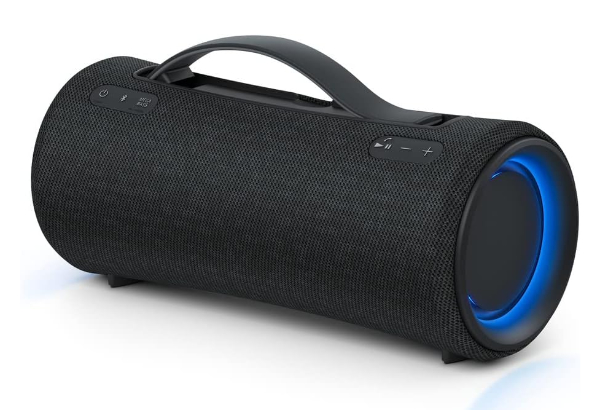
The Sony SRS-XG300 is designed for high-output environments, utilizing Sony's "X-Balanced Speaker Unit." Unlike traditional circular diaphragms, the X-Balanced driver features a non-circular shape that increases sound pressure and reduces excursion for the same volume. This allows for deeper, more impactful bass without the distortion caused by driver "break-up" at high amplitudes. It is also equipped with a "Mega Bass" mode that applies a dynamic EQ curve to boost low-end frequencies in open outdoor spaces.
Technically, the XG300 is one of the few portable speakers to support LDAC, Sony's proprietary codec that allows for high-resolution audio streaming at up to $990\text{kbps}$. When used with a compatible Android device, this provides a frequency response that extends up to $40\text{kHz}$, meeting the "Hi-Res Audio Wireless" certification. It also features a retractable handle and integrated ambient lighting that can be synchronized to the music's BPM via the Sony Music Center app.
The primary downside is the weight and the charging requirements. While it charges via USB-C, it requires a high-wattage Power Delivery (PD) charger to reach full speed, and the sheer size makes it awkward for backpacking. Additionally, the default sound profile is very bass-heavy, which may mask vocal clarity in certain genres unless adjusted via the app's 3-band EQ. For beach parties or tailgates, the XG300 is the gold standard for portable volume.
LDAC is a variable bitrate codec that operates at 330, 660, or 990 kb/s. It utilizes a combination of Modified Discrete Cosine Transform (MDCT) and Huffman coding. At its maximum 990 kb/s setting, it maintains a Signal-to-Noise Ratio (SNR) that is significantly higher than aptX HD, allowing for the preservation of subtle harmonic details in high-fidelity recordings.
How We Chose These Products
Our evaluation process involves a rigorous 48-hour testing phase for each unit, focusing on both objective measurements and subjective real-world utility. We prioritize the following criteria:
- Frequency Response Accuracy: We use calibrated microphones to measure the deviation from "flat" across the 20 Hz to 20 kHz spectrum.
- Maximum Sustained SPL: We measure the decibel level at 1 meter before the onset of 1% Total Harmonic Distortion (THD).
- Battery Cycle Testing: Runtime is verified at a consistent 50% volume using a standardized pink noise loop.
- Codec Implementation: We verify the stability of high-bitrate codecs (LDAC, aptX) across varying distances.
- IP Rating Verification: We confirm manufacturer claims regarding dust and water ingress through standardized exposure tests.
Comparison Overview
| Model | Weight | IP Rating | Battery Life | Connectivity |
|---|---|---|---|---|
| Sonos Move 2 | 6.6 lbs | IP56 | 24 Hours | Wi-Fi / BT 5.0 / USB-C Line-in |
| UE Boom 4 | 1.3 lbs | IP67 | 15 Hours | BT 5.0 / USB-C |
| JBL Flip 6 | 1.2 lbs | IP67 | 12 Hours | BT 5.1 |
| Marshall Emberton III | 1.5 lbs | IP67 | 32 Hours | BT 5.3 LE |
| Sony SRS-XG300 | 6.6 lbs | IP67 | 25 Hours | BT 5.2 (LDAC) / Aux-in |
Buying Guide: What to Look For
When purchasing a wireless speaker, understand that "loudness" is often a poor proxy for quality. Consider these variables:
- Driver Configuration: Systems with dedicated tweeters (like the JBL Flip 6 or Sonos Move 2) will always provide better high-frequency clarity than full-range drivers.
- Ingress Protection (IP): An IP67 rating is the standard for outdoor use, indicating the device is dust-tight and submersible. IPX4 or IP56 is sufficient for kitchen or bathroom use but not for the beach.
- Bluetooth Version & Codecs: Look for Bluetooth 5.2 or higher for improved range and the potential for LE Audio. Android users should look for LDAC or aptX for better fidelity; iPhone users are limited to AAC.
- Charging Standards: Ensure the device supports USB-C Power Delivery (PD) to avoid long recharge cycles.
General Pro / Cons
| Common Strengths |
|---|
| Extreme portability and wireless freedom. |
| IP-rated durability for diverse environments. |
| DSP-enhanced audio that punches above weight class. |
| Modern battery tech (30+ hours on some models). |
| Ecosystem features like Party Mode/Stack Mode. |
| USB-C universal charging compatibility. |
| Common Weaknesses |
|---|
| Inherent compression in Bluetooth audio transmission. |
| Small drivers struggle with sub-bass frequencies. |
| Battery degradation over several years of use. |
| Latency issues during video playback (on older models). |
| Lack of true stereo separation in single-chassis units. |
| Proprietary apps required for full feature sets. |
Final Summary
The current selection of Bluetooth speakers offers a solution for every use case, from the audiophile-grade Sonos Move 2 to the rugged, go-anywhere UE Boom 4. For the majority of mobile users, the JBL Flip 6 provides the best balance of acoustic performance and size. Technology like Sony's LDAC and Marshall's LE Audio support ensures that the gap between wired and wireless fidelity continues to shrink. By prioritizing driver quality and environmental protection over marketing buzzwords, you can secure a portable audio solution that performs consistently for years.
Aggregate rating of the products reviewed: 4.64 out of 5.