
Best Bluetooth Trackers of 2026
Losing your keys or wallet is a universal frustration, but modern tracking technology has turned a twenty-minute frantic search into a ten-second glance at your phone. We evaluate the top trackers based on network density, precision, and everyday durability.
Introduction
Bluetooth trackers have evolved from simple beeping keychains into sophisticated nodes in massive, global networks. The technical landscape is currently split into two camps: proprietary networks and massive crowd-sourced ecosystems. While the "Bluetooth" in the name refers to the 2.4 GHz radio frequency used to talk to your phone, the real magic happens when you are miles away. By leveraging billions of smartphones as passive observers, these trackers can update their location without needing their own GPS or cellular connection.
When shopping for a tracker, the biggest friction point is ecosystem lock-in. A tracker that works perfectly for an iPhone user may be completely useless for an Android user. Furthermore, the introduction of Ultra-Wideband (UWB) technology has changed the game, moving from "it's somewhere in this room" to "it's under the couch cushion, three feet to your left." We have selected five trackers that represent the pinnacle of reliability, network size, and technical performance for various user needs.
Best for Apple Users: Apple AirTag
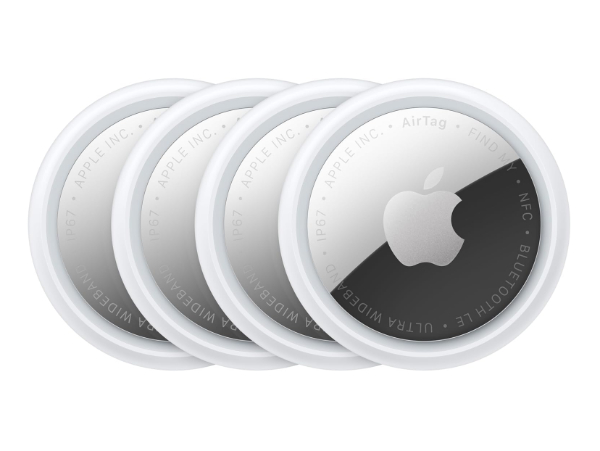
The Apple AirTag is the gold standard for anyone within the iOS ecosystem. Its primary strength lies in the Find My network, which consists of hundreds of millions of Apple devices. If you leave your keys in a park, any passing iPhone can securely and anonymously ping the AirTag's location back to you. This "crowd-sourced" density is essentially unrivaled in most urban and suburban environments.
Technically, the AirTag stands out due to its U1 chip, which utilizes Ultra-Wideband (UWB) technology. While standard Bluetooth gives you a general idea of proximity, UWB allows for "Precision Finding." On an iPhone, this translates to an on-screen arrow that guides you directly to the item within inches. This eliminates the frustration of hearing a beep but being unable to locate the item inside a drawer or under a pile of clothes.
The major downside is the "accessory tax." The AirTag itself is a smooth disc with no hole for a keyring, meaning you must buy a separate case or loop to actually attach it to anything. It is also strictly limited to Apple devices; Android users cannot set up or track an AirTag, which is a significant barrier for multi-platform households.
UWB operates at very high frequencies (between 6.5 GHz and 8.0 GHz). Because these waves have a very wide bandwidth, they can measure the "Time of Flight" - the exact time it takes for a signal to travel between two devices. Why it matters: This allows the device to calculate distance with sub-centimeter accuracy, whereas standard Bluetooth can only guess distance based on signal strength, which is easily blocked by walls or furniture.
Best for Samsung Users: Samsung Galaxy SmartTag2
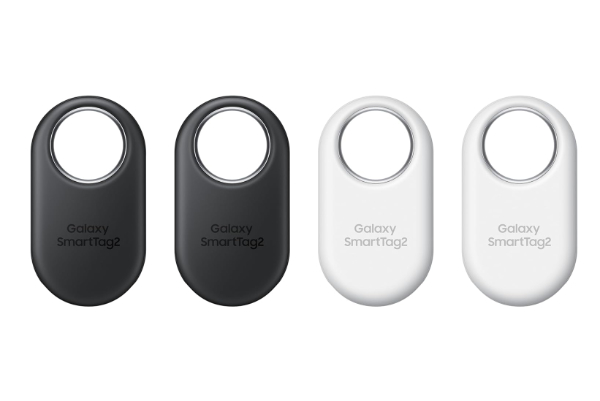
The Samsung Galaxy SmartTag2 is a robust answer to the AirTag, designed specifically for the Samsung Galaxy ecosystem. It features an elongated, ring-shaped design that solves one of the biggest complaints about other trackers: it has a built-in metal-reinforced hole for your keyring. This makes it significantly more durable for heavy-duty use on bags or pet collars without needing extra silicone cases.
From a technical perspective, the SmartTag2 supports both Bluetooth Low Energy (BLE) and UWB. For users with high-end Galaxy phones, the "Compass View" provides a visual overlay to find lost items. It also has an impressive IP67 rating for dust and water resistance, meaning it can survive being submerged in a meter of water for 30 minutes. This is a critical benefit for outdoor gear or pets that might end up in a puddle.
The trade-off is the ecosystem restriction. Like the AirTag, the SmartTag2 only works with Samsung Galaxy devices. It will not work with other Android phones from Google, Motorola, or OnePlus. This fragmentation means you are betting entirely on the density of other Samsung users in your area to help find your lost items when they are out of range.
The IP67 rating means the device is "6" (completely dust-tight) and "7" (protected against immersion in water up to 1m for 30 minutes). Why it matters: Most electronics fail because of moisture-induced corrosion on the circuit board. An IP67 seal ensures that the internal CR2032 battery and logic board remain dry even in heavy rain or accidental spills.
Best Rechargeable Option: Pebblebee Clip
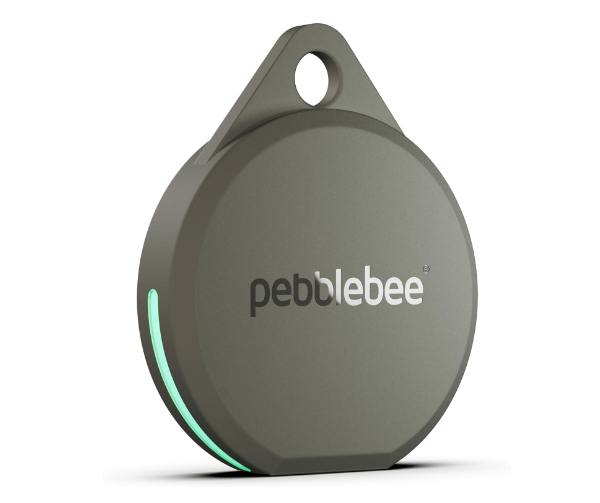
Most Bluetooth trackers rely on coin-cell batteries (CR2032) that must be replaced once a year. The Pebblebee Clip breaks this mold by offering a rechargeable internal battery that lasts up to 12 months on a single charge. This is a huge friction-remover for users who hate the "maintenance" of trackers or those who want a more eco-friendly option that doesn't result in discarded batteries every year.
The Pebblebee Clip is versatile because it is available in versions compatible with either Apple's Find My network or Google's Find My Device network. This makes it a bridge between worlds, though you must choose your network at the time of purchase. It features a bright LED light and a loud buzzer, making it easier to find visually in dark environments like the bottom of a backpack or under a car seat.
A minor limitation is that while it is rechargeable, the internal Lithium-Polymer battery will eventually degrade after several years of use. Unlike a replaceable battery tracker that can theoretically last forever, the Pebblebee Clip has a finite lifespan. However, for the convenience of USB-C charging and a loud 115-decibel alarm, it is an excellent trade-off for most people.
The Pebblebee uses a specialized Li-Po cell designed for low-current discharge. Why it matters: Standard batteries lose energy even when not in use. This specific chemistry allows the tracker to maintain a "listening" state for Bluetooth signals for 365 days while remaining small enough to fit on a keychain.
Best for Loudness and Range: Tile Pro
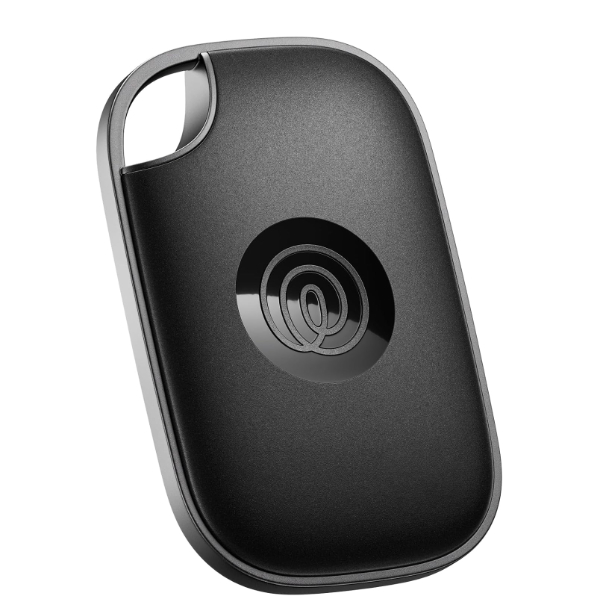
Tile was the pioneer of this category, and the Tile Pro remains the powerhouse of the lineup. While Apple and Google rely on their massive OS-level networks, Tile relies on its own user base. The "Pro" model is designed for range, boasting up to 400 feet of direct Bluetooth connectivity. This makes it ideal for finding items in large homes or yards before the "crowd-sourced" network even needs to kick in.
The standout feature of the Tile Pro is the volume. It is significantly louder than an AirTag or SmartTag. For users who might have hearing difficulties or those who often lose things in noisy environments (like a busy office or a workshop), the high-decibel ring is a lifesaver. It also works across both iOS and Android via the Tile app, making it the best choice for families that don't stick to a single phone brand.
However, the lack of UWB precision finding means you are relying solely on sound and signal strength "bubbles" to find your item. Furthermore, Tile’s network is smaller than Apple's or Google's. To get the best features - like "Smart Alerts" that tell you if you left home without your keys - you have to pay for a Premium subscription, which is a major long-term cost friction point.
The Tile Pro output is approximately 128 decibels. Why it matters: Sound intensity is logarithmic. A 10 dB increase represents a sound that is twice as loud to the human ear. The Tile Pro is nearly 3x as loud as a standard tracker, allowing the sound to penetrate through heavy coats, thick cushions, or even from another room.
Best for Google Find My Device: Chipolo ONE Point
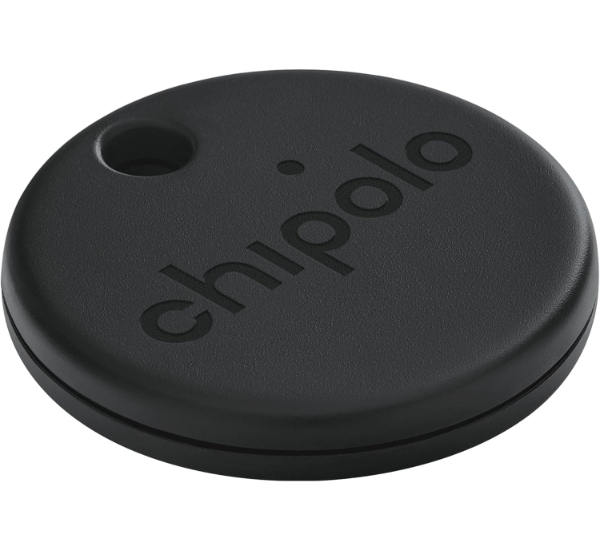
For the millions of Android users who don't own a Samsung phone, the Chipolo ONE Point is the premier choice. It is built specifically to integrate with Google's revamped Find My Device network. This network leverages billions of Android devices globally, finally giving Android users a tracking ecosystem that rivals Apple's Find My network in terms of density and reach.
The Chipolo ONE Point is refreshingly simple. It features a loud ring and a standard replaceable CR2032 battery that lasts up to two years - twice as long as most competitors. It also has a built-in hole for keyrings, avoiding the need for extra accessories. The setup process is "Fast Pair" enabled, meaning your Android phone will automatically detect it the second you pull the battery tab, removing all setup complexity.
The limitation here is the lack of UWB. While it works with Google's "visual proximity" tool (a bar that fills up as you get closer), it won't give you a precise arrow. It is also strictly for Android; you cannot use this with an iPhone. But as a value-oriented, highly effective tracker for the "standard" Android user, it is currently the best-in-class option.
The ONE Point uses Bluetooth Low Energy (BLE) beaconing. Why it matters: Instead of maintaining a constant connection, the tracker sends out tiny "packets" of data every few seconds. This allows it to be discovered by passing phones while consuming such a small amount of electricity that a tiny coin battery can power it for over 700 days.
How We Chose These Products
Our selection process was driven by Network Density, Precision, and Total Cost of Ownership. We prioritized trackers that tap into "OS-level" networks (Apple and Google) because a tracker is only as good as the network of phones looking for it. We also evaluated physical durability, specifically looking for metal-reinforced attachment points and IP-rated water resistance. Finally, we addressed the battery friction point, choosing a mix of long-life replaceable cells and modern rechargeable options to suit different user maintenance preferences.
Comparison Overview
| Model | Primary Network | Precision Tech | Battery Type | Water Rating |
|---|---|---|---|---|
| Apple AirTag | Apple Find My | UWB (U1 Chip) | CR2032 (Replaceable) | IP67 |
| Samsung SmartTag2 | Samsung SmartThings | UWB + BLE | CR2032 (Replaceable) | IP67 |
| Pebblebee Clip | Apple/Google (Selectable) | BLE Only | Rechargeable (USB-C) | IPX6 |
| Tile Pro | Tile Network | BLE Only | CR2032 (Replaceable) | IP67 |
| Chipolo ONE Point | Google Find My Device | BLE Only | CR2032 (Replaceable) | IPX5 |
Buying Guide: What to Look For
- Ecosystem Compatibility: This is the first and most important step. If you have an iPhone, the AirTag is superior. If you have a Google Pixel or similar Android, look for "Google Find My Device" compatibility.
- UWB vs. BLE: If you often lose things inside your house, UWB (Ultra-Wideband) is worth the extra cost for the visual "Precision Finding" feature. If you mostly worry about leaving bags at a restaurant, standard BLE is sufficient.
- Volume Levels: Check decibel ratings. If you're putting a tracker inside a thick, padded laptop sleeve, you'll need the extra volume of a Tile Pro or Pebblebee Clip to hear it.
- Anti-Stalking Features: Modern trackers should include proactive alerts that tell you if an unknown tracker is moving with you. Apple, Samsung, and Google now share a common industry standard for these alerts.
- Attachment Method: Consider if you want to pay more for cases. Products like the SmartTag2 and Chipolo ONE Point have holes built-in; AirTags require a separate purchase.
General Pro / Cons
| Pros |
|---|
| Global networks can find items thousands of miles away. |
| Precision finding (UWB) eliminates guesswork in small spaces. |
| Waterproof designs survive rain and puddles. |
| Replaceable batteries provide years of device utility. |
| Rechargeable options reduce environmental waste. |
| Loud sirens can be heard through heavy bags and furniture. |
| Privacy standards help prevent unwanted tracking. |
| Setup is generally as simple as holding the device near your phone. |
| Cons |
|---|
| Severe ecosystem lock-in restricts choices based on your phone. |
| Some features require monthly paid subscriptions (Tile). |
| "Accessory Tax" for trackers without built-in keyring holes. |
| Proprietary networks (Tile) are less dense than Apple/Google. |
| Precision finding requires the latest, most expensive smartphones. |
| Internal rechargeable batteries eventually lose capacity. |
| Trackers can be physically bulky on small keyrings. |
| Location updates are not real-time like a GPS tracker. |
Final Summary
Choosing a Bluetooth tracker is no longer about the hardware itself, but the network it lives on. For the majority of users, the Apple AirTag and Samsung SmartTag2 offer the best blend of precision and massive search networks. If you are an Android user outside of the Samsung ecosystem, the Chipolo ONE Point is your best bet for reliability. Meanwhile, those who prioritize volume or cross-platform flexibility will find the Tile Pro or the rechargeable Pebblebee Clip to be excellent, specialized alternatives. Each of these devices effectively solves the friction of lost items, provided you stay within the ecosystem that matches your daily driver smartphone.
Aggregate rating of the products reviewed: 4.58 out of 5.