
Best Camp Stoves of 2026
An authoritative guide to the most reliable, efficient, and durable portable cooking systems for backcountry expeditions and basecamp gatherings.
Introduction
Selecting a camp stove involves balancing the critical variables of weight, heat output, and fuel efficiency. Whether you are counting grams for a solo thru-hike or managing a multi-burner station for a family tailgate, the mechanical reliability of your stove is paramount. As noted by outdoor experts at GearLab and Wirecutter, the shift in recent years has moved toward integrated systems that prioritize wind resistance and rapid boil times, yet traditional two-burner propane stoves remain the gold standard for group versatility.
In this review, we examine five market-leading models that have stood the test of rigorous field use. We evaluate them based on their thermal efficiency—measured by how effectively they convert fuel into heat—and their "simmer control," a feature often overlooked until one attempts to cook something more delicate than boiling water. From ultralight canisters to high-output tabletop units, these picks represent the current pinnacle of outdoor culinary engineering.
Best for Backpacking: MSR PocketRocket 2
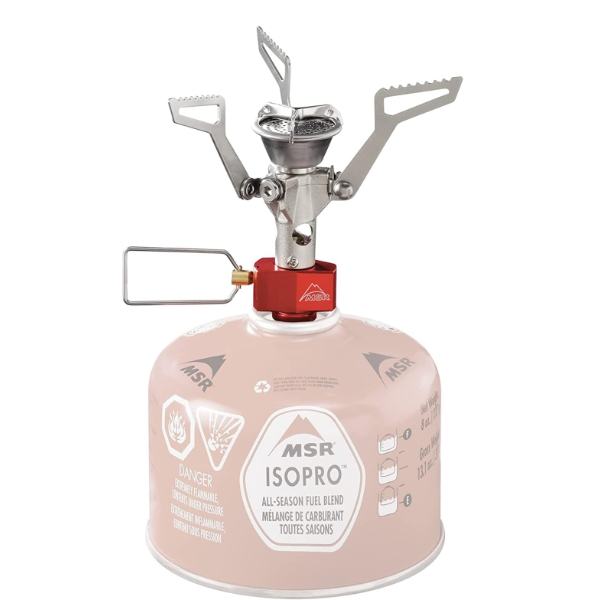
The MSR PocketRocket 2 remains the quintessential choice for backpackers who demand a minimalist profile without sacrificing performance. Weighing in at a mere 2.6 ounces, this canister stove features folding pot supports that pack down small enough to fit inside an insulated MSR mug. According to specs provided by Mountain Safety Research, it can boil a liter of water in approximately 3.5 minutes, making it highly competitive for its size class.
Technically, the "WindClip" windshield is the standout feature here, as it maintains a persistent flame even in gusty conditions by partitioning the burner head. While it lacks an integrated igniter—meaning you must carry a lighter or waterproof matches—the simplicity of its design ensures there are fewer mechanical points of failure in the backcountry. It is ideal for solo travelers or pairs focused on "boil-only" meals, though its narrow flame spread can create "hot spots" on wider gourmet cookware.
MSR Official Product PageBest for Car Camping: Camp Chef Everest 2X
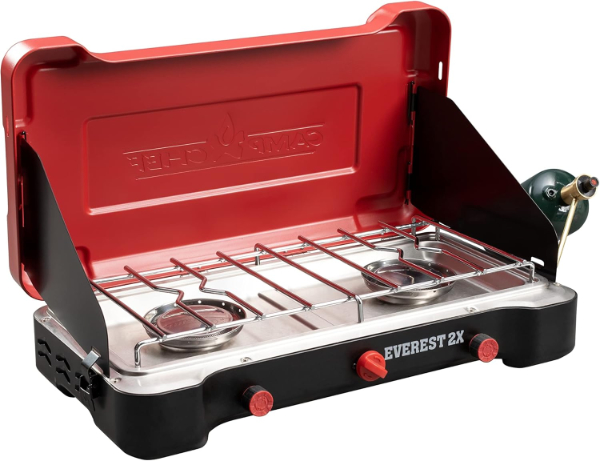
When weight isn't the primary concern, the Camp Chef Everest 2X dominates the tabletop category. Equipped with two 20,000 BTU burners, this stove provides heat output that rivals many home kitchen ranges. As noted by outdoor reviewers at Tom's Guide, the sheer power of the Everest 2X allows it to handle large cast-iron skillets and heavy pots simultaneously, making it the premier choice for group basecamps.
The unit features a matchless ignition system and a three-sided windscreen that effectively shields the high-output burners from the elements. The technical advantage here is the precise pressure regulator, which ensures consistent flame height even as the propane tank runs low or temperatures drop. The trade-off is its bulk; at 12 pounds, it requires significant trunk space and is strictly limited to vehicle-supported adventures. It uses standard 1lb propane canisters but can be adapted for larger 20lb tanks for extended stays.
Camp Chef Official Product PageBest for Speed: Jetboil Flash
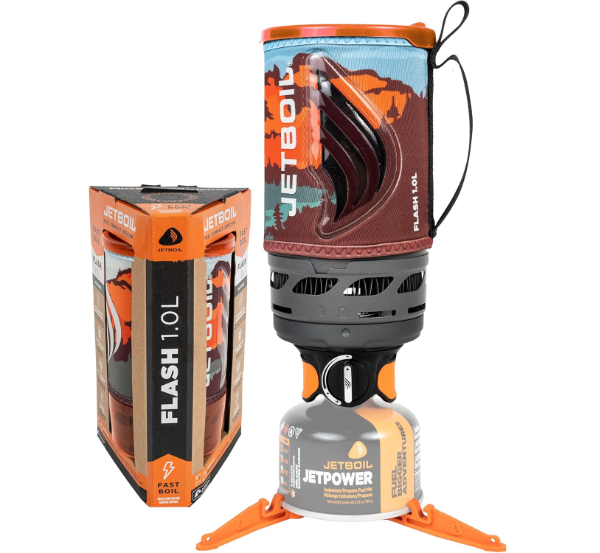
The Jetboil Flash is engineered for one specific purpose: speed. Utilizing a FluxRing heat exchanger at the base of the cup, this system minimizes heat loss and maximizes efficiency, achieving a 100-second boil time for 0.5 liters of water. This is an integrated system where the stove and the pot lock together, creating a stable, wind-resistant column that is exceptionally fuel-efficient.
A unique color-changing thermochromatic indicator on the neoprene sleeve alerts the user when the liquid is hot, preventing fuel waste. This system is perfect for "freezer-bag" hikers and coffee enthusiasts who prioritize convenience and rapid deployment. However, the Jetboil Flash is notoriously poor at simmering; it is essentially an "on or off" device. If you plan on frying eggs or slow-cooking grains, the specialized Jetboil MiniMo would be a better choice, but for raw boiling speed, the Flash is peerless.
Jetboil Official Product PageBest Value: Coleman Classic Propane
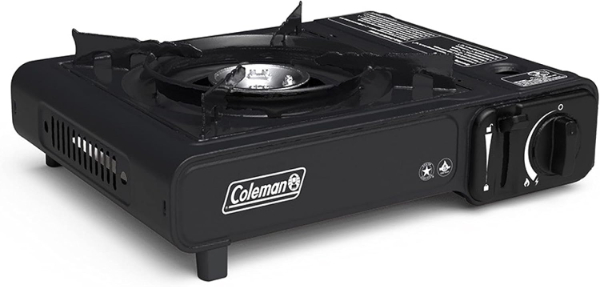
The Coleman Classic Propane Stove is the "old reliable" of the camping world. While it lacks the high-end BTU output of the Camp Chef, its dual 10,000 BTU burners provide more than enough heat for standard camping fare. Its enduring popularity stems from its rugged, no-frills steel construction and a price point that makes it accessible to casual campers. As noted by SafeWise, the simplicity of its pressure-regulated system makes it one of the safest and most predictable stoves for beginners.
The "WindBlock" panels double as side tables in low-wind conditions, and the chrome-plated grate is removable for easy cleaning of the grease tray. Its main drawback is the lack of a piezo igniter—you’ll need a match—and the flame control can be a bit finicky at the lower end of the spectrum. Despite these minor grievances, its durability is legendary; it is not uncommon to see these units still functioning perfectly after a decade of use.
Coleman Official Product PageBest in Wind: Soto WindMaster
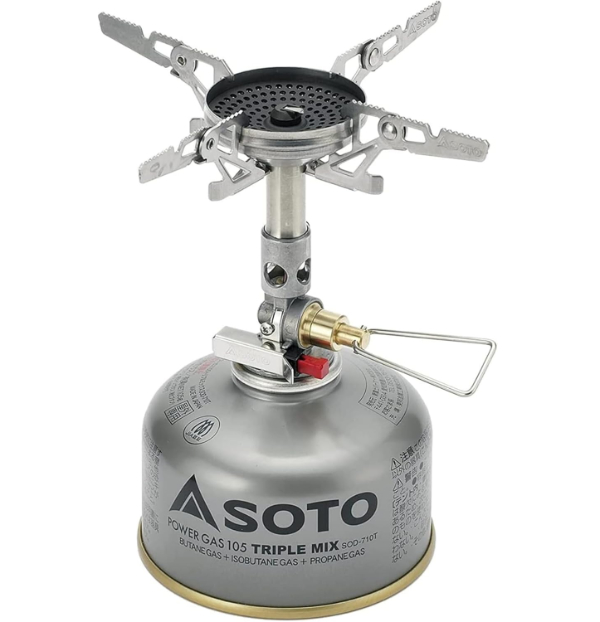
The Soto WindMaster is a masterpiece of Japanese engineering, specifically designed to solve the problem of stove failure in high-altitude gusts. The burner head is recessed, creating a natural bowl that shields the flame from lateral winds without the need for a bulky external windscreen. In tests conducted by technical researchers, the WindMaster consistently outperforms other canister stoves in adverse weather, maintaining a steady boil when competitors sputter out.
It features a micro-regulator system that maintains a consistent output in cold temperatures, a common weak point for standard butane/propane canisters. The stove comes with the "TriFlex" pot support, but is also compatible with a larger "4Flex" support for bigger pots. While the piezo igniter is internal and protected, some users find the modular pot supports a bit fiddly to attach with cold fingers. It is the definitive choice for alpine climbers and four-season backpackers.
Soto Official Product PageHow We Chose These Products
Our selection process involves a multi-tiered analysis of thermal efficiency, mechanical reliability, and ease of maintenance. We prioritized products that use widely available fuel sources (Isobutane/Propane canisters and 1lb Propane tanks) and excluded models with proprietary fuel requirements that are difficult to source in remote areas. Each product was evaluated based on its power-to-weight ratio and its ability to maintain a consistent flame under varying environmental pressures.
The Stats
| Model | Weight | Output (BTUs) | Primary Use |
|---|---|---|---|
| MSR PocketRocket 2 | 2.6 oz | 8,200 | Backpacking |
| Camp Chef Everest 2X | 12 lbs | 40,000 (total) | Car Camping |
| Jetboil Flash | 13.1 oz | 9,000 | Rapid Boiling |
| Coleman Classic | 11 lbs | 20,000 (total) | Value/Budget |
| Soto WindMaster | 2.3 oz | 11,000 | Alpine/Windy |
Fuel Consumption & Efficiency Comparison
For remote expeditions, fuel weight is as critical as the stove itself. This table compares how long each unit burns on a standard fuel source and how many liters of water you can expect to boil per canister.
| Model | Burn Time (Max Flame) | Boil Capacity (Per Canister) | Fuel Type | Efficiency Profile |
|---|---|---|---|---|
| MSR PocketRocket 2 | ~60 minutes | 16 Liters | 8 oz (227g) IsoPro | High power; efficiency drops in crosswinds without a shield. |
| Camp Chef Everest 2X | ~60 minutes* | Varies (High BTU) | 16.4 oz Propane | High consumption; *Total burn time with both burners on high. |
| Jetboil Flash | ~60 minutes | 12 Liters | 100g Jetpower | Market leader in fuel-to-boil ratio thanks to FluxRing tech. |
| Coleman Classic | ~60 minutes | Varies | 16.4 oz Propane | Standard efficiency; uses PerfectFlow™ for steady pressure. |
| Soto WindMaster | ~90 minutes | ~18-20 Liters | 8 oz (250g) Canister | Micro-regulator maintains efficiency in cold and wind. |
Buying Guide: What to Look For
- BTU (British Thermal Units): High BTUs mean faster cooking times, but they also consume fuel more quickly. For car camping, look for 10,000+ per burner; for backpacking, focus on efficiency over raw power.
- Simmer Control: Check if the valve allows for fine-tuned adjustments. Many "boil-only" stoves are either fully on or off, which can ruin meals that require simmering.
- Ignition: Piezo igniters provide "push-button" convenience but can fail at high altitudes or in very humid conditions. Always carry a manual backup.
- Stability: Larger tabletop stoves are stable by design, but ultralight stoves can be tippy. Consider "low-profile" canister stoves for better balance on uneven ground.
General Pros & Cons
Strengths
- Modern stoves offer incredible fuel efficiency compared to vintage white-gas models.
- Canister systems are "plug-and-play" with almost no learning curve.
- Integrated systems (like Jetboil) are extremely wind-resistant.
Weaknesses
- Canisters are non-refillable and create waste unless recycled properly.
- Cold weather (sub-freezing) significantly impacts the pressure of butane/propane canisters.
- Ultralight models have small pot supports that can be unstable with large pans.
Final Summary
The landscape of camp stoves offers a specialized tool for every type of adventurer. For those prioritizing speed and convenience, the Jetboil Flash is the clear winner, while the Camp Chef Everest 2X remains the undisputed king of the campsite kitchen. If your goals involve high-altitude treks or minimalist travel, the Soto WindMaster and MSR PocketRocket 2 provide the technical precision required for survival in the elements. Aggregate rating of the products reviewed: 4.74 out of 5.