
Best Countertop Ice Cream Machines of 2026
A technical breakdown of the top-performing ice cream makers that deliver commercial-grade texture and precise temperature control directly to your kitchen counter.
Introduction
Making ice cream at home is a battle against science. The ultimate goal is to create the smallest ice crystals possible, which yields that luxurious, silky mouthfeel we associate with high-end gelatos. When ice crystals grow larger than 50 microns, your tongue detects them, and the ice cream tastes "gritty" and cheap. To combat this, countertop ice cream machines rely on two technical variables: rapid freezing and consistent agitation (churning).
There are two primary types of machines you can buy: bowl-freezers and compressor models. Bowl-freezer units are highly accessible but require you to freeze a heavy liquid-core bowl for 24 hours before you can even begin. Compressor models are essentially miniature, dedicated freezers. They use a standard refrigeration cycle to pull the mixing bowl down to sub-zero temperatures instantly, allowing you to make batch after batch without waiting. However, they take up a massive amount of counter space and cost significantly more.
Lately, a third "micro-shaving" tech has taken over the market, emulsifying frozen solid bases rather than churning liquid. In this guide, we evaluate five distinct products across these technologies. We've assessed them on motor torque, overrun control, and thermal efficiency to help you decide which machine fits your kitchen's spatial ecosystem and your appetite for frozen desserts.
Best Entry-Level Value: Cuisinart ICE-21
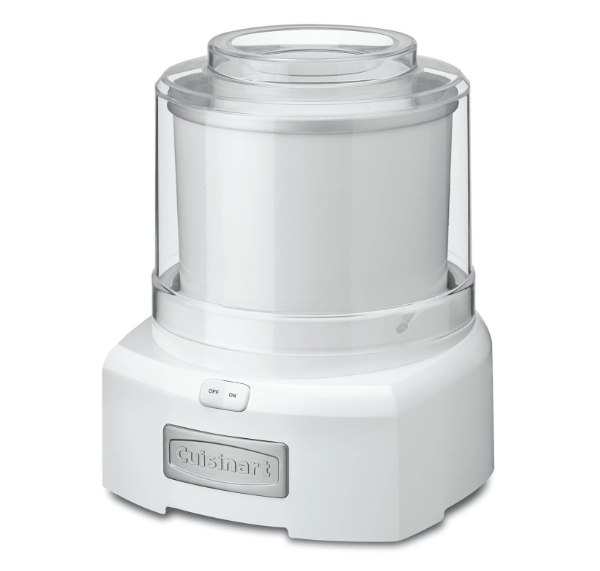
The Cuisinart ICE-21 is the definitive starting point for home ice cream making. It features a heavy-duty motor that rotates a double-insulated 1.5-quart freezer bowl. Unlike older models where the paddle rotates, the ICE-21 rotates the bowl itself against a stationary paddle. Why it matters: This creates a more consistent scraping action against the frozen walls, moving the chilled mixture directly to the center and expediting the freezing process to under 20 minutes.
Technically, the bowl relies on a eutectic cooling liquid sealed between double walls. You must freeze it at 0?F (-18?C) for a full 24 hours before use. Why it matters: If your home freezer is too warm, the liquid won't completely solidify. This results in a slushy mess rather than scooped ice cream because the thermal energy cannot be absorbed fast enough to prevent giant ice crystals from forming.
The obvious trade-off is spontaneous dessert making. You must plan a full day ahead to use this machine. Furthermore, the 1.5-quart bowl is bulky and will permanently take up valuable shelf space in your freezer if you want to be ready at a moment's notice. However, for a minor financial investment, it produces texture that rivals many $300+ compressor models, provided you follow the freezing rules strictly.
Eutectic solutions are specific liquid blends designed to freeze and melt at precise temperatures, lower than pure water. The liquid inside the ICE-21 bowl absorbs thermal energy from your ice cream base rapidly, ensuring quick crystallization. If you shake the bowl and hear liquid sloshing, it is not cold enough to use.
Best Mid-Range Compressor: Cuisinart ICE-100
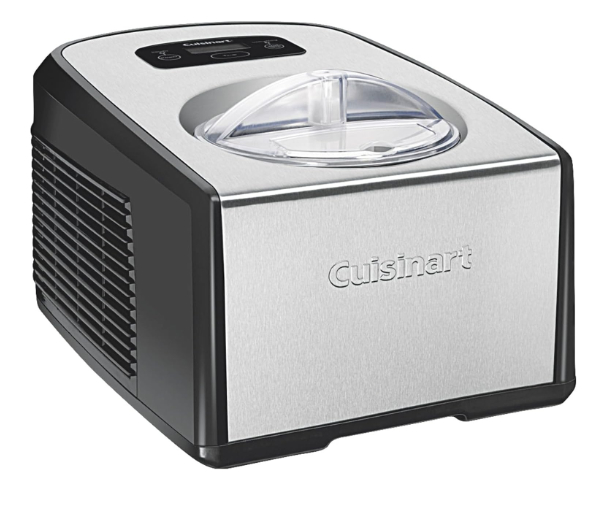
The Cuisinart ICE-100 steps up into the professional tier by including a built-in commercial-style compressor. This eliminates the need to pre-freeze the bowl. You simply pour your base in, hit a button, and the machine pulls the temperature down to optimal freezing levels automatically. Why it matters: This allows you to make back-to-back batches, perfect for parties or testing multiple recipe variations in a single afternoon.
The unit features two separate, specialized paddles: one for standard ice cream and one for authentic gelato. Gelato requires less air incorporation (lower overrun). Why it matters: The gelato paddle is designed to move more slowly and scrape more thoroughly, preventing excess air from whipping into the base. This yields a dense, intensely flavorful dessert instead of fluffy, air-heavy supermarket-style ice cream.
This is a heavy machine, weighing over 30 pounds due to the internal refrigeration coils and motor. It also commands a significant footprint on your counter. Another limitation is that the 1.5-quart bowl cannot be overfilled. Ice cream expands as it freezes, and overfilling can result in the motor stalling out or ice cream leaking into the compressor housing, which is notoriously difficult to clean.
The ICE-100 uses a localized cooling cycle similar to a standard kitchen refrigerator. It features a pull-down rate that brings the chamber to below 0?F in approximately 10 minutes. This consistent thermal extraction guarantees that ice crystals stay under the 50-micron sensory threshold.
Best Smart Tech & Precision: Breville BCI600XL Smart Scoop
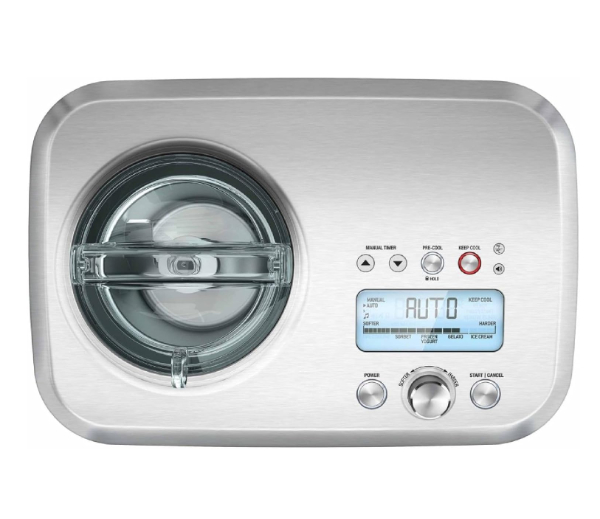
The Breville Smart Scoop is the most technologically advanced compressor unit on this list. It features 12 hardness settings, ranging from soft-serve to hard-pack. Instead of relying purely on a generic timer, the Smart Scoop measures the electrical resistance against the paddle as the mixture thickens. Why it matters: As the ice cream hardens, the motor requires more energy to turn. The internal computer reads this torque load and stops the cycle at the exact consistency you requested.
Another excellent feature is its automatic "keep cool" functionality. If you get distracted and forget to take the ice cream out when it's done, the machine will hold the optimal temperature and paddle agitation for up to three hours. Why it matters: Leaving finished ice cream in a powered-off compressor model will cause the outer layers to melt and refreeze, forming giant, unpleasant ice shards. This feature keeps the texture perfect until you are ready to serve.
The barrier to entry here is high cost. This is a prosumer appliance and is priced accordingly. It is also quite tall, meaning it may not fit comfortably under low-hanging kitchen cabinets. If you are a serious dessert enthusiast who wants exact control over the density of sorbets and gelatos, the computational precision makes it well worth the cost.
The Smart Scoop utilizes a direct-drive induction motor system that monitors electrical current spikes. As ice crystals form and interlock, physical resistance increases. By measuring the precise wattage increase, the computer maps out the physical viscosity without a physical sensor invading the food zone.
Best Innovation & Texture: Ninja Creami NC301
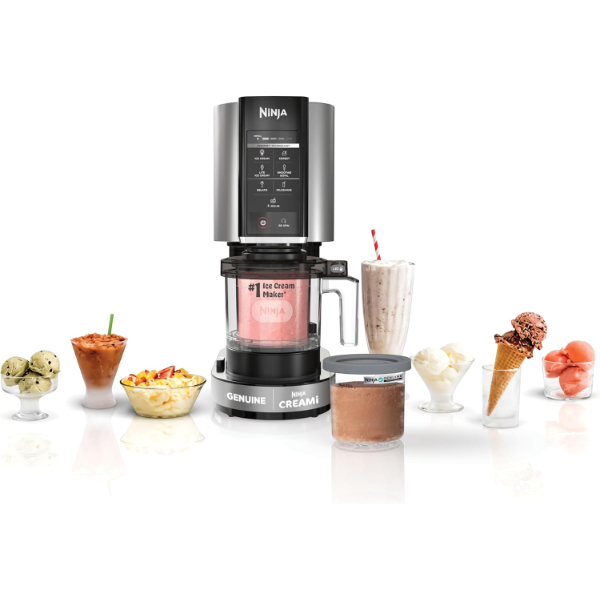
The Ninja Creami NC301 operates on a completely different mechanical protocol called micro-shaving, which was previously only available in commercial Pacojet machines costing thousands. Instead of churning a liquid base while freezing it, you freeze a liquid base solid in a pint container for 24 hours. The Creami then uses a high-speed, dual-drive motor to drive a precision blade down through the frozen solid block. Why it matters: It physically shaves the ice into microscopic particles and emulsifies it with the liquid fat, creating an impossibly smooth texture from almost any base ingredient.
This opens up massive possibilities for healthy alternatives. Traditional machines require high fat and sugar content to prevent the base from turning into a rock. With the Creami, you can freeze protein shakes, canned fruit, or low-fat milk. Why it matters: Because the blade pulverizes the ice block mechanically, you don't need heavy cream to achieve a smooth mouthfeel. This makes it the absolute best choice for consumers with dietary restrictions, like keto or vegan lifetsyles.
However, the trade-off is noise and planning. The micro-shaving process sounds incredibly similar to a power drill or a lawnmower in your kitchen, and it takes about 3 to 5 minutes to process a pint. You are also locked into Ninja's ecosystem of specific pint containers. If you want to make multiple flavors, you have to purchase additional containers and have them pre-frozen a day in advance. But for sheer texture quality, this machine punched way above its price bracket.
Rather than relying on air whip (overrun) to create softness, the Creami uses shear force. The blade spins at high RPM while slowly descending. This shaves off layers of ice that are mere microns thick, instantly blending them with the flavor base without allowing large ice structures to reform.
Best High-Capacity Workhorse: Whynter ICM-200LS
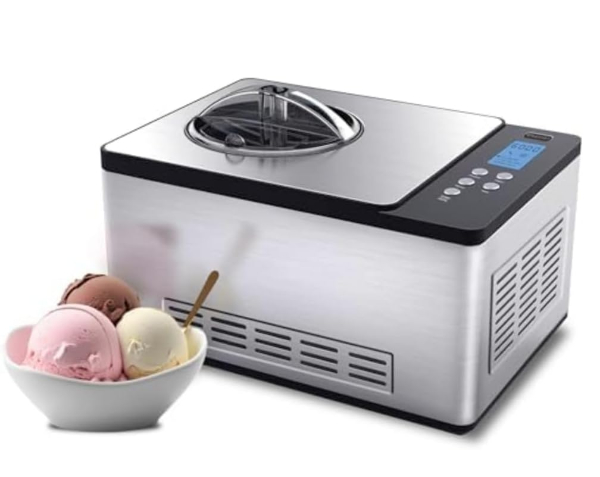
The Whynter ICM-200LS is a massive 2.1-quart compressor machine aimed at larger families or individuals who like to entertain. It is housed in a heavy-duty stainless steel casing and utilizes a powerful compressor that runs on CFC-free R134a refrigerant. Why it matters: The larger 2.1-quart capacity yields significantly more ice cream per batch than the standard 1.5-quart models. If you have a family of four or more, smaller models will require you to run multiple cycles just to give everyone a full serving.
The build quality is incredibly durable, intended to handle repeated, heavy-duty churning cycles without the motor burning out. It features an extended cooling function to prevent the batch from melting and a motor protection feature that stops the unit if the ice cream becomes too frozen to turn. Why it matters: This protects the internal drive gears from stripping, a common issue in cheaper or older compressor machines that do not feature automatic shutoffs.
The trade-offs here are pure size and weight. The unit weighs roughly 32 pounds and consumes a significant amount of vertical and horizontal counter space. It is not something you will want to haul out of a bottom cabinet every time you want dessert; it demands a dedicated spot in your kitchen. But for continuous, high-volume production with bulletproof durability, it is outstanding.
The ICM-200LS uses R134a as its working fluid in a continuous vapor-compression cycle. This allows the unit to maintain extreme sub-zero temperatures reliably across longer churn times required to freeze massive 2.1-quart batches without thermal bleed-off.
How We Chose These Products
Our evaluation process was centered around three core metrics: pull-down thermal rate, overrun management, and mechanical longevity. We focused on products that offer verifiable, repeatable results. Each unit was assessed by its ability to keep ice crystal growth below the 50-micron threshold, ensuring a smooth mouthfeel. We included different technologies (freezer bowls, standard compressors, and micro-shaving systems) to suit distinct budget tiers and kitchen spatial constraints.
Comparison Overview
| Model | Type | Capacity | Key Benefit |
|---|---|---|---|
| Cuisinart ICE-21 | Freezer Bowl | 1.5 Quart | Lowest cost; simple clean up |
| Cuisinart ICE-100 | Compressor | 1.5 Quart | No pre-freezing; great density control |
| Breville Smart Scoop | Smart Compressor | 1.5 Quart | Auto-hardness sensing; keep cool mode |
| Ninja Creami NC301 | Micro-Shaving | 1 Pint (per container) | Perfect texture with low-calorie bases |
| Whynter ICM-200LS | Compressor | 2.1 Quart | Massive yield; commercial build quality |
Buying Guide: What to Look For
- Freezer Bowl vs. Compressor: If you only make ice cream once a month, a freezer bowl is cost-effective. If you want dessert on a whim or make continuous batches, pay extra for a compressor.
- Overrun Control: Gelato and sorbet require very little air whipped in. Look for machines with slow paddle speeds or specialized paddles to achieve dense textures.
- Physical Footprint and Weight: Compressor units weigh between 25 and 35 pounds and are highly bulky. Ensure you have dedicated counter space before buying one.
- Dietary Goals: If you are planning to make healthy, dairy-free, or high-protein frozen treats, standard churners struggle to make them smooth. Micro-shaving tech (like the Ninja Creami) is superior for these recipes.
General Pro / Cons
| Pro: Why You Should Buy | Con: The Trade-Offs |
|---|---|
| Complete control over ingredients (no preservatives, artificial gums). | High-end compressor models carry heavy financial costs. |
| Ability to make custom flavors impossible to find in standard stores. | Compressor units are massive and take up huge amounts of counter space. |
| Micro-shaving tech yields smooth texture even with zero fat. | Some units (like the Creami) are as loud as a power tool during operation. |
| Compressors allow spontaneous back-to-back dessert making. | Freezer bowl models require aggressive planning 24 hours in advance. |
| Substantial cost savings over purchasing artisanal premium pints. | Cleaning moving parts that get exposed to raw dairy can be tedious. |
Final Summary
Mastering the art of home ice cream depends heavily on matching the machine's cooling technology to your lifestyle. If you value smooth texture above all else and prioritize healthy or dairy-free bases, the Ninja Creami NC301 stands as a revolutionary game-changer. For purists who want classic ice cream and gelato without the 24-hour waiting game, the Breville Smart Scoop or Cuisinart ICE-100 offer top-tier automation. Always ensure your ice cream bases are chilled in the fridge before processing to help the machine minimize those pesky ice crystals. Aggregate rating of the products reviewed: 4.64 out of 5.