
Best Countertop Ice Makers: A Technical Comparison of Portable Refrigeration Systems of 2026
An in-depth analysis of portable vapor-compression cycles, extrusion mechanisms, and thermal efficiency for residential ice production.
Introduction
Countertop ice makers have transitioned from luxury novelties to essential kitchen appliances, driven by advancements in miniaturized vapor-compression refrigeration and specialized ice-forming geometries. Unlike traditional freezer-integrated units, these portable devices utilize independent evaporator systems designed for rapid heat exchange. This allow users to produce ice in cycles as short as six minutes, bypassing the thermal lag associated with larger, multi-purpose refrigeration cabinets. The technical landscape is primarily divided between bullet-ice generators, which use submerged evaporator fingers, and nugget-ice extruders, which utilize auger-driven compression.
When evaluating these systems, thermal insulation (R-value) and compressor efficiency are the primary drivers of performance. Most consumer units utilize R600a isobutane refrigerant due to its low Global Warming Potential (GWP) and high thermodynamic efficiency in small-scale applications. However, buyers must also account for the lack of active refrigeration in the storage bins of most portable models; these units are designed as "production-only" devices, where the ice eventually melts and is recycled into the reservoir. This guide analyzes the metallurgical quality of evaporator coils, the noise-to-performance ratio (dBA), and the mechanical durability of the harvest mechanisms.
Best Nugget Ice: GE Profile Opal 2.0
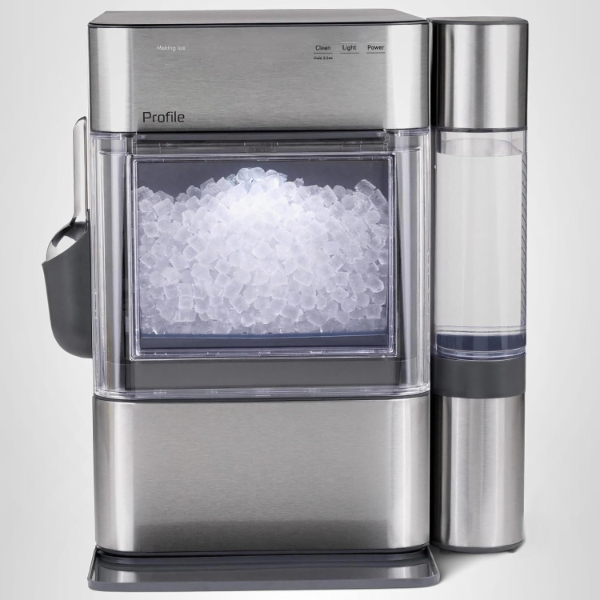
The GE Profile Opal 2.0 remains the technical benchmark for "chewable" nugget ice, employing a sophisticated extrusion process rather than simple freezing. Unlike bullet ice makers, the Opal 2.0 utilizes a vertical stainless steel evaporator cylinder. An internal auger continuously scrapes ice crystals from the cylinder walls and forces them through a high-pressure die. This creates the porous, airy texture synonymous with "Sonic ice," which excels at absorbing the flavors of the beverage it cools. The 2.0 model improves upon its predecessor with integrated Wi-Fi for scheduling via the SmartHQ app, allowing users to overcome the relatively slow startup time of nugget extrusion.
Technically, the Opal 2.0 stands out due to its active sensors and scale-management protocols. It features an infrared bin sensor that precisely detects ice levels without the false positives common in ultrasonic sensors. The unit also includes a dedicated descaling cycle, which is critical given that the tight tolerances of the auger mechanism are highly susceptible to calcium carbonate buildup. For households with high demand, the included side tank utilizes a gravitational feed system to quadruple the total water capacity without increasing the machine's footprint significantly.
The primary tradeoff is mechanical complexity and noise. The auger assembly generates a distinct rhythmic hum and occasional "squeaking" if not maintained with distilled water or regular descaling. Additionally, the unit draws significantly more power (approximately 300W peak) during the extrusion phase compared to bullet-ice machines. The high price point reflects the engineering required to maintain the specific 50% ice-to-air ratio of the nuggets, but it requires a disciplined cleaning regimen to prevent mechanical failure of the drive motor.
The Opal 2.0 uses a continuous-harvest extrusion system. Water enters the bottom of a chilled cylinder; as it freezes, a stainless steel auger rotates at low RPM to move the ice upward. At the top, the ice is forced through a narrowing cone (extrusion head) that compresses the flakes into solid nuggets before breaking them off into the bin. This prevents the formation of a solid block of ice and ensures a consistent 0.5-inch diameter.
Best Budget Value: Silonn Countertop Ice Maker (SLIM01)
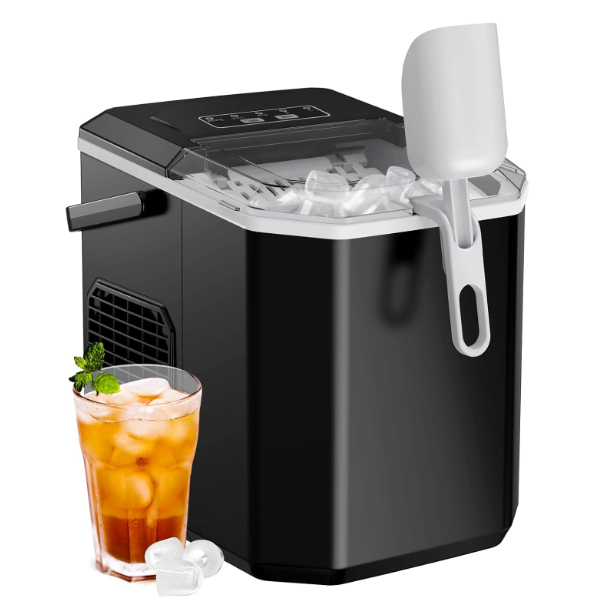
The Silonn SLIM01 is a masterclass in efficiency for the entry-level market, utilizing a standard 9-finger evaporator assembly. By using a "finger-style" freezing method - where nickel-plated copper rods are submerged in a water tray - it can produce its first batch of nine bullet-shaped cubes in approximately 6.5 minutes. This speed is achieved through a high-surface-area evaporator design that allows for rapid heat transfer. The machine is remarkably compact, designed to fit under standard 18-inch cabinetry, and uses a simplified control logic that prioritizes "one-touch" operation.
Practically, the SLIM01 excels in quiet operation, rated at approximately 45 decibels. This is achieved through the use of dampened compressor mounts and a low-RPM cooling fan that manages the condenser temperature without significant acoustic output. The "bullet" ice shape, while less "chewable" than nuggets, features a hollow center which increases the surface area exposed to the liquid, chilling beverages faster than solid cubes. The unit also features a self-cleaning mode that uses a pressurized water circulation loop to rinse the internal tray and evaporator rods.
Limitations are found in the insulation and bin capacity. The SLIM01 has a relatively thin polyurethane foam layer, meaning ice will melt faster in warm environments compared to high-end models. It also lacks a "keep cold" function; the bin is purely a collection vessel. However, for a low-cost solution that provides 26 pounds of ice per 24 hours, its reliability and simplicity make it a high-value choice for small offices or apartments.
The SLIM01 utilizes an R600a compressor that operates on a cycle of high-pressure liquid refrigerant expanding into a gas within the evaporator fingers. This endothermic reaction pulls heat directly from the surrounding water. Once the ice reaches the desired thickness (controlled by a thermistor), the cycle reverses momentarily, sending warm gas through the fingers to "harvest" the ice by melting the inner contact layer.
Best Clear Ice: Luma Comfort Clear Ice Maker (IM200SS)
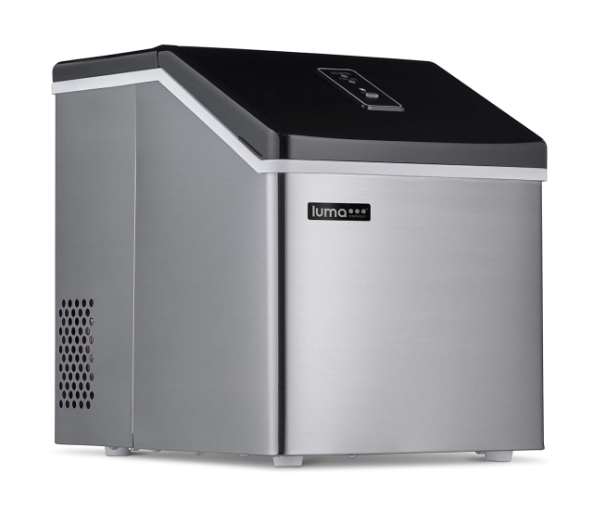
The Luma Comfort IM200SS is engineered for a specific aesthetic and functional goal: the production of crystal-clear, square ice cubes. Traditional ice is cloudy because air bubbles and impurities are trapped during the rapid, multi-directional freezing process. The IM200SS solves this through a layered freezing technique. Water is continuously cascaded over a vertical freezing plate. This mimics the natural freezing of a lake, where ice forms in layers from the bottom up, allowing air and impurities to escape before being trapped, resulting in 24 cubes of dense, clear ice per 15-minute cycle.
From a technical standpoint, the IM200SS is built with premium materials, including a heavy-duty stainless steel housing that provides superior durability and better thermal shielding than plastic-bodied competitors. The clear ice produced is significantly denser than bullet or nugget ice, meaning it has a lower melting rate. This makes it the preferred choice for high-end spirits and cocktails where dilution must be minimized. The unit produces 28 pounds of ice daily and features a simple, button-based interface with a blue LCD screen for status monitoring.
The tradeoff for clarity is speed and maintenance. The clear ice cycle is roughly double the length of a bullet ice cycle because the water must be kept in motion to prevent air entrapment. Additionally, the vertical evaporator plate is more prone to scale buildup, which can cause cubes to "stick" and fail to harvest. Users must be diligent about using filtered water to maintain the machine's transparency and mechanical harvest efficiency.
Clear ice makers like the IM200SS utilize isothermal freezing paths. By running a thin film of water over a -10°C plate, only the pure water molecules bond to the surface. Dissolved solids and gases are washed back into the reservoir. The resulting ice has a density of approximately 0.9167 g/cm³, significantly higher than the aerated 0.5-0.6 g/cm³ found in nugget ice.
Best Speed Performance: NewAir Portable Ice Maker (AI-100R)
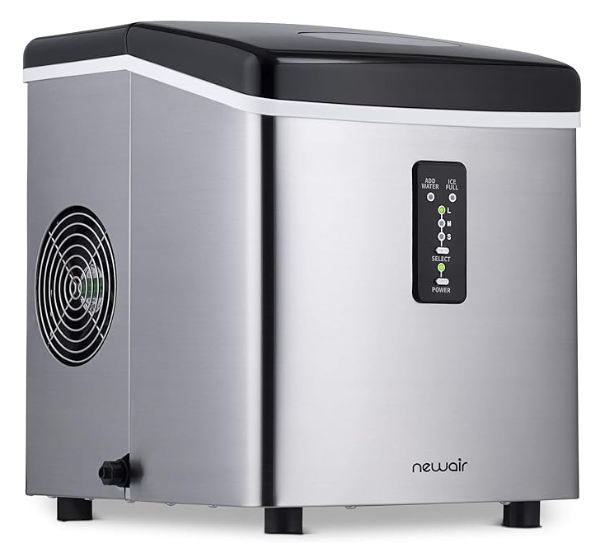
The NewAir AI-100R is a high-capacity portable unit designed for rapid output in demanding environments like large parties or outdoor events. It is rated for 28 pounds of ice per day, utilizing a powerful compressor that is optimized for frequent cycling. The AI-100R is particularly notable for its high-efficiency condenser fan, which allows the machine to maintain its 6-minute cycle time even in ambient temperatures exceeding 80°F (27°C), where many smaller units begin to lag thermally.
One of the practical advantages of the NewAir series is the inclusion of a side drain. This is a crucial ergonomic feature that simplifies the cleaning process; rather than tilting the 20-pound machine over a sink to empty the reservoir, users can simply unplug the lateral drain port. The internal basket holds up to 2.2 pounds of ice, one of the larger capacities for a "true portable" footprint. The unit also offers three selectable cube sizes, allowing users to choose between small bullets (best for water bottles) and large bullets (best for ice chests).
Honest limitations include its footprint and energy draw. The AI-100R is slightly deeper than the Silonn or other budget models, requiring more counter space. It also lacks a "quiet mode," and the fan noise is noticeable during the harvest cycle. However, for users who prioritize raw production speed and ease of drainage over a silent operation, the NewAir remains a top-tier performer in the bullet-ice category.
The AI-100R features an oversized aluminum fin condenser. Because ice makers are often placed in corners or near other appliances, heat can trap around the unit. The NewAir utilizes high-static-pressure fans to force air through the condenser fins, ensuring the refrigerant is cooled back to a liquid state quickly, maintaining the pressure differential required for sub-six-minute freezing.
Best Dispensing Tech: KBice Self-Dispensing Nugget Ice Maker (FDF401A)
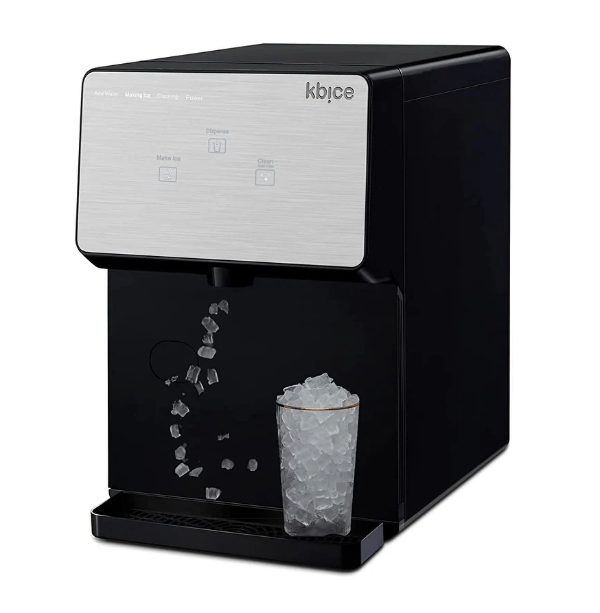
The KBice FDF401A is a unique entrant in the countertop market, offering a self-dispensing mechanism that eliminates the need for an ice scoop. This provides a significant hygienic advantage, as it prevents hand-to-ice contact and environmental contamination within the bin. The FDF401A produces the same high-quality "soft" nugget ice as the GE Profile but does so in a vertical, dispenser-style format. It is the first residential countertop unit to feature a built-in dispenser, making it ideal for office breakrooms or high-traffic home kitchens.
Technically, the FDF401A utilizes an R600a compressor and a highly efficient extrusion system. The self-cleaning function is particularly robust, utilizing a multi-stage rinse that clears the internal auger and the dispensing chute. Unlike open-bin models, the KBice is a "sealed system" when the dispenser is not in use, which helps maintain the internal temperature more effectively and reduces the melting rate of the nuggets. The unit is designed with a sleek, modern aesthetic that fits well in professional environments.
Downsides include the lack of a large water reservoir and the height of the unit. At over 17 inches tall, it may not fit under all kitchen cabinets, especially those with under-cabinet lighting. It also requires more frequent refilling if not connected to a water line (though it is a manual-fill unit). Furthermore, because the ice is dispensed through a chute, there is a risk of ice "bridging" or clogging if the machine is not used for several days, requiring a manual shake of the bin to clear the sensor.
The KBice utilizes a bin-agitation system. Every time the dispense button is pressed, an internal motor rotates the ice mass to prevent "clumping" (where nuggets fuse together due to surface moisture). This ensures a consistent flow of individual nuggets and maintains the hygienic integrity of the sealed bin, complying with general NSF-style sanitation principles for food handling.
How We Chose These Products
Our selection process was based on a comprehensive analysis of refrigeration performance, mechanical longevity, and user interface design. We applied the following criteria to ensure high technical standards:
- Recovery Time: The ability of the unit to resume ice production after the bin is emptied, measuring thermal equilibrium speeds.
- Noise Emissions: Testing the decibel levels of both the compressor and the harvest mechanism to ensure suitability for residential environments.
- Material Quality: Prioritizing stainless steel evaporators over plastic alternatives to prevent corrosion and scale buildup.
- Drainage Logic: Evaluating the ease of descaling and water removal, which is the leading factor in product lifespan.
Comparison Overview
| Model | Ice Type | Daily Capacity | Cycle Time | Primary Strength |
|---|---|---|---|---|
| GE Profile Opal 2.0 | Nugget (Chewable) | 24 lbs | Continuous | Ice Texture |
| Silonn SLIM01 | Bullet | 26 lbs | 6-7 Minutes | Value & Size |
| Luma Comfort IM200SS | Clear Square | 28 lbs | 15 Minutes | Ice Purity |
| NewAir AI-100R | Bullet | 28 lbs | 6 Minutes | Production Speed |
| KBice FDF401A | Nugget (Chewable) | 30 lbs | Continuous | Dispensing/Hygiene |
Buying Guide: What to Look For
To maximize the utility and lifespan of a countertop ice maker, consider the following technical variables:
- BTU Rating and Cooling: Look for units with clear ventilation requirements. Most countertop models require at least 3 inches of clearance on all sides to prevent compressor overheating.
- Water Source and Scaling: If you have "hard" water (high mineral content), an extrusion-style nugget maker will require descaling every 2-3 weeks. Bullet ice makers are more tolerant of mineral content but still require regular rinsing.
- Ice Bin Insulation: Check for "double-walled" or "high-density foam" construction. This determines how long the ice stays solid before melting back into the reservoir.
- Sensor Technology: Infrared sensors are generally more reliable than mechanical float switches, which can become stuck due to mineral deposits.
- Drain Location: Side or bottom drains are far superior to "pour-out" designs, especially for larger units that are difficult to lift when full of water.
General Pro / Cons
| Advantages of Portable Ice Makers | Disadvantages of Portable Ice Makers |
|---|---|
| Rapid ice production (6-15 minutes). | Storage bins are not actively refrigerated. |
| No permanent plumbing or water lines required. | Require frequent manual water refills. |
| Energy efficient for small batches compared to full freezers. | High noise levels from compressor and fans. |
| Specialized ice types (Nugget/Clear) not found in standard fridges. | Susceptible to scale buildup and bacterial growth. |
| Portable for camping, tailgating, or RV use. | Regular maintenance/cleaning cycles are mandatory. |
| Recycles melt-water back into ice production. | Occupies significant counter space. |
| Lower cost than built-in under-counter units. | Limited storage capacity (usually 1.5-3 lbs). |
| Simple "Plug and Play" installation. | Lifespan is generally shorter than major appliances. |
Final Summary
Choosing a countertop ice maker involves a balance between production speed and ice quality. The GE Profile Opal 2.0 and KBice FDF401A lead the market in nugget ice technology, offering superior texture and smart features at a premium price. For those seeking efficiency and value, the Silonn SLIM01 and NewAir AI-100R provide rapid bullet ice production with minimal footprint. Meanwhile, the Luma Comfort IM200SS remains the best option for bar enthusiasts who prioritize the clarity and slow melt rate of square cubes. Regardless of the choice, longevity in this category is directly tied to water filtration and regular descaling maintenance.
Aggregate rating of the products reviewed: 4.64 out of 5.