
Best Countertop Cutting Boards of 2026
A technical analysis of surface hardness, material porosity, and knife-edge preservation for professional and home culinary environments.
Introduction
The selection of a countertop cutting board is fundamentally a study in material science and tribology - the science of interacting surfaces in relative motion. A cutting board serves not merely as a platform for food preparation but as a sacrificial interface designed to protect the microscopic integrity of a knife's apex. The primary technical conflict in this category involves the balance between surface hardness, which ensures board longevity and hygiene, and surface resilience, which prevents the rapid blunting of high-carbon or stainless steel blades through excessive impact energy.
When evaluating these tools, researchers look at the Shore hardness scale for synthetics and the Janka hardness test for wood species. A board that is too hard, such as glass or marble, will cause immediate rolling or chipping of the blade's edge. Conversely, a board that is too soft or overly porous can harbor microbial growth within deep fissures. Modern culinary standards require boards that offer low moisture absorption rates and, in many cases, the ability to withstand high-temperature sanitation cycles in commercial dishwashers. The following selections represent the pinnacle of current material engineering in the kitchenware sector.
Best Wood Heritage: John Boos Block Maple Edge Grain
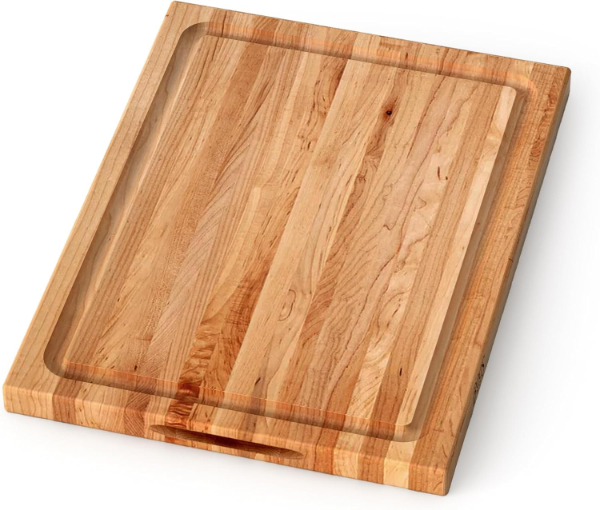
The John Boos Block Maple Edge Grain is the industry standard for traditional wood surfaces, utilizing Northern Hard Maple (Acer saccharum). Hard Maple is technically categorized as a diffuse-porous wood, which provides a tight grain structure that naturally resists bacterial penetration more effectively than open-grain woods like oak. The edge-grain construction means the wood fibers run parallel to the cutting surface, offering a stable and predictable strike zone that resists warping under moderate humidity fluctuations. This board is specifically engineered for heavy-duty prep work where mass and stability are required to prevent board "walk" during high-velocity chopping.
Technically, this board stands out due to its NSF (National Sanitation Foundation) certification, a rarity for wood products. This certification confirms that the materials and manufacturing processes meet strict safety standards for food contact. The board’s thickness - often 1.5 inches or more - provides significant thermal mass, which helps it remain flat even as it absorbs and releases ambient moisture. It is an ideal choice for those using Western-style knives with a slightly higher angle of attack, as the maple provides a firm but forgiving feedback loop.
Limitations involve a strict maintenance protocol; the board is not dishwasher safe and requires regular applications of food-grade mineral oil and beeswax to maintain its hydrophobic properties. Failure to oil the board leads to desiccation and eventual checking (small cracks) along the glue lines. Furthermore, its weight makes it less suitable for kitchens where the board must be moved frequently from storage to counter. However, in terms of sheer durability and a "self-healing" surface that hides knife marks, it remains unsurpassed in the wooden category.
Wood is a hygroscopic material, meaning it actively interacts with water vapor. Hard Maple's capillary structure allows it to pull moisture (and bacteria) deep into the wood fibers. Once trapped, the bacteria are deprived of oxygen and moisture, leading to their eventual lysis. This natural antimicrobial property is maintained as long as the wood's moisture content is stabilized through topical oil treatments, which fill the pores and prevent liquid saturation.
Best Paper Composite: Epicurean Gourmet Series
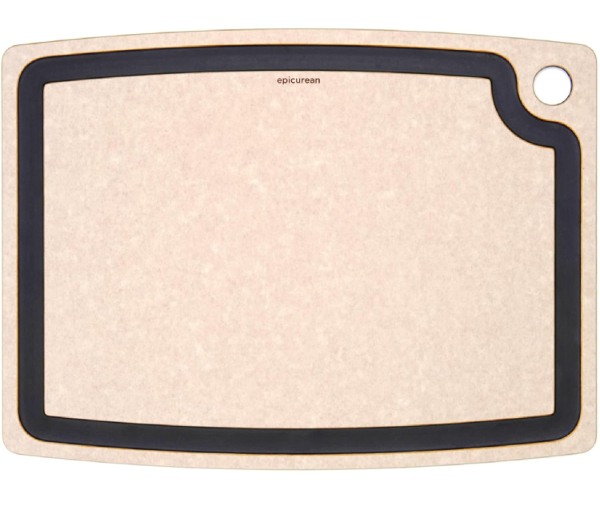
The Epicurean Gourmet Series utilizes a high-tech paper composite material known as Richlite, which was originally developed for industrial tooling and aerospace applications. This material is created by saturating layers of FSC-certified paper with a food-safe phenolic resin and then pressing them under intense heat and pressure. The result is a non-porous, incredibly dense surface that is completely dishwasher safe and heat resistant up to 350°F (176°C). Unlike wood, it will never warp, crack, or require oiling, making it the premier choice for low-maintenance kitchens.
Technically, the Gourmet Series stands out for its surface density and lack of "grain." Because the material is monolithic, it does not harbor bacteria in microscopic fissures. The board is thinner than wood boards but maintains exceptional structural integrity, allowing it to be stored easily. The "Gourmet" iteration includes a juice groove on one side to manage liquid runoff from proteins, while the flat side remains available for vegetable prep. Its hardness is rated higher than most woods, which provides a very loud, sharp "clack" during use, indicating high energy return to the blade.
The primary tradeoff is its effect on knife edges. Because the surface is harder than maple or hinoki, it will dull knives faster than soft wood or rubber boards. It is not recommended for expensive, high-hardness Japanese knives (60+ HRC) which may chip upon impact. However, for standard stainless steel kitchen knives, it provides a highly sanitary and durable surface that is virtually indestructible in a domestic environment. It represents the perfect bridge between the aesthetics of wood and the utility of plastic.
The manufacturing process of Epicurean boards involves a thermosetting reaction. The phenolic resin undergoes cross-linking during the pressing phase, creating a permanent chemical bond that is impervious to water and heat. This polymerization ensures that the board remains inert and food-safe even after years of high-temperature wash cycles, as the resin prevents the release of any underlying paper fibers.
Best Synthetic Utility: OXO Good Grips Utility Cutting Board
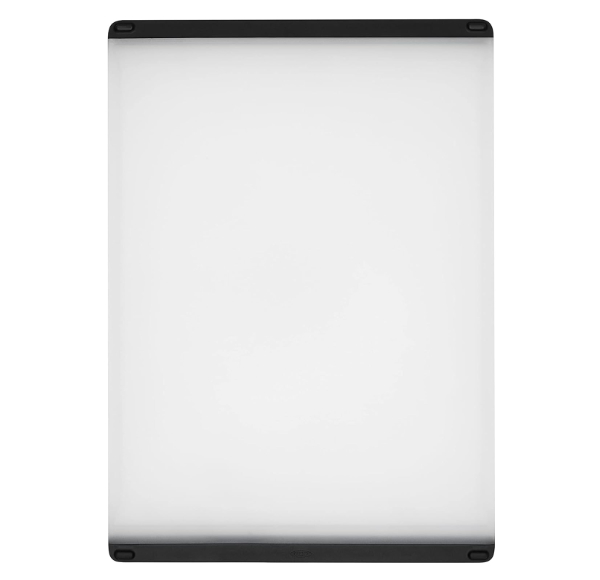
The OXO Good Grips Utility Cutting Board is an expertly designed tool made from high-density polypropylene. This material is chosen for its specific chemical resistance and high Shore D hardness, which allows for a surface that is soft enough to protect knife edges while remaining tough enough to resist deep gouging. Polypropylene is inherently non-porous and resists odor absorption, making this board the ideal choice for "high-risk" prep items such as raw poultry, garlic, and onions. The surface features a subtle texture that reduces surface tension, preventing wet ingredients from sticking to the board.
What distinguishes this board technically is the integration of tapered thermoplastic elastomer (TPE) edges. These "Good Grips" serve two functions: they act as a shock absorber during heavy chopping and provide a high coefficient of friction against various countertop materials (granite, marble, laminate). This prevents the board from sliding, a critical safety feature that eliminates the need for the "wet towel" trick often used by chefs. The board also features a deep juice groove that is designed with a high-capacity cross-section to prevent overflow during carving tasks.
While this board is an exceptional value, it is susceptible to deep knife scarring over time. Unlike wood, polypropylene does not "self-heal," and deep grooves can eventually become difficult to sanitize even in a dishwasher. It is best treated as a high-performance utility board with a 2-3 year lifespan under heavy use. It is widely available and remains the top choice for those who prioritize safety, ease of cleaning, and cross-contamination prevention over long-term heirloom durability.
OXO employs an over-molding process to bond the black TPE edges to the polypropylene core. This creates a mechanical and chemical bond that prevents the ingress of water between the two materials. This design is crucial for hygiene, as it ensures there are no hidden seams or gaps where mold or bacteria could proliferate during storage or use.
Best for Knife Preservation: Shun Hinoki Cutting Board
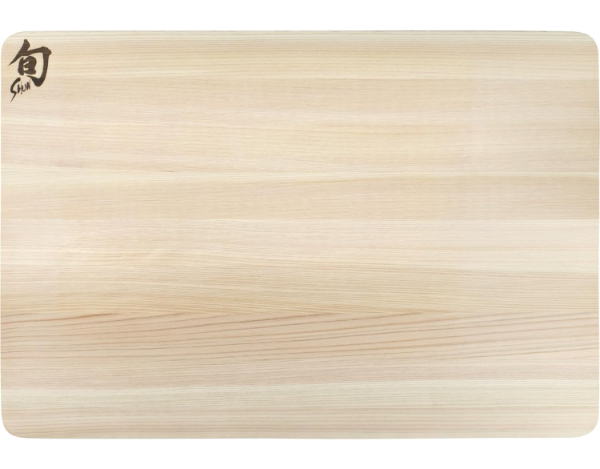
The Shun Hinoki Cutting Board is crafted from Japanese Cypress, a wood species renowned for its extremely low Janka hardness rating. This softness is a deliberate design choice intended for use with high-hardness Japanese cutlery (VG-MAX, SG2 steels). Because the wood fibers are so compliant, they yield under the pressure of a razor-sharp edge rather than resisting it. This prevents the microscopic chipping of the blade's "teeth," significantly extending the interval between professional sharpenings. Hinoki also has a distinct, pleasant citrus scent that is released when the board is dampened.
Technically, Hinoki is unique due to its high concentration of phytoncides - natural organic compounds that the tree uses to repel insects and prevent rot. These compounds provide the board with inherent antibacterial properties that are superior to many other wood types. Shun constructs these boards from a single piece or large vertical grain sections to minimize the use of adhesives. Before use, it is standard protocol to wet the Hinoki surface; this prevents juices and odors from being absorbed into the soft fibers, acting as a temporary liquid barrier.
The limitation of Hinoki is its extreme fragility. It is prone to denting, staining, and warping if not cared for with precision. It should never be used for heavy cleaver work or high-impact hacking, as the wood will crush. It is a specialized tool for precision slicing, julienning, and delicate prep work. For the culinary enthusiast who has invested in high-end Japanese knives, this board is a mandatory companion to protect that investment, but it requires a user who respects its delicate material properties.
Hinoki wood contains alpha-pinene and bornyne, which are natural terpenes. These chemicals are part of the tree's immune system. Scientific studies have shown that these compounds can inhibit the growth of various microorganisms, including E. coli and Staphylococcus aureus. These oils are part of the wood's cellular structure and remain active for years, contributing to the board's long-term hygiene profile.
Best Professional Rubber: Hasegawa Soft Rubber Cutting Board
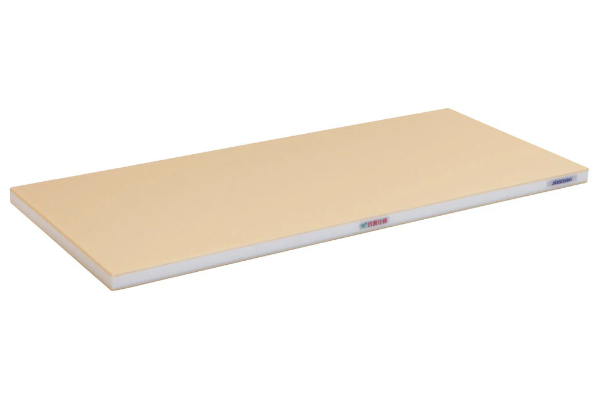
The Hasegawa Soft Rubber Cutting Board is widely considered the "holy grail" of cutting surfaces in professional sushi kitchens and high-end restaurants. Its construction is unique: it features a rigid wood core sandwiched between two layers of specialized synthetic rubber. This design provides the structural stability and lightness of wood while offering a high-friction, "grippy" rubber surface. The rubber used is soft enough that the knife edge can slightly penetrate the surface, which provides incredible control and prevents the blade from sliding during precision tasks.
Technically, the Hasegawa board addresses the primary flaw of solid rubber boards (like Hi-Soft), which is their tendency to warp or bow over time. The internal wood core acts as a stabilizer, ensuring the board remains perfectly flat. The rubber surface is designed with a specific texture that facilitates easy cleaning and resists the deep, permanent staining common in standard plastic boards. It is also heat-safe for brief exposure to boiling water for sanitation purposes, though it is generally not recommended for full dishwasher cycles to protect the wood core's integrity.
The main trade-offs are price and specialized care. Hasegawa boards are significant investments and require the use of a specialized "board scraper" (resembling a sanding block) to occasionally resurface the rubber and remove knife marks. Additionally, the soft surface can be damaged by serrated bread knives or rough hacking. It is a precision instrument designed for users who have mastered their knife skills and want the absolute best combination of edge protection, sanitation, and board stability.
The "FR" (F-series) Hasegawa boards use an internal wood core to reduce weight by up to 30% compared to solid rubber boards. This core is hermetically sealed by the rubber outer layers. This hybrid approach allows for larger board sizes that remain easy to lift and maneuver while providing the mechanical stiffness required for a perfectly level cutting plane, which is essential for uniform slicing.
How We Chose These Products
Our evaluation process for countertop cutting boards involved a multi-disciplinary approach focusing on material durability, knife-edge attrition rates, and hygienic maintenance. We prioritized products that have a verifiable track record in both commercial and residential settings. Key criteria included:
- Surface Resilience: We assessed how each material responds to the impact of various steel types, from soft German stainless to ultra-hard Japanese powdered steels.
- Thermal and Chemical Stability: For synthetic and composite boards, we tested their ability to withstand repeated high-heat sanitation cycles without deformation.
- Microbial Resistance: We favored materials with documented antimicrobial properties or non-porous structures that prevent cross-contamination.
- Ergonomics and Safety: We evaluated board weight, non-slip features, and juice management systems to ensure they contribute to a safe kitchen environment.
Comparison Overview
| Product | Material | Hardness Level | Dishwasher Safe | Best Use Case |
|---|---|---|---|---|
| John Boos Block | Hard Maple | Medium-High | No | Heavy Chopping & Prep |
| Epicurean Gourmet | Paper Composite | High | Yes | Low Maintenance Utility |
| OXO Good Grips | Polypropylene | Medium | Yes | Raw Proteins & Poultry |
| Shun Hinoki | Japanese Cypress | Low | No | Precision Slicing |
| Hasegawa Rubber | Rubber/Wood Core | Medium-Low | Limited | Professional/Sushi |
Buying Guide: What to Look For
- Material Mohs/Hardness: Consider your primary knife steel. If you use expensive, brittle steel, opt for Hinoki or Rubber. For durable Western knives, Maple or Composite is preferred.
- Porosity: Non-porous materials (Plastic/Composite) are essential for raw meat. Porous wood should be reserved for vegetables and bread unless you are committed to high-level maintenance.
- Size and Storage: Measure your sink and dishwasher. A massive board is useless if you cannot wash it effectively.
- Stability Features: Look for boards with significant weight or non-slip rubber feet to ensure the board doesn't shift under pressure.
- Maintenance Commitment: Be honest about your willingness to oil and sand a board. If you want a "buy and forget" tool, choose the Epicurean or OXO.
General Pro / Cons
| Strengths | Weaknesses |
|---|---|
| Wood boards offer natural antimicrobial properties. | Wood requires monthly oiling and waxing. |
| Composite boards are heat resistant and very durable. | Hard surfaces dull knife edges faster. |
| Plastic boards are inexpensive and easy to sanitize. | Plastic scars easily and harbors bacteria in deep cuts. |
| Rubber boards provide the best grip for precision work. | Rubber boards are heavy and can be very expensive. |
| Edge-grain wood resists warping and deep gouging. | Wood boards cannot be submerged in water. |
| Juice grooves prevent counter mess during meat carving. | Grooves reduce the effective flat cutting area. |
| Hinoki wood protects expensive Japanese knife edges. | Soft wood stains easily with colorful vegetables like beets. |
| Synthetic boards often feature convenient non-slip edges. | Synthetics lack the aesthetic "patina" of aged wood. |
Final Summary
The ideal cutting board choice depends entirely on the intersection of your knife collection, your maintenance habits, and your culinary style. The John Boos Block remains the quintessential choice for those who value traditional materials and high-mass stability. For the pragmatic cook, the Epicurean Gourmet Series and OXO Utility Board offer unparalleled ease of use and sanitation. Specialty users, however, will find their needs best met by the extreme edge protection of the Shun Hinoki or the professional grip and stability of the Hasegawa Soft Rubber Board. Understanding the material trade-offs is the key to both kitchen safety and long-term cutlery health.
Aggregate rating of the products reviewed: 4.7 out of 5.