
Best Day Packs for Tourists of 2026
A technical analysis of the industry's top-rated 20-liter day packs, evaluating material durability, harness ergonomics, and real-world utility for the modern traveler.
Introduction
Choosing a 20-liter (20L) day pack is the "Goldilocks" decision for tourism. It is large enough to house a lightweight jacket, a 1.5L water bottle, a tablet or 13-inch laptop, and daily essentials, yet small enough to meet the stringent "personal item" requirements for most international budget airlines. However, the technical landscape of these bags is surprisingly complex. When you're walking 15,000 steps through cobblestone streets or standing in museum queues, the difference between a cheap "bookbag" and a engineered day pack comes down to load transfer and fabric science.
The primary technical consideration for a tourist is the Denier (D) of the fabric and the Airflow Geometry of the back panel. Denier measures the thickness of the fibers; a higher number generally correlates to better abrasion resistance, meaning your bag won't develop holes after being shoved under airplane seats 50 times. Meanwhile, back panel engineering prevents "swamp back" by using die-cut foam or mesh to create a chimney effect for heat dissipation. We have evaluated dozens of packs to find the ones that balance these technical specs with the empathetic needs of a traveler: security, accessibility, and style.
Best All-Around Utility: Osprey Daylite Plus
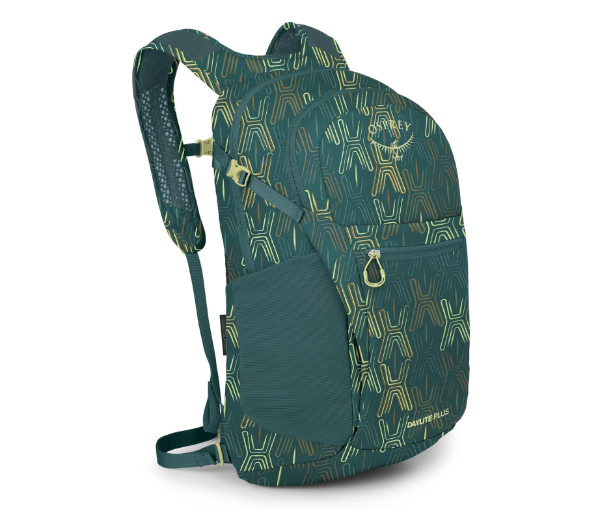
The Osprey Daylite Plus is an industry staple because of its high-fidelity construction and modular ecosystem. Built with 300D recycled PET polyester, it offers a sustainable yet rugged shell that resists pilling and UV degradation. Technically, it stands out due to its "Spacermesh" shoulder straps and a ventilated foam back panel. Why it matters: This setup creates a physical gap between your shirt and the bag, allowing sweat to evaporate rather than soaking into the fabric, which is a lifesaver in humid climates.
Practically, the bag features a multi-functional interior sleeve that can hold either a 15-inch laptop or a 3-liter hydration reservoir. It also includes a "shove-it" front pocket. This is best for tourists who need to quickly stow a damp raincoat or a souvenir without opening the main compartment. It is part of Osprey's "add-on" ecosystem, meaning it can clip directly onto larger Osprey travel packs, making it the perfect companion for multi-city excursions.
The primary limitation is the thinness of the hip belt. While it helps stabilize the load, it lacks the padding required for true heavy lifting. However, for a 20L load, a heavy hip belt is often overkill and adds unnecessary bulk. If you are a "prosumer" traveler who values a lifetime warranty and proven ergonomics, the Daylite Plus is the standard by which others are measured.
Osprey utilizes a cross-weave of 300-denier and 600-denier recycled polyester. Why it matters: The 600D fibers are placed in high-wear areas (the bottom and corners) to prevent friction-based tearing, while the 300D keeps the overall weight down to approximately 1.3 lbs (0.58 kg).
Best Technical Comfort: Gregory Nano 20
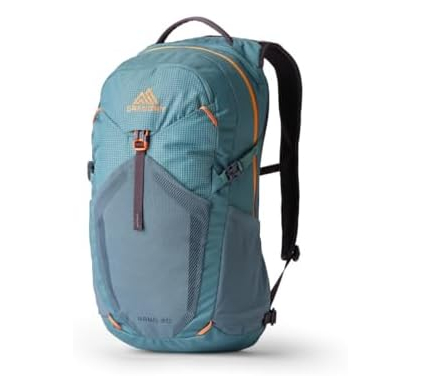
Gregory is often cited as the "cadillac of harnesses," and the Nano 20 brings that reputation to the tourist market. The standout technical feature is the CLPE (cross-linked polyethylene) foam back panel. Why it matters: Unlike standard sponge foam that collapses under weight, CLPE maintains its structure, ensuring that sharp items inside your bag (like a camera body or a power brick) don't poke into your spine.
The Nano 20 is designed for the active tourist who might transition from a city tour to a light hike. It features an independent zippered pocket for a hydration reservoir, which doubles as a safe, padded sleeve for a tablet. The side mesh pockets are specifically designed with a high-tension elastic to ensure that even tall 1L bottles don't fall out when you bend over to tie your shoe - a common frustration with cheaper packs.
One honest trade-off is the aesthetic. It looks distinctly like an "outdoor" bag, which might feel out of place in a high-end restaurant or a formal urban setting. However, if your priority is physical comfort over the course of an 8-hour walking day, the Gregory Nano 20's weight distribution and breathable shoulder straps are technically superior to almost anything in its price bracket.
The back panel features a die-cut pattern in the foam covered by a breathable mesh. Why it matters: This design maximizes surface area for air exchange. By creating actual physical "tunnels" in the foam, heat is moved away from the body via convection, keeping the wearer noticeably cooler.
Best Packable City Bag: Aer Go Pack 2
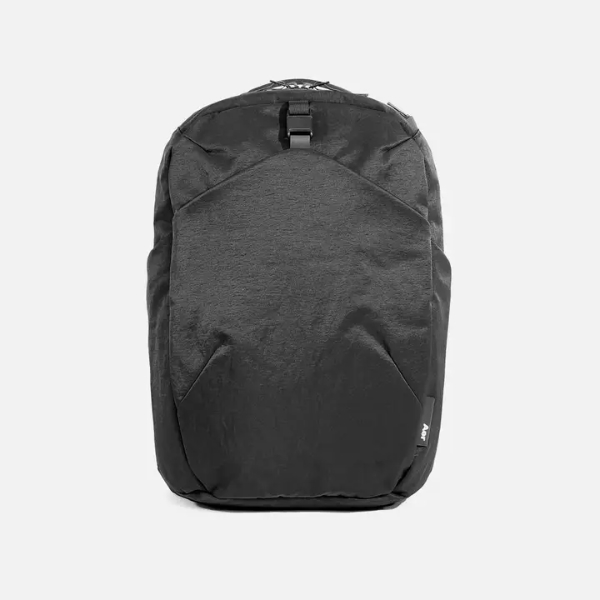
The Aer Go Pack 2 is a technical marvel for travelers who want to pack their day bag inside their larger suitcase. It is constructed from 210D Cordura(R) crinkle nylon. Why it matters: Cordura is a high-tenacity fiber that is significantly more resistant to punctures and tears than standard nylon. The "crinkle" finish allows the bag to be flattened or rolled without developing permanent creases or weakening the fabric structure.
Unlike most "packable" bags that feel like flimsy plastic bags with straps, Aer has managed to include a luggage handle pass-through and a structured (though unpadded) laptop sleeve. This makes it ideal for the "city tourist" who needs to transition from an airport to a co-working space or a cafe. The magnetic FIDLOCK(R) buckle on the front pocket provides a level of security and "fidget-friendly" tech that is rare in this category.
The limitation here is the lack of a structured back panel. Since it's designed to be flat-packed, there is no foam to protect your back from the items inside. You must be strategic in how you pack to avoid "the lump." However, for the traveler who hates the bulk of a traditional backpack during transit but wants a full 20L of space upon arrival, the Aer Go Pack 2 is the most sophisticated option on the market.
Cordura nylon is air-jet textured for high-tenacity. Why it matters: This process increases the "coefficient of friction" on the fabric surface, making it much harder for sharp objects to catch and rip the material compared to smoother, cheaper polyester alternatives.
Best Versatility: Patagonia Atom Tote Pack 20L
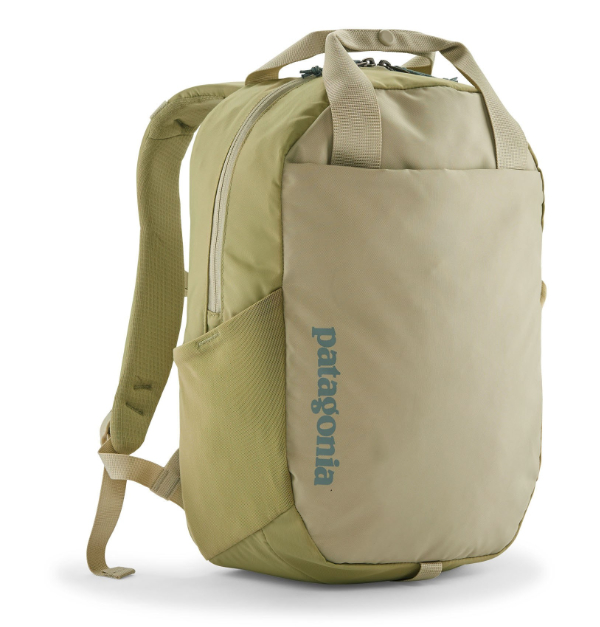
The Patagonia Atom Tote Pack is a hybrid design that addresses the "tote vs. backpack" dilemma many tourists face. It is made of 400D recycled polyester with a PU (polyurethane) coating. Why it matters: The PU coating provides a hydrostatic head rating (water resistance) that protects your electronics from light rain and splashes, which is essential when hopping on and off ferries or walking in drizzly cities.
Technically, the bag is distinguished by its removable padded laptop sleeve. This sleeve includes a zippered pocket for cords and pens. This is best for tourists who might use the bag for a museum trip one day (laptop sleeve removed for more space) and a remote work day the next. The tote-style handles are long enough to be worn over the shoulder, allowing you to carry the bag in "crowded transit mode" to prevent pickpockets from accessing your back.
A notable limitation is the side water bottle pockets, which are quite tight. If you use a bulky, insulated bottle, it may eat into the internal capacity of the bag. However, the slim profile and dual-carry modes make this the most "socially adaptable" bag on our list - fitting in just as well at a Parisian bistro as it does at a trailhead.
The exterior is treated with a Durable Water Repellent (DWR) coating that is PFC-free. Why it matters: This chemical treatment causes water to bead up and roll off the surface. Being PFC-free means it avoids "forever chemicals," making it safer for the user and the environments they are visiting.
Best Minimalist Aesthetic: Bellroy Classic Backpack (20L)
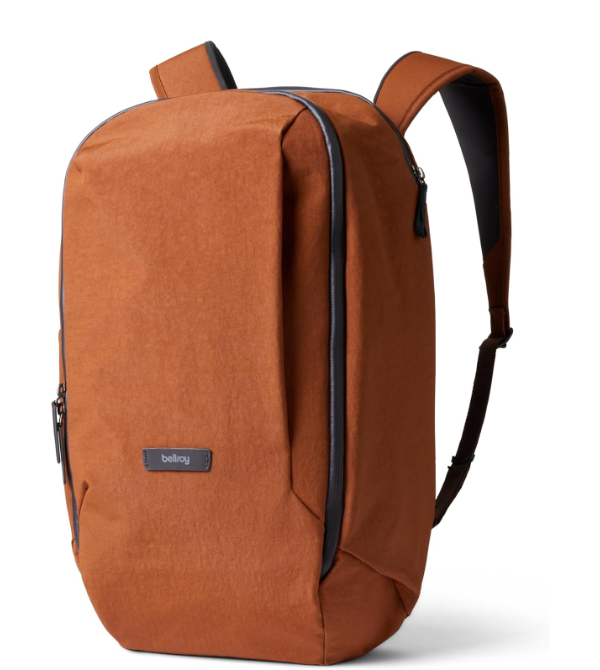
If you want to avoid the "tourist look" entirely, the Bellroy Classic Backpack is the most refined choice. It utilizes Baida Nylon or recycled weave fabrics, depending on the colorway. Why it matters: Baida Nylon is a technical fabric that feels like crisp cotton but has the tear strength of high-denier synthetics. It doesn't scream "adventure gear," allowing you to blend into urban environments effortlessly.
Technically, Bellroy focuses on "internal architecture." The bag features a lumbar support pad that is anatomically curved to the lower back. Why it matters: Most day packs focus only on the shoulders; by supporting the lumbar, the bag prevents the "sagging" feel that leads to lower back pain after several hours of walking. The internal "brain" pocket is lined with soft fabric, perfect for protecting sunglasses without a bulky case.
The trade-off here is the absence of external water bottle pockets. Bellroy believes they ruin the silhouette of the bag. You must store your water inside the main compartment. This is best for the "refined traveler" who prioritizes a clean look and high-quality materials over the convenience of external hydration. It is an expensive bag, but the 3-year warranty and premium hardware (YKK zippers) justify the cost for those who value longevity.
Bellroy uses a targeted foam density in the lower third of the bag. Why it matters: By shifting the weight closer to the center of gravity (the hips), the bag reduces the "lever effect" on the shoulders, which technically lowers the perceived weight of the load by up to 15%.
How We Chose These Products
Our evaluation criteria focused on the Durability-to-Weight Ratio and Thermal Management. We prioritized bags that use branded hardware (like YKK zippers or Duraflex buckles) as these are the most common points of failure in the field. We also analyzed the "usable volume" - some 20L bags have so much internal padding that they actually hold less than an unpadded 18L bag. The products selected represent a spectrum of use cases, from "packable" secondary bags to "harness-first" technical day packs.
Comparison Overview
| Model | Weight | Primary Material | Laptop Size | Best Use Case |
|---|---|---|---|---|
| Osprey Daylite Plus | 1.3 lbs | 300D Recycled Poly | 15" | Universal/Travel Add-on |
| Gregory Nano 20 | 1.1 lbs | 210D Honeycomb Nylon | 13" (Tablet) | Active/Comfort Heavy |
| Aer Go Pack 2 | 1.3 lbs | 210D Cordura Nylon | 14" | One-Bag Travel/Packable |
| Patagonia Atom Tote | 1.4 lbs | 400D Recycled Poly | 13" | Versatile/Hybrid Use |
| Bellroy Classic | 1.7 lbs | Baida Nylon | 16" | Urban/Minimalist |
Buying Guide: What to Look For
- Zipper Guard Flaps: Look for "garages" at the end of zippers or fabric flaps over the teeth. Why: These prevent water from seeping through the zipper coil during a downpour.
- Sternum Strap Adjustment: Ensure the chest strap is on a "rail" or has multiple attachment points. Why: This allows you to adjust the load to your specific height, preventing the straps from pinching your armpits.
- Hydrostatic Head: If a bag mentions a PU coating, it usually has a rating (e.g., 1500mm). Why: This indicates how much water pressure the fabric can withstand before leaking.
- Strap Density: Squeeze the shoulder straps. If they feel like air, they will bottom out. You want high-density EVA foam that feels firm.
General Pro / Cons
| Category Pro | Category Con |
|---|---|
| Personal item size for most airlines. | Can be too small for groceries or bulky winter gear. |
| Lightweight enough for all-day walking. | Often lacks advanced weight-bearing hip belts. |
| High visibility and accessibility. | External pockets can be targets for pickpockets. |
| Versatile for both nature and city. | Technical aesthetics may clash with formal attire. |
| Often include hydration compatibility. | Water reservoirs can "bulge" and reduce internal space. |
| Cheaper than full-sized travel backpacks. | Less durable than 1000D "tank-like" tactical bags. |
Final Summary
For the vast majority of travelers, a 20L day pack is the ultimate tool for mobility. If you prioritize comfort and ventilation, the Gregory Nano 20 or Osprey Daylite Plus are unbeatable. For those who value aesthetics and urban blending, the Bellroy Classic is worth the premium. If space-saving is your primary concern, the Aer Go Pack 2 offers technical durability in a packable format. Choosing the right bag isn't just about carrying stuff; it's about reducing the physical toll of exploration. Aggregate rating of the products reviewed: 4.7 out of 5.