
Best Dog GPS Trackers of 2026
A technical guide to the most reliable satellite and cellular tracking systems designed to keep your canine companions safe in any environment.
Introduction
Losing a dog is a visceral fear that every pet owner understands. While traditional microchips are vital for identification, they are passive devices - they only work if someone finds your dog and takes them to a shelter. A GPS tracker is an active defense, providing real-time location data directly to your smartphone. The landscape of pet wearables has shifted from bulky, unreliable radio tags to sophisticated devices using the same LTE-M and GNSS technology found in high-end smartwatches.
When selecting a tracker, the biggest hurdle isn't just the hardware price; it is the infrastructure required to keep the device connected. Most modern trackers rely on cellular networks to transmit GPS coordinates, which means a monthly subscription is almost always part of the deal. You are essentially buying a tiny cell phone for your dog. Understanding the difference between "Live Tracking" and "Location Updates" is critical, as the former consumes battery at a much higher rate but is the only feature that matters during an actual escape.
In this guide, we evaluate the top five solutions currently on the market, ranging from cellular-dependent smart collars to professional-grade VHF (Very High Frequency) units for areas where cell towers don't exist. We focus on battery efficiency, signal penetration, and physical durability - because a tracker that falls off in the brush is just expensive litter.
Best Overall Performance: Fi Series 3 Smart Collar
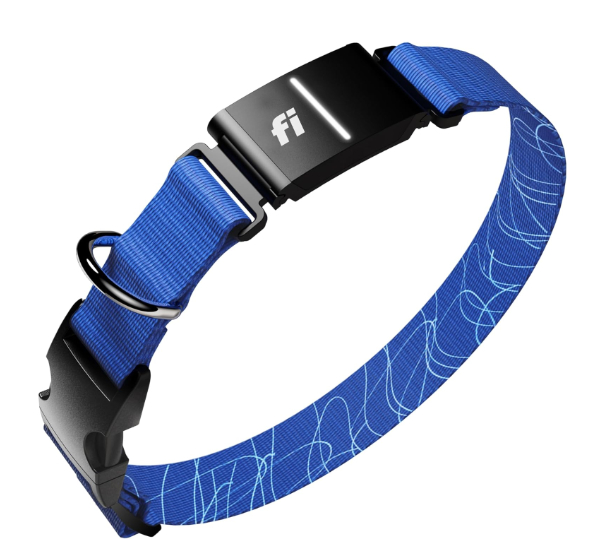
The Fi Series 3 represents the current peak of the integrated smart collar. Unlike "clip-on" units that can snag or be chewed off, the Series 3 is built into a stainless steel frame that can withstand up to 400 lbs of pull tension. It utilizes LTE-M technology, which is a low-power, long-range cellular protocol designed specifically for "Internet of Things" devices. This allows the collar to reach further into rural areas and penetrate deeper into buildings than standard LTE, all while consuming significantly less power.
What sets the Fi apart is its clever power management. It uses your home Wi-Fi and your phone's Bluetooth as "Safe Zones." As long as the collar is near these signals, the GPS and cellular radios stay dormant to save energy. The moment your dog leaves that radius without you, the collar enters "Lost Dog Mode," firing up its cellular antenna to provide location pings every minute. This balance gives it a battery life that can last weeks on a single charge under normal conditions.
The primary limitation is the proprietary nature of the system. You cannot use your own SIM card, and the device is effectively a brick without a paid Fi subscription. However, for most urban and suburban users, the combination of sleek design and reliable escape alerts makes it the most practical daily driver. It also includes an IP68 and IP69K rating, meaning it can survive both deep immersion and high-pressure jet sprays.
Technical Deep-Dive: LTE-M Protocol
The Fi Series 3 uses LTE-M (Long Term Evolution for Machines). Why It Matters: Standard cell phones use high-bandwidth LTE to stream video, which kills battery fast. LTE-M uses narrow frequency bands to send small packets of data (like GPS coordinates) over much longer distances. This means your dog can be further from a cell tower and still be found, while the battery lasts weeks instead of days.
Best Budget Value: Tractive GPS Dog 4
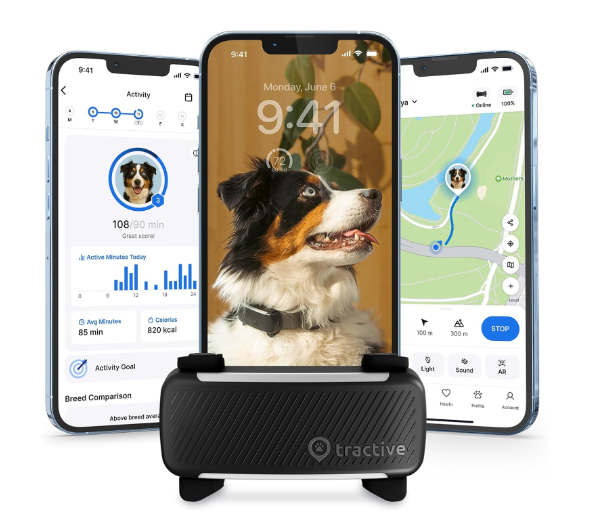
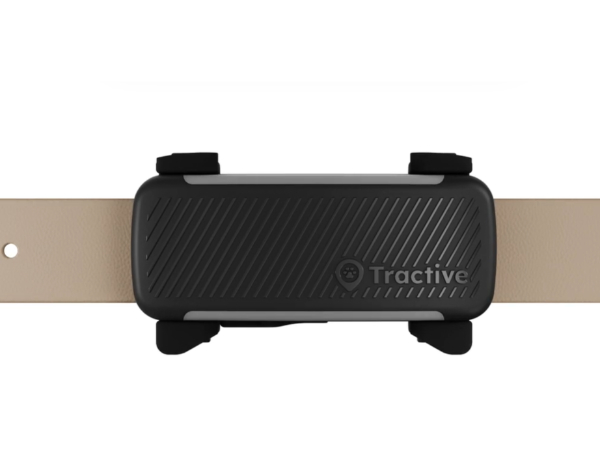
Tractive has long been the go-to for owners who want reliable tracking without the premium price tag of integrated collars. The Tractive GPS Dog 4 is a versatile clip-on unit that works with almost any existing collar or harness. Its standout feature is "LIVE Mode," which provides location updates every 2-3 seconds. When your dog is on the move, this high-frequency update is the difference between seeing where your dog was and seeing exactly where they are running.
Technically, Tractive uses a multi-network SIM that connects to the strongest available cellular provider in your area, whether that is AT&T, Verizon, or T-Mobile. This redundancy is vital if you travel with your pet. The hardware is surprisingly robust for its price, featuring a fully waterproof casing. It also includes health monitoring features that track sleep quality and active minutes, giving you a holistic view of your dog's wellbeing alongside their location.
The trade-off for the low entry price and frequent updates is battery life. When in LIVE mode, the battery drains rapidly, often lasting only a few hours. In standard mode, you can expect about 5-7 days. It also relies on a rubber clip system which, while secure, isn't as indestructible as a reinforced collar. It is the best choice for those who want a powerful safety net for weekend hikes or occasional escapes without a massive upfront investment.
Technical Deep-Dive: GNSS Multi-Constellation Support
The Tractive Dog 4 supports multiple GNSS (Global Navigation Satellite Systems), including GPS (USA), GLONASS (Russia), and Galileo (EU). Why It Matters: By talking to more than just the US GPS satellites, the device can find a "lock" faster and maintain accuracy even in "urban canyons" or under heavy tree canopies where a single system might fail.
Best for Health Monitoring: Whistle Switch
The Whistle Switch is a dual-purpose device that prioritizes proactive health data alongside reactive GPS tracking. It uses an internal accelerometer to track specific behaviors like licking, scratching, and drinking. By analyzing these "micro-movements," the Whistle app can alert you to potential skin issues or UTIs before they become obvious clinical problems. For owners of senior dogs or breeds prone to specific health issues, this data is an invaluable early warning system.
From a tracking perspective, the "Switch" moniker refers to its clever battery design. It comes with two swappable battery packs. You can charge one while the other is on the dog, ensuring you never have "dead zones" in your tracking history. This solves the common problem of forgetting to put the collar back on after it has been sitting on a charger across the room. It uses AT&T's 4G LTE network for wide coverage across North America.
The limitation here is the hardware size; it is a bit bulkier than the Fi or Jiobit, making it less ideal for very small dogs (under 20 lbs). Additionally, the depth of health insights requires a more expensive subscription tier. However, if you view your tracker as a holistic wellness tool rather than just an anti-lost device, the Whistle Switch offers the most sophisticated data analysis on the market.
Technical Deep-Dive: Accelerometer Sampling Rates
Whistle uses a 3-axis accelerometer that samples movement multiple times per second. Why It Matters: Standard activity trackers just count "steps." Whistle's higher sampling rate allows it to distinguish the specific frequency of a "scratch" versus a "lick." This biometric data helps you identify health trends (like increased scratching) that indicate allergies or fleas before you see them.
Best for Rural Areas: Garmin T 20
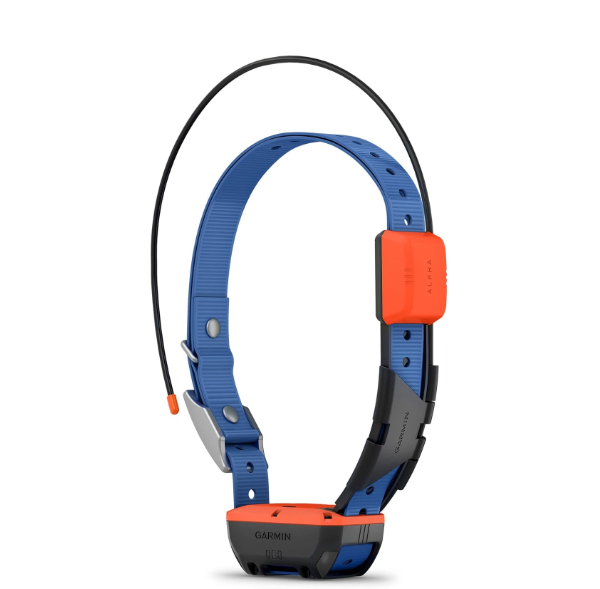
The Garmin T 20 is a professional-grade tool designed for hunters, hikers, and people living in "dead zones" where cellular signals don't reach. Unlike the other products on this list, the T 20 does not require a cellular subscription or a SIM card to work. Instead, it uses MURS (Multi-Use Radio Service) to broadcast its location directly to a handheld Garmin receiver (sold separately). It is a line-of-sight system that works anywhere on earth, as long as the handheld unit and the collar are within a 9-mile radius.
Technically, the T 20 is a tank. It is built to endure thick brush, rocky terrain, and deep water. It features a top-mounted high-sensitivity GPS and GLONASS receiver that maintains a signal even in deep canyons. It also includes user-replaceable flex bands and multi-color LED beacon lights that can be activated from the handheld unit, making it much easier to spot your dog in the dark or heavy cover.
The "trade-off" is the significant upfront cost and the ergonomics. You must carry a dedicated handheld device; your smartphone alone won't find the dog (unless you use the Garmin app to bridge the two). It is also the largest unit here, suitable only for medium to large breeds. For someone whose dog spends hours off-leash in the wilderness, cellular trackers are useless; the T 20 is the only reliable choice.
Technical Deep-Dive: VHF Radio Transmission
The T 20 communicates via VHF (Very High Frequency) radio waves. Why It Matters: Cellular trackers need a tower within range to talk to. VHF works "peer-to-peer." The collar sends a radio signal directly to your handheld. This is critical in mountains or forests where cell signals are blocked by terrain but radio waves can "bounce" or travel through obstacles.
Best Compact Design: Jiobit Next
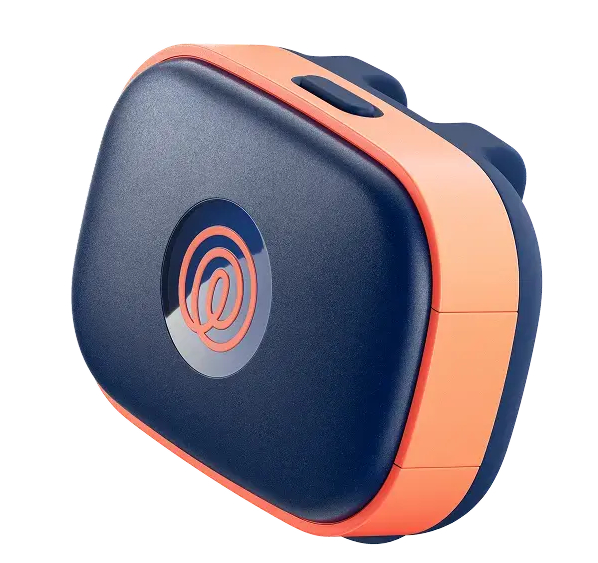
The Jiobit Next is roughly the size of a tea bag and weighs less than an ounce, making it the only viable high-performance tracker for toy breeds and small dogs (under 10 lbs). Despite its diminutive size, it contains a cellular radio, GPS, Wi-Fi, and Bluetooth. It uses a multi-protocol approach called "Progressive Beaconing" to stay connected in almost any environment, from a high-rise apartment to a suburban park.
One of Jiobit's strongest technical claims is its security. It is the first pet-friendly tracker to utilize a dedicated security chip that meets government-level encryption standards (FIPS 140-2). This prevents hackers from intercepting your dog's location data - a niche but important consideration for high-profile owners or those concerned about privacy. The antenna design is also highly optimized, offering surprisingly good reception for such a small surface area.
The limitation is primarily battery capacity. While it can last up to 10 days in low-power mode, that number drops significantly if you aren't near a "Trusted Place" like your home Wi-Fi. It also lacks the fitness and health metrics found in Whistle or Tractive. It is a pure, focused location device designed for those who want the smallest footprint possible without sacrificing signal reliability.
Technical Deep-Dive: LPP (Low Power Proximity) Sensing
Jiobit uses LPP sensing to manage its radios. Why It Matters: Instead of constantly searching for GPS satellites (which eats battery), Jiobit first looks for known Bluetooth or Wi-Fi signals. Only when those vanish does it escalate to the high-power GPS and Cellular radios. This "staged" approach is why such a tiny device can last over a week.
How We Chose These Products
Our evaluation criteria were based on the "Recovery Window" - the time between a dog escaping and the owner receiving an accurate location. We prioritized devices that use LTE-M or NB-IoT networks for their superior range and building penetration compared to standard 4G. We also excluded any "Bluetooth-only" tags (like AirTags) for this guide, as they rely on a nearby network of other people's phones and are technically not GPS trackers. Every product on this list had to meet a minimum IP67 waterproofing standard and demonstrate at least 24 hours of battery life while in active "Lost Dog" mode.
Comparison Overview
| Product | Technology | Subscription Required? | Water Rating | Best Use Case |
|---|---|---|---|---|
| Fi Series 3 | LTE-M / GPS | Yes | IP68 / IP69K | Daily All-Around Use |
| Tractive Dog 4 | LTE / GNSS | Yes | IPX7 | Urban/Suburban Budget |
| Whistle Switch | LTE / GPS | Yes | IPX8 | Proactive Health Tracking |
| Garmin T 20 | VHF / GPS | No | 1 ATM (10m) | Wilderness/No-Cell Areas |
| Jiobit Next | LTE-M / GPS | Yes | IPX8 | Small Breeds / Privacy |
Buying Guide: What to Look For
- Network Coverage: Check which cellular provider the tracker uses. If you live in a T-Mobile dead zone but the tracker only uses T-Mobile, it won't work in your yard.
- Attachment Type: Integrated collars (like Fi) are most secure. Clip-ons are convenient but can be knocked off if your dog runs through dense brush.
- Update Frequency: Look for "Live Tracking." If a tracker only updates every 10 minutes, your dog could be two miles away by the time the next ping arrives.
- Battery vs. Accuracy: High-precision tracking (updates every 3 seconds) kills battery. Ensure the app allows you to set "Safe Zones" to save power when the dog is home.
- Ecosystem Fees: Factor in the cost of the subscription over 2 years. A "cheap" tracker can become the most expensive one if the monthly fee is high.
General Pro / Cons
| Pros |
|---|
| Active recovery allows you to track a moving dog. |
| Virtual fences send instant alerts if a gate is left open. |
| Activity tracking helps manage pet obesity. |
| Peace of mind for travelers and hikers. |
| Health insights can catch illnesses early. |
| Reduces the load on animal shelters. |
| Cons |
|---|
| Most require a monthly subscription fee. |
| Battery life is limited during active tracking. |
| Cellular models are useless in deep wilderness. |
| Clip-on models can be lost or damaged. |
| Requires consistent charging habits from the owner. |
| Can be bulky on very small dogs. |
Final Summary
The right dog GPS tracker depends entirely on where you live and how your dog behaves. For the vast majority of owners, the Fi Series 3 is the most complete package, offering industrial-strength durability and a battery that doesn't require daily attention. If you are on a budget but still need high-speed updates, Tractive provides the best software experience for the price. However, if your adventures take you off the grid, don't rely on a cellular device; the Garmin T 20 is the only tool that guarantees a signal when the bars on your phone disappear. Every dog is an escape artist in waiting; these tools ensure that their "great escape" is a short one.
Aggregate rating of the products reviewed: 4.7 out of 5.