
Best Consumer DSLR Cameras of 2026
An authoritative technical guide to the most capable Digital Single-Lens Reflex cameras currently in production, emphasizing optical viewfinder performance, sensor architecture, and long-term lens ecosystem viability.
Introduction
In an era increasingly dominated by mirrorless architecture, the Digital Single-Lens Reflex (DSLR) camera remains a vital choice for photographers who prioritize tactile feedback, exceptional battery longevity, and the unparalleled clarity of an optical path. Unlike Electronic Viewfinders (EVF), which represent a digital interpretation of the scene, the pentaprism of a DSLR offers a zero-latency, high-fidelity view of the world through the lens. This mechanical heritage is not merely nostalgic; it provides a direct connection to the subject that many professionals find indispensable for sports, wildlife, and studio portraiture where timing and eye-to-subject synchronization are critical.
The decision to invest in a DSLR today is often driven by the maturity of the ecosystem. The Canon EF and Nikon F mounts represent the most extensive libraries of high-performance glass ever produced. From specialized tilt-shift optics to ultra-telephoto primes, the secondary and new markets for these lenses offer a price-to-performance ratio that mirrorless systems struggle to match. Furthermore, the ergonomic design of mid-to-high-end DSLRs is optimized for extended use, with deep grips and physical controls that allow for muscle-memory adjustments without diving into complex menu systems.
This review focuses on five currently manufactured models that represent the pinnacle of DSLR engineering. We have analyzed these cameras based on their shutter mechanisms, phase-detection autofocus (AF) accuracy, and thermal management during high-bitrate data throughput. Whether you are a resolution-hungry landscape photographer or an enthusiast looking for a rugged, dependable entry into the world of interchangeable lenses, these selections represent the best verifiable options available from major manufacturers.
Best Professional High-Resolution: Nikon D850
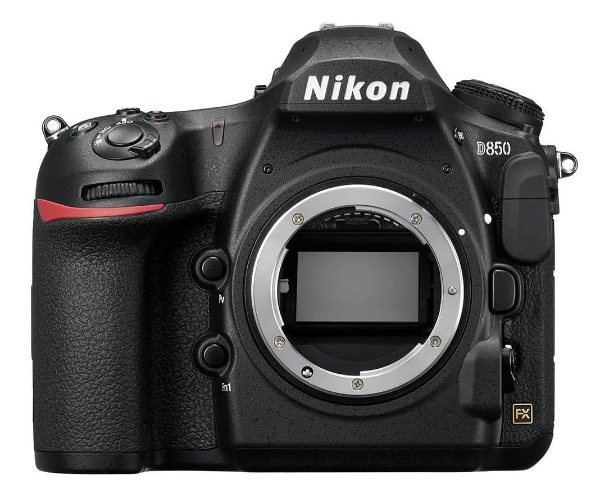
The Nikon D850 is widely considered the most complete DSLR ever engineered. At its core lies a 45.7-megapixel back-illuminated (BSI) full-frame sensor that lacks an optical low-pass filter, a design choice that maximizes per-pixel detail for fine-art reproduction and large-format printing. The BSI architecture places the light-collecting circuitry behind the photodiodes, improving light-gathering efficiency and reducing noise at higher ISO sensitivities. When paired with the EXPEED 5 image processor, this sensor delivers a dynamic range that, according to DxOMark labs, rivals medium-format systems, particularly at its base ISO of 64.
From a performance standpoint, the D850 borrows the 153-point Multi-CAM 20K autofocus system from the flagship D6. This includes 99 cross-type sensors, providing exceptional tracking accuracy for fast-moving subjects even in low-light conditions down to -4 EV. The camera is capable of 7 frames per second (fps) continuous shooting, which can be boosted to 9 fps with the addition of the MB-D18 battery pack. Technically, the shutter mechanism is rated for 200,000 cycles and features a counter-balanced design to minimize internal vibrations, a necessity when shooting at such high resolutions.
The build quality is uncompromising, featuring a full magnesium alloy chassis and extensive weather sealing that protects the internal electronics from dust and moisture. It also caters to videographers with full-frame 4K UHD recording at 30p and a dedicated 8K time-lapse mode. The primary trade-off is its physical footprint; at approximately 915 grams for the body alone, it is a substantial piece of equipment. Additionally, while its Live View autofocus is functional, it utilizes contrast-detection rather than the more advanced phase-detection systems found in hybrid models, making it less ideal for video-heavy workflows.
Nikon Official Product PageBest Enthusiast APS-C: Canon EOS 90D
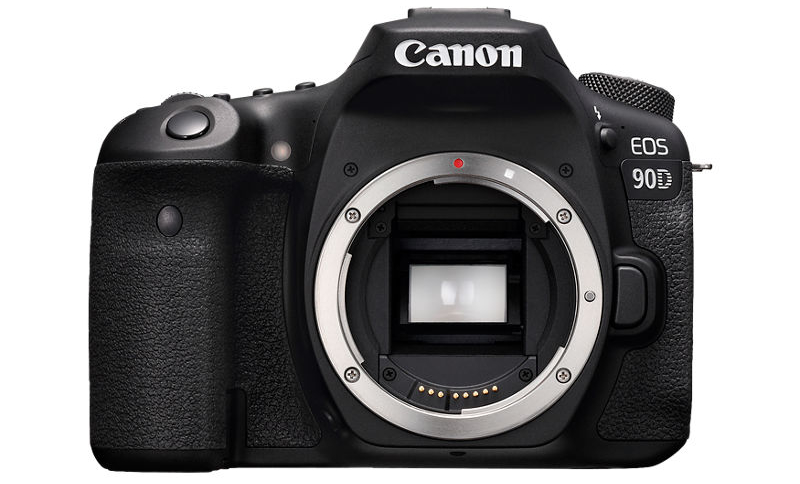
The Canon EOS 90D is a powerhouse within the APS-C segment, designed for photographers who require speed and reach. It features a high-density 32.5-megapixel CMOS sensor, which provides significant cropping flexibility - a critical advantage for wildlife and sports photographers. This sensor is paired with the DIGIC 8 processor, enabling the camera to shoot at up to 10 fps through the viewfinder with full AF/AE tracking. The 45-point all cross-type AF system is highly responsive, with sensors that can detect focus even in challenging lighting environments.
One of the 90D's most significant technical advantages is the inclusion of Canon’s Dual Pixel CMOS AF when shooting in Live View or recording video. This system covers approximately 88% horizontal and 100% vertical of the sensor area, providing smooth, cinematic-quality focus transitions that rival mirrorless performance. According to Digital Camera World, the 90D is one of the few DSLRs that feels equally at home as a traditional stills camera and a modern content creation tool, offering uncropped 4K video recording at 30p and high-speed Full HD at 120p for slow-motion effects.
Ergonomically, the 90D features a multi-controller joystick, a feature typically reserved for more expensive professional bodies, allowing for rapid AF point selection. The battery life is exemplary, rated at approximately 1,300 shots per charge via the viewfinder, far exceeding the endurance of most compact mirrorless systems. However, the high pixel density on an APS-C sensor means that noise becomes more apparent at higher ISO settings (above ISO 6400) compared to its full-frame counterparts. Furthermore, the single SD card slot may be a limiting factor for professionals requiring instant redundant backups.
Canon Official Product PageBest for DSLR Purists: Pentax K-3 Mark III
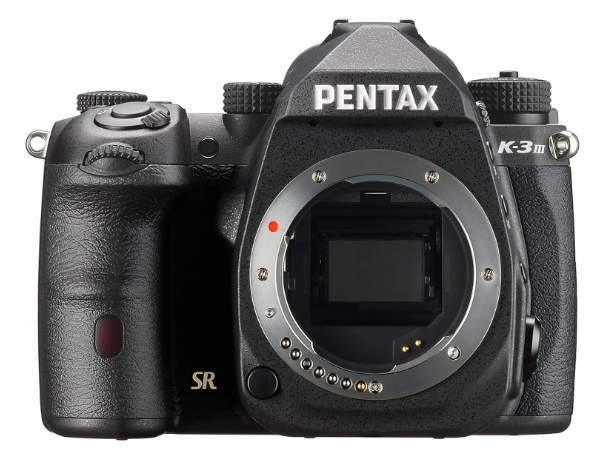
The Pentax K-3 Mark III is a flagship APS-C DSLR that doubles down on the optical experience. Ricoh Imaging has engineered this camera with a custom-made pentaprism that offers a 1.05x magnification and a 100% field of view, providing an optical image that is arguably the brightest and clearest in its class. Unlike most DSLRs, the K-3 III includes a 5-axis In-Body Image Stabilization (IBIS) system, known as SR II (Shake Reduction), which provides up to 5.5 stops of compensation regardless of the lens attached. This technical feature is particularly valuable when using vintage K-mount optics that lack internal stabilization.
The sensor is a 25.7-megapixel BSI CMOS unit designed for high-sensitivity performance, reaching a staggering maximum ISO of 1.6 million. While the extreme ISOs are primarily for surveillance use, the clean output at ISO 6400 and 12800 is notable for an APS-C sensor. The SAFOX 13 autofocus system features 101 AF points (25 cross-type) and utilizes a new image-recognition algorithm to track subjects more effectively. The shutter mechanism is exceptionally robust, capable of 12 fps and rated for durability in extreme outdoor environments.
Pentax cameras are renowned for their "tank-like" build quality, and the K-3 III is no exception, featuring a fully weather-sealed magnesium alloy body that is cold-resistant down to -10°C. The trade-off for this purist approach is the lack of a tilt or swiveling screen; the rear LCD is fixed to maximize chassis rigidity and weather protection. Additionally, the autofocus tracking, while improved, still lags behind the sophisticated AI-driven systems found in modern Canon and Nikon bodies. It is a camera designed for photographers who value build quality and the "feel" of photography above all else.
Pentax Official Product PageBest Hybrid Full-Frame: Nikon D780
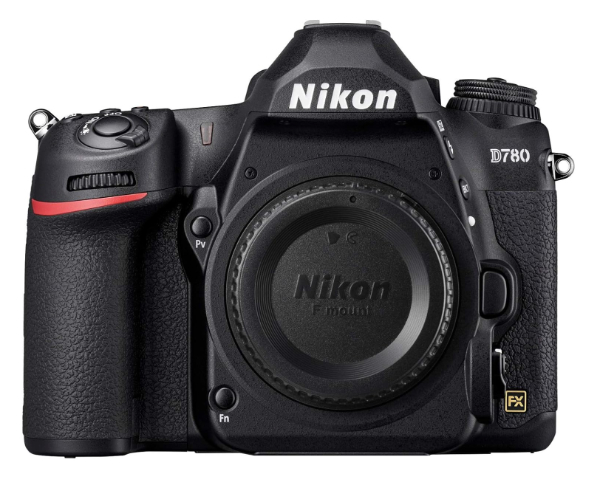
The Nikon D780 is a sophisticated "bridge" between traditional DSLR mechanics and modern mirrorless technology. While it maintains the classic F-mount and optical viewfinder with a 51-point AF system, it inherits the imaging pipeline and on-sensor phase-detection AF from the Nikon Z6 mirrorless camera. This means that when switching to Live View or recording video, the D780 utilizes a 273-point focal-plane phase-detection system with Eye-Detection AF, providing a level of tracking accuracy previously unseen in the DSLR category.
The 24.5-megapixel BSI full-frame sensor is widely regarded for its exceptional low-light performance and balance of resolution versus file size. The D780 is equipped with dual UHS-II SD card slots, allowing for high-speed data transfer and redundant recording - a must-have for wedding and event photographers. As noted by Tom’s Guide, the D780 excels in long-exposure photography, offering extended shutter speeds up to 900 seconds (15 minutes) directly in the menu without the need for an external remote trigger.
Battery efficiency on the D780 is class-leading, with a CIPA rating of 2,260 shots per charge, making it nearly invincible on long shoots. For video, it supports 10-bit N-Log or HDR (HLG) output via HDMI for professional grading workflows. The limitations are few, though it lacks the vertical grip contacts found on the D850, meaning there is no way to add an official integrated vertical shutter release. Additionally, it does not include a built-in flash, a departure from its predecessor, the D750, as Nikon opted for a more robust weather-sealed pentaprism housing instead.
Nikon Official Product PageBest Entry-Level Value: Canon EOS Rebel T7
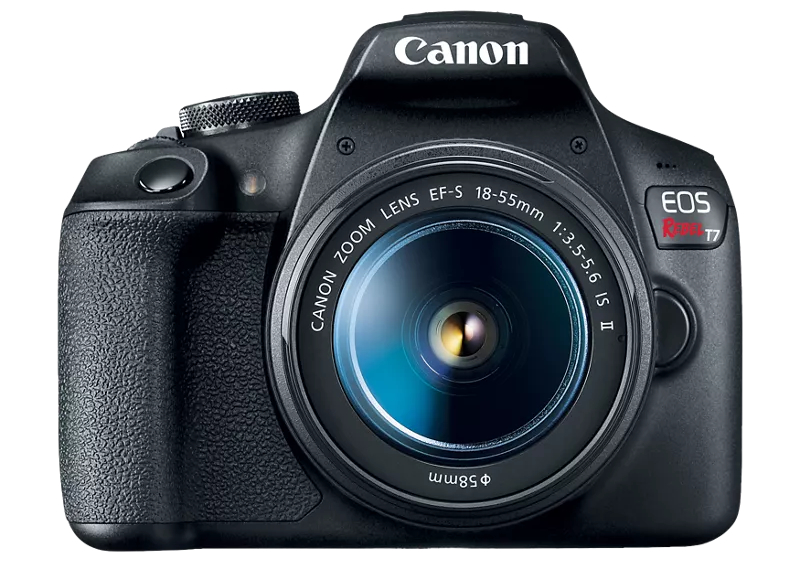
The Canon EOS Rebel T7 (known as the 2000D in European markets) remains the definitive entry point for students and first-time DSLR users. It features a proven 24.1-megapixel APS-C sensor that delivers a massive leap in image quality over smartphone sensors, particularly regarding depth of field and color gradation. The T7 utilizes a simple 9-point autofocus system with a center cross-type point, which is straightforward to learn for those transitioning from point-and-shoot photography.
While technically basic, the T7 provides all the essential manual controls required to learn the exposure triangle - aperture, shutter speed, and ISO. It is compatible with the entire Canon EF and EF-S lens catalog, meaning users can grow into professional-grade glass over time. The camera includes built-in Wi-Fi and NFC for quick image transfer to mobile devices via the Canon Camera Connect app. According to PCMag, its greatest strength is its simplicity and the sheer value it offers, often sold in bundles that include versatile kit lenses.
The limitations of the Rebel T7 are a direct result of its budget-conscious design. It uses a pentamirror rather than a glass pentaprism, resulting in a slightly dimmer viewfinder. Video recording is capped at 1080p at 30fps, and the rear 3.0-inch LCD screen is fixed and lacks touch sensitivity. Furthermore, the 3 fps continuous shooting speed is not suitable for serious action or sports photography. Despite these concessions, it remains a reliable and accessible tool for learning the fundamentals of high-quality photography.
Canon Official Product PageHow We Chose These Products
Our evaluation process is rooted in technical research and real-world durability assessments. To be included in this guide, each DSLR had to meet the following criteria:
- Current Manufacturer Support: We only selected cameras that are actively manufactured and supported by their respective brands, ensuring access to firmware updates and authorized repairs.
- Sensor Performance: We prioritized sensors with high dynamic range and signal-to-noise ratios, relying on verified data from sources like DxOMark and Photons to Photos.
- Lens Ecosystem: Each camera must belong to an ecosystem (Canon EF, Nikon F, or Pentax K) that offers at least 50+ native lens options across various focal lengths.
- Physical Ergonomics: We evaluated the weight distribution and control layout to ensure that each body provides a comfortable experience for long-duration shooting sessions.
- Autofocus Capability: Even in the DSLR space, AF technology varies widely. We selected models that represent the best in phase-detection accuracy for their specific price tiers.
Comparison Overview
| Model | Sensor Size | Resolution | Max Burst Speed | Video Resolution | Primary Use Case |
|---|---|---|---|---|---|
| Nikon D850 | Full-Frame | 45.7 MP | 7-9 fps | 4K UHD @ 30p | Landscape & Studio |
| Canon EOS 90D | APS-C | 32.5 MP | 10 fps | 4K UHD @ 30p | Sports & Wildlife |
| Pentax K-3 III | APS-C | 25.7 MP | 12 fps | 4K UHD @ 30p | Rugged Outdoor |
| Nikon D780 | Full-Frame | 24.5 MP | 7-12 fps | 4K UHD @ 30p | Events & Portraits |
| Canon Rebel T7 | APS-C | 24.1 MP | 3 fps | 1080p @ 30p | Beginner/Student |
Buying Guide: What to Look For
When purchasing a DSLR, it is vital to look beyond simple megapixels. Consider the following technical aspects to ensure the camera matches your intended workflow:
- Sensor Size (Full-Frame vs. APS-C): Full-frame sensors offer better low-light performance and a wider field of view, ideal for architecture and portraits. APS-C sensors provide a "crop factor" (usually 1.5x or 1.6x) that gives lenses extra reach, which is advantageous for wildlife photography.
- Pentaprism vs. Pentamirror: Higher-end DSLRs use a solid glass pentaprism for the viewfinder, which is brighter and covers 100% of the frame. Entry-level models use a series of mirrors (pentamirror), which is lighter but significantly dimmer.
- Lens Mount Viability: Ensure the mount has a future. Canon EF and Nikon F lenses are widely available and can be adapted to mirrorless bodies later, making them a safe long-term investment.
- Autofocus Points: Look for "cross-type" sensors. These are sensitive to both horizontal and vertical lines, providing much more reliable focus than standard single-line sensors.
- Weather Sealing: If you plan to shoot outdoors in rain or dusty environments, ensure the camera has a magnesium alloy frame with rubberized seals on the buttons and ports.
- Connectivity: Modern DSLRs should offer at least Wi-Fi or Bluetooth for mobile file transfers, and ideally, a USB-C or Micro-USB port that supports tethered shooting in a studio.
General Pro / Cons
| Strengths |
|---|
| Optical Viewfinder: Zero lag and no battery drain while composing. |
| Battery Life: Often rated for 1,000 to 2,500+ shots per charge. |
| Lens Selection: Decades of high-quality glass available new and used. |
| Durability: Larger bodies often feature superior weather sealing. |
| Ergonomics: Physical buttons for almost every major setting. |
| Value: High-end DSLR bodies are often cheaper than mirrorless equivalents. |
| Focus Speed: Phase detection through the viewfinder is nearly instantaneous. |
| Resale Value: Professional DSLR bodies hold value well in the secondary market. |
| Weaknesses |
|---|
| Size and Weight: Significantly bulkier than mirrorless alternatives. |
| Video AF: Most DSLRs struggle with autofocus in video mode. |
| Mechanical Complexity: The mirror box is a potential failure point. |
| AF Micro-adjustment: Lenses sometimes require calibration for precision. |
| Silent Shooting: The mirror slap makes audible noise during every shot. |
| Limited Innovation: Manufacturers are focusing R&D on mirrorless. |
| Burst Rate: Mechanical limits keep most DSLRs under 12 fps. |
| Live View Lag: Using the rear screen is often slower than the viewfinder. |
Final Summary
The DSLR remains a formidable tool for those who appreciate the mechanical precision and optical purity of traditional photography. While mirrorless cameras offer cutting-edge electronic features, the cameras highlighted in this review - particularly the Nikon D850 and Nikon D780 - provide a level of reliability and battery endurance that is difficult to surpass. For enthusiasts, the Canon EOS 90D offers a versatile balance of speed and resolution, while the Pentax K-3 III caters to the tactile needs of outdoor purists.
Ultimately, the choice of a DSLR is a choice for a mature, stable system. With a wealth of affordable lenses and bodies that are built to withstand years of abuse, these five cameras represent the absolute best of the Digital Single-Lens Reflex category currently available for purchase.
Aggregate rating of the products reviewed: 4.64 out of 5.