
Best Electric Scooters for Modern Commuting of 2026
A technical evaluation of high-performance micro-mobility solutions, focusing on motor efficiency, battery management systems, and chassis structural integrity.
Introduction
The landscape of urban micro-mobility has shifted from recreational novelty to serious transportation infrastructure. Modern electric scooters are no longer simple toys; they are sophisticated vehicular platforms integrating high-density Lithium-ion battery packs, brushless DC (BLDC) motors, and advanced kinetic energy recovery systems (KERS). As cities become denser, the technical requirements for these devices - ranging from IP-rated water resistance to automotive-grade suspension - have become the primary benchmarks for consumer selection.
When evaluating the current market, it is essential to look beyond top-line speed and total range. Engineering nuances such as the thermal management of the motor controller, the chemistry of the battery cells, and the geometry of the folding mechanism dictate the long-term viability of the investment. This guide analyzes five leading models that represent the pinnacle of current engineering standards, providing a data-driven comparison for the discerning commuter and the high-performance enthusiast alike.
Best for Reliability: Segway Ninebot KickScooter MAX G2
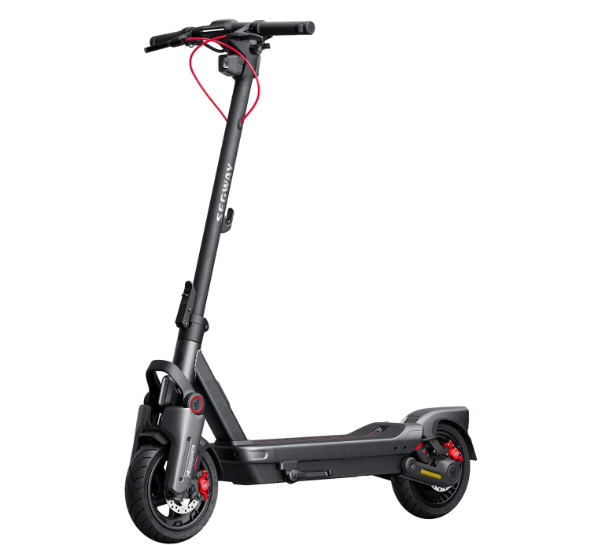
The Segway Ninebot MAX G2 represents the evolution of the industry's most successful fleet-grade platform. Historically, the "Max" series set the standard for IPX5-rated water resistance and frame durability, but the G2 iteration introduces a sophisticated dual-suspension system - a hydraulic front dampener and dual rear springs. This hardware upgrade addresses the primary criticism of previous solid-chassis models, providing a significantly higher vibration damping coefficient without compromising the structural rigidity of the deck.
Technically, the MAX G2 utilizes a 1000W peak rear-wheel drive motor, which provides improved traction control (TCS) during acceleration on low-friction surfaces. This is one of the few consumer-grade scooters to implement a dedicated traction control algorithm via the firmware, preventing wheel-spin on wet pavement. Furthermore, the integration of Apple Find My technology into the internal circuitry offers a native hardware-level security layer that is not reliant on third-party accessories, an essential feature for urban environments.
While the MAX G2 is robust, its weight is a notable limitation. At roughly 53 lbs, it is not optimized for multi-modal commuting involving frequent stairs or crowded public transit. The built-in 3A fast charger is a massive convenience, eliminating the need for bulky external power bricks, but the charge time remains significant if the 551Wh battery is fully depleted. This product is best for the "last mile" commuter who prioritizes weather-sealing and mechanical reliability over sheer portability.
Segway's proprietary RideyLong system involves a coordinated optimization of the high-performance brushless motors, new-formula long-range tires, and a refined controller algorithm. By increasing the efficiency of the power-delivery curve and reducing the rolling resistance of the 10-inch self-healing tires, the system can achieve up to a 20% increase in range compared to standard configurations with identical battery capacities.
Best Daily Commuter: NIU KQi3 Max
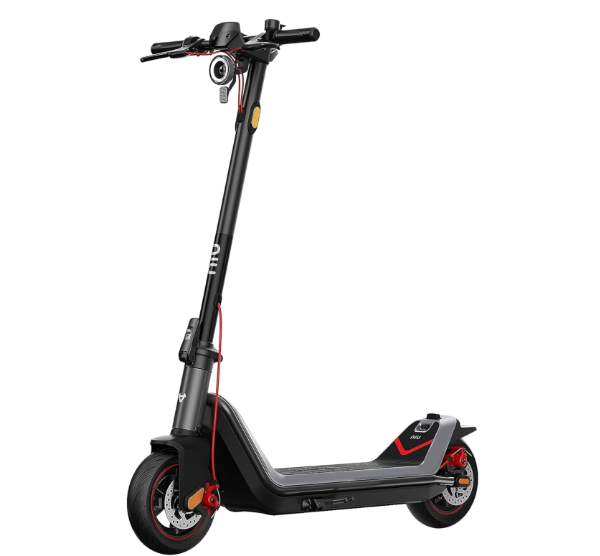
NIU has transitioned their expertise from electric mopeds to stand-up scooters, resulting in the KQi3 Max, which focuses on cockpit ergonomics and stable handling. The chassis features a wider handlebar and deck than the industry average, promoting a more natural stance that reduces rider fatigue. The KQi3 Max is powered by a 450W rated motor (900W peak) running on a 48V system architecture, which offers superior torque for hill climbing compared to 36V competitors.
The braking system is a technical highlight, featuring dual mechanical disc brakes combined with an intelligent regenerative braking system. Unlike many scooters that feel jerky during deceleration, NIU’s electronic braking is tuned to be progressive, feeding kinetic energy back into the 608Wh battery while maintaining a smooth stop. The use of self-healing pneumatic tires significantly mitigates the risk of flats, which is the leading cause of maintenance-related downtime for commuters.
Limitations include a lack of mechanical suspension. While the large 9.5-inch tires absorb small road chatter, the ride can feel jarring on cobblestones or uneven asphalt. Additionally, the NIU ecosystem is heavily dependent on their mobile app for locking/unlocking and firmware updates, which can be a point of failure if the Bluetooth connectivity is inconsistent. It is best for riders who travel on reasonably well-paved city streets and want a high-torque, stable platform.
The KQi3 Max employs the NIU Energy Battery Management System, which offers 14 levels of protection, including over-current, over-charge, and short-circuit protection. The system utilizes 18650 high-capacity cells and actively balances the voltage across all parallel groups to maximize cycle life, ensuring the pack maintains over 80% capacity after 500+ full discharge cycles.
Best Integrated Technology: Apollo City Pro
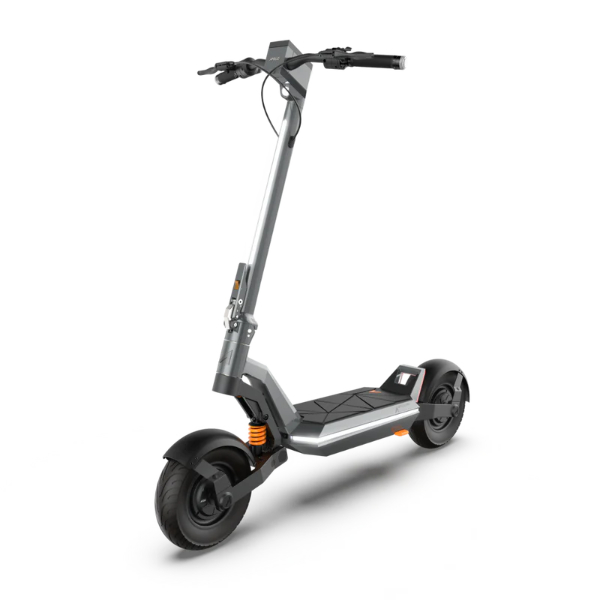
The Apollo City Pro is a high-integration model that prioritizes a "unified" design over the typical component-based assembly found in other scooters. It features dual 500W motors, providing 32 mph top speeds and aggressive hill-climbing capabilities. The technical standout is the "Power RBS" (Regenerative Braking System), which is controlled by a dedicated thumb throttle. This allows for near-total "one-pedal" riding, using the motors to handle up to 90% of braking needs, thereby extending the life of the mechanical drum brakes.
The City Pro is built with a proprietary "Apollo Mach 1" controller, which offers smoother throttle mapping and more efficient power modulation than generic sine-wave controllers. The hardware includes integrated turn signals, a 360-degree lighting package, and a triple-suspension system that combines a front spring with dual rear shocks. The use of a puncture-proof "air-core" tire design aims to provide the comfort of pneumatic tires with the maintenance-free nature of solid tires.
Trade-offs include a complex ecosystem lock-in. Repairs often require proprietary parts that must be sourced directly from the manufacturer, making it difficult for local shops to service. While the IP66 rating is excellent, the heavy reliance on electronics and app-based customization may frustrate users who prefer a more analog experience. This is best for the tech-forward rider who wants the best safety features and integrated aesthetics available today.
The Apollo City Pro utilizes a Hall-effect sensor in the dedicated regen-throttle. When engaged, the controller reverses the magnetic field in the BLDC motors, converting the rider's kinetic energy back into electrical energy. This process not only recharges the battery but also significantly reduces the heat buildup in mechanical brake components, preventing brake fade during long downhill descents.
Best Ultra-Portable: Unagi Model One Voyager
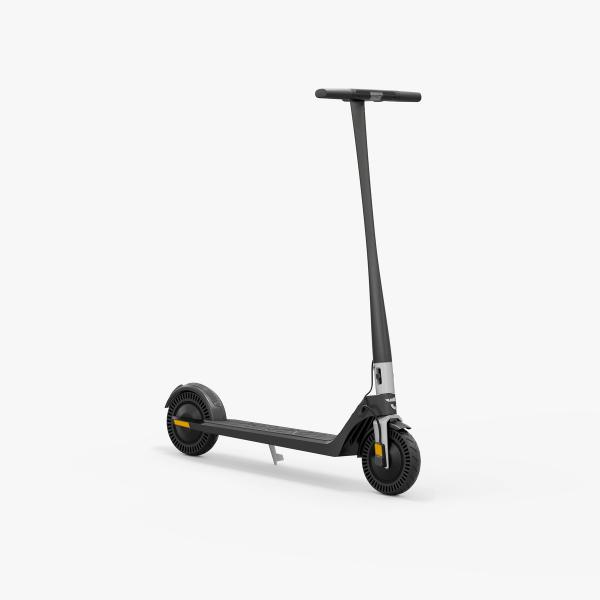
The Unagi Model One Voyager is designed for weight-sensitive users who require a high-performance scooter that can be easily carried. To achieve a weight of just under 30 lbs while maintaining dual-motor capability, Unagi utilizes exotic materials typically found in aerospace engineering. The "TORY" carbon fiber used in the stem is manufactured in Japan and offers an incredible strength-to-weight ratio, while the deck and handlebars are made of high-pressure magnesium alloy.
Technically, the Voyager improves on its predecessor with a 360Wh battery that provides roughly double the usable range. The dual 250W motors (1000W peak total) are managed by a custom firmware that prioritizes instant torque, allowing this featherweight scooter to zip away from stoplights. The folding mechanism is a single-click design that is both highly secure and incredibly fast, making it the superior choice for commuters who frequently transition to buses or trains.
The honest limitation is the ride quality. To keep the weight down, Unagi uses 7.5-inch solid rubber tires with honeycomb air pockets. Without mechanical suspension, the ride is quite firm; you will feel every crack in the pavement. Furthermore, the small battery and lightweight motors are not designed for riders over 220 lbs or for long-distance journeys exceeding 15 miles of actual range. It is a specialized tool for short, high-speed urban bursts where portability is the non-negotiable factor.
The Model One Voyager uses magnesium alloy for its deck because it is 33% lighter than aluminum and 50% lighter than titanium. Beyond weight, magnesium possesses high damping capacity, which helps dissipate some of the high-frequency vibrations from the solid tires. However, magnesium requires specific corrosion-resistant coatings, which Unagi applies via a multi-stage paint process to ensure longevity.
Best High-Performance: Kaabo Wolf Warrior X GT
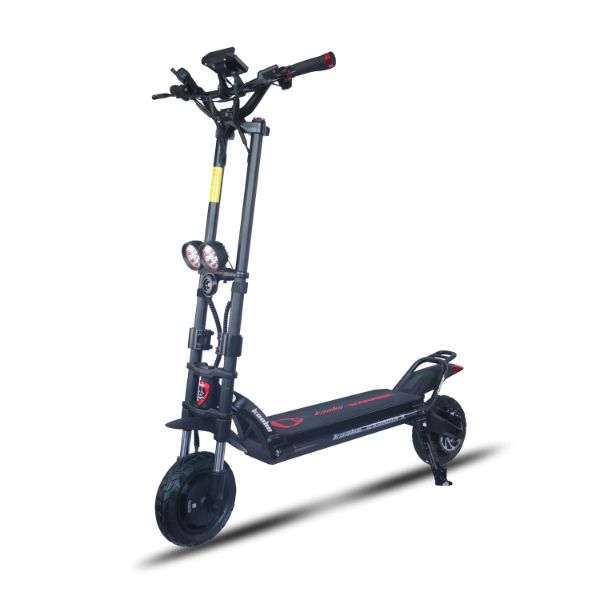
The Kaabo Wolf Warrior X GT is a "super scooter" designed for those who demand maximum power and off-road capability. Unlike traditional scooters, it features a dual-stem design - reminiscent of a motorcycle - which significantly increases front-end stability at high speeds. It is powered by dual 1100W motors and high-performance Sine Wave controllers. This combination allows for a blistering top speed of 43 mph and the ability to conquer 35-degree inclines with a 265 lb payload.
The technical core of the GT version is the upgrade to a 60V 28Ah battery using LG or Samsung cells. This higher voltage reduces the current draw needed for high speeds, which minimizes heat generation and improves overall system efficiency. The suspension is motorcycle-grade: a front hydraulic fork and a rear dual-spring setup. Combined with 10-inch all-terrain tires, the Wolf Warrior X GT can transition from asphalt to gravel trails with ease, maintaining a plush ride quality that commuters can only dream of.
Downsides include massive dimensions and weight. At nearly 80 lbs, this scooter is not portable in any traditional sense; it usually requires a SUV or truck for transport. The dual-stem design also makes the folding footprint larger than its peers. Additionally, the sheer power of this device requires significant rider skill and protective gear (full-face helmet). This is not a commuter for the faint of heart, but rather a professional-grade mobility tool for enthusiasts.
The X GT uses Sine Wave controllers rather than cheaper Square Wave variants. Square wave controllers deliver power in discrete "steps," which can create motor hum and jerky acceleration. Sine Wave controllers utilize Pulse Width Modulation (PWM) to create a smooth, sinusoidal current flow. This results in quieter motor operation, more precise throttle control at low speeds, and improved thermal efficiency under high-load conditions.
How We Chose These Products
Our evaluation process for electric scooters is rooted in performance data and structural analysis. We focused on the following criteria to filter through the noise of the current market:
- Motor Efficiency & Thermal Management: We prioritized models with Sine Wave controllers and high-density copper windings that resist heat buildup during sustained loads.
- Battery Chemistry & Safety: Only scooters with UL-certified packs or reputable cell manufacturers (LG, Samsung, EVE) were considered.
- Chassis Integrity: We analyzed the stress points of folding mechanisms and the materials used in the stem and deck (7000-series aluminum vs. magnesium alloy).
- Braking Reliability: Models with redundant braking systems (Electronic + Mechanical) scored higher for rider safety.
- Real-World Utility: We balanced technical specs against weight, IP ratings, and the availability of replacement parts.
Comparison Overview
| Model | Motor Power | Max Range | Weight | IP Rating |
|---|---|---|---|---|
| Segway MAX G2 | 1000W Peak | 43 Miles | 53.5 lbs | IPX5 |
| NIU KQi3 Max | 900W Peak | 40 Miles | 46.3 lbs | IP54 |
| Apollo City Pro | Dual 500W | 43 Miles | 65.0 lbs | IP66 |
| Unagi Voyager | Dual 250W | 25 Miles | 29.6 lbs | IPX4 |
| Kaabo Wolf X GT | Dual 1100W | 60 Miles | 79.0 lbs | IPX5 |
Buying Guide: What to Look For
- Voltage vs. Amp-Hours: Voltage (36V, 48V, 60V) determines the "punch" and hill-climbing speed. Amp-Hours (Ah) determine the size of the "fuel tank" or range.
- Tire Diameter: Larger tires (10-inch+) provide more gyroscopic stability and better obstacle clearance. 8-inch tires are more portable but less stable at high speeds.
- Suspension Type: Hydraulic suspension is superior to spring suspension as it offers adjustable rebound and better shock absorption.
- IP Ratings: Look for at least IPX5 for rain protection. Avoid IPX4 if you plan on riding in anything more than a light mist.
- Payload Capacity: Always choose a scooter with a max load at least 20% higher than your body weight to avoid stressing the motor and battery.
General Pro / Cons
| Category Strengths |
|---|
| Reduces carbon footprint for urban commuting |
| Low operational cost (approx. $0.02 per charge) |
| High maneuverability in dense traffic areas |
| Advanced regenerative braking increases efficiency |
| Compact folding designs for easy storage |
| Lower maintenance compared to ICE vehicles |
| Category Weaknesses |
| Limited range compared to electric bicycles |
| Safety concerns on roads with high-speed traffic |
| Battery performance drops in cold temperatures |
| Fragility of folding mechanisms over time |
| Heavy models are difficult to carry manually |
| High repair costs for proprietary electronics |
Final Summary
Choosing the best electric scooter requires a balance of portability, power, and reliability. For the high-mileage daily commuter, the Segway Ninebot MAX G2 remains the most dependable choice due to its robust build and suspension. The Apollo City Pro offers the most sophisticated technology integration for those who value safety features like turn signals and regen-braking. Meanwhile, the Unagi Model One Voyager stands alone for ultra-portability, and the Kaabo Wolf Warrior X GT is the definitive choice for pure performance. Regardless of the choice, the transition to high-quality micro-mobility represents a significant upgrade in urban efficiency.
Aggregate rating of the products reviewed: 4.62 out of 5.