
Best Electric Toothbrushes: A Technical Evaluation of Biofilm Disruption of 2026
A deep-dive into the engineering of oscillating-rotating versus sonic technologies, evaluating motor torque, bristle kinematics, and pressure-sensing circuitry.
Introduction
Modern oral hygiene has evolved from simple mechanical abrasion to sophisticated fluid dynamics and targeted biofilm disruption. The electric toothbrush market is currently dominated by two primary mechanical philosophies: the oscillating-rotating-pulsating movement championed by the Braun/Oral-B ecosystem and the high-frequency sonic vibrations pioneered by Philips Sonicare. Selecting the optimal device requires an understanding of how these mechanical forces interact with gingival tissue and dental enamel.
Technical considerations for the high-end consumer include motor drive systems - such as linear magnetic drives versus traditional eccentric weight motors - battery discharge stability under load, and the integration of micro-electro-mechanical systems (MEMS) for real-time positional tracking. This guide evaluates products based on their ability to maintain consistent torque, the quality of their filament tapering, and the reliability of their moisture-sealed internal circuitry.
Best Premium Technology: Oral-B iO Series 10
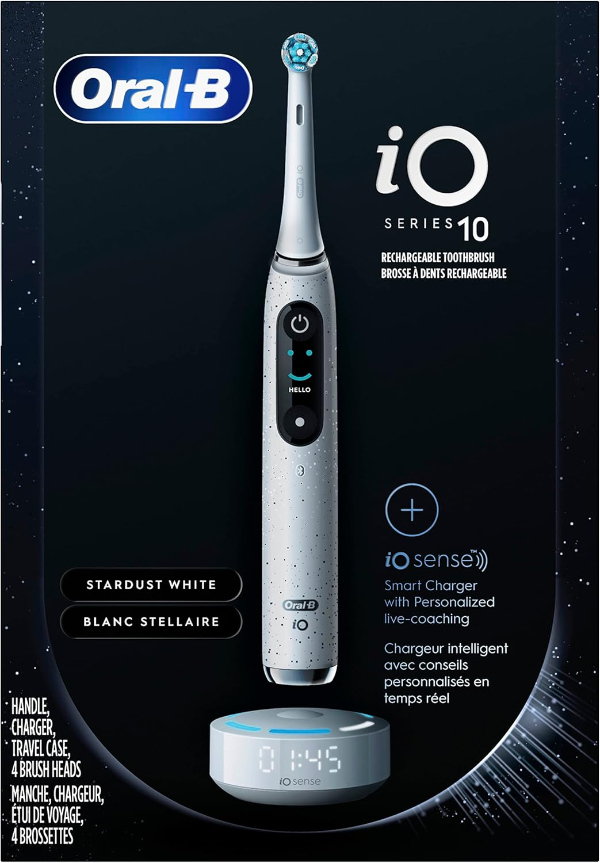
The Oral-B iO Series 10 represents a significant departure from traditional mechanical gear-driven toothbrushes. It utilizes a frictionless linear magnetic drive system that directs energy specifically to the bristle tips, resulting in micro-vibrations superimposed on the classic oscillating-rotating movement. This engineering choice reduces mechanical noise and internal wear while providing a more controlled transfer of kinetic energy to the tooth surface. The standout feature is the iOsense charging base, which acts as an external processor to provide real-time feedback on coverage, pressure, and duration without requiring the user to hold a smartphone.
From a performance standpoint, the iO Series 10 excels in "3D tracking." Using an internal accelerometer and gyroscope combined with an AI-trained algorithm, the device identifies six zones within the oral cavity. This data is processed to ensure uniform plaque removal, addressing the common human tendency to underspend time on the lingual surfaces of the mandibular molars. The smart pressure sensor is particularly sophisticated, using a tri-color LED ring to indicate not just excessive force (red) but also the "optimal" range (green), preventing both gingival recession and ineffective under-brushing.
The primary tradeoff is the proprietary nature of the iO brush heads. Unlike previous Oral-B generations, the iO series requires specific heads that are significantly more expensive and utilize a different internal coupling mechanism. Furthermore, while the charging base is highly functional, it creates a "tethered" feedback ecosystem; to get the full benefit of the tracking, the base must be visible during the brushing session. This is the definitive choice for users who prioritize data-driven hygiene and the latest in magnetic motor technology.
Technical Deep-Dive: Linear Magnetic Drive
The iO series replaces the traditional motor-and-cam system with a linear magnetic drive. By using alternating magnetic fields, the system creates oscillating motion without physical contact between moving parts. This eliminates the mechanical friction that causes heat and noise, allowing for a more stable frequency of 145Hz, which is optimized for disrupting the molecular bonds of dental plaque.
Best Sonic Performance: Philips Sonicare DiamondClean Smart 9750
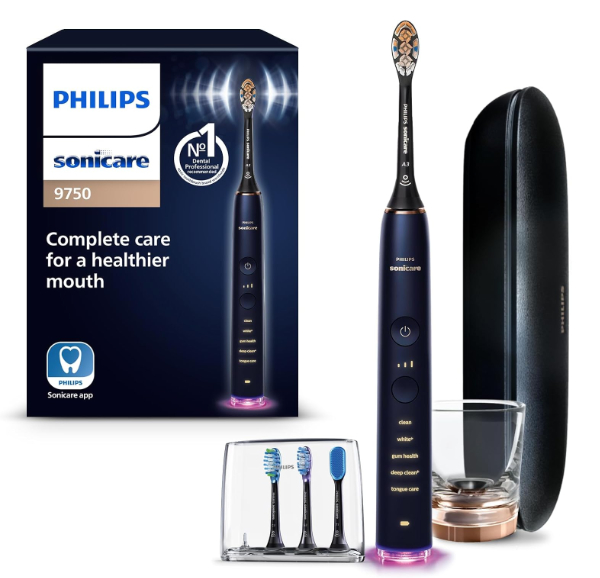
The Philips Sonicare DiamondClean Smart 9750 is the flagship of sonic technology, utilizing a piezoelectric transducer to create 62,000 brush movements per minute. Unlike the mechanical scrubbing of oscillating brushes, this device relies on fluid dynamics - creating microbubbles that reach deep into interdental spaces and beneath the gumline. The 9750 variant is distinguished by its comprehensive sensor suite, which includes location, pressure, and scrubbing sensors that sync via Bluetooth to the Sonicare app to map the mouth in 12 distinct zones.
The engineering of the brush heads is a critical component of the Sonicare ecosystem. The C3 Premium Plaque Control heads feature soft, flexible rubber sides that allow the bristles to contour to the unique shape of the user's teeth and gums. This increases surface contact by up to 4x compared to a standard brush head. The handle also features "BrushSync" technology, using an RFID chip within the head to automatically select the optimal cleaning mode and intensity, and to track the actual wear of the bristles based on brushing pressure and time.
The limitation of the DiamondClean Smart is its reliance on the smartphone app for its most advanced tracking features, as the handle itself lacks a visual display for location feedback. Additionally, the high-frequency vibration can be jarring for those with extreme tooth sensitivity. It remains the gold standard for users who prefer the "sonic feel" and desire a high degree of automation through RFID-enabled accessories.
Technical Deep-Dive: Piezoelectric Sonic Motion
The Sonicare system uses a piezoelectric transducer to convert electrical energy into high-frequency mechanical vibrations. At 31,000Hz (62,000 movements), the bristle velocity creates significant pressure waves in the saliva. According to fluid dynamics research, these waves create shear forces capable of disrupting bacteria up to 3mm beyond the physical reach of the bristles.
Best Value Sonic: Philips Sonicare 4100
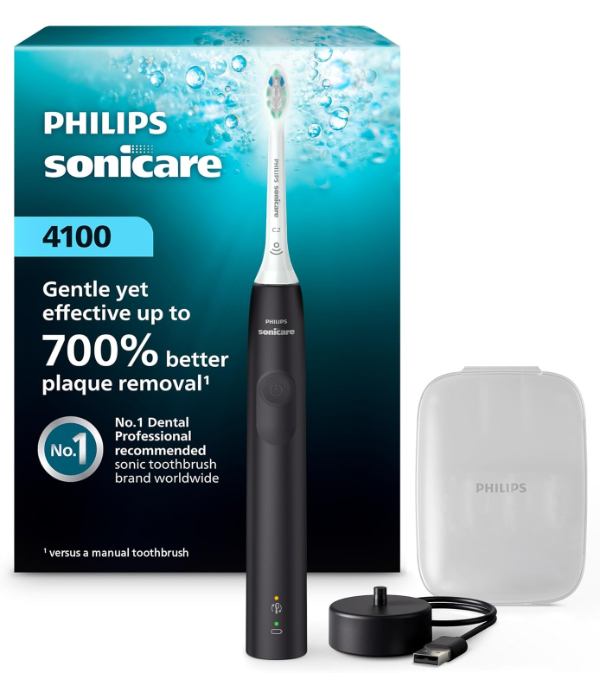
The Philips Sonicare 4100 is engineered for users who require effective plaque removal without the overhead of Bluetooth connectivity or multiple cleaning modes. It focuses on the core sonic technology, delivering the same 62,000 brush movements found in premium models but housed in a slimmer, lighter chassis. The most critical technical feature retained in this value model is the built-in pressure sensor, which pulses if the user applies excessive force, safeguarding the gingival margin from mechanical trauma.
Battery management in the 4100 is surprisingly robust for its price point. It utilizes a Lithium-Ion cell that provides a consistent power curve over its 14-day charge life, unlike Nickel-Metal Hydride (NiMH) batteries that tend to lose torque as they deplete. The inclusion of the "SmarTimer" and "QuadPacer" ensures that users adhere to the ADA-recommended two-minute brushing duration, divided into 30-second intervals for each quadrant of the mouth. This is a "set-and-forget" device designed for longevity and ease of use.
The main drawback is the lack of intensity settings; the 4100 operates at a single high-power frequency which may be too intense for some. It also uses a basic USB charging base without a wall adapter, reflecting its modern, travel-friendly design but requiring a USB port for power. It is highly recommended for those transitioning from manual to electric brushing who want the technical benefits of sonic vibration at a lower entry cost.
Technical Deep-Dive: Duty Cycle and PWM
The 4100 uses Pulse Width Modulation (PWM) to control the motor speed. By rapidly switching the power on and off at specific intervals, the internal controller maintains a consistent vibration frequency even as the battery voltage drops. This ensures that the first minute of brushing is just as effective as the last minute before the battery requires a recharge.
Best Value Oscillating: Oral-B Pro 1000
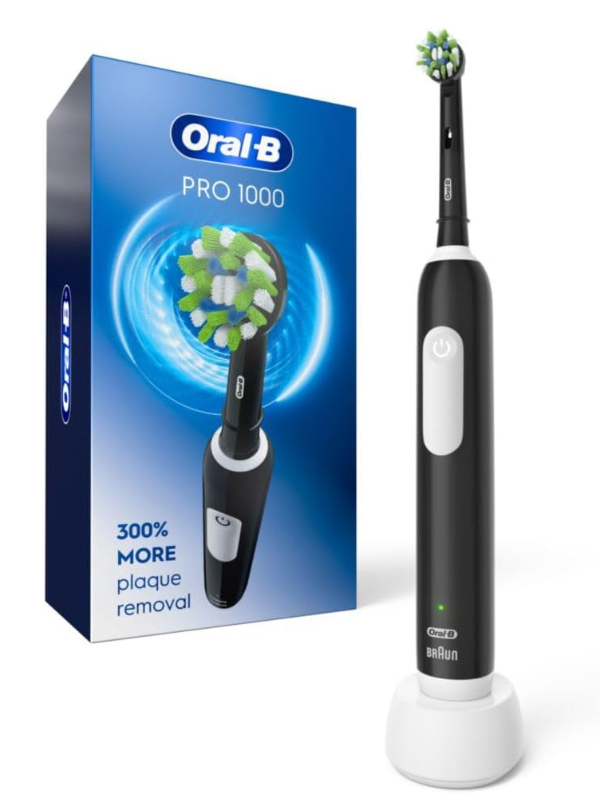
The Oral-B Pro 1000 is the quintessential mechanical toothbrush, utilizing a classic oscillating-rotating-pulsating action. While it lacks the magnetic drive of the iO series, its 3D cleaning action involves the brush head pulsating to loosen plaque and then rotating to sweep it away. This mechanical approach is highly effective for removing stubborn, calcified plaque. It is compatible with a wide array of Oral-B heads, including the CrossAction, FlossAction, and Sensitive Clean, making it the most versatile handle in terms of bristle selection.
Technically, the Pro 1000 is a study in simplicity and durability. It features a single mode and a basic mechanical pressure sensor that stops the pulsations if you press too hard. While the motor is louder than sonic or magnetic versions, it provides a tactile "scrubbing" sensation that many users find more reassuring than high-frequency vibrations. The handle is waterproof and features a rugged, rubberized grip that is easy to maintain and disinfect.
The limitations are primarily in the battery and charge time. The Pro 1000 often uses older battery chemistry in some regions or a lower-capacity Li-Ion cell, resulting in a shorter 7-10 day battery life compared to premium models. The charging process is also slow, often taking up to 22 hours for a full cycle. However, for a no-nonsense tool that provides clinically proven oscillating plaque removal, the Pro 1000 is the industry's reliable workhorse.
Technical Deep-Dive: 3D Pulsation Mechanics
The Pro 1000's '3D' movement involves two distinct planes of motion. The pulsation (axial movement) operates at approximately 20,000 cycles per minute to "knock" plaque loose, while the oscillation (rotational movement) operates at 8,800 strokes per minute to whisk the debris away. This dual-action approach is specifically designed to mimic the movements of professional dental cleaning tools.
Best Ergonomics: Burst Sonic Toothbrush
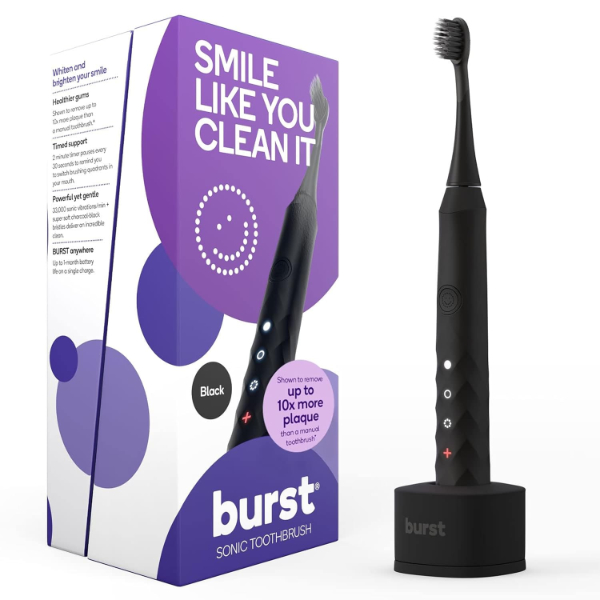
The Burst Sonic Toothbrush has gained technical acclaim for its focus on bristle material science and battery efficiency. It operates at 33,000 sonic vibrations per minute, placing it firmly in the high-performance sonic category. The most notable feature is the use of high-quality PBT (Polybutylene Terephthalate) bristles infused with binchotan charcoal. These bristles are designed to be thinner and more tapered than standard nylon, allowing for better penetration into the gingival sulcus while the charcoal provides a mild abrasive quality for surface stain removal.
In terms of power management, the Burst handle is one of the most efficient in the category, boasting a 4-week battery life on a single charge. This is achieved through a high-energy-density Lithium-Ion battery and an optimized motor controller that reduces parasitic power draw. The handle itself is ergonomically designed with a slim profile and a textured back for improved grip during wet use. It offers three modes - Whitening, Sensitive, and Massage - providing enough versatility for most users without overwhelming them with unnecessary settings.
The primary tradeoff is the ecosystem lock-in. Burst operates primarily on a subscription model for its replacement heads. While the heads are high-quality, they are not available in most physical retail stores, requiring users to plan ahead for replacements. Additionally, the sonic motor, while powerful, lacks the sophisticated pressure sensors and AI tracking found in the flagship models from Philips or Oral-B. It is an excellent choice for those who want a stylish, long-lasting travel companion with superior bristle tech.
Technical Deep-Dive: Binchotan Charcoal Infusion
The PBT bristles are infused with charcoal during the extrusion process. Charcoal is naturally porous and has a high surface area, which helps in adsorbing microscopic debris and bacteria. From a mechanical standpoint, the PBT material itself is more resistant to moisture absorption than Nylon 612, meaning the bristles maintain their stiffness and "snap" for longer periods in the humid environment of a bathroom.
How We Chose These Products
Our evaluation criteria are based on clinical efficacy data, mechanical reliability, and user-centric design. We prioritized devices that include a pressure sensor, as this is the single most important technical feature for preventing dental damage. Furthermore, we assessed:
- Motor Type: Magnetic vs. Mechanical vs. Piezoelectric performance and noise levels.
- Battery Chemistry: Preference for Li-Ion for its flatter discharge curve and longevity.
- Bristle Quality: Material composition (Nylon vs. PBT) and end-rounding quality to ensure enamel safety.
- Feature Utility: Whether "Smart" features provide actionable hygiene improvements or are merely aesthetic additions.
Comparison Overview
| Feature | Oral-B iO 10 | Sonicare 9750 | Sonicare 4100 | Oral-B Pro 1000 | Burst Sonic |
|---|---|---|---|---|---|
| Drive System | Magnetic Linear | Sonic Transducer | Sonic Transducer | Mechanical Cam | Sonic Motor |
| Movements/min | Proprietary iO | 62,000 | 62,000 | 20k/8.8k | 33,000 |
| Pressure Sensor | Smart (Tri-color) | Haptic/Visual | Haptic | Mechanical | No |
| Battery Life | 14 Days | 14 Days | 14 Days | 7-10 Days | 28 Days |
| Tracking | AI (Base Station) | AI (App) | None | None | None |
Buying Guide: What to Look For
- The Pressure Sensor: Essential for preventing "toothbrush abrasion." Look for sensors that provide immediate haptic or visual feedback.
- Oscillating vs. Sonic: Oscillating brushes (Oral-B) are generally better for physical removal of plaque from the tooth surface; Sonic brushes (Philips) are often gentler and better at interdental fluid cleaning.
- Total Cost of Ownership: Factor in the price of replacement heads. Specialized heads like the iO series or RFID-enabled heads can cost significantly more over the life of the handle.
- Timer Functions: Ensure the device has a quadrant pacer to encourage equal attention to all areas of the mouth.
General Pro / Cons
| Common Pros |
|---|
| Significantly more plaque removal than manual brushing. |
| Built-in timers ensure consistent 2-minute sessions. |
| Pressure sensors protect against over-brushing. |
| Interchangeable heads for specific needs (sensitive, ortho, etc.). |
| Easier to use for individuals with limited manual dexterity. |
| Sonic technology aids in cleaning hard-to-reach spaces. |
| Bluetooth tracking can gamify hygiene for better habits. |
| Long-term reduction in gingival inflammation. |
| Common Cons |
|---|
| High initial investment cost for premium handles. |
| Recurring costs for replacement brush heads. |
| Requires countertop space for charging bases. |
| Potential for electronic failure in humid environments. |
| Noise and vibration can be unpleasant for some. |
| Battery life degrades over 3-5 years of daily use. |
| Travel can be cumbersome due to proprietary chargers. |
| Over-reliance on 'Smart' apps can lead to feature fatigue. |
Final Summary
The transition to an electric toothbrush is one of the most effective ways to improve long-term oral health. For users seeking the absolute peak of modern engineering, the Oral-B iO Series 10 offers a revolutionary magnetic drive and intuitive feedback. Those who prefer a gentler, fluid-based clean will find the Philips Sonicare DiamondClean Smart 9750 to be the pinnacle of sonic performance. However, clinical results show that even entry-level models like the Sonicare 4100 or Oral-B Pro 1000 provide a vastly superior clean compared to manual brushing, provided they are used with proper technique and the integrated pressure sensors.
Aggregate rating of the products reviewed: 4.7 out of 5.