
Best Motorized Smart Window Shades of 2026
A technical assessment of high-precision automated window treatments, evaluated for motor torque, acoustic performance, and wireless protocol stability.
Introduction
The modernization of window treatments has transitioned from simple motorized lifting to sophisticated architectural components integrated into the smart home ecosystem. Today’s motorized shades are defined by their ability to operate with sub-40 dBA acoustic profiles, precision alignment, and low-energy wireless protocols like Thread and Zigbee. Selecting the appropriate system requires a nuanced understanding of power delivery - ranging from rechargeable lithium-ion cells to hardwired low-voltage DC lines - and the specific torque requirements of various fabric densities.
Performance in this category is no longer measured solely by the motor’s ability to move the shade, but by the stability of its wireless connection and the granularity of its positioning. Systems utilizing proprietary RF frequencies often provide superior reliability compared to congested 2.4 GHz Wi-Fi bands, while the emergence of the Matter standard has begun to bridge the gap between closed ecosystems. This review analyzes five industry-leading solutions based on their mechanical engineering, protocol integrity, and long-term durability in residential and professional environments.
Best for Reliability & Silence: Lutron Serena Smart Shades
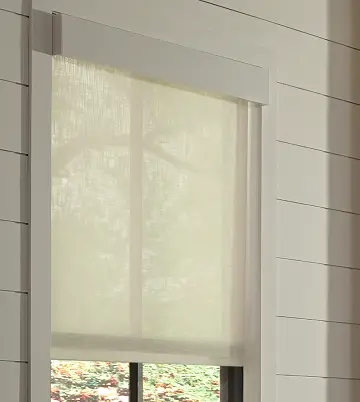
Lutron Serena shades represent the pinnacle of consumer-grade motorized window treatments, primarily due to the company's proprietary Clear Connect RF technology. Operating on the 434 MHz frequency, these shades bypass the significant interference found in the overcrowded 2.4 GHz spectrum used by Wi-Fi and Bluetooth. This ensures nearly instantaneous response times and prevents "ghost" triggers or failed commands. Mechanically, the Serena motor is engineered for extreme efficiency, allowing it to run for three to five years on a single set of standard D-cell batteries, a feat that remains unmatched by rechargeable competitors.
The acoustic signature is another technical standout, with an operating volume of approximately 38 dBA. This is quieter than a typical household refrigerator, making it ideal for bedrooms where silent operation at sunrise is essential. Lutron also employs a "perfect unison" feature, where multiple shades on the same wall move at exactly the same speed, ensuring the bottom bars remain perfectly aligned throughout the transition - a detail often overlooked by lower-end motorized options.
The primary limitation of the Serena system is the ecosystem lock-in; to access smart features, a Lutron Smart Hub (Bridge) is mandatory. Furthermore, while the build quality is exceptional, the upfront cost for a single window is significantly higher than modular DIY kits. For users prioritizing "set and forget" reliability and world-class mechanical precision, Lutron remains the industry benchmark.
Lutron Official Product PageTechnical Deep-Dive: Clear Connect RF (434 MHz)
Unlike standard 2.4 GHz Wi-Fi, which must contend with physical obstacles and interference from appliances, Lutron’s 434 MHz signal utilizes longer wavelengths that penetrate walls and floors more effectively. This sub-gigahertz frequency is reserved for low-power communication, resulting in a signal-to-noise ratio that allows for reliable control across large homes without the need for mesh repeaters. This is the same protocol used in high-end commercial building automation.
Best Smart Home Technology: Eve MotionBlinds with Matter
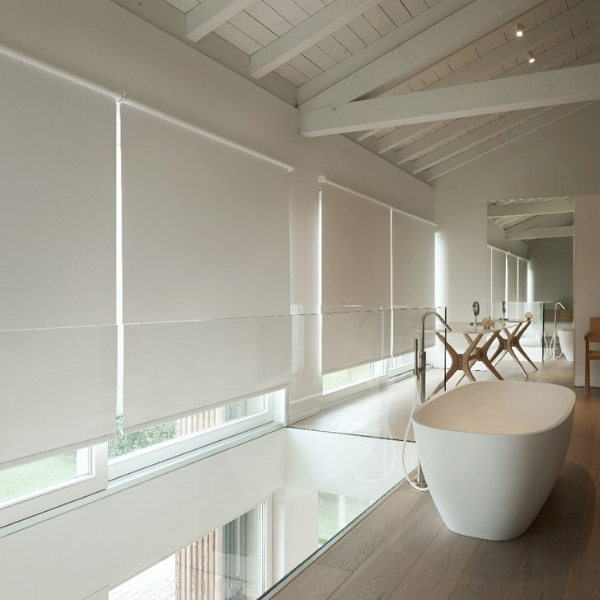
Eve MotionBlinds are at the forefront of the Matter-over-Thread revolution. By utilizing Thread, a low-power mesh networking protocol, these shades become more reliable as more devices are added to the network. Unlike Bluetooth, which has limited range, or Wi-Fi, which drains battery quickly, Thread provides a self-healing network with low latency. With the inclusion of Matter support, these shades offer native interoperability across Apple Home, Google Home, Amazon Alexa, and Samsung SmartThings without requiring a proprietary brand-specific bridge.
Technically, the Eve motor features "Absolute Silence" technology, incorporating acoustically tuned motors and soft start/stop speed control to prevent the mechanical jarring often heard in cheaper models. A unique feature is the integrated manual pull cord; even if the network is down or the remote is lost, the shades can be operated manually without damaging the motor. Power is supplied by a built-in rechargeable battery that typically lasts 12 months per charge, depending on usage and shade weight.
One trade-off is the requirement for a Thread Border Router (like a HomePod or Nest Hub) to unlock the full potential of the mesh network. Users in homes without Thread-enabled devices may find the initial setup more complex. However, for those building a future-proof smart home, the local control and lack of cloud dependency make Eve MotionBlinds a superior technical choice.
Eve Official Product PageTechnical Deep-Dive: Matter over Thread
Thread is an IPv6-based networking protocol designed for IoT devices. It creates a mesh network where each mains-powered device acts as a router, extending the range for battery-powered end-devices like shades. Matter sits on top of this transport layer, providing a common language that allows devices from different manufacturers to communicate locally. This eliminates the latency of cloud-to-cloud communication and ensures the shades respond instantly even if your internet connection fails.
Best All-Around Performance: Yoolax Motorized Roller Shades
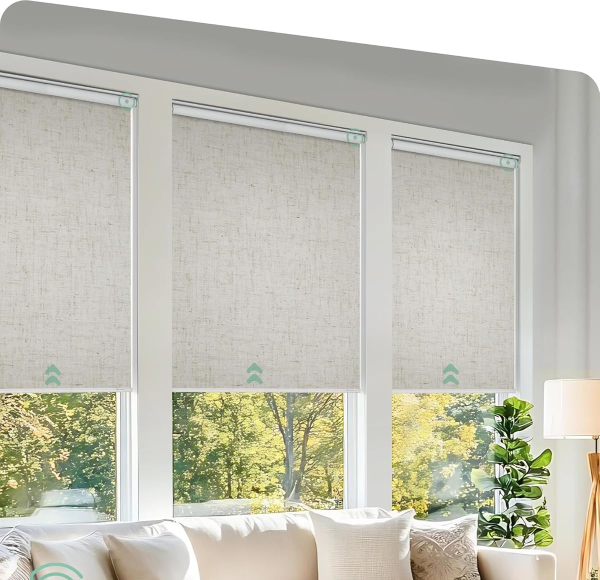
Yoolax has solidified its position as the leader in customizable, value-oriented motorized shades. The technical strength of Yoolax lies in its motor versatility; users can choose between Zigbee, Bluetooth, or Wi-Fi enabled motors based on their existing infrastructure. Their Zigbee 3.0 motors are particularly popular for users of Echo Hubs or SmartThings, as they connect directly without needing an additional bridge. The motors are rated at a noise level below 48 dB, which is respectable for a mid-range product.
The power options are exceptionally flexible. While the standard internal battery provides 4–6 months of operation, Yoolax offers a dedicated solar panel attachment that can provide continuous trickle-charging. This is an ideal solution for high-reaching windows where manual charging via USB is impractical. The fabric selection is extensive, covering everything from 100% blackout vinyl to light-filtering polyester, all cut to precise millimetric dimensions.
Honest limitations involve the software experience. The Yoolax app is functional but lacks the polish of Lutron or Eve, and setting upper/lower limits can be a tedious process using the remote. Additionally, while the motors are reliable, they do not feature the "soft stop" refinement of premium brands, resulting in a slight mechanical thud when reaching the fully open or closed positions. For those who need custom-sized shades for every window in the house without a professional installation price tag, Yoolax offers the best performance-to-cost ratio.
Yoolax Official Product PageTechnical Deep-Dive: Solar Trickle Charging
The Yoolax solar panel utilizes monocrystalline silicon cells to convert ambient light into energy. Because motorized shades are typically in standby mode 98% of the time, the power draw is minimal (standby current is often <0.5mA). A small solar panel can generate enough current, even on overcast days, to replenish the energy used during the twice-daily open/close cycles, effectively creating a "perpetual" power source for the lithium-ion battery.
Best Professional Grade: Somfy Sonesse Ultra 30 WireFree
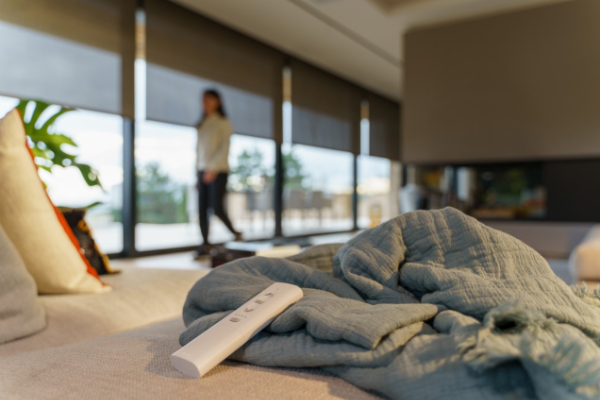
For high-end residential or commercial installations requiring high-torque motors, the Somfy Sonesse Ultra 30 is the professional choice. Unlike consumer-oriented DIY shades, Somfy motors are often integrated into custom window treatments by specialized installers. The Sonesse Ultra 30 provides 2 Nm (Newton-meters) of torque, significantly more than typical DIY motors. This allows it to lift heavy, high-density fabrics or oversized shades (up to 96 inches wide) without straining or overheating. The motor's speed is adjustable between 10 and 28 rpm, allowing for precise customization of travel time.
Somfy uses the RTS (Radio Technology Somfy) protocol at 433.42 MHz, which offers exceptional range and penetration through building materials. The motor is designed with a "quiet" architecture that keeps noise levels below 42 dBA. Reliability is reinforced by the built-in lithium-ion battery that provides roughly 500 up/down cycles per charge, which for most users translates to roughly one year of operation between charges.
The primary downside is that Somfy is not a "plug-and-play" system for most homeowners. The setup and programming of RTS limits can be opaque, and smart home integration requires the TaHoma hub or a third-party RTS-to-IP bridge. Furthermore, the motor is often sold as a component, meaning users must source their own tubes and fabrics. However, for sheer mechanical strength and longevity in large-scale projects, Somfy's engineering is unsurpassed.
Somfy Official Product PageTechnical Deep-Dive: Torque and Linear Load
Torque is a measure of rotational force. For window shades, torque determines the maximum weight and length of fabric a motor can lift without stalling. Somfy’s 2 Nm rating means the motor can handle roughly 17 inch-pounds of force. In practical terms, this allows the Sonesse Ultra 30 to manage heavy blackout materials or large Roman shades that would cause lower-torque motors to fail or operate at inconsistently slow speeds.
Best for Custom Aesthetics: Graywind Motorized Zebra Shades
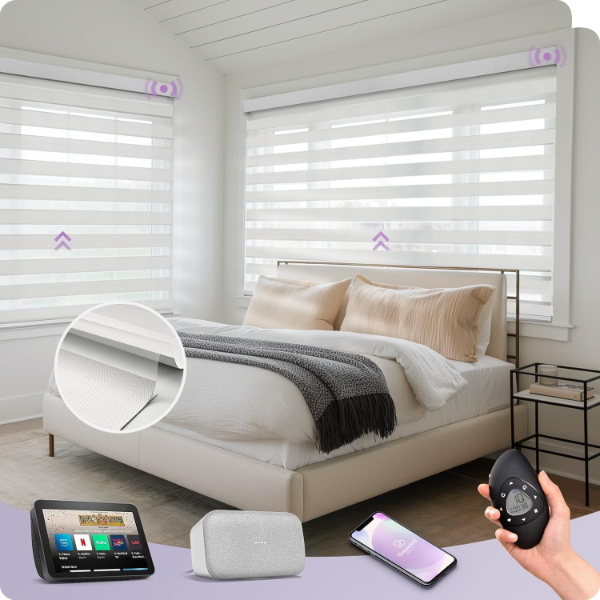
Graywind has specialized in "Zebra" or layered shades, which combine alternating bands of sheer and solid fabric. This dual-layer design provides the most granular control over light and privacy of any motorized system. Technologically, Graywind uses Zigbee 3.0 motors that are compatible with Amazon Echo (with built-in hub), Google Home via a Zigbee bridge, and Matter-enabled controllers. The shades can be set to stop at specific percentages, allowing the user to align the solid bands for total privacy or offset them for filtered sunlight.
The build quality is remarkably robust for the price, utilizing a high-density aluminum headrail and a weighted bottom bar to ensure the fabric hangs straight. Graywind also offers a hardwired DC option for users who have pre-run 12V or 24V lines, eliminating the need for battery maintenance entirely. Their Zigbee motors support multi-admin control, meaning you can control them via a physical remote and a voice assistant simultaneously without configuration conflicts.
The trade-off with Zebra shades is the mechanical complexity. Because there are two layers of fabric moving independently, they are more susceptible to misalignment if the window frame is not perfectly level. The motor noise is slightly more pronounced than the Lutron or Somfy, typically hovering around 45-48 dBA. However, for modern interiors where aesthetic versatility is the priority, Graywind’s motorized Zebra shades are a standout solution.
Graywind Official Product PageTechnical Deep-Dive: Zigbee 3.0 Mesh Networking
Zigbee 3.0 is a standardized communication protocol based on the IEEE 802.15.4 standard. Unlike Wi-Fi, which connects every device directly to the router, Zigbee creates a mesh. Mains-powered devices (like hardwired shades) act as routers, while battery-powered shades act as "leaf" nodes. This reduces power consumption significantly, as the radio only needs to transmit to the nearest neighbor rather than a distant central router.
How We Chose These Products
Our selection process focused on mechanical longevity and protocol stability. We evaluated products based on:
- Acoustic Benchmarking: Prioritizing motors with decibel ratings below 50 dBA to ensure non-disruptive operation.
- Wireless Protocol Integrity: Favoring systems that utilize low-latency mesh (Thread/Zigbee) or proprietary RF (Lutron/Somfy) over basic Wi-Fi.
- Power Architecture: Evaluating battery longevity and the availability of sustainable power options like solar or hardwired DC.
- Torque Consistency: Ensuring motors can maintain a constant rpm even when lifting heavy blackout or oversized fabrics.
Comparison Overview
| Model | Protocol | Battery Life | Noise (dBA) | Torque / Strength |
|---|---|---|---|---|
| Lutron Serena | Clear Connect (434MHz) | 3-5 Years (D-Cell) | ~38 dBA | Moderate (Precision) |
| Eve MotionBlinds | Matter / Thread | 12 Months (Rechargeable) | ~40 dBA | Moderate (Soft Start) |
| Yoolax Roller | Zigbee / Wi-Fi | 4-6 Months (Solar option) | ~48 dBA | Standard |
| Somfy Sonesse 30 | RTS (433MHz) | 12 Months (Rechargeable) | ~42 dBA | High (2 Nm) |
| Graywind Zebra | Zigbee 3.0 | 6-8 Months (Hardwire option) | ~46 dBA | Standard (Dual Layer) |
Buying Guide: What to Look For
- Protocol Stability: If your router is more than 30 feet from your windows, avoid Wi-Fi motors. Zigbee or Thread mesh networks are more reliable for whole-home setups.
- Standby Power Draw: Motors spend most of their life waiting for a signal. Check the "quiescent current" or standby ratings; Lutron leads the industry here, which is why their batteries last years.
- Hembar Alignment: If you have multiple windows side-by-side, ensure the motor supports speed adjustment so you can synchronize the shades to move in unison.
- Hardwired vs. Battery: Battery is easier for retrofitting, but if you are doing a renovation, 12V or 24V hardwired lines are far superior as they eliminate all maintenance and provide higher torque.
General Pro / Cons
| Strengths (Pros) | Weaknesses (Cons) |
|---|---|
| Instant automation based on sunrise/sunset or temperature triggers. | Higher initial cost compared to manual window treatments. |
| Improved home security via simulated occupancy schedules. | Dependency on wireless networks or proprietary bridges. |
| Energy efficiency by reducing solar heat gain during peak hours. | Periodic battery maintenance (charging or replacement) is required. |
| Cordless design provides a significant safety benefit for children/pets. | Motor noise can be intrusive in very quiet environments. |
| Integration with larger smart home scenes (e.g., "Movie Night"). | Professional installation is often required for high-end systems. |
| Ability to control inaccessible windows (high skylights or clerestory). | Firmware updates can occasionally disrupt third-party integrations. |
Final Summary
The selection of a motorized shade system should be dictated by your existing smart home infrastructure and the size of your windows. For those seeking absolute reliability, Lutron Serena’s proprietary RF signal remains the industry gold standard. However, the emergence of Matter-over-Thread with Eve MotionBlinds offers a more future-proof and interoperable solution for tech enthusiasts. For larger, heavy-duty applications, Somfy’s professional-grade torque is indispensable, while Yoolax and Graywind provide exceptional value for custom DIY projects. Aggregate rating of the products reviewed: 4.7 out of 5.