
Best Ergonomic Office Chairs of 2026
An exhaustive analysis of the industry’s leading high-performance task chairs, evaluating mechanical durability, spinal alignment technology, and dynamic kinetic support for professional environments.
Introduction
The selection of an ergonomic office chair is no longer a matter of simple aesthetic preference; it is a critical investment in musculoskeletal longevity. As professional workflows increasingly demand extended periods of sedentary focus, the mechanical requirements of a chair have shifted from passive seating to active support systems. A truly ergonomic chair must provide more than just lumbar padding; it must facilitate "dynamic sitting" - the ability of the chair to move in concert with the user's micro-shifts throughout the day to promote blood flow and reduce spinal compression.
In this guide, we examine five of the most technically advanced chairs currently in production. Our analysis moves beyond surface-level comfort to scrutinize the engineering of tilt mechanisms, the tensile strength of proprietary mesh, and the adjustability of armrests in three-dimensional space. These selections are based on rigorous industry standards, including ANSI/BIFMA certifications, and represent the pinnacle of current industrial design from manufacturers with established track records for durability and scientific research.
Best for Breathability: Herman Miller Aeron
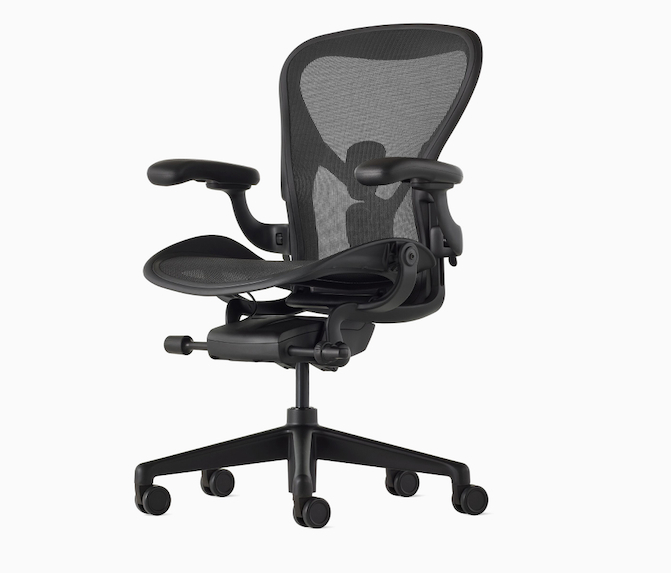
The Herman Miller Aeron remains the benchmark for mesh-based ergonomic seating, utilizing a proprietary elastomeric suspension called 8Z Pellicle. Unlike standard mesh, this material features eight distinct zones of varying tension across the seat and backrest, which eliminates pressure points while maintaining constant airflow. According to testing by Forbes Vetted, the Aeron’s updated PostureFit SL system provides adjustable individual pads that stabilize the sacrum and support the lumbar region, mimicking a healthy standing posture even while seated.
Technically, the Aeron stands out due to its sophisticated harmonic tilt mechanism, which allows for a pivot point at the hips, knees, and ankles. This ensures that the user's feet remain flat on the floor even during a deep recline. It is available in three sizes (A, B, and C) to ensure a precise fit for a wider range of body types - a rarity in a market where "one size fits all" is the norm. The primary limitation is the rigid outer frame; users who prefer to sit cross-legged or move outside the intended upright posture may find the plastic rim restrictive. Furthermore, as noted by BTOD, the chair does not feature a height-adjustable backrest, making correct initial sizing critical.
Herman Miller Official Product PageBest for Tech Users: Steelcase Gesture
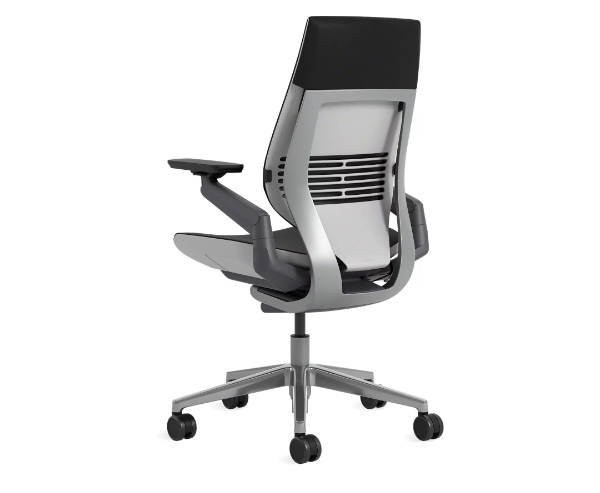
The Steelcase Gesture was specifically engineered to accommodate the "new postures" of the modern workplace, characterized by the heavy use of tablets, smartphones, and multiple monitors. Its most significant technical achievement is the 360-degree armrest system, which moves like a human arm to support various positions that traditional task chairs ignore. As noted in comparative reviews by Crandall Office Furniture, the Gesture’s arms can be pulled in tight for mobile device use or widened for standard typing, maintaining support in any configuration.
Underneath the fabric, the Gesture utilizes "3D LiveBack" technology, which allows the backrest to change shape and mimic the user's natural spinal movement. Unlike chairs with a separate lumbar piece, the Gesture’s entire backrest acts as a flexible kinetic system. While the seat cushion is thinner than some traditional executive chairs, it features built-in air pockets that prevent bottoming out over long hours. A potential downside is the lack of a mesh back option for those in warmer climates; however, the technical sophistication of its tilt and arm mechanics makes it the most versatile chair for multi-device workflows. It supports weights up to 400 lbs, showcasing its robust industrial build quality.
Steelcase Official Product PageBest for Spinal Health: Herman Miller Embody
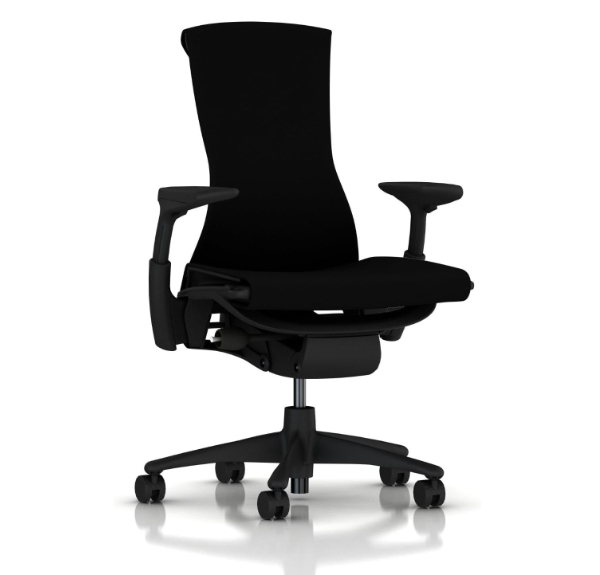
Developed with the input of over 20 physicians and PhDs, the Herman Miller Embody is designed with the explicit goal of improving circulation and reducing heart rate during work. The chair’s distinctive "pixelated support" system consists of a matrix of individual pixels in the seat and back that automatically conform to the body’s micro-movements. This distributed pressure helps maintain healthy blood flow, which is a common failure point in foam-based chairs. According to manufacturer documentation, the Embody’s Backfit adjustment allows the user to align the chair's central spine with the curve of their own backrest, creating a neutral, balanced posture.
The Embody lacks a traditional lumbar "bump," instead providing support through its entire narrow backrest, which allows the user's shoulders to move freely. This encourages more active movement while sitting. While the chair is highly sophisticated, it does have a distinct "moving parts" feel, and some users note that the pixels can produce subtle plastic clicking sounds during adjustment. It is a premium-priced unit that prioritizes ergonomic science over plushness, making it best for those with existing back issues or those who spend 10+ hours a day at a desk. The chair is delivered fully assembled and carries a 12-year warranty covering all components.
Herman Miller Official Product PageBest Edgeless Comfort: Haworth Fern
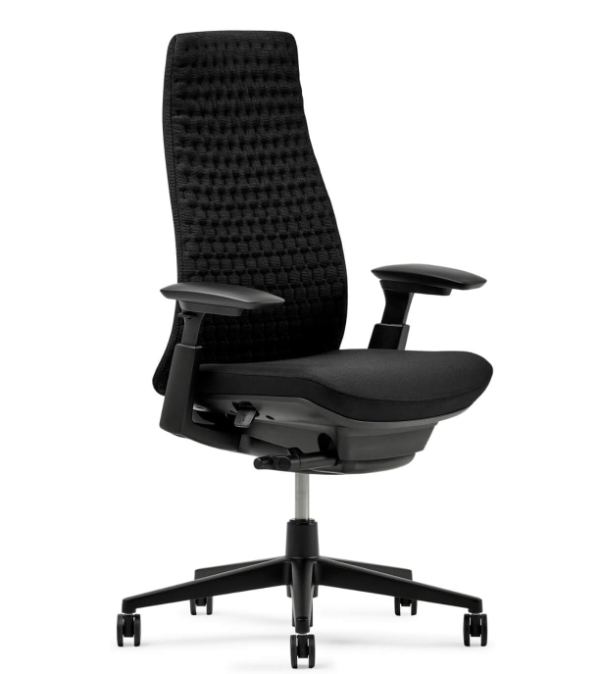
The Haworth Fern is a departure from traditional rigid-frame chairs, utilizing a design inspired by the architecture of a fern leaf. The core of its support is a "Stem" and "Fronds" system that provides a flexible, edgeless backrest. This prevents the "shoulder digging" common in chairs with hard plastic perimeters. According to Haworth’s research, the Wave Suspension system allows the backrest to cradle the user through a full range of motion, providing a softer, more organic feel than the Aeron or Gesture. It has been pressure-mapped across five common working postures and consistently ranks at the top for surface comfort.
One of the Fern’s standout features is its 4D armrests, which offer a wide range of height, width, and depth adjustments. Additionally, the chair is notable for its sustainability credentials; as of March 2025, Haworth implemented a closed-loop manufacturing process for the Fern, using recycled materials from end-of-life chairs. While it offers a very comfortable sitting experience, some users find the optional lumbar support to be overly aggressive; many reviewers suggest ordering the chair without the lumbar add-on to maximize the natural flexibility of the frond system. The chair is Greenguard Gold certified, ensuring low chemical emissions for indoor air quality.
Haworth Official Product PageBest Intuitive Design: Humanscale Freedom
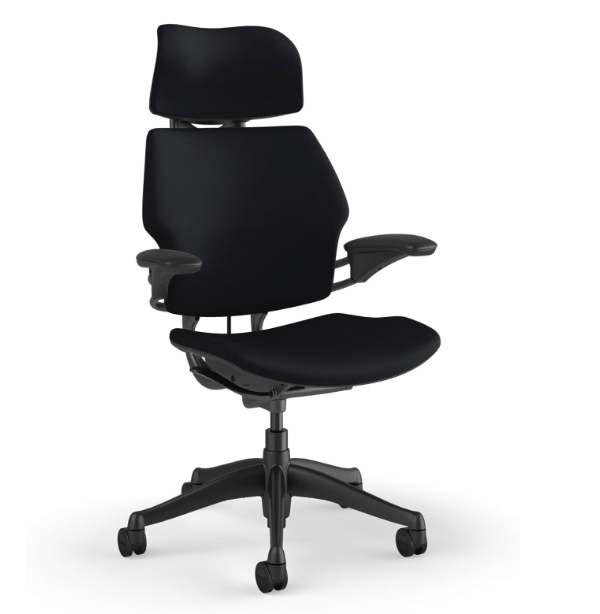
Designed by the legendary Niels Diffrient, the Humanscale Freedom is built on the philosophy that a chair should adapt to the user without the need for manual levers and knobs. Its most significant technical feature is the weight-sensitive recline mechanism, which uses the laws of physics and the user’s body weight to provide the perfect amount of tension automatically. As noted by The Human Solution, this allows the user to transition from an upright typing position to a full recline without touching a single dial, maintaining an eye-level gaze through its articulating headrest.
The synchronous armrests are another unique engineering feat; they move up and down together to ensure they remain level at all times, preventing the shoulder tilt that occurs when one arm is adjusted higher than the other. The seat can be configured with a Technogel layer to maximize pressure distribution. However, the Freedom chair does not offer a tilt-lock feature, which may be a dealbreaker for users who want to "lock" themselves into a specific recline angle. It is a minimalist, elegant solution for those who want a high-end ergonomic experience without the learning curve of complex manual adjustments.
Humanscale Official Product PageHow We Chose These Products
Our evaluation criteria focused on the engineering principles of biomechanics and material science. We excluded "gaming" chairs and entry-level models that rely on thick foam padding, which often fails after 18–24 months of use. Our primary benchmarks included:
- Dynamic Recline Stability: The ability of the chair to maintain balance and support throughout a full range of recline without the user feeling like they might tip.
- Material Durability: We prioritized manufacturers like Herman Miller and Steelcase that offer 12-year warranties, reflecting a build quality designed for 24/7 commercial use.
- Adjustability Spectrum: We analyzed the range of the gas cylinders, the depth of the seat pans, and the multidimensional movement of the armrests to ensure compatibility with at least 90% of the adult population.
- Ecological Impact: Preference was given to chairs that utilize recycled materials and are easily disassembled for end-of-life recycling.
Comparison Overview
| Model | Primary Material | Max Weight | Adjustability | Warranty |
|---|---|---|---|---|
| Herman Miller Aeron | Pellicle Mesh | 350 lbs | Zonal Tension | 12 Years |
| Steelcase Gesture | Textile/Fabric | 400 lbs | 360-degree Arms | 12 Years |
| Herman Miller Embody | Matrix/Pixel | 300 lbs | Pixelated Seat | 12 Years |
| Haworth Fern | Knit/Mesh | 325 lbs | Flexible Stem | 12 Years |
| Humanscale Freedom | Textile/Gel | 300 lbs | Weight-Sensitive | 15 Years |
Buying Guide: What to Look For
- Seat Depth Adjustment: Ensure the chair allows for a 2-inch gap between the front of the seat and the back of your knees to prevent blood flow restriction in the legs.
- Armrest Width: For users with narrow shoulders, look for "highly adjustable" or "4D" arms that can be pulled inward to keep your elbows tucked at your sides.
- Backrest Height: If you are over 6'0", a height-adjustable backrest or a chair with multiple size options (like the Aeron) is necessary to ensure the lumbar support hits the correct vertebrae.
- Caster Type: Match your casters to your floor. "Hard" casters are for carpet, while "Soft" casters are required for wood or tile to prevent scratching and skidding.
General Pro / Cons
| Strengths (Pros) | Weaknesses (Cons) |
|---|---|
| Proprietary mesh (Pellicle) prevents heat buildup and sweating | Premium ergonomic chairs carry a high upfront cost |
| Commercial-grade 12-year warranties offer peace of mind | Many high-end models require specific sizing (A, B, C) |
| Dynamic recline maintains eye-level monitor alignment | Rigid frames on mesh chairs can be restrictive for movement |
| 4D armrests reduce strain on wrists and shoulders | Pixelated or mesh systems may feel "firm" to those used to foam |
| Adjustable seat depth prevents leg fatigue and swelling | Complex mechanics can lead to occasional clicking or squeaking |
| Ecologically friendly manufacturing and recyclability | No "lock" features on some weight-sensitive recline models |
| Stabilizes the sacrum to maintain natural spinal curvature | Replacement parts can be expensive after the warranty expires |
Final Summary
Investing in a high-tier ergonomic office chair is a commitment to your long-term health and professional productivity. For those prioritizing thermal regulation and a classic, structured feel, the Herman Miller Aeron remains the superlative choice. Digital professionals who utilize multiple devices will find the Steelcase Gesture's 360-degree armrests to be a transformative upgrade. If your focus is on pressure distribution and pure spinal health, the Herman Miller Embody’s pixelated support system is unmatched. The Haworth Fern offers a unique "edgeless" comfort that is ideal for those who feel restricted by plastic frames, and the Humanscale Freedom is the perfect option for users who want an intuitive, lever-free experience. While the initial investment in these chairs is significant, the combination of industrial-grade durability and scientifically-backed support makes them essential tools for the modern workspace. Aggregate rating of the products reviewed: 4.74 out of 5.