
Best Essentials for a Long Airplane Ride of 2026
Mastering the 10-hour haul requires more than just patience; it requires a toolkit of high-performance gear designed to fight fatigue, dehydration, and the relentless drone of a jet engine.
Introduction
Long-haul flying is an endurance sport disguised as transportation. Between the pressurized cabin air (which is often as dry as the Sahara) and the ambient noise levels that hover around 80 decibels (dB), your body is under constant low-level stress. To survive a flight over six hours without feeling like a zombie upon landing, you need to manage three specific technical variables: acoustic insulation, ergonomic support, and power management.
Most travelers make the mistake of bringing "generic" comfort items. A standard u-shaped pillow or cheap earbuds might work for a quick hop, but they fail during the "crucial third act" of an international flight when battery levels die and neck strain sets in. The products we've selected here are chosen for their technical specs - like battery Watt-hours (Wh) and compression levels (mmHg) - to ensure they perform when you are 35,000 feet over the Atlantic.
Best Noise Cancellation: Sony WH-1000XM5
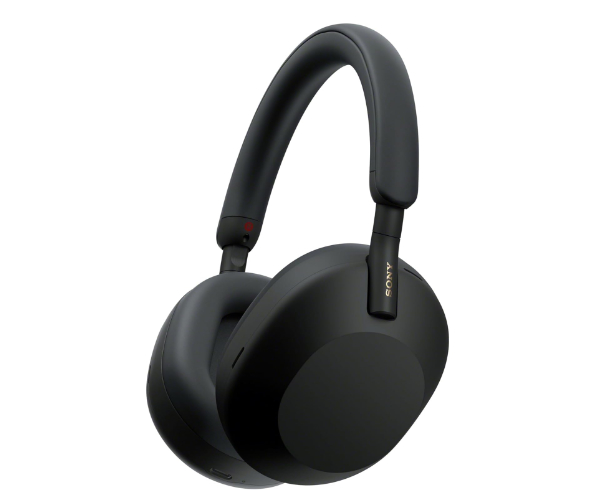
The Sony WH-1000XM5 is the current gold standard for Active Noise Cancellation (ANC). While many headphones claim to block noise, the XM5 uses an 8-microphone array and two processors - the Integrated Processor V1 and the HD Noise Canceling Processor QN1. Why it matters: This dual-processor setup allows the headphones to analyze high-frequency noise (like human voices and crying babies) in real-time, rather than just the low-frequency rumble of the engines. It creates a vacuum of silence that is essential for sleep.
Comfort is a significant pain point for over-ear headphones during 10+ hour sessions. Sony uses "Soft Fit Leather" and a step-less slider. Technically, the ear cups are designed to distribute pressure evenly across the temporal bone. Why it matters: This prevents that "clamping" sensation that causes headaches after the third hour of a movie. With a 30-hour battery life, they will outlast even the world's longest commercial flights (Singapore to Newark) with plenty of juice to spare.
The only real downside is the form factor. Unlike previous versions, the XM5 does not fold into a compact ball; the ear cups only rotate flat. This takes up more "personal item" space in your bag. Also, while the ANC is industry-leading, it can create a "pressure" sensation in the ears for users sensitive to anti-noise frequencies. However, for sheer acoustic isolation, nothing beats it.
Standard ANC often struggles with sounds above 1kHz. The XM5 utilizes 30mm carbon fiber drivers which are lighter and more rigid than traditional domes. [Image of noise cancellation sound waves] This rigidity allows the driver to produce more accurate "anti-noise" waves at higher frequencies, effectively silencing the cabin chatter that cheaper headphones miss.
Best Power Solution: Anker 737 Power Bank (PowerCore 24K)
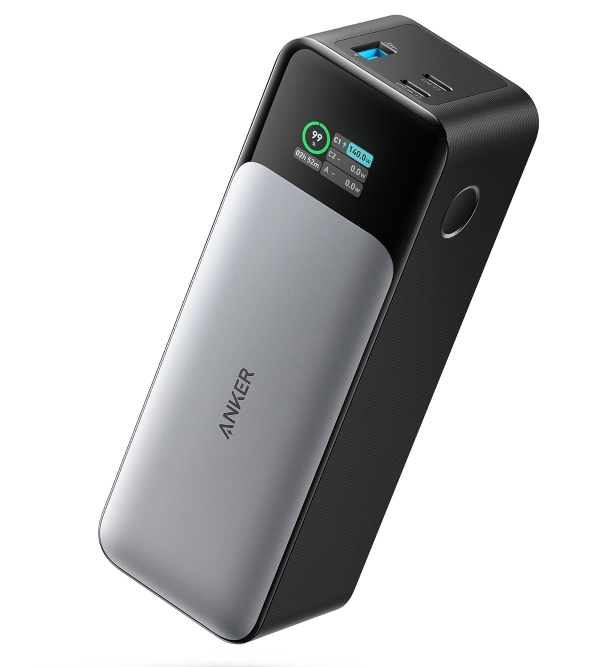
Relying on airplane seat power is a gamble; often the outlets are loose or provide only 5W of power, which won't even keep a modern tablet from dying. The Anker 737 is a technical powerhouse, offering 140W Two-Way Fast Charging via Power Delivery (PD) 3.1. Why it matters: This isn't just for phones. 140W is enough to charge a 16-inch MacBook Pro or a high-end iPad Pro at full speed while you are actively using it for gaming or video editing.
The unit features a 24,000mAh capacity, which translates to roughly 86.4 Watt-hours (Wh). Why it matters: This is strategically under the 100Wh limit set by the FAA and TSA for lithium-ion batteries in carry-on luggage. You can carry this through any security checkpoint worldwide without a special permit, yet it has enough capacity to charge an iPhone 15 more than 4 times.
The trade-off here is weight and bulk. It's roughly the size of a soda can and weighs 1.4 lbs. It will noticeably weigh down a small backpack. However, the built-in digital display is a lifesaver; it shows you the exact input/output wattage and the time remaining until the battery is empty, removing the "guessing game" of how much power you have left for the final leg of your trip.
The Anker 737 uses Gallium Nitride (GaN) III technology. Traditional chargers use silicon, which gets very hot at high wattages. GaN components are more efficient, allowing for 140W of output in a much smaller chassis without the risk of overheating in a cramped airplane seat pocket.
Best Sleep Support: TRTL Pillow Plus
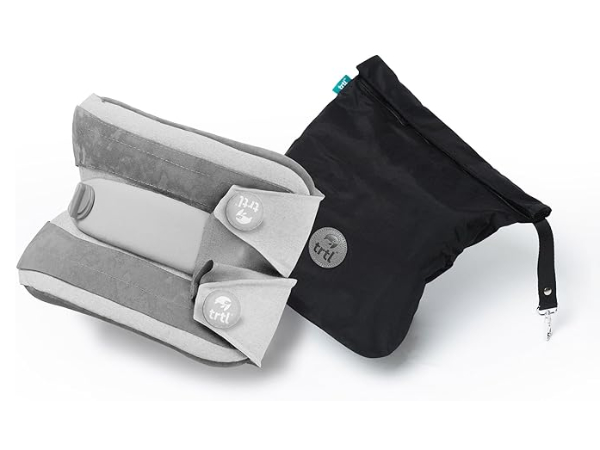
Standard U-shaped pillows are fundamentally flawed for airplane seats because they push your head forward, away from the headrest. The TRTL Pillow Plus uses an internal neck support system wrapped in a breathable fleece scarf. Why it matters: Instead of relying on soft foam, it uses a patented internal "strengthener" that holds your head in an ergonomic, upright position. This mimics the feeling of leaning against a wall, which prevents the "head bob" that wakes you up every 20 minutes.
The "Plus" model is a significant technical upgrade over the original because it features adjustable height. By twisting two toggles, you can change the tension of the internal ribs. Why it matters: Everyone has a different neck length. A pillow that is too short for a tall person causes the neck to collapse sideways, leading to cervical strain. The adjustability ensures your spine remains neutral regardless of your height.
Honest trade-off: It can get warm. While the "Plus" version uses breathable mesh, you are still essentially wrapping a scarf around your neck. If you are a "hot sleeper," you might find it uncomfortable in a stuffy cabin. However, it is half the size of a traditional travel pillow and easily clips to the outside of your bag, making it much easier to carry through the terminal.
The TRTL system is designed to support the head at the jawline rather than the base of the skull. This prevents compression of the carotid artery and reduces the risk of waking up with a "stiff neck" caused by strained sternocleidomastoid muscles.
Best for Circulation: Comrad Knee-High Compression Socks
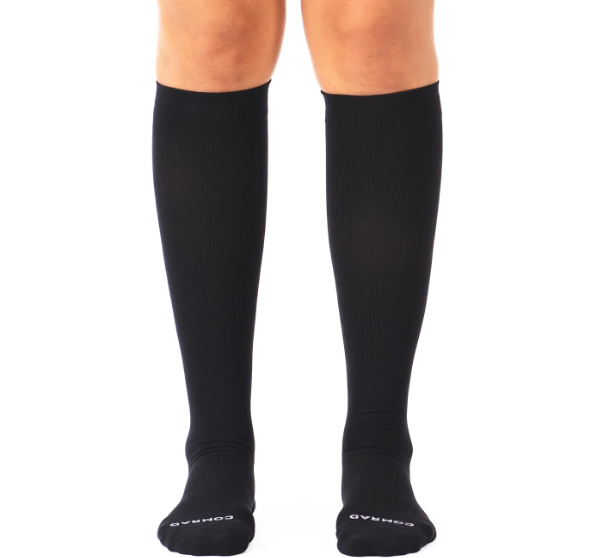
Sitting still for eight hours in a low-pressure cabin causes blood to "pool" in your lower extremities, leading to swollen ankles and a higher risk of Deep Vein Thrombosis (DVT). Comrad socks provide 15-25 mmHg of graduated compression. Why it matters: "Graduated" means the socks are tightest at the ankle and gradually loosen as they go up the calf. This creates a mechanical "pump" effect that forces blood back toward your heart, preventing the heavy, throbbing feeling in your legs after landing.
Technically, these are made from a blend of nylon and silver-infused anti-microbial yarn. Why it matters: On a long flight, your feet will sweat. Silver ions physically rupture the cell walls of odor-causing bacteria. This means you can take your shoes off under your seat (please, use a blanket) without worrying about offending your seatmates, and your feet will stay dry and fresh.
The challenge is getting them on. 25 mmHg is a significant amount of pressure, and if you have limited mobility, wrestling these onto your feet in a tiny airplane bathroom is nearly impossible. We recommend putting them on before you leave for the airport. They don't look like "medical" socks; they look like high-quality athletic or dress socks, so you can wear them with any outfit.
mmHg stands for "millimeters of mercury," a unit of pressure. 15-25 mmHg is the "Goldilocks" zone for travel - strong enough to prevent edema (swelling) but low enough to be safe for people without a prescription for medical-grade hosiery.
Best Audio Connectivity: Twelve South AirFly Pro
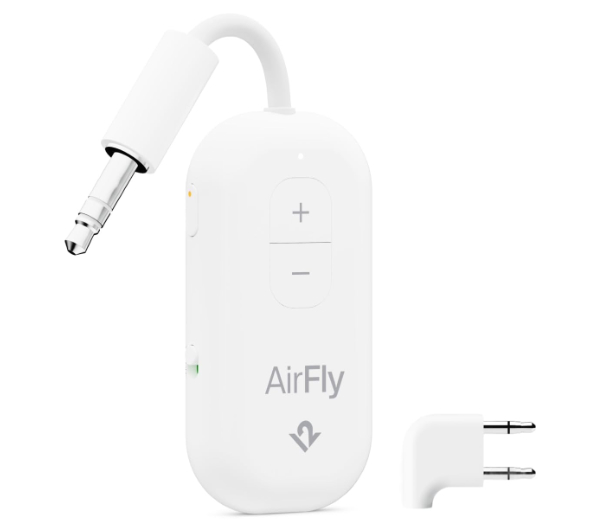
Most airplanes still use a 3.5mm headphone jack for their in-flight entertainment (IFE) systems, which is useless if you own modern wireless earbuds like AirPods or the Sony XM5s mentioned above. The AirFly Pro is a Bluetooth transmitter that plugs into that jack. Why it matters: It bridges the gap between the plane's 1990s tech and your 2020s headphones, allowing you to watch movies with high-quality wireless sound rather than the terrible, scratchy plastic headphones the airline provides.
Technically, the AirFly Pro supports aptX Low Latency. Why it matters: Standard Bluetooth often has a "lag" where the audio doesn't match the actor's lips moving. aptX LL reduces this delay to under 40 milliseconds (ms), which is virtually imperceptible to the human brain. This prevents the "lip-sync" frustration that ruins an in-flight movie experience.
A unique feature of the "Pro" model is that it can pair with two sets of headphones simultaneously. If you are traveling with a partner, you can both watch the same movie on one screen using your own wireless buds. The internal battery lasts over 25 hours, meaning you never have to charge it mid-flight. The only downside is the small size; it is very easy to leave plugged into the seat-back when you rush off the plane.
AirFly Pro utilizes Bluetooth 5.0, which offers higher bandwidth and better range. While 5.0 itself doesn't solve latency, the implementation of the aptX codec over the 5.0 stack ensures a stable connection even in a cabin filled with hundreds of competing signals.
How We Chose These Products
Our selection process was driven by environmental testing data and regulatory compliance. We focused on products that solve the specific physiological challenges of flying: the 80dB noise floor, the 10-15% humidity levels, and the restricted blood flow of the lower limbs. Every product on this list had to meet three criteria: it must be TSA/FAA compliant (especially regarding lithium-ion batteries), it must offer a "Technical Multiplier" (solving more than one problem, like the AirFly's dual-pairing), and it must have a proven durability record for frequent travelers.
Comparison Overview
| Product | Key Metric | Primary Benefit | Travel Compatibility |
|---|---|---|---|
| Sony WH-1000XM5 | 30dB+ Reduction | Total Acoustic Silence | Non-folding, Large case |
| Anker 737 | 140W PD / 86Wh | Charges Laptops | TSA Compliant (<100Wh) |
| TRTL Pillow Plus | Adjustable Support | Prevents Neck Strain | Ultra-compact/Scarf style |
| Comrad Socks | 15-25 mmHg | Prevents Leg Swelling | Anti-microbial Silver |
| AirFly Pro | <40ms Latency | Use Wireless Buds | 3.5mm Universal Jack |
Buying Guide: What to Look For
- Noise Isolation vs. Cancellation: Look for "Active" cancellation for plane engines. Passive isolation only blocks high-pitched sounds; ANC is required to cancel the low-frequency "drone" of the engines.
- Battery Wh (Watt-hours): Always check the Wh of a power bank. If it is over 100Wh, you cannot fly with it. The calculation is (mAh * Voltage) / 1000.
- Compression Levels: For travel, stay between 15-25 mmHg. 30+ mmHg is medical grade and can be dangerously tight if you have certain circulatory conditions without a doctor's supervision.
- Codec Support: If buying a Bluetooth transmitter, ensure it supports "aptX Low Latency." Without this, the delay between the movie screen and your ears will be frustrating.
General Pro / Cons
| Pros | Cons |
|---|---|
| Dramatic reduction in "travel fatigue" and post-flight recovery time. | High initial investment (total kit can exceed $500). |
| Independence from faulty airplane seat power and audio. | Adds weight to your personal item or carry-on bag. |
| Improved sleep quality in economy class seating. | Requires managing multiple charging cables for different devices. |
| Prevention of serious medical issues like Deep Vein Thrombosis. | Internal components (ANC, GaN) are sensitive to extreme drops. |
| Bluetooth transmitters allow for shared entertainment with partners. | Some products (like compression socks) are difficult to put on in-flight. |
Final Summary
Investing in the right gear changes the fundamental experience of travel from a grueling chore to a manageable, even relaxing, transition. By prioritizing noise cancellation with the Sony WH-1000XM5 and circulatory health with Comrad Socks, you address the two biggest stressors on the human body during flight. Adding a high-wattage battery like the Anker 737 ensures your digital ecosystem stays alive, while the TRTL Plus and AirFly Pro solve the comfort and connectivity gaps left by the airline. Aggregate rating of the products reviewed: 4.7 out of 5.