
Best Fishing Rods of 2026
Navigating the complexities of rod blank materials, guide ceramics, and action ratings to find the perfect tool for your next outing.
Introduction
Choosing a fishing rod often feels like a lesson in material science you didn't ask for. Between "High Modulus Graphite," "Nano-resins," and "Fast Action" labels, the industry does a great job of hiding simple utility behind complex jargon. At its core, a rod is an extension of your nervous system; it needs to transmit the vibration of a fish's strike to your hand while providing enough backbone to pull that fish out of heavy cover. The difficulty lies in the trade-off between sensitivity (feeling the fish) and durability (not snapping the rod).
In this guide, we break down the most reliable options on the market today. Whether you are battling the anxiety of a high price tag or the fear of a rod snapping on a trophy fish, we have analyzed the carbon-fiber layouts and guide-ring materials to ensure you are making an informed investment. We look at rods as tools for specific jobs--from the indestructible utility of fiberglass blends to the surgical precision of high-strain carbon fibers--so you can stop worrying about the specs and start focusing on the water.
Best All-Around Value: St. Croix Triumph Spinning Rod
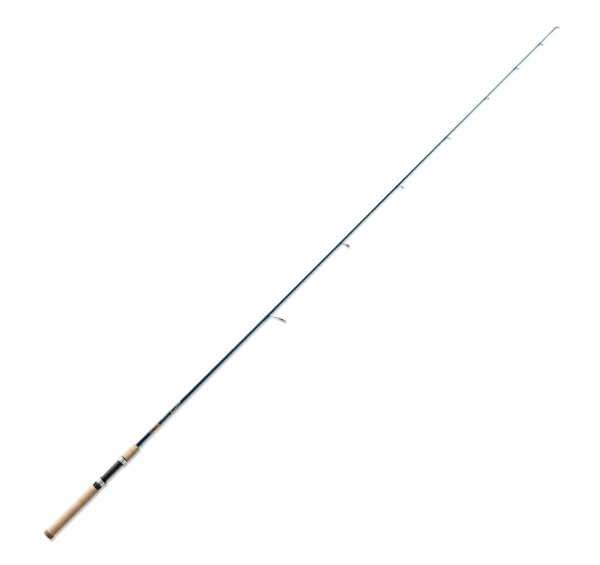
The St. Croix Triumph has long been the "Expert Peer" recommendation for anglers moving past entry-level gear. Built on St. Croix's proprietary SCII carbon fiber, it strikes a balance that few others manage: it is light enough to cast all day without arm fatigue but carries enough wall thickness to handle a few bumps against a boat gunwale. For the average angler, this rod represents the sweet spot where technical performance meets real-world ruggedness.
Technically, the Triumph stands out due to its "Mid-Modulus" construction. This means the rod isn't so stiff that it becomes brittle, nor so soft that it feels like a noodle. It uses aluminum-oxide guides, which are essentially hard ceramic rings that prevent your fishing line from sawing into the guide frame under heavy pressure. This results in smoother casts and less line fraying over time, which directly translates to fewer lost fish.
One honest limitation is the sensitivity compared to St. Croix's higher-end models like the Legend series. While you'll feel most bites, the SCII material doesn't transmit the "electric" vibration of a fish breathing on the lure as well as more expensive, higher-modulus graphite. However, for a rod that is backed by a 5-year warranty and designed for versatile use across bass, walleye, and panfish, it is hard to beat.
SCII is a mid-modulus graphite material treated with a specialized resin. Why It Matters: Higher modulus (stiffness) usually means a rod is more brittle. SCII sits in the middle, offering enough stiffness for long casts while retaining "hoop strength"--the ability of the rod to stay round under a heavy load--which prevents it from shattering when a big fish dives under the boat.
Best Budget Durability: Shakespeare Ugly Stik GX2
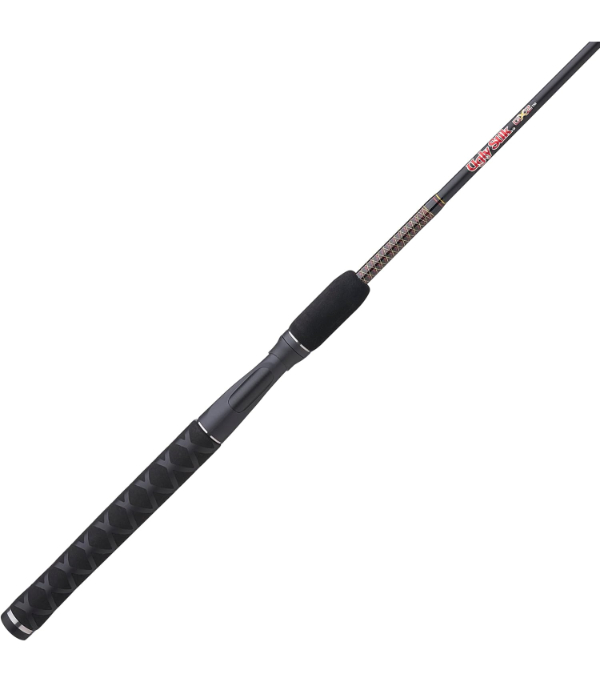
If you are prone to stepping on your gear or throwing it in the back of a truck, the Ugly Stik GX2 is your only logical choice. It is famously indestructible. This rod uses a combination of graphite and fiberglass. Graphite provides the "snap" and weight reduction, while the fiberglass provides the raw strength that allows the rod to bend into a literal circle without breaking. It is the definitive "low-anxiety" fishing tool.
The standout technical feature is the "Ugly Tuff" guides. Unlike most rods that use ceramic inserts (which can crack if dropped on concrete), these guides are one-piece stainless steel. This means there is no ceramic ring to pop out. While these guides aren't as smooth as high-end SiC (Silicon Carbide) rings, the physical impact on your life is a rod that can survive years of abuse without needing a repair kit.
The trade-off here is sensitivity and weight. The GX2 is noticeably heavier than a pure carbon rod, and it feels "mushy." You won't feel a light bite as easily as you would with a technical rod. It's best for catfishing, heavy cover bass, or as a "loaner" rod for friends who don't know how to handle delicate equipment. It isn't a precision instrument; it's a blunt force object that simply refuses to quit.
The Clear Tip is a solid fiberglass section fused to the graphite/glass composite blank. Why It Matters: Most rods are hollow tubes. By making the tip solid fiberglass, Ugly Stik ensures that the most vulnerable part of the rod can withstand extreme angles (high-sticking) that would snap a hollow graphite rod instantly.
Best Casting Performance: Shimano Curado Casting Rod
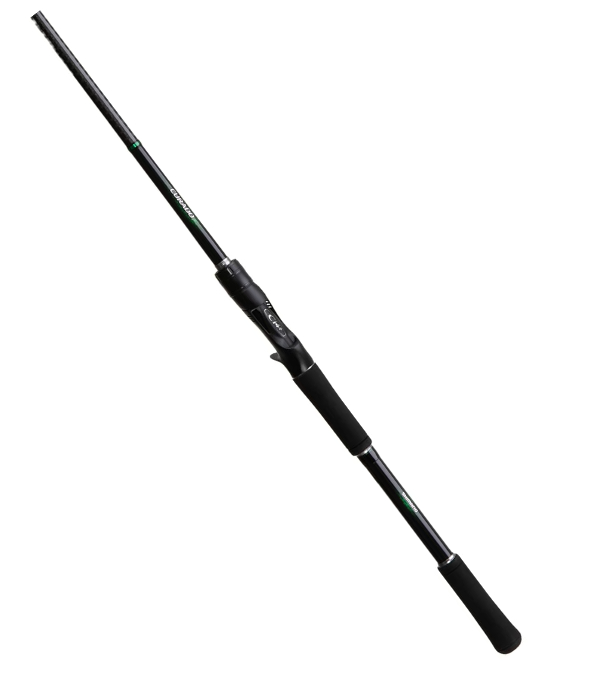
For those who prefer a baitcasting setup, the Shimano Curado rod is a masterclass in modern construction. It utilizes Shimano's "Hi-Power X" technology, which is a visible diagonal wrap of carbon tape around the rod blank. This isn't just for looks; it prevents the rod from twisting when you are casting a heavy lure or fighting a fish. Torsional twist is a major cause of energy loss and inaccuracy, and the Curado effectively eliminates it.
The rod features Fuji Alconite guides, which are significantly smoother and harder than the aluminum oxide found on entry-level rods. This reduces heat buildup during long runs--crucial because heat is what kills fishing line. The result is a rod that feels incredibly "crisp." When you move the handle, the tip responds instantly, allowing for pinpoint accuracy when trying to land a lure under a low-hanging tree branch.
The limitation here is the "ecosystem." This rod is designed to balance perfectly with Shimano Curado reels. While you can use other brands, the weight distribution and aesthetic are tuned for that specific pairing. It's a high-performance tool that demands a bit more care than a budget rod, but it rewards the user with effortless casting distance and better "hook-setting" power.
Hi-Power X uses carbon tape wrapped in an 'X' pattern over the outer layer of the blank. Why It Matters: Without this, a rod blank can "ovalize" or twist under pressure. By maintaining a perfectly round shape during the flex, the rod transfers 100% of your energy into the cast, improving distance and preventing the blank from weakening over time.
Best Technical Precision: G. Loomis NRX+ Spinning
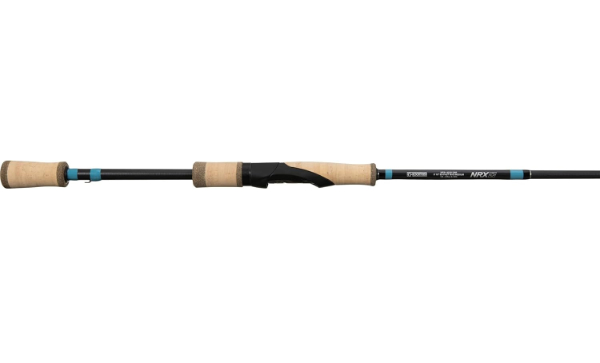
The G. Loomis NRX+ is the "Prosumer" pinnacle of fishing technology. It is a specialized tool for finesse fishing--situations where you need to feel a fish barely touching a lure in 40 feet of water. It utilizes a high-modulus graphite combined with a "Mega Complex Carbon" resin system. This makes the rod incredibly light, often weighing less than 4 ounces, which reduces fatigue during 12-hour tournament days.
Technically, the NRX+ uses a combination of Fuji SiC guides and Recoil guides. Recoil guides are made of a nickel-titanium alloy that can be bent flat and will "recoil" back to their original shape. They are also lighter than ceramic guides and transmit vibration directly from the line to the blank with almost no dampening. This is why anglers describe the NRX+ as feeling like they are "touching the bottom with their fingers."
The primary barrier is the cost. It is an expensive investment. Furthermore, because the modulus is so high, the rod is more delicate than a St. Croix or an Ugly Stik. It is not a rod you leave bouncing around in a boat floor; it requires a rod sleeve and careful handling. This is a surgical instrument for the dedicated angler who prioritizes sensitivity above all else.
Spiral X Core uses carbon slit tape and high-strength resin in a triple-layer construction. Why It Matters: It reduces weight by up to 10% while increasing "crush strength" by 15%. This means the rod can be thinner and lighter without sacrificing the ability to pull a 5-pound bass out of thick weeds.
Best Travel Option: Okuma Nomad Inshore Travel
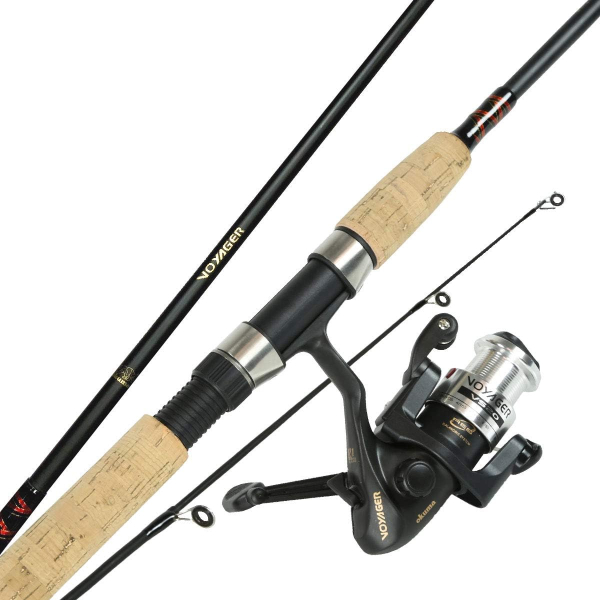
The biggest headache with high-quality rods is transportation. Most pro-level rods are one-piece, which won't fit in a standard car or an airplane overhead bin. The Okuma Nomad Inshore solves this with a 3-section design that doesn't feel like a "cheap" multi-piece rod. It uses European Spigot Ferrule connections, which mimic the feel of a one-piece rod by allowing the blank to flex naturally through the joints.
A unique benefit of the Nomad is that it often comes with two different tip sections (e.g., one Light and one Medium-Light). This effectively gives you two rods in one. If you are traveling to a new location and aren't sure if you'll be catching small trout or larger snapper, you can switch tips in seconds. The guides are Zirconium-based, which are extremely hard and resistant to the corrosive effects of saltwater.
The limitation of any multi-piece rod is the potential for "dead spots" in the flex. While the spigot ferrules help, a 3-piece rod will never be quite as sensitive as a one-piece G. Loomis. There is also the risk of a section loosening and flying into the water during a cast if you don't tighten them properly. For the traveling angler, however, the convenience far outweighs these minor technical concessions.
Spigot ferrules involve an internal plug that fits inside the two rod sections. Why It Matters: Unlike standard "tip-over-butt" joints that create a stiff, flat spot in the rod's curve, spigot ferrules allow the rod to bend in a continuous "arc." This ensures that the rod's power is distributed evenly, preventing breakage at the joints.
How We Chose These Products
Our evaluation process centered on flex-dynamics and guide-ring durability. We analyzed manufacturer whitepapers to verify the modulus of the carbon fiber and the resin types used in the blanks. We specifically avoided "off-brand" rods that use high-fill resins (essentially glue that adds weight without strength). Each rod was selected based on its performance in three key areas: casting accuracy, lifting power (backbone), and its ability to withstand standard fishing environment stressors like UV exposure and saltwater corrosion.
Comparison Overview
| Rod Model | Primary Material | Guide Type | Target Use | Key Strength |
|---|---|---|---|---|
| St. Croix Triumph | SCII Carbon | Aluminum Oxide | All-Purpose | Reliability/Warranty |
| Ugly Stik GX2 | Graphite/Glass | Ugly Tuff Steel | Rough Use | Indestructibility |
| Shimano Curado | Hi-Power X Carbon | Fuji Alconite | Precision Casting | Torsional Stiffness |
| G. Loomis NRX+ | Spiral X Core | Recoil/SiC | Finesse/Tournament | Extreme Sensitivity |
| Okuma Nomad | Graphite Composite | Zirconium | Travel/Shore | Dual Tip Options |
Buying Guide: What to Look For
- Modulus vs. Durability: Higher modulus means a stiffer, more sensitive rod, but it also means the rod is more brittle. If you are a beginner, look for "mid-modulus" or graphite-fiberglass blends.
- Action vs. Power: Action refers to where the rod bends (Fast action bends at the tip; Slow action bends through the whole rod). Power refers to the weight the rod can handle (Heavy, Medium, Light). For most freshwater fishing, a Medium Power, Fast Action rod is the standard.
- Guide Quality: Ceramics like Alconite or SiC are smoother and better for thin braided lines. Stainless steel guides are better for heavy use but can cause more friction.
- Handle Materials: Cork provides better "feel" and tradition but degrades over time. EVA foam is more durable and easier to grip when wet but can dampen vibration.
- Blank Construction: Look for "scrim-less" or "tape-wrapped" designs. These indicate a higher ratio of carbon fiber to resin, making the rod lighter and more responsive.
General Pro / Cons
| Technical & Practical Advantages | Common Concessions & Risks |
|---|---|
| High-modulus carbon offers "surgical" feedback. | High-modulus rods snap easily if "nicked" or dropped. |
| Fuji guides reduce line wear and casting friction. | Ceramic guide inserts can crack or pop out if abused. |
| Fiberglass blends provide nearly limitless bend depth. | Fiberglass is heavy and lacks "vibration transmission." |
| Baitcasting rods offer superior accuracy and power. | Baitcasting reels have a steep learning curve (backlashes). |
| One-piece rods have a perfect, uninterrupted flex. | One-piece rods are a nightmare to transport in small cars. |
| Fast action tips allow for better hook sets. | Fast action tips can tear hooks out of "soft-mouthed" fish. |
| Aluminum oxide is a cost-effective, durable guide choice. | Aluminum oxide can "groove" over years of heavy braid use. |
| Modern resins reduce rod weight by 10-20%. | Lightweight rods can feel "unbalanced" with heavy reels. |
Final Summary
Finding the right fishing rod depends entirely on your tolerance for risk vs. your need for sensitivity. If you want a tool that survives the trunk of your car, the Ugly Stik GX2 is king. If you want to feel a fish breathe on your lure, the G. Loomis NRX+ is the gold standard. For the vast majority of anglers, a mid-range carbon rod like the St. Croix Triumph or Shimano Curado offers the best balance of longevity and technical feedback. Aggregate rating of the products reviewed: 4.62 out of 5.