
Best Garage Door Openers of 2026
Choosing a garage door opener used to be as simple as picking a chain or a belt. Today, it's a decision between high-definition surveillance, smart home ecosystems, and ultra-quiet motor technology that won't wake the baby. We've researched the top-performing units to find the perfect balance of lifting power and modern security.
Introduction
The primary worry for most garage door opener buyers is the fear of a complicated installation or the annoyance of a noisy motor that shakes the entire house. For decades, AC-powered chain drives were the standard, but they are essentially a bicycle chain rattling against a metal rail. Modern openers have transitioned to DC motors, which allow for "soft start and stop" mechanics. This means the door doesn't just slam into the floor; it slows down as it reaches the bottom, saving your door's hardware from premature wear.
Security has also shifted from simple radio signals to sophisticated encryption. Older "fixed code" remotes were easy to hack with simple grabbers; today's units use rolling codes that change the digital "key" every time you press the button. In this guide, we break down the hardware specs - like horsepower equivalents and drive types - into real-world benefits so you can decide if you need a heavy-duty lifter for a wood carriage door or a silent belt drive for a bedroom-adjacent garage.
Best Professional Flagship: LiftMaster 87504-267
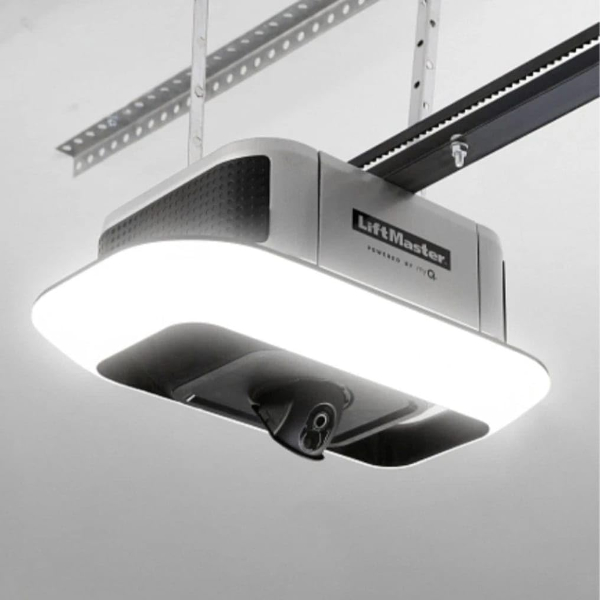
The LiftMaster 87504-267 is the pinnacle of the "Secure View" line, and it is a technical powerhouse. It features a built-in 1080p camera with two-way audio, but what truly makes it stand out is the integrated Corner-to-Corner LED lighting system. Generating 2,000 lumens of light, it effectively replaces your garage's ceiling fixtures, illuminating every corner when the door opens. It is a belt-drive system, which uses a steel-reinforced rubber belt instead of a chain, making it nearly silent.
Technically, this unit uses a high-torque DC motor. Unlike AC motors that run at a single speed, this DC motor allows for precision control over the door's travel. This is crucial for homes with heavy, insulated double doors. It also includes a battery backup system, which is no longer a luxury - it's a safety requirement in many states. If the power goes out, the lead-acid battery provides enough juice for up to 20 cycles within 24 hours, ensuring you aren't trapped inside during a storm.
The honest trade-off here is the ecosystem. LiftMaster (and its sister brand Chamberlain) uses the myQ platform. While it works flawlessly with its own app, connecting it to smart home systems like Apple HomeKit or Amazon Alexa sometimes requires a separate bridge or a small subscription fee for certain integrations. It is best for homeowners who want a "set it and forget it" professional installation that handles security, lighting, and lifting in one sleek package.
This motor utilizes Pulse Width Modulation (PWM) to control speed. Why It Matters: Instead of hitting the door with 100% power instantly, the controller "pulses" the electricity to slowly ramp up the speed. This reduces the mechanical shock on the door's torsion springs and rollers, potentially extending the life of your door hardware by several years.
Best Integrated Video: Chamberlain B6753T
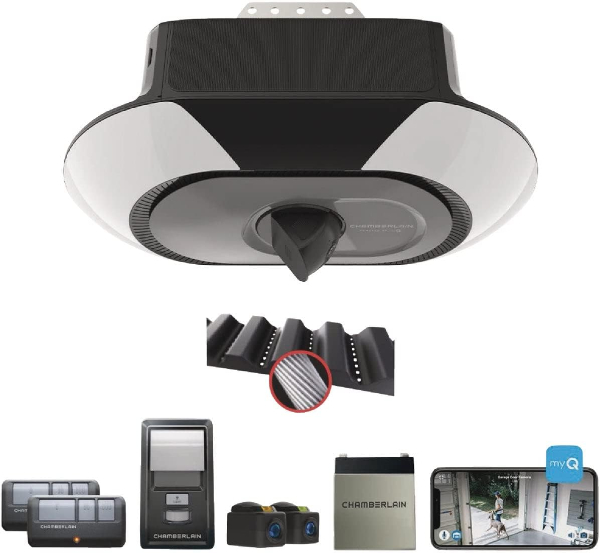
The Chamberlain B6753T is essentially the consumer-friendly version of the LiftMaster flagship. It boasts an ultra-quiet belt drive and an "extra-strong" motor rated at 1-1/4 Horsepower Equivalent (HPe). This HPe rating is significant because it indicates the motor's ability to handle heavy-duty loads (up to 550 lbs) without straining the belt or the motor's internal gears. If you have a solid wood door or a custom-designed facade, this is the motor that won't struggle.
The standout feature is the motion-activated 1080p camera that can be tilted and rotated. Practically, this allows you to monitor not just the door, but your workbench or storage area. It uses a 130-degree wide-angle lens, which is technically optimized to reduce "fisheye" distortion at the edges. This means you get a clear, realistic view of who is entering your home. It also features myQ Diagnostics, which monitors the motor's health and can send an alert to your phone if it detects a struggle in the lifting cycle.
One downside is the sheer size of the unit. The large light panels and integrated camera make the motor head quite bulky. If you have a very low-clearance garage or a lot of overhead storage racks, you'll need to measure carefully before committing. However, for a DIY-friendly unit that offers professional-grade lifting power and video surveillance, this is the gold standard.
DC motors are measured in HPe because they don't use the same constant-load metrics as AC motors. Why It Matters: A 1-1/4 HPe rating means the motor has high "starting torque." It can get a heavy door moving from a dead stop more efficiently than a 1/2 HP AC motor, which prevents the "jerking" motion that often knocks doors off their tracks.
Best Value Smart Opener: Genie StealthDrive Connect
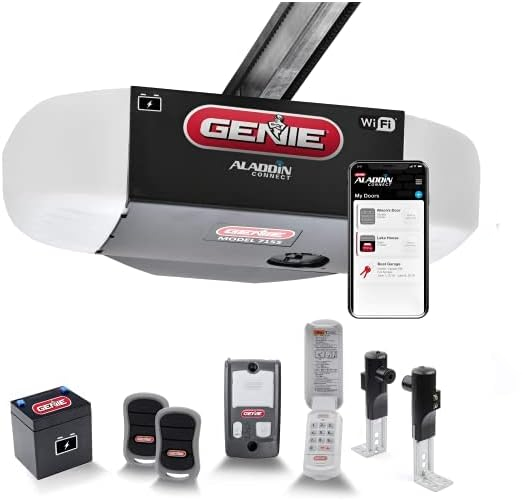
The Genie StealthDrive Connect (Model 7155-TKV) strikes a perfect balance between technical sophistication and price. It utilizes a 1-1/4 HPe DC motor paired with a steel-reinforced belt drive. The "Stealth" in the name isn't hyperbole; the belt is made of a composite material that eliminates the metal-on-metal clanging found in cheaper chain models. This makes it an ideal candidate for garages that sit directly below a master bedroom.
Genie's proprietary Aladdin Connect technology is the heart of this unit's smart features. Unlike some competitors, Genie's system is highly compatible with diverse smart home platforms like Google Assistant and Alexa without requiring extra "bridge" hardware. The 7155-TKV also features "Intellicode" encryption, which uses billions of combinations for the rolling code signal. This prevents "code grabbing," a method where thieves record your remote signal to replay it later and gain entry.
The primary limitation is the light output. While it has two bulb sockets, it doesn't feature the expansive LED panels seen on the higher-end LiftMaster or Chamberlain models. You are essentially relying on traditional light bulbs. However, if you already have good lighting in your garage and just want a reliable, quiet, smart-capable opener for a standard door, this is the most cost-effective way to get high-end performance.
Genie uses a sophisticated frequency-hopping system. Why It Matters: Every time you use your remote, the opener and remote agree on a new 128-bit encrypted code. Even if a hacker intercept the signal, that code is immediately "voided" by the opener, making the stolen data useless for future entry.
Best Space-Saving Wall Mount: Chamberlain RJO70
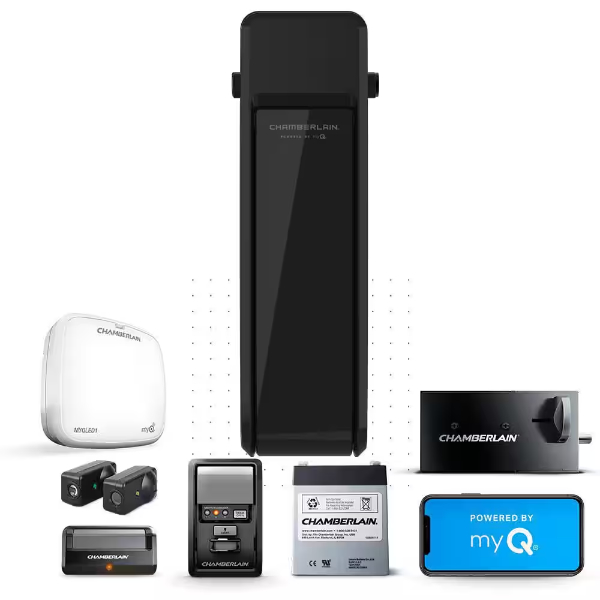
The Chamberlain RJO70 (Next-Gen Wall Mount) represents a complete rethink of garage door mechanics. Most openers sit in the center of your ceiling and pull the door via a rail. The RJO70 mounts directly to the wall on either side of your garage door and connects to the torsion bar. This is called a "Jackshaft" drive. By removing the ceiling rail, you gain massive amounts of vertical space - perfect for high-lift tracks, car lifts, or simply storing kayaks and ladders overhead.
From a technical standpoint, this is the quietest unit on the list because there is no rail to vibrate against the ceiling joists. It also includes an Automatic Garage Door Lock. When the door closes, this heavy-duty deadbolt physically engages with the door track, making it virtually impossible to "fish" the release lever or pry the door open from the outside. This is a massive security upgrade for those living in areas with high property crime.
The honest friction point is the installation requirement. It only works with torsion spring systems (the big spring above the door), not extension springs (springs that run along the side tracks). It also requires a nearby power outlet on the wall. If your current garage is only wired for a ceiling outlet, you will need to run a new line. But for those with the right setup, the "dead-silent" operation and reclaimed ceiling space make it a game-changer.
The RJO70 turns the torsion bar directly rather than pulling the door panels. Why It Matters: This eliminates the "rail flex" and "vibration" common in traditional openers. Since the motor is mounted on the wall, the noise is isolated from the ceiling joists, which usually act as a "drum" that amplifies motor sounds into the rooms above.
Best Budget Reliability: Genie Chain Drive 500
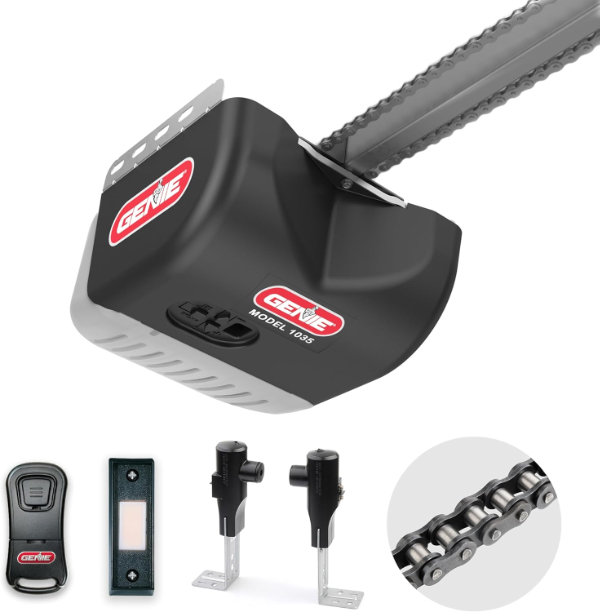
If you have a detached garage or a workshop where noise isn't an issue, the Genie Chain Drive 500 is the "expert peer" choice for pure longevity. It lacks the bells and whistles of 1080p cameras and battery backups, focusing instead on a 1/2 HP DC motor and a heavy-duty chain. Chain drives are inherently louder than belts, but they are also incredibly durable and less sensitive to temperature fluctuations, making them ideal for uninsulated garages in extreme climates.
Technically, the 1/2 HP motor is perfectly sized for standard, non-insulated residential doors (up to 350 lbs). Because it uses a DC motor instead of a traditional AC motor, you still get the "soft start/stop" benefits, meaning it won't be as jarringly loud as the chain drives from 20 years ago. It comes with Genie's standard security features, including the Safe-T-Beam infrared sensors that stop the door if an object (or pet) crosses the path.
The honest trade-off here is the lack of "smart" features. This is a manual-operation unit out of the box. You press a button on the wall or the remote; it opens. There is no app control. However, it is compatible with most universal smart garage hubs if you choose to upgrade later. For a simple, reliable lifter that costs less than a week's groceries, this is the most honest value on the market.
Even in this budget unit, Genie uses a DC motor. Why It Matters: Older budget units used AC motors that were either "On" or "Off." The DC motor allows this unit to be lighter (easier for DIY install) and significantly more reliable because it has fewer mechanical parts that can fail under high starting loads.
How We Chose These Products
Our selection process was based on three pillars: Acoustic Performance, Security Encryption, and Lifting Torque. We filtered out any models still using "fixed code" radio signals, as they represent a significant security risk. We prioritized DC motors because the "soft start/stop" feature is the single best way for a homeowner to prevent expensive door repairs. We also ensured that our picks spanned different "drive types" to accommodate diverse garage layouts, from low-ceiling workshops to high-lift professional garages.
Comparison Overview
| Model | Drive Type | Power (HPe) | Smart App | Best For |
|---|---|---|---|---|
| LiftMaster 87504-267 | Belt | High-Torque DC | myQ | Pro-Install/Full Tech |
| Chamberlain B6753T | Belt | 1-1/4 HPe | myQ | Heavy Wood Doors |
| Genie StealthDrive | Belt | 1-1/4 HPe | Aladdin Connect | Value/Quiet |
| Chamberlain RJO70 | Wall Mount | High-Torque DC | myQ | Space Saving |
| Genie Chain 500 | Chain | 1/2 HP | No (Hub req) | Budget/Detached |
Buying Guide: What to Look For
- Drive Type: Belt drives are silent but pricier. Chain drives are rugged and cheap but noisy. Jackshafts save space but have strict installation requirements.
- Motor Type (AC vs DC): Always look for DC motors. They are quieter, lighter, and allow for battery backup integration.
- HPe (Horsepower Equivalent): If your door is insulated or made of wood, don't settle for less than 1-1/4 HPe. Under-powering a door leads to motor burnout.
- Smart Connectivity: Check if your preferred app (Alexa, Google, HomeKit) is supported natively. Be aware of potential subscription fees for video storage.
- The Battery Backup: Many modern openers include this. It is a mandatory feature for safety if you live in an area prone to power outages.
General Pro / Cons
| Strengths |
|---|
| DC motors provide near-silent "soft" operation. |
| Smartphone alerts tell you if you left the door open. |
| Battery backups ensure access during power failures. |
| Rolling code encryption prevents signal hacking. |
| Integrated cameras allow for secure package delivery. |
| LED lighting systems replace old garage bulbs. |
| Wall-mount units reclaim valuable ceiling space. |
| Motion sensors can trigger lights automatically. |
| Trade-offs |
|---|
| Belt drives are significantly more expensive than chains. |
| Smart features often require a stable Wi-Fi signal. |
| DIY installation can take 4-6 hours for beginners. |
| Video storage often involves a monthly subscription fee. |
| Wall-mount units only work with specific torsion bars. |
| AC motors in older homes are loud and vibrate. |
| Replacement batteries need swapping every 2-3 years. |
| Smart ecosystems can have occasional server downtime. |
Final Summary
Upgrading your garage door opener is one of the most immediate "quality of life" improvements you can make to your home. If you want the absolute best in security and silence, the LiftMaster 87504-267 or the Chamberlain RJO70 are the top choices. For a reliable, modern experience that doesn't break the bank, the Genie StealthDrive Connect offers the best middle ground. Always remember to check your door's balance before installing a new motor; a motor is only as good as the springs doing the heavy lifting.
Aggregate rating of the products reviewed: 4.78 out of 5.