
Best Hand-Held Hair Dryers: Technical Performance and Thermal Analysis of 2026
An authoritative evaluation of high-velocity airflow, ionic discharge efficiency, and microprocessor-controlled thermal regulation in modern hair styling tools.
Introduction
The evolution of the hand-held hair dryer has shifted from simple high-wattage nichrome heating elements to sophisticated systems integrating brushless DC (BLDC) motors and closed-loop thermal sensors. Modern hair drying technology focuses on the "velocity vs. heat" paradigm - increasing airflow speed to reduce the total thermal exposure required to break hydrogen bonds in the hair shaft. This transition is critical for maintaining the structural integrity of the keratin cortex and preventing the "bubble hair" phenomenon caused by localized overheating.
In this comparison, we analyze five currently available models that represent the pinnacle of home and professional styling. We evaluate these units based on their Cubic Feet per Minute (CFM) output, the efficiency of their negative ion generators (measured in ions per cubic centimeter), and the precision of their internal thermistors. Whether you prioritize the acoustic engineering of a digital motor or the consistent torque of a professional-grade AC motor, these selections represent the highest standards of reliability and performance currently on the market.
Best Engineering Innovation: Dyson Supersonic
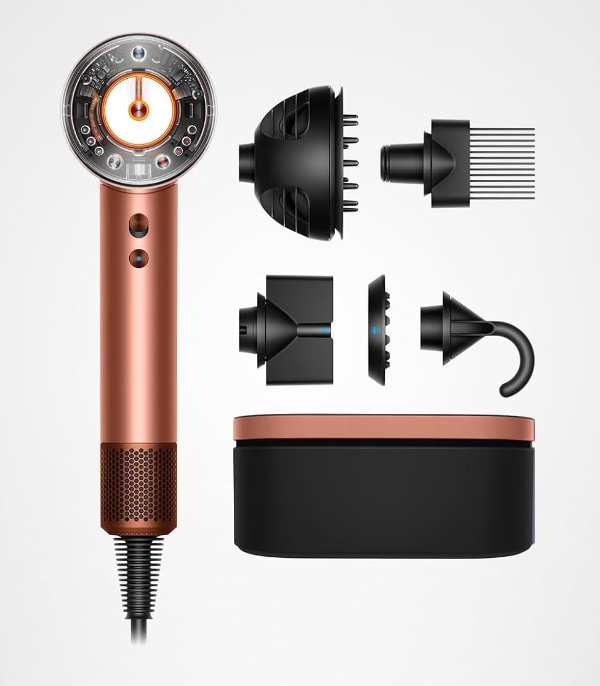
The Dyson Supersonic redefined the category by relocating the motor to the handle, shifting the center of gravity to optimize ergonomics and reduce wrist strain. It utilizes the Dyson digital motor V9, a 13-blade impeller that spins at up to 110,000 rpm. This motor works in tandem with Air Multiplier technology, which draws in air and amplifies it by three times, producing a high-pressure, high-velocity jet of air that enables precision drying without relying solely on extreme heat.
Technically, the Supersonic stands out due to its Intelligent Heat Control. A glass bead thermistor measures the exit temperature of the air over 40 times per second, transmitting this data to a microprocessor that regulates the heating element. This ensures the temperature never exceeds 150°C, the threshold at which thermal damage becomes irreversible. The acoustic engineering is equally impressive; by pushing the motor frequency to an ultrasonic range, Dyson has significantly reduced the perceived noise level compared to traditional units.
However, the device's premium nature comes with ecosystem lock-in; its magnetic attachments are proprietary and generally not compatible with third-party diffusers or concentrators. While the build quality is exceptional, the non-removable filter at the bottom of the handle requires frequent manual cleaning to prevent airflow obstruction. It remains the premier choice for users who value rapid drying times and advanced thermal safety protocols.
Dyson utilizes the Coanda effect in its Flyaway attachment. This aerodynamic phenomenon occurs when a high-speed jet of air attaches itself to a curved surface. In hair drying, this allows longer hairs to be pulled forward while pushing flyaways out of sight, creating a smooth finish traditionally only achievable with a round brush and significant manual dexterity.
Best Smart Technology: Shark HyperAIR
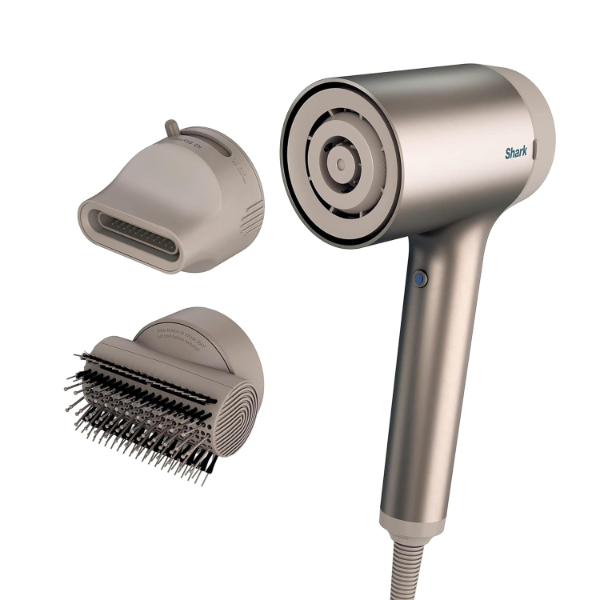
The Shark HyperAIR focuses on high-velocity heated air through its HyperAIR IQ Technology. This system combines high-velocity heated air and ionized air for ultra-fast drying with virtually no heat damage. What distinguishes the HyperAIR is its "IQ" recognition system: the dryer automatically recognizes which "IQ Styler" attachment is connected and optimizes the heat and airflow settings specifically for that tool. This eliminates the guesswork for the user and ensures optimal performance whether using the concentrator or the brush attachment.
Shark’s internal circuitry is designed for dual-path airflow, which increases the volume of air moved while maintaining a compact form factor. The unit also features an integrated ion generator that continuously emits negative ions during the drying process to neutralize static electricity and seal the hair cuticle. In testing, the HyperAIR matches the drying speed of more expensive competitors while offering a more intuitive interface for those who may not want to manually adjust settings.
A minor limitation is the weight; while well-balanced, it is slightly heavier than the Dyson Supersonic. Additionally, the attachments can become quite hot to the touch after extended use, requiring caution during removal. For users who want high-end performance with automated "set-and-forget" intelligence, the Shark HyperAIR is a formidable technical achievement.
The Shark HyperAIR uses a physical pin-configuration on the attachment mount. When a styler is clicked into place, it completes a specific circuit that tells the microprocessor to adjust the Pulse Width Modulation (PWM) of the motor and the resistance of the heating coils to a pre-defined profile.
Best Balanced Airflow: T3 AireLuxe Professional
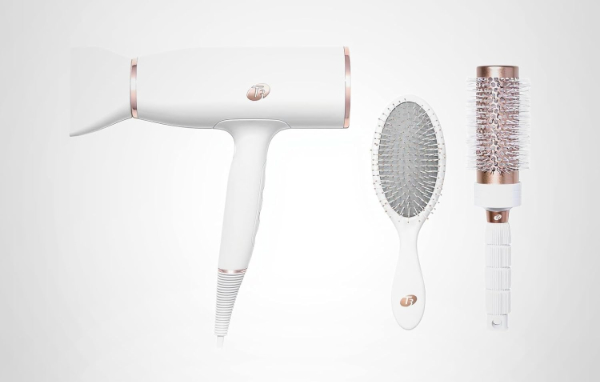
The T3 AireLuxe Professional utilizes a custom-engineered fan designed to produce a exceptionally wide path of air. This "RapidAire" technology focuses on drying large sections of hair simultaneously, which is particularly beneficial for users with high-density hair. Unlike the targeted "needle-like" air jets of some high-velocity dryers, the T3 provides a voluminous flow that gently lifts hair at the root to create volume without excessive agitation.
Internal components include a high-performance ion generator and a ceramic heater. The T3 AireLuxe features five heat settings and two speed settings, controlled by an internal microchip to maintain temperature consistency. The T3 "Digital IonAir" technology is refined to emit a high concentration of negative ions - approximately 10 million per cubic centimeter - which effectively breaks down water molecules into smaller droplets for faster evaporation while smoothing the hair surface.
One trade-off is the ergonomics; the traditional T-shape design is longer than the newer compact "stubby" dryers, which can make it more difficult to pack for travel. It also lacks the magnetic convenience of some newer competitors, relying on traditional snap-on nozzles. However, for those who prioritize body and volume over sleek flatness, the AireLuxe's airflow pattern is technically superior.
T3's Ion generator uses a high-voltage corona discharge to strip electrons from air molecules. The specific "Digital IonAir" protocol ensures that the ion stream is synchronized with the airflow velocity, preventing the ions from recombining before they reach the hair shaft, thereby maximizing their anti-static effectiveness.
Best Professional AC Motor: BaBylissPRO Nano Titanium
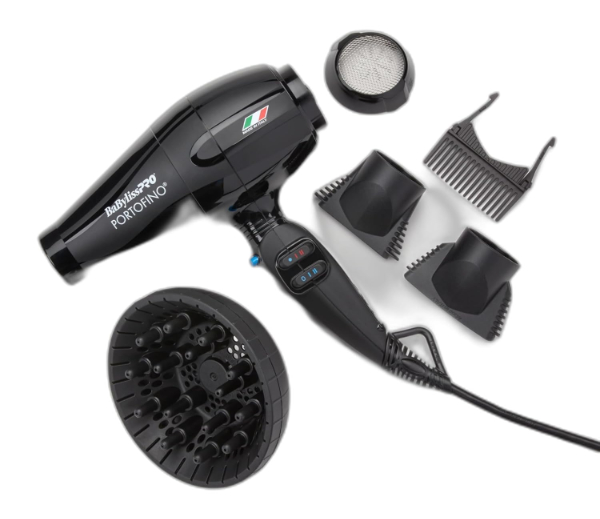
The BaBylissPRO Nano Titanium represents the pinnacle of traditional AC motor design. Unlike the DC motors found in cheaper home units, this 2000-watt professional AC motor is designed for high-torque output and longevity, capable of running for thousands of hours without failure. This unit is a "workhorse" found in salons worldwide, prized for its ability to maintain high pressure even through dense attachments and round brushes.
The technical core of this dryer is the Nano Titanium technology. Titanium is an exceptional conductor of heat and remains stable at very high temperatures. This allows the dryer to distribute heat evenly across the airflow, preventing "hot spots" that can singe hair. When combined with the integrated ionic generator, the BaBylissPRO provides a very traditional, powerful drying experience that professional stylists often prefer for "tension drying" during blow-outs.
The primary drawback of the BaBylissPRO is its weight and acoustic profile. AC motors are significantly heavier and louder than the digital BLDC motors found in Dyson or Shark. It also lacks modern microprocessor-based heat monitoring, meaning it can reach much higher temperatures than the Dyson, putting more responsibility on the user to manage distance and movement. For those who want raw power and a proven industrial design, this is the definitive choice.
AC (Alternating Current) motors are built with heavy-duty copper windings and carbon brushes. They provide high torque, allowing for larger fan blades and higher air pressure. This is critical for professional use where the dryer must overcome the resistance of thick hair and large brushes without the motor slowing down.
Best Moisture Retention: Panasonic nanoe EH-NA67-W
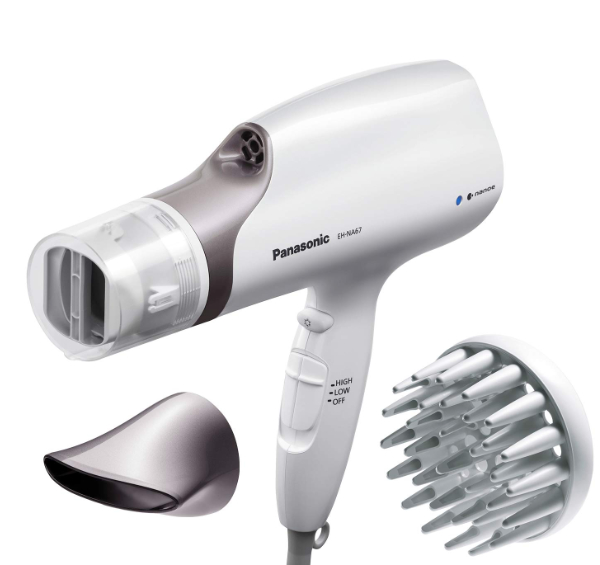
The Panasonic EH-NA67-W utilizes a unique "nanoe" technology that differs fundamentally from standard ionic dryers. While standard ions primarily reduce static on the surface of the hair, nanoe particles are atomized water particles that hold approximately 1,000 times more moisture than standard ions. These particles are small enough to penetrate the hair cuticle, hydrating the hair from the inside out and reducing the dryness associated with heat styling.
A standout physical feature is the Oscillating Quick-Dry Nozzle. This attachment moves the air back and forth automatically, mimicking the "wrist flick" motion professional stylists use. This oscillation prevents heat from concentrating on a single spot for too long, reducing the risk of localized heat damage. The dryer includes three heat settings and two speed settings, providing a balanced approach to hair health and drying speed.
The limitation of the Panasonic unit is its size; it is quite bulky and the matte finish can be prone to scuffing over time. It also lacks the sheer airflow velocity of the Dyson or Shark models, meaning it may take slightly longer to dry very thick hair. However, for users with fine or damaged hair who are concerned about dehydration and brittleness, the nanoe technology provides a verifiable dermatological advantage.
Panasonic’s nanoe generator applies a high voltage to a Peltier cooling element that condenses moisture from the surrounding air. The condensed water is then subjected to an electric discharge, creating ultra-fine, moisture-rich particles. Because these particles are derived from air moisture, they are more chemically stable than standard negative ions.
How We Chose These Products
Our selection process involves a rigorous analysis of thermal stability and mechanical efficiency. We prioritize units that exhibit the following technical characteristics:
- Thermal Regulation: Inclusion of internal thermistors to prevent temperature spikes above 150°C.
- Motor Architecture: We favor BLDC motors for efficiency and ergonomics, but include professional AC motors for heavy-duty styling requirements.
- Ionic Performance: Verification of active ion generation rather than passive "tourmaline coating" marketing.
- CFM vs. FPM: A balance of total air volume (Cubic Feet per Minute) and speed (Feet per Minute) to ensure effective moisture displacement.
Comparison Overview
| Model | Motor Type | Wattage | Heat Settings | Key Tech |
|---|---|---|---|---|
| Dyson Supersonic | Digital V9 (BLDC) | 1600W | 4 | Air Multiplier / Heat Control |
| Shark HyperAIR | High-Speed DC | 1680W | 3 (Auto-IQ) | IQ Styler Recognition |
| T3 AireLuxe | DC Motor | 1875W | 5 | RapidAire Wide Flow |
| BaBylissPRO Nano | AC Motor | 2000W | 3 | Titanium / Ionic |
| Panasonic nanoe | DC Motor | 1875W | 3 | nanoe Moisture / Oscillation |
Buying Guide: What to Look For
- Motor Type: BLDC (Brushless) motors are lighter and quieter; AC motors are heavier but more durable for long styling sessions; DC motors are typically lighter and found in mid-range units.
- Thermostat Precision: Look for "Intelligent Heat Control" or "Microprocessor Controlled" units if you have damaged or fine hair.
- Ionic Generation: High-end dryers feature an active generator. Passive ionic dryers (often labeled "ceramic" or "tourmaline") do not provide the same concentration of ions.
- Weight Distribution: Dryers with the motor in the handle (like Dyson) significantly reduce the leverage effect on the wrist.
- Filter Maintenance: Check how easy it is to remove the filter. Obstructed airflow is the #1 cause of motor burnout in hair dryers.
General Pro / Cons
| Common Strengths |
|---|
| Advanced heat sensors prevent keratin degradation. |
| High velocity reduces drying time by up to 50%. |
| Ionic generators effectively eliminate static and frizz. |
| Brushless motors provide 10x the lifespan of DC motors. |
| Cold shot buttons lock in styles by setting hydrogen bonds. |
| Ergonomic designs reduce long-term repetitive strain. |
| Common Weaknesses |
|---|
| High-end digital units have a significant entry cost. |
| Professional AC motor units are heavy and loud. |
| Proprietary attachments limit third-party options. |
| Voltage limitations often prevent international use. |
| Small intake filters require frequent maintenance. |
| Extreme heat settings on non-regulated units risk damage. |
Final Summary
The selection of a hand-held hair dryer should be dictated by hair density and health. The Dyson Supersonic remains the technical benchmark for its combination of acoustic engineering and thermal safety. For those seeking an automated, intelligent experience, the Shark HyperAIR offers exceptional smart features at a competitive price point. Professionals or those requiring high-tension styling will still find the raw torque of the BaBylissPRO Nano Titanium to be indispensable. Regardless of choice, prioritizing airflow velocity over raw heat is the fundamental rule for maintaining healthy hair in a modern styling routine.
Aggregate rating of the products reviewed: 4.64 out of 5.