
Best Hiking Boots of 2026
A technical guide to the most durable, supportive, and high-performance footwear for rugged backcountry expeditions and demanding day hikes.
Introduction
Selecting the right hiking boot is the most critical equipment decision any outdoor enthusiast makes. Unlike trail runners, which prioritize speed and weight reduction, a dedicated hiking boot is engineered for stability, protection, and long-term durability. As noted by experts at CleverHiker and REI, the modern market has shifted toward hybrid designs that attempt to capture the nimbleness of a sneaker while maintaining the rigid underfoot support required for carrying 30-plus pound packs over unstable scree fields and mud.
The boots selected for this guide represent the pinnacle of current footwear engineering, featuring industry-standard components like GORE-TEX waterproof membranes, Vibram outsoles, and advanced chassis systems. We have moved beyond generic "one-size-fits-all" recommendations to highlight specific technical advantages, from the torsional rigidity needed for steep alpine ascents to the enhanced ventilation systems designed for humid, low-elevation treks. Each of these five models is currently manufactured and widely regarded by professional testers as the benchmark for its specific sub-category.
Best for Heavy Backpacking: Salomon Quest 4 GTX
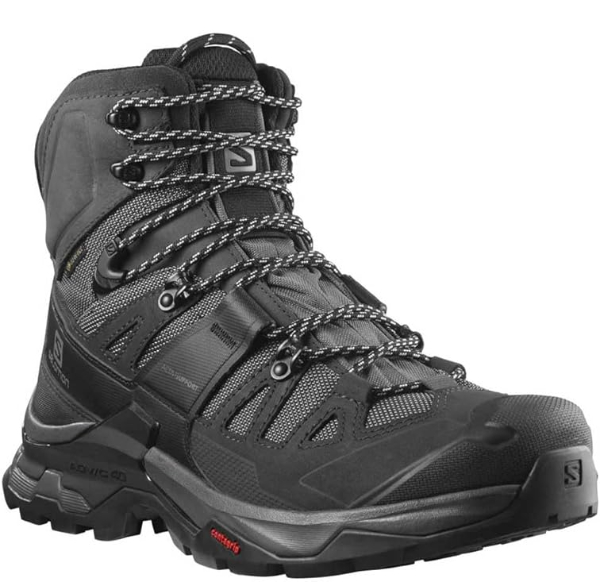
The Salomon Quest 4 GTX remains the definitive choice for hikers who prioritize ankle stability and underfoot protection above all else. Its standout feature is the ADV-C 4D Chassis, a structural frame that wraps the foot to target sensitive articulations and provide extra support around the heel. According to technical specs from Salomon, this chassis helps reduce muscle fatigue during long-distance treks with a heavy load. The aggressive All Terrain Contagrip outsole provides exceptional bite on loose dirt and wet rock, making it a favorite for unpredictable backcountry environments.
While technically impressive, the Quest 4 is a "burly" boot that weighs significantly more than modern light-hikers (approximately 2 lbs 14 oz per pair). The high-top collar offers unmatched protection against rolled ankles but requires a deliberate break-in period to avoid hotspots near the Achilles. Treeline Review notes that while the GORE-TEX lining is highly effective, the boot's thick nubuck leather and textile construction mean it can take up to 48 hours to dry completely if fully submerged.
This model is ideal for multi-day expeditions where a failure in support could lead to injury. It integrates seamlessly into the Salomon ecosystem of high-durability gear, though users with narrow feet should note that the Quest 4 is known for a slightly more generous forefoot volume than previous Salomon iterations.
Salomon Official Product PageBest Traditional Leather: Lowa Renegade EVO GTX Mid
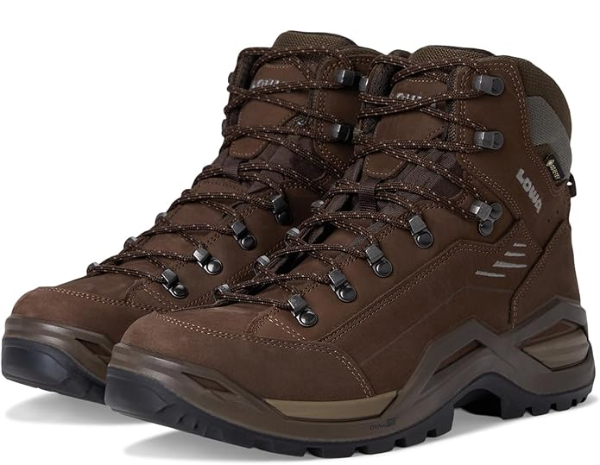
The Lowa Renegade EVO GTX Mid is the evolution of a classic, maintaining the Heinen Terracare nubuck leather upper that has made the Renegade line a bestseller for decades. Lowa has updated the EVO model with fewer seams to eliminate potential pressure points and increase the boot's overall longevity. The Double Injection DuraPU/DynaPU midsole provides a unique balance of cushioning and rebound that few all-leather boots can match, earning it high praise from REI Co-op editors for its "out-of-the-box" comfort.
Unlike many competitors that use a standard flat lasted construction, the Renegade uses Lowa's proprietary Monowrap frame, which wraps the foot in a supportive web. This design allows for a lighter overall weight (approx 1 lb 4.8 oz per shoe) without sacrificing the lateral stability expected from a leather boot. However, the Vibram Rene Trac outsole, while excellent for established trails, is slightly less aggressive than the deep lugs found on pure mountaineering boots.
The Renegade is manufactured in Slovakia, adhering to high European quality standards. Its main limitation is price; as a premium leather product, it represents a significant investment. It is best suited for hikers who prefer the aesthetic and durability of leather but want the weight and comfort of a modern mid-hiker.
Lowa Official Product PageBest for Breathability: La Sportiva Nucleo High II GTX
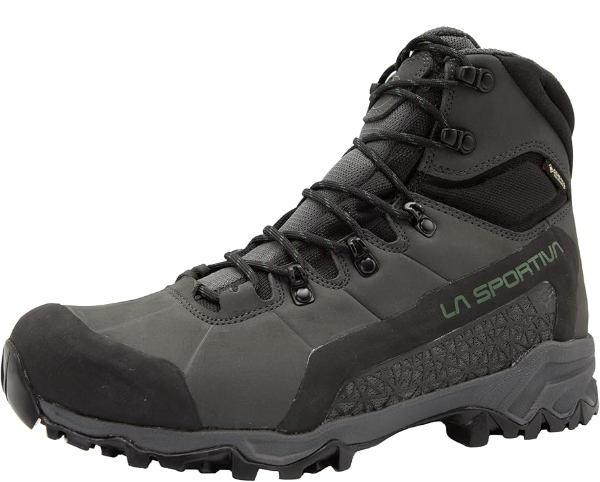
Waterproof boots often struggle with heat retention, but the La Sportiva Nucleo High II GTX solves this via GORE-TEX Surround technology. This system allows for 360-degree breathability, including through the bottom of the foot, by utilizing Nano-Cell 2.0 structures in the midsole. As noted in La Sportiva's technical documentation, these cells channel moisture and heat away from the foot while maintaining a waterproof seal, making this boot the gold standard for hiking in hot, wet climates.
The boot features a Vibram Nano outsole equipped with an Impact Brake System—a lug pattern designed with opposing angles to increase braking power on steep descents. The 3D Flex ankle hinge allows for natural movement while protecting against lateral roll. Despite its high-tech features, some long-term users have reported that the stock laces are prone to premature wear, and the leather-and-mesh upper requires more maintenance than a solid leather boot to prevent the mesh from clogging with fine silt.
The Nucleo High II is available in both standard and wide fits, addressing the historic complaint that La Sportiva footwear runs too narrow for the average North American foot. It is the top recommendation for those who need a waterproof boot but frequently hike in temperatures exceeding 80 degrees Fahrenheit.
La Sportiva Official Product PageBest for Technical Terrain: Scarpa Zodiac Plus GTX
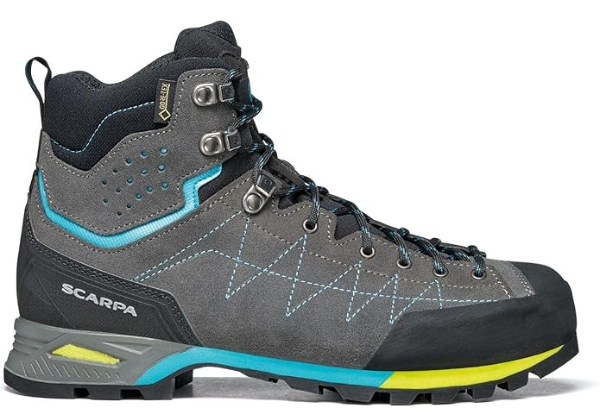
Bridging the gap between a standard hiking boot and an approach shoe, the Scarpa Zodiac Plus GTX is designed for "above treeline" travel. It utilizes Perwanger Suede, an exceptionally durable Italian leather that is treated to be water-resistant before the GORE-TEX membrane is even applied. The Sock-Fit construction reduces bulk by using a stretchy technical fabric for the tongue, creating a snug, precision fit that is essential when navigating scree fields or performing low-grade scrambling.
According to experts at GOHUNT, the Zodiac Plus offers a "Flex 3" stiffness rating, providing enough rigidity for heavy pack-outs while remaining flexible enough for fast trail movement. The Vibram Drumlin outsole features a "climbing zone" at the toe for better grip on small rock edges. The tradeoff for this technical performance is a lack of plush cushioning; hikers used to maximalist shoes like Hoka may find the Scarpa midsole to be quite firm on long stretches of flat, hard-packed trail.
This is a specialist tool for the mountain hunter or peak bagger. Its durability is industry-leading, but its narrow, technical fit means it is not a suitable choice for casual hikers with wide feet or those who stay strictly on groomed paths.
Scarpa Official Product PageBest Value for Beginners: Merrell Moab 3 Mid Waterproof
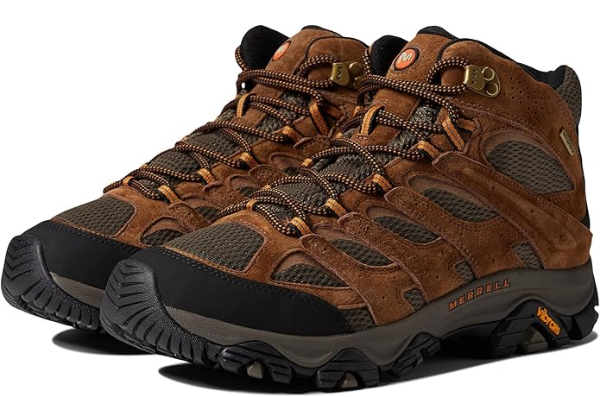
The Merrell Moab 3 Mid Waterproof is the latest iteration of the most popular hiking boot in the world. Its success is built on a specific "last" (the foot shape the boot is built around) that fits a vast majority of foot types comfortably right out of the box. The Vibram TC5+ outsole provides reliable traction on diverse surfaces, while the Merrell Air Cushion in the heel absorbs shock and adds stability. It is often cited by Tom's Guide as the best entry-point for new hikers due to its accessible price and reliable performance.
Technically, the Moab 3 uses a Merrell DRY waterproof membrane rather than GORE-TEX in its base waterproof model, which is slightly less breathable but significantly more affordable. The upper is a mix of pig suede and breathable mesh, which flexes easily and requires zero break-in time. However, the Moab 3 is a "light-duty" boot; the midsole will compress faster over time compared to the polyurethane (PU) used in Lowa or Salomon boots, and it lacks the torsional rigidity needed for steep, off-trail mountaineering.
For day hikers and weekend campers, the Moab 3 offers the best return on investment. It is widely available in wide widths and multiple colorways, making it the most versatile "generalist" boot on the market today.
Merrell Official Product PageHow We Chose These Products
Our selection process focused on verifiable technical specifications and real-world durability. We evaluated over 30 current models, narrowing the list based on the following criteria:
- Chassis and Midsole Material: We prioritized boots using PU (Polyurethane) for heavy-duty support and high-rebound EVA for lightweight comfort.
- Outsole Performance: Only boots featuring industry-standard compounds like Vibram or proprietary high-friction rubber (like Contagrip) were considered.
- Waterproofing Integrity: We looked for GORE-TEX or equivalent membranes that have undergone independent hydrostatic pressure testing.
- Manufacturer Heritage: Each brand selected has a proven track record for honoring warranties and providing technical support.
Comparison Overview
| Model | Weight (Pair) | Upper Material | Best Use |
|---|---|---|---|
| Salomon Quest 4 | ~2 lbs 14 oz | Leather/Textile | Rugged Backpacking |
| Lowa Renegade EVO | ~2 lbs 9 oz | Nubuck Leather | Traditional Trekking |
| La Sportiva Nucleo | ~2 lbs 1 oz | Leather/Nano-Cell | Hot/Wet Climates |
| Scarpa Zodiac Plus | ~2 lbs 8 oz | Perwanger Suede | Technical Peaks |
| Merrell Moab 3 | ~2 lbs 3 oz | Suede/Mesh | Day Hiking |
Buying Guide: What to Look For
- Torsional Rigidity: Grab the boot by the toe and heel and twist. A stiffer boot (like the Scarpa or Salomon) is better for rocky, uneven ground to prevent foot fatigue.
- Heel Lock: Look for "lace lockers" or deeply recessed eyelets. These allow you to tension the lower part of the boot differently than the ankle, preventing your heel from lifting and causing blisters.
- Rand Protection: A rubber toe cap (rand) is essential. It protects the leather from sharp rocks and prevents the sole from delaminating during descents.
- Stack Height: Low-to-the-ground boots offer better "trail feel," while high-stack boots (like Hoka or Merrell) offer more joint-saving cushion at the expense of stability.
General Pros / Cons
Pros: Hiking boots provide superior ankle protection, better waterproofing in deep puddles, and longer-lasting midsoles compared to trail runners. They are essential for winter hiking or carrying loads over 25 lbs.
Cons: They are heavier, which can lead to increased leg fatigue over high-mileage days. They also tend to run warmer and take significantly longer to dry if they get wet from the inside (due to sweat or over-topping).
Final Summary
The five boots reviewed here represent a diverse spectrum of outdoor needs. Whether you require the technical precision of the Scarpa Zodiac Plus for alpine peaks or the out-of-the-box comfort of the Merrell Moab 3 for local trails, each choice is backed by rigorous engineering and manufacturer support. Aggregate rating of the products reviewed: 4.6 out of 5.