
Best International Travel Essentials of 2026
A technical guide to the most reliable gear for crossing borders, staying powered, and maintaining comfort on long-haul journeys.
Introduction
Preparing for international travel has evolved from simply grabbing a passport to managing a complex personal ecosystem of electronics, hygiene, and logistics. The technical landscape of global travel involves navigating varying electrical standards (from 110V to 240V), ensuring data security on public networks, and optimizing the physical weight-to-utility ratio of your luggage. When you are 5,000 miles from home, a failed charging port or a contaminated water source isn't just an inconvenience - it's a trip-ending logistical nightmare.
We approach travel gear with a "fail-safe" mindset. This means looking beyond the marketing claims of "lightweight" and "portable" to examine the actual engineering. We look for Gallium Nitride (GaN) circuitry that allows for smaller, cooler power bricks, and high-tenacity ripstop fabrics measured in denier (D) to ensure your gear survives the rigors of automated airport sorting systems. The following recommendations are selected for their technical reliability and their ability to solve the most common "pain points" travelers face: dead batteries, jet-engine fatigue, and disorganized packing.
Best Power Solution: Epicka Universal Travel Adapter TA-105
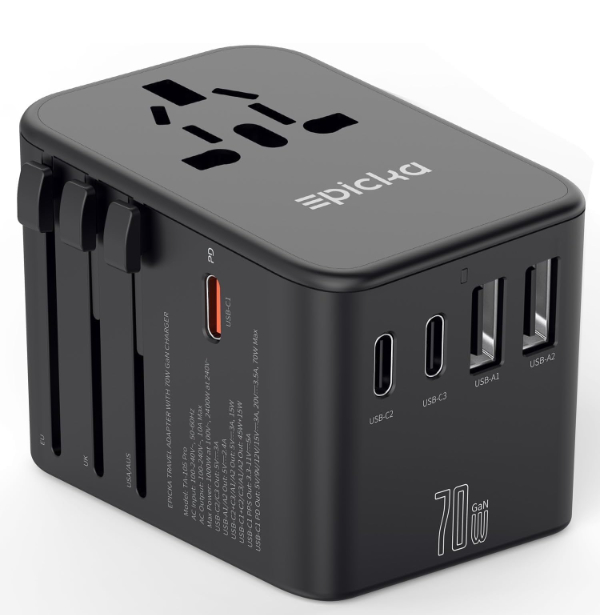
The Epicka TA-105 is an essential piece of hardware for anyone venturing across multiple continents. It covers over 150 countries using four distinct plug types (USA, UK, EU, AUS) that slide out via a mechanical locking system. Unlike cheap gas-station adapters, this unit features a built-in 10A fuse and a spare. Why it matters: If a hotel in a country with an unstable grid sends a power surge, the fuse blows to save your $1,000 smartphone rather than melting the internal circuitry of the device.
Technically, the TA-105 stands out because of its total power distribution. It provides one USB-C port, four USB-A ports, and one AC socket simultaneously. The total DC output is 5V/5.6A, meaning it can "handshake" with multiple devices to distribute current safely. This is best for the traveler carrying a phone, a tablet, and a camera, as it eliminates the need to carry five different wall warts. However, it is important to remember this is a plug adapter, not a voltage converter. If you plug a 110V-only hair dryer into a 240V European outlet using this, you will destroy the dryer.
The build quality is robust, utilizing fire-resistant polycarbonate. The real-world benefit here is "outlet efficiency." In many older international hotels, you might only find one reachable outlet. Being able to charge six items from that single point, while maintaining safety through the integrated fuse, makes this an unparalleled travel tool. The only downside is its bulk; it can occasionally block the power switch on certain wall outlets if they are positioned too closely to the socket.
The TA-105 utilizes a 10A ceramic fuse rather than a simple thermal cutoff. Why it matters: Ceramic fuses have a higher "breaking capacity," meaning they can safely interrupt much higher surge currents without exploding or arcing, which is a critical safety feature when dealing with the 240V grids found in Europe and Asia.
Best Noise Cancellation: Sony WH-1000XM5
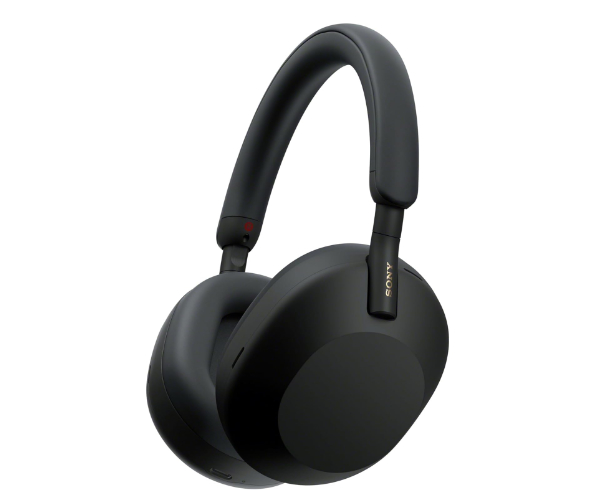
Travel fatigue is often caused by "auditory stress" - the constant low-frequency roar of jet engines (usually around 80-120Hz). The Sony WH-1000XM5 combats this using a dual-processor system: the Integrated Processor V1 and the HD Noise Cancelling Processor QN1. Why it matters: By processing sound in real-time, these headphones can cancel out high-frequency noises like crying babies or cabin announcements much more effectively than older models that only targeted engine hum.
The XM5s use an array of eight microphones to sample ambient sound. From a technical perspective, the diaphragm is made of a carbon fiber composite material. Why it matters: Carbon fiber is extremely rigid and lightweight, allowing the driver to move with incredible speed and precision. This results in "tighter" sound and less distortion, meaning you don't have to crank the volume to dangerous levels just to hear your movie over the plane noise.
While they are the gold standard for silence, the trade-off is the "non-folding" design. Unlike the previous XM4 model, these do not fold into a compact ball, meaning they take up more volume in your carry-on. However, the 30-hour battery life and the "Quick Charge" feature (3 minutes of charging equals 3 hours of playback) make them indispensable for long-haul routes. They are best for travelers who prioritize sleep and mental clarity over saving a few cubic inches of bag space.
The XM5 includes a sensor that detects the barometric pressure of the airplane cabin. Why it matters: Sound travels differently in pressurized air. By adjusting the frequency response based on air density, the Sony XM5 maintains consistent noise cancellation performance at 35,000 feet that sounds just as good as it does on the ground.
Best High-Speed Charging: Anker 737 Power Bank (PowerCore 24K)
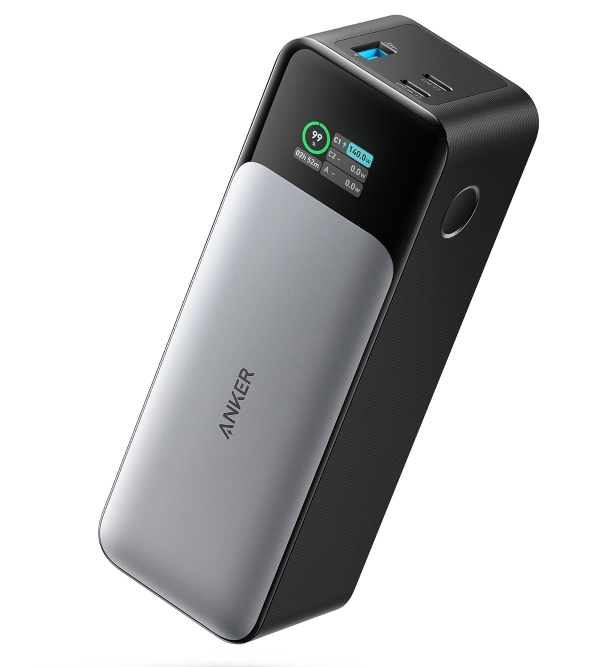
For international travelers, your phone is your map, your translator, and your boarding pass. The Anker 737 is a 24,000mAh monster that solves "battery anxiety" for the entire trip. It features Power Delivery (PD) 3.1 technology, allowing it to output a massive 140W of power. Why it matters: This is one of the few portable chargers that can charge a MacBook Pro at full speed, or an iPhone from 0% to 50% in roughly 25 minutes, which is vital during short layovers.
The technical standout is the "Smart Digital Display." It provides real-time data on the input and output wattage and the estimated time until the power bank itself is fully recharged. Why it matters: Instead of guessing with four blinking LEDs, you know exactly how much "juice" is left. It also utilizes GaN (Gallium Nitride) technology. This material conducts electrons 1,000 times more efficiently than traditional silicon. This allows for a massive battery capacity in a smaller footprint with significantly less heat generation.
The limitation here is the weight. At 1.4 pounds, it is a "brick" in your backpack. However, it falls exactly under the 100Wh (Watt-hour) limit imposed by the FAA and international aviation authorities for carry-on luggage. This makes it the largest battery you can legally take on a plane without special permission. It's best for digital nomads or families who need to keep multiple devices alive during 15-hour flights.
The 737 supports PD 3.1 for both output and input. Why it matters: Traditional large batteries can take 6-10 hours to recharge. With a compatible wall charger, this 24,000mAh battery can go from empty to 100% in just 52 minutes, ensuring you are ready for a full day of sightseeing after just a quick morning charge.
Best Organization System: Peak Design Packing Cubes
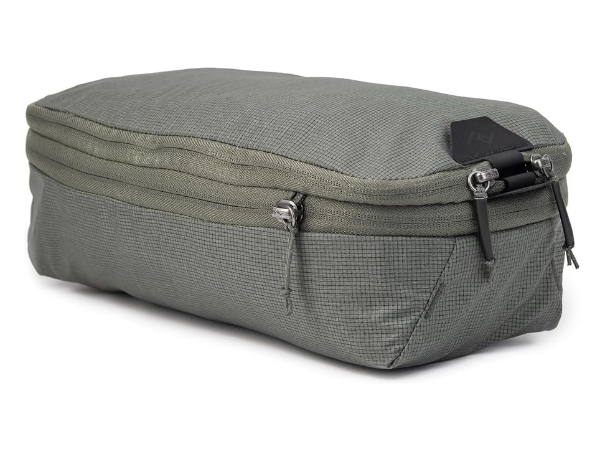
Most travelers struggle with fitting 10 days of clothing into a carry-on. Peak Design Packing Cubes use a technical "UltraZip" and a secondary compression zipper to reduce the volume of your clothes by up to 50%. The shell material is a self-healing 70D nylon/poly blend. Why it matters: The "70D" (Denier) refers to the mass of the fibers. This specific density provides a perfect balance of being paper-thin and lightweight, while having enough tensile strength to withstand the massive pressure of compression without the seams bursting.
What sets these apart practically is the "Dirty/Clean" internal divider. Most cubes are just empty bags, but these have a floating internal wall. Why it matters: As you use clothes on your trip, you move them from the clean side to the dirty side. The divider shifts to accommodate the change in volume, keeping your fresh clothes smelling clean and preventing cross-contamination with dirty laundry.
The trade-off is the price. They are significantly more expensive than generic nylon bags. However, generic bags often use standard zippers that snag or split under the pressure of compression. Peak Design uses a proprietary abrasion-resistant thread for the zippers, ensuring they survive hundreds of cycles. They are best for the "One-Bag" traveler who wants to avoid checked luggage fees by maximizing every cubic inch of their backpack.
These cubes utilize a "ripstop" weave where a thicker reinforcement thread is woven into the fabric at regular intervals in a crosshatch pattern. Why it matters: If you snag the bag on a piece of luggage hardware and get a small puncture, the ripstop grid prevents the hole from "running" or expanding, keeping your contents secure until you can repair it.
Best Water Filtration: Grayl GeoPress Purifier
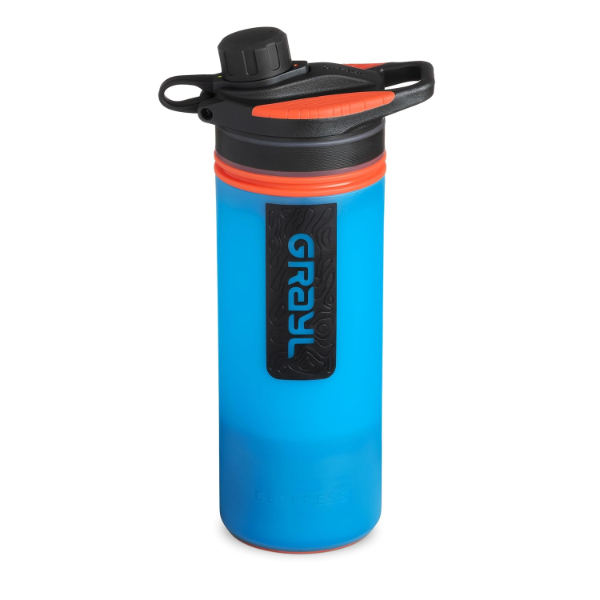
In many parts of the world, tap water contains pathogens like Giardia, Cryptosporidium, or even viruses like Hepatitis A. The Grayl GeoPress is not just a filter - it is a purifier. It uses electroadsorption and activated carbon to remove 99.9% of viruses, bacteria, and protozoa. Why it matters: Standard "hiking filters" often miss viruses, but the GeoPress uses a specialized media that creates an "electro-positive" trap to pull out even the smallest sub-micron contaminants.
The operation is a "One-Press" system. You fill the outer shell with water from any tap, river, or hotel sink and press the inner bottle down. In 8 seconds, you have 24oz of safe drinking water. Why it matters: This eliminates the need to buy plastic water bottles in developing nations, saving you money and reducing environmental impact. It also filters out microplastics, heavy metals (like lead), and chemicals (like chlorine) that affect the taste.
The honest trade-off is the physical effort required. As the cartridge reaches the end of its lifespan (typically 250 liters or 350 "presses"), it becomes harder to push down. It requires a fair amount of body weight to operate. Additionally, the replacement cartridges are a recurring cost. However, for travelers going to Southeast Asia, South America, or anywhere with questionable infrastructure, the peace of mind of having "instant safe water" is worth the effort.
The purifier cartridge contains a non-woven fiber media embedded with positively charged ions. Why it matters: Pathogens like viruses and bacteria are naturally negatively charged. As water is forced through the media, the pathogens are physically "magnetized" to the fiber and permanently trapped, regardless of their size.
How We Chose These Products
Our evaluation criteria centered on Functional Redundancy and Material Science. We prioritized products that perform more than one task (like the Epicka adapter) and those built with standardized, high-performance materials (like Sony's carbon-fiber drivers or Anker's GaN circuitry). We specifically looked for products that meet international safety certifications - such as CE (European Conformity), FCC (Federal Communications Commission), and RoHS (Restriction of Hazardous Substances) - to ensure they are safe for use in diverse global power environments.
Comparison Overview
| Product | Key Technical Spec | Primary Benefit | Weight |
|---|---|---|---|
| Epicka TA-105 | 10A Ceramic Fuse | Surge Protection | 5.3 oz |
| Sony XM5 | QN1 & V1 Processors | Auditoy Stress Reduction | 8.8 oz |
| Anker 737 | 140W PD 3.1 / GaN | High-Speed Power | 22.4 oz |
| Peak Design Cubes | 70D Ripstop Nylon | 50% Volume Compression | 3.9 oz (Med) |
| Grayl GeoPress | Electroadsorption Purifier | Viral Removal | 21.6 oz |
Buying Guide: What to Look For
- Voltage vs. Frequency: Ensure your electronics are "dual-voltage" (100V-240V, 50/60Hz). Most modern chargers are, but high-wattage items like kettles or irons rarely are.
- IPX Ratings: For travel gear, look for at least IPX4. This means the item can survive splashes or light rain, which is common in many international climates.
- TSA/FAA Compliance: Batteries must be under 100Wh (Watt-hours) to fly. The formula is (mAh * Voltage) / 1000. If your battery exceeds 100Wh, it may be confiscated.
- RFID Protection: While less common today, RFID-blocking sleeves for passports and credit cards protect against "skimming" in high-traffic tourist areas.
- Material Density (Denier): Higher denier (e.g., 500D) is more durable but heavier. For packing cubes, 70D is the "sweet spot" for strength vs. weight.
General Pro / Cons
| Category Pro | Category Con |
|---|---|
| GaN technology allows for lighter, cooler charging bricks. | High-end technical gear carries a premium price. |
| Compression systems allow for carry-on-only travel. | Over-compressing can damage delicate fabrics or electronics. |
| Active Noise Canceling reduces "travel fatigue" significantly. | ANC devices require consistent recharging to function. |
| Universal adapters cover 150+ countries in one unit. | Physical bulk can block adjacent outlets or light switches. |
| Water purifiers reduce reliance on single-use plastics. | Purifier cartridges require regular, costly replacements. |
| Ripstop fabrics prevent minor tears from becoming failures. | Proprietary fabrics can be difficult to patch in the field. |
Final Summary
Successful international travel relies on minimizing points of failure. By investing in gear with high-fidelity specs - like ceramic fuses for power, carbon-fiber diaphragms for audio, and electroadsorptive media for water - you effectively insulate your trip from the most common logistical disasters. Whether it is staying connected with the Anker 737 or staying organized with Peak Design, these tools are engineered to handle the unpredictable nature of global exploration. Aggregate rating of the products reviewed: 4.74 out of 5.