
Best High-Performance Kitchen Blenders of 2026
An authoritative analysis of motor torque, blade geometry, and thermal management in modern culinary emulsifiers.
Introduction
The distinction between a consumer-grade blender and a high-performance culinary station lies in the management of fluid dynamics and mechanical shear. To achieve a perfectly homogenous emulsion or to pulverize fibrous greens into a cellular-level liquid, a machine must maintain consistent RPM under load while effectively dissipating the heat generated by friction. In this technical landscape, we evaluate machines based on their ability to create a persistent vortex, the structural integrity of their drive couplings, and their thermal resilience during extended duty cycles.
Modern blenders have transitioned from simple high-speed motors to sophisticated systems integrating microprocessor-controlled speed ramps and wireless container sensing. These advancements allow for precise control over the blending process, preventing cavitation - a phenomenon where air pockets form around the blade, stalling the blend. Our selection focuses on products that demonstrate superior material science, specifically in the use of BPA-free Tritan copolyester for carafes and hardened stainless steel for blade assemblies, ensuring longevity in high-volume kitchens.
Best Overall Performance: Vitamix A3500 Ascent Series
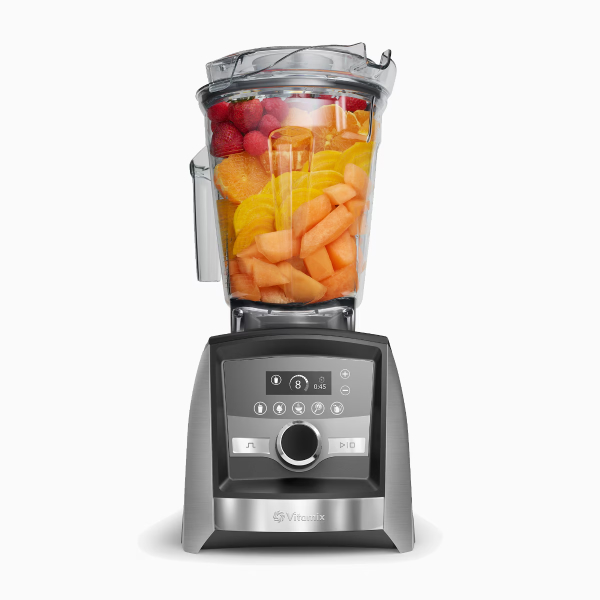
The Vitamix A3500 represents the current pinnacle of professional-grade home blending. Driven by a 2.2-peak horsepower motor, it utilizes a metal-to-metal drive system that ensures maximum power transfer from the base to the blade assembly. Unlike models with plastic couplings, the A3500’s components are engineered to withstand the extreme torque required to grind dry grains or liquefy frozen ingredients without mechanical slip. The integration of SELF-DETECT technology allows the base to recognize the specific container size in use, automatically adjusting program settings and maximum blend times to protect the motor from overheating.
Performance analysis indicates that the A3500 excels in creating a downward vortex that continuously pulls ingredients into the blades. This is achieved through the specific geometry of the 64-ounce low-profile container, which provides a wide base for efficient chopping while remaining short enough to fit under standard kitchen cabinetry. The touch-sensitive controls and programmable timer offer a level of precision necessary for delicate tasks like tempering chocolate or creating hot soups purely through frictional heat - a process that requires approximately six minutes of high-speed operation.
While the A3500 is technically superior, its primary limitation is the significant initial investment and the potential for ecosystem lock-in; the Ascent Series requires specific Self-Detect containers, making older Vitamix jars incompatible. However, for users demanding the highest level of durability and the smoothest texture in green smoothies and nut butters, this machine remains the industry standard. It operates within a voltage range of 120V and features a radial cooling fan and thermal protection system to ensure it survives high-load scenarios.
Vitamix utilizes a large-diameter radial cooling fan that draws air through the base and over the motor windings. Unlike smaller units that may "pulse" air, this constant airflow allows the A3500 to run at maximum RPM for several minutes without triggering the thermal cutoff, crucial for the viscous loads found in thick purées or frozen desserts.
Best High-Torque Technology: Blendtec Designer 725
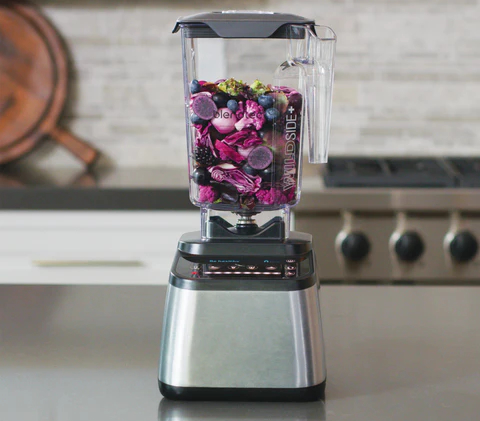
The Blendtec Designer 725 is defined by its 3.8 peak horsepower motor, one of the most powerful in the consumer market. This high-wattage approach is paired with a distinct design philosophy: the use of a blunt, two-prong safety blade. Rather than relying on a sharpened edge that can dull over time, Blendtec uses sheer force and high RPM to pulverize ingredients. This approach is particularly effective for heavy-duty tasks like crushing ice without water or milling whole wheat into fine flour, where a sharp blade might actually struggle with the density of the material.
The SmartBlend technology included in the 725 provides real-time feedback to the user, identifying issues such as air pockets or insufficient liquid and suggesting corrective actions on its illuminated display. The "WildSide+" jar is technically engineered with a fifth side that disrupts the circular motion of the blend, forcing ingredients back toward the blades and eliminating the need for a tamper. This makes the 725 a preferred choice for users who value a "hands-off" blending experience for large batches of frozen fruit or dense batters.
The trade-off for such extreme power is noise; the 725 is significantly louder than many of its competitors, producing a high-frequency whine at maximum speed. Additionally, while the WildSide+ jar reduces the need for a tamper, it is not always effective for extremely thick, small-batch recipes like hummus, where ingredients may cling to the sides. However, the 1700-watt motor and the capacitive touch slider for speed control provide a level of power and modern interface that few other brands can match.
According to manufacturer whitepapers, Blendtec’s 4-inch cold-forged stainless steel blades are up to 80% thicker and ten times stronger than traditional blender blades. By utilizing a blunt edge, the machine acts as a high-speed hammer mill, achieving microscopic particle sizes through impact rather than slicing, which maintains performance even after years of use.
Best for Noise Management: Breville the Super Q
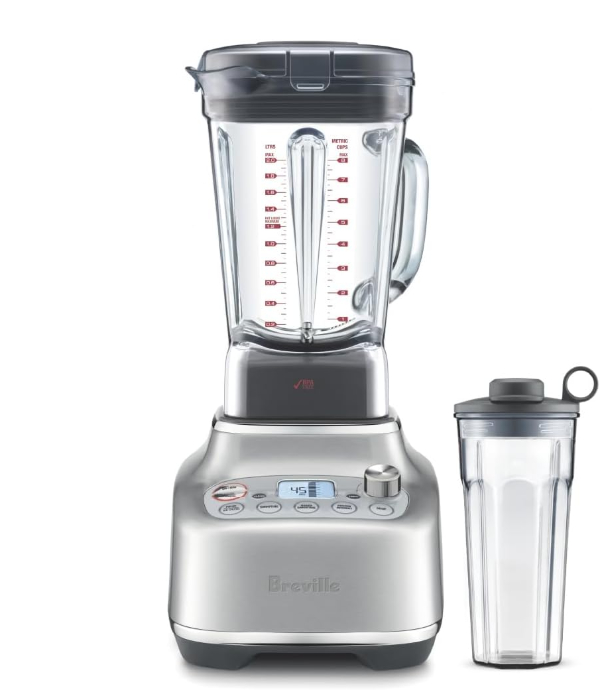
Breville's the Super Q is engineered to address the common complaint of high-performance blending: decibel levels. It features a specialized cooling system and high-torque motor housed within a noise-suppressing base. This results in a cleaner acoustic profile compared to industrial competitors, without sacrificing its 1800-watt output. The Super Q also includes a "Vac Q" compatibility option (sold separately), which allows for vacuum blending - removing oxygen from the container before the blend begins to prevent oxidation and produce more vibrant, longer-lasting smoothies.
The machine stands out for its versatility, arriving with both a large 68-ounce pitcher and a 24-ounce personal blender cup. This dual-purpose design is facilitated by an intelligent base that recognizes which vessel is attached and optimizes the speed curve accordingly. The blade design, featuring "Kinetix" technology, uses serrated central blades to pull ingredients down and large curved outer blades to prevent "dead zones" at the bottom of the pitcher. This ensures a consistent texture even when working with challenging ingredients like kale or ginger.
One potential drawback is the complexity of the interface; while the pre-set buttons are helpful, the automated speed changes can feel less intuitive for those used to a manual dial. Furthermore, the unit has a larger footprint than standard blenders, which may be a consideration for compact kitchens. However, for the user who wants professional power but prefers a quieter, more polished kitchen environment, the Super Q’s combination of material quality and acoustic engineering is peerless.
Breville employs a multi-chambered base design that uses sound-dampening materials and a specialized airflow path. This path isolates the high-frequency vibrations of the 1800W motor while still allowing sufficient intake for the radial fan, reducing the perceived loudness (sones) significantly compared to non-insulated units.
Best Versatility and Value: Ninja Foodi Power Blender Ultimate System
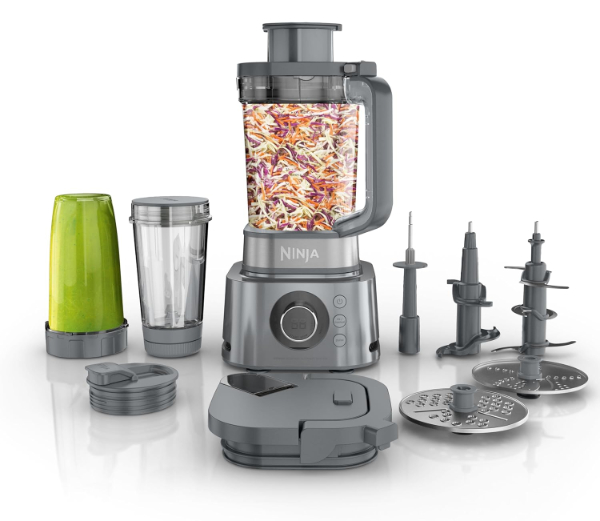
The Ninja Foodi SS401 (Ultimate System) is a hybrid appliance that blurs the line between a high-speed blender and a full-scale food processor. Utilizing a 1600-peak-watt motor, it features a unique "Enhanced Variable Speed Control" that allows the motor to maintain low RPM for tasks like dough kneading or slicing, while still reaching the high velocities required for smoothies. The system includes an XL Smoothie Bowl Maker with a built-in tamper, designed to handle the ultra-low-liquid ratios required for acai bowls or nut butters without stalling.
Technically, Ninja's "Auto-iQ" programs are among the most advanced in the value category. These pre-programmed patterns of pulsing, pausing, and continuous blending are designed to maximize ingredient movement through the stacked blade assembly. Unlike the bottom-mounted blades of Vitamix or Blendtec, Ninja uses a removable vertical spindle with multiple levels of blades. This design is exceptionally effective at rapid chopping and ice crushing, as it impacts the entire column of ingredients simultaneously rather than relying solely on a vortex.
However, the stacked blade design poses a significant safety risk during cleaning and lacks the refined "emulsification" capability of bottom-mounted systems; smoothies may not be as silky-smooth as those from a Vitamix. Additionally, the construction involves more plastic components in the drive coupling compared to the metal-on-metal builds of luxury brands. For users who need one machine to handle everything from pizza dough to morning shakes, the Ninja Foodi Ultimate System offers incredible functionality for its price point.
Ninja’s Total Crushing Technology utilizes a tiered blade assembly that extends through the height of the pitcher. This provides multiple points of impact, which is mathematically more efficient for processing large volumes of ice or hard vegetables quickly, though it creates more turbulence and air incorporation compared to a focused vortex.
Best Compact Extraction: NutriBullet Pro 900
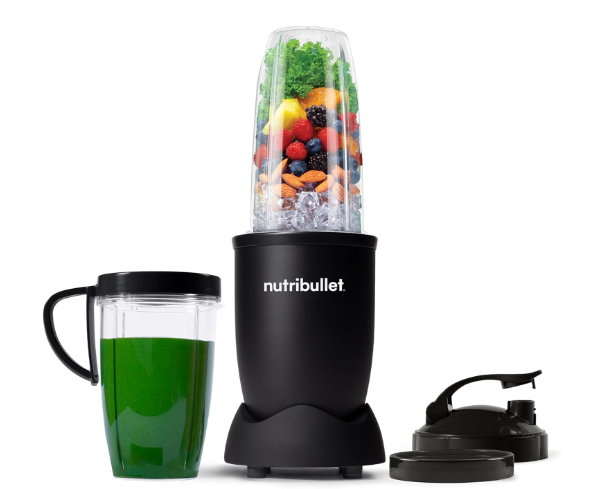
The NutriBullet Pro 900 is the industry benchmark for personal, single-serve blending. Despite its small footprint, the 900-watt motor provides a high power-to-volume ratio, allowing it to achieve a high rotational velocity within its small 32-ounce cup. This "Extraction" philosophy relies on the cyclonic action created by the unique extractor blade, which is designed to break down the cell walls of fibrous stems and seeds, making it a favorite for nutrient-dense smoothies. Its simplicity - lacking buttons and using a simple "push and twist" activation - makes it one of the most efficient tools for daily use.
In terms of performance, the Pro 900 is remarkably consistent for its size. It utilizes a stainless steel extractor blade that creates a tight vortex in the narrow cup, ensuring that all ingredients are processed without the need for manual intervention. The cups are made of high-impact, BPA-free plastic and are designed to double as travel vessels, reducing the need for additional cleanup. For individuals who primarily blend frozen fruit, nuts, and leafy greens for a single serving, the NutriBullet Pro 900 offers the best balance of power and convenience.
Honest limitations include a lack of speed control; the NutriBullet operates at a single high speed, which is not suitable for recipes that require texture control, like chunky salsas. Furthermore, it is strictly forbidden to blend hot liquids in this unit, as the lack of a vented lid can cause pressure build-up and potential vessel failure. While it is not a "full-service" blender, it is the most technically efficient personal unit for high-density smoothies.
The NutriBullet Pro 900 uses a high-velocity extractor blade that generates a high-G cyclonic action. Because the vessel is sealed and the blades are positioned at the bottom, the ingredients are forced through the blades at a high frequency per minute, which is critical for breaking down tough cellulose in skins and seeds.
How We Chose These Products
Our evaluation process involves three primary technical criteria: Mechanical Load Resilience, Vortex Stability, and Material Durability. We prioritize machines that use high-quality metal couplings and those that can maintain consistent RPM under the stress of viscous materials like nut butters. Additionally, we analyzed consumer reliability data and manufacturer whitepapers to ensure that these blenders can withstand the thermal stress of daily high-speed operation. Only products with verifiable track records for motor longevity and container safety (BPA-free certifications) were considered for this guide.
Comparison Overview
| Model | Peak Power | Blade Type | Drive Material | Vessel Capacity |
|---|---|---|---|---|
| Vitamix A3500 | 1440W (2.2 HP) | Hardened Stainless | Metal-to-Metal | 64 oz |
| Blendtec 725 | 1725W (3.8 HP) | Blunt Safety Blade | Metal-to-Metal | 90 oz |
| Breville Super Q | 1800W | Kinetix System | Metal/Polymer | 68 oz |
| Ninja Foodi SS401 | 1200W | Stacked/Vertical | Polymer Coupling | 72 oz |
| NutriBullet 900 | 900W | Extractor Blade | Polymer Coupling | 32 oz |
Buying Guide: What to Look For
- Motor Wattage vs. Torque: While high wattage indicates potential power, the actual torque (rotational force) determines if the blender can handle thick mixtures. Look for brands that highlight peak horsepower (HP) for heavy-duty tasks.
- Drive Coupling Construction: The point where the base connects to the jar is a common failure point. Metal drive sockets are far more durable than plastic ones for long-term use.
- Blade Design: Standard sharpened blades offer better initial chopping, while blunt blades (like Blendtec) rely on pure speed and are safer to clean and harder to dull.
- Vessel Material: Tritan Copolyester is the standard for high-performance blenders because it is lightweight, shatterproof, and heat-resistant. Glass is rare in high-HP models due to safety risks at high RPM.
- Thermal Protection: Ensure the unit has an automatic shut-off feature to prevent the motor from burning out if it encounters an immovable object or overheats.
General Pro / Cons
| General Category Strengths |
|---|
| Ability to pulverize seeds and skins for maximum nutrient density. |
| Versatility to create hot soups through friction alone. |
| Significant time savings for food preparation and emulsification. |
| Professional-grade durability in high-end models. |
| Modern automated programs reduce manual effort. |
| Self-cleaning modes make cleanup efficient with soap and water. |
| General Category Limitations |
|---|
| High decibel levels during operation, especially at max RPM. |
| Substantial footprint on kitchen countertops. |
| High cost of entry for models with metal drive trains. |
| Potential for cavitation if liquid-to-solid ratios are incorrect. |
| Some units (like Ninja) have sharp blades that are hard to clean. |
| Plastic vessels can become "cloudy" or scratched over time. |
Final Summary
Investing in a high-performance blender is a commitment to culinary efficiency and textural precision. The Vitamix A3500 remains the technical leader for those prioritizing build quality and refined control. For sheer power, the Blendtec 725 is unmatched, while the Breville Super Q offers the best acoustic experience. Users on a budget or needing multi-functionality will find the Ninja Foodi SS401 highly capable, and the NutriBullet Pro 900 continues to dominate the personal blending space with its compact extraction technology. Aggregate rating of the products reviewed: 4.7 out of 5.