
Best Messenger Bags of 2026
A technical guide to the most durable, ergonomic, and weather-resistant over-the-shoulder carry systems for modern commuters and professionals.
Introduction
The messenger bag has evolved from a niche tool for bike couriers into the preferred carry solution for the modern "mobile office." Unlike backpacks, which require you to stop and unsling both straps to reach your gear, a messenger bag offers "on-the-fly" access. This is critical for commuters navigating crowded subways or professionals who need to grab a tablet or phone without breaking their stride. However, the convenience of a single-strap design comes with a technical challenge: weight distribution. A poorly engineered bag will pull on your neck or slide around your ribs, leading to fatigue over long distances.
When evaluating these bags, we look beyond the number of pockets. We analyze the denier (D) of the exterior fabric - a measure of fiber thickness that dictates how many years of concrete-scraping abuse the bag can take - and the type of waterproofing used. Many "waterproof" bags rely on a surface spray that wears off, whereas the best use a floating TPU (Thermoplastic Polyurethane) liner. This guide cuts through the marketing fluff to identify the bags that balance material science with real-world ergonomics.
Best Overall: Timbuk2 Classic Messenger Bag
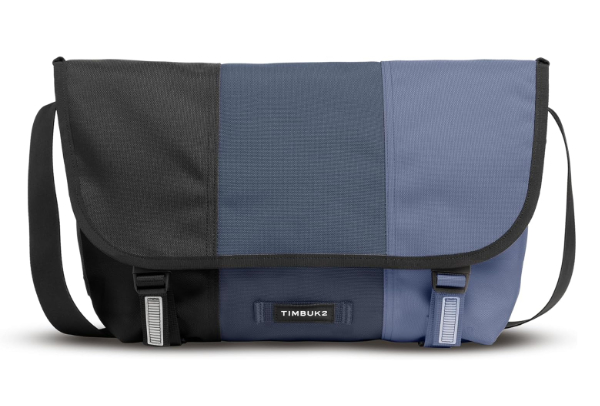
The Timbuk2 Classic is the industry benchmark for a reason: it perfected the "internal waterproof" architecture. The bag uses a 1830D Cordura Canvas exterior paired with a fully sewn-in TPU liner. Why it matters: While the outside might get wet in a downpour, the TPU liner acts like a dry bag inside, ensuring that moisture never reaches your electronics. It features the "Double-Loop" cam buckle, which allows you to adjust the strap length with one hand while the bag is still on your body.
Technically, the "Wingman" strap design is what sets it apart. The strap attaches to the bag at an angle rather than a straight line. Why it matters: This prevents the bag from "folding" or bunching up against your back when it's fully loaded, distributing the weight across your shoulder blade rather than your neck. It's an ideal choice for students or office workers who need a "one-bag" solution that lasts for a decade.
One honest trade-off is the lack of a dedicated, padded laptop sleeve in the base model; it uses an internal slash pocket that offers minimal drop protection. If you're carrying a high-end MacBook, you'll want to pair this with a separate sleeve. Additionally, the Velcro closure is famously loud - not ideal for quiet libraries or meeting rooms - though Timbuk2 includes "silencer" strips to mitigate this.
Most bags use DWR (Durable Water Repellent) coatings that wash away. Timbuk2 uses a 0.1mm TPU laminate. Why it matters: TPU is a physical barrier that doesn't "wear out." It keeps the bag flexible in freezing temperatures without cracking, unlike cheaper PVC liners.
Best for Heavy Utility: Chrome Industries Citizen
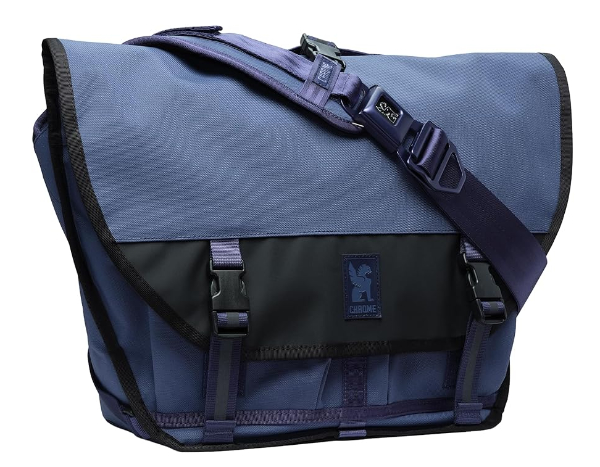
The Chrome Citizen is built for the "prosumer" who treats their gear like hardware. It is famous for its iconic seatbelt buckle release. Why it matters: If you are carrying a heavy load (over 15 lbs), pulling a bag over your head can strain your shoulder. The buckle allows you to drop the bag instantly without lifting it. The exterior is a massive 1050D Nylon, which is virtually impossible to tear under normal usage.
The internal construction uses a "floating bucket" design. The waterproof tarp liner is not stitched to the outer shell at the bottom. Why it matters: This prevents "wicking," where water travels through the thread holes of the outer shell into the interior. It is one of the few bags that can actually be hosed off if it gets covered in road salt or mud.
The limitation here is weight. Because of the heavy steel buckle and dual-layer construction, the bag weighs nearly 3 lbs empty. It also lacks internal organization; it's essentially one large cavern. This is a bag for the "hauler" who needs to carry groceries, tools, or a change of clothes alongside their tech and values indestructible build quality over lightweight comfort.
Chrome uses "Ballistic" grade nylon, originally developed for flak jackets. Why it matters: It has a high tensile strength (resistance to pulling) and a high melting point, meaning it won't "fuzz" or pill even after years of friction against your back.
Best for Tech & Gear: Peak Design Everyday Messenger (V2)
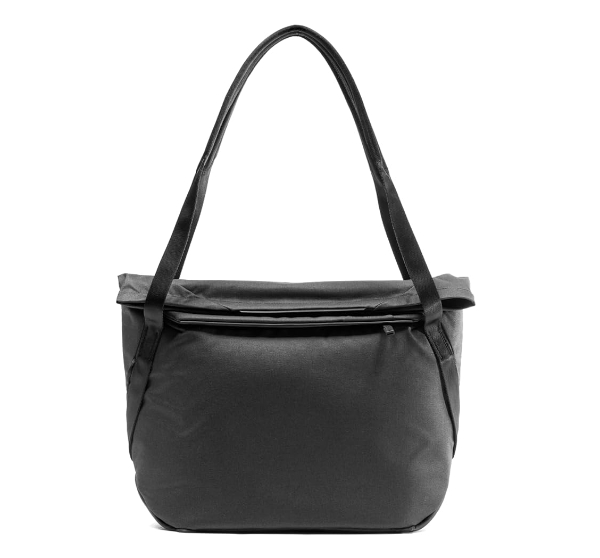
The Peak Design Everyday Messenger is a masterclass in modern engineering. It abandons traditional Velcro for the "MagLatch" system - a magnetic, one-handed closure that adjusts to the bag's volume. Why it matters: If you overstuff the bag with a camera or extra layers, the latch still finds its mark without you having to re-thread a buckle. The exterior is a 400D recycled nylon shell that is double-poly-coated for water resistance.
Inside, the bag features "FlexFold" dividers inspired by origami. Why it matters: Unlike static foam inserts, these can be folded into "shelves" or "cubbies." You can stack a camera lens on the bottom and a hard drive on top in the same vertical space, maximizing the 13L or 15L capacity without gear banging together.
The downside is the ecosystem lock-in; it's designed to work best with Peak Design's own Capture Clips and accessories. It also feels more "rigid" than a canvas bag, which some users find less comfortable against their side. This is the ultimate choice for photographers or tech enthusiasts who need specialized protection for delicate gear.
Peak Design uses proprietary "Ultra-Zips" with abrasion-resistant thread. Why it matters: Standard zippers fail because the thread holding the teeth wears out. Ultra-Zips use a higher-density weave that lasts 2x longer under heavy stress.
Best Professional Minimalist: Bellroy System Messenger
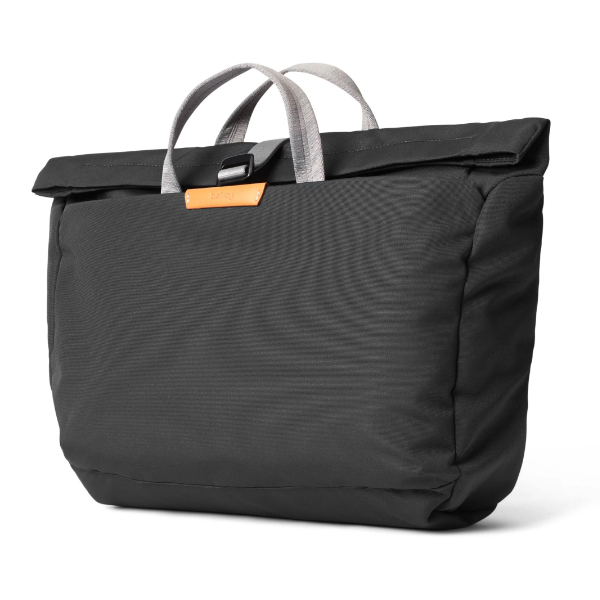
Bellroy focuses on "visual weight." The System Messenger is designed to look like a high-end briefcase but perform like a courier bag. It uses a recycled, water-resistant woven fabric that feels like luxury upholstery rather than tactical gear. Why it matters: This bag doesn't look out of place in a boardroom or a fancy restaurant. It uses a "G-hook" closure which is silent and low-profile.
Technically, it excels in internal organization. It features a dedicated 16" laptop sleeve and "pop-out" pockets for water bottles or power bricks. Why it matters: These pockets fold flat when empty. This keeps the bag slim against your body, reducing the "pendulum effect" where a thick bag swings out and hits people on a crowded train.
The limitation is the strap. It lacks the heavy padding and quick-adjustment cam of the Timbuk2 or Chrome. If you plan to carry heavy loads for miles, the thinner strap may dig in. It's also less "weather-proof" than the TPU-lined options; while the fabric is DWR treated, it is not meant for an hour-long ride in a monsoon. This is the "executive" pick for the urban professional.
The laptop compartment uses a soft baize lining. Why it matters: This is a non-abrasive material that prevents "micro-scratching" on metal laptop chassis caused by dust and vibration during your commute.
Best Classic Heritage: Manhattan Portage Vintage Messenger
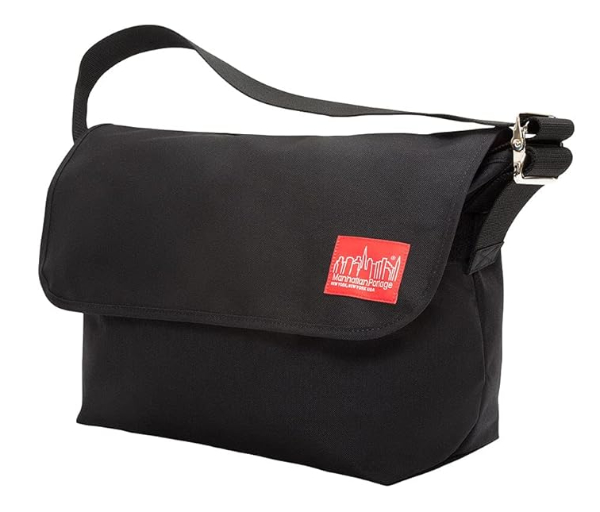
Manhattan Portage created the original "city messenger" look in the 1980s, and the Vintage model stays true to that legacy. It uses a 1000D Cordura Classic fabric with a water-resistant coating. Why it matters: This is a "no-fuss" bag. There are no fancy magnets or seatbelt buckles to break. It relies on massive Velcro panels and a simple metal slide-buckle that works every single time.
The bag is characterized by its "boxy" shape. Why it matters: Unlike "envelope" style bags that get tight at the bottom, the Vintage maintains its width. This makes it significantly better for carrying flat items like vinyl records, art portfolios, or a stack of hardcover books without bending the corners.
The honest downside is the total lack of modern tech features. There is no laptop padding, no key clip, and the strap is a simple 2-inch nylon webbing without a pad (though you can buy one separately). It's a "blank slate" bag. It is best for the user who wants a lightweight, indestructible bag they can throw into a washing machine and keep for twenty years.
The strap is made from high-tensile nylon webbing. Why it matters: It has a "breaking strength" of over 2,000 lbs. While you'll never carry that much, it means the strap won't fray or stretch even after decades of use.
How We Chose These Products
Our evaluation criteria focused on three primary technical vectors: Abrasion Resistance, Load Stabilization, and Component Failure Points. We prioritized bags using Cordura or Ballistic Nylon over cheaper "polyester" blends, as polyester has a lower melting point and pills under friction. We specifically looked for bags that offer "on-body" adjustment systems, as a bag that can't be tightened while walking will cause spinal misalignment. Finally, we excluded bags with plastic buckles at the primary load points, as these are prone to snapping in cold weather or when stepped on.
Comparison Overview
| Model | Exterior Fabric | Waterproofing | Capacity (L) | Closure Type |
|---|---|---|---|---|
| Timbuk2 Classic | 1830D Cordura | TPU Liner | 21L (Medium) | Buckles + Velcro |
| Chrome Citizen | 1050D Nylon | Floating Tarp | 24L | Seatbelt Buckle |
| Peak Design Everyday | 400D Recycled Nylon | DWR + Poly-Coat | 13L / 15L | MagLatch |
| Bellroy System | Woven Fabric | DWR Finish | 16L | G-Hook |
| Manhattan Vintage | 1000D Cordura | Water-Resist Coat | 20L | Velcro |
Buying Guide: What to Look For
- Strap Pivot Points: Look for "swivel" attachments. Why it matters: Straps that are sewn flat will "cut" into your neck if you wear the bag across your chest. Swivel points allow the strap to rotate to your body's natural angle.
- Internal vs. External Sleeves: A laptop sleeve should be "suspended" 1-inch from the bottom. Why it matters: If you drop your bag on the floor, a suspended sleeve prevents the laptop from taking the direct impact.
- Stabilizer Straps (Cross-Straps): For cyclists, this is mandatory. Why it matters: It connects from the main strap to the corner of the bag, forming a "Y" shape that prevents the bag from sliding around to your chest when you lean forward.
- Light Loops: Look for a webbing loop on the exterior. Why it matters: This allows you to clip a blinky LED light for visibility during night commutes, a critical safety feature that's often overlooked.
General Pro / Cons
| Pro: Why Buy a Messenger? | Con: The Trade-Offs |
|---|---|
| On-the-fly access without removing the bag. | Uneven weight distribution can cause shoulder fatigue. |
| Professional "office" look compared to bulky backpacks. | Less stable than backpacks for running or hiking. |
| Slim profile is better for crowded public transit. | Generally lower capacity for extremely heavy loads. |
| Easier to "swing" to your front to protect from pickpockets. | Single-strap padding is often thinner than dual-straps. |
| Better ventilation for your back (less "sweat patches"). | Can swing forward and hit your legs if not buckled tightly. |
Final Summary
Selecting the right messenger bag depends entirely on your daily "payload." If you need an indestructible commuter that keeps your laptop bone-dry in a storm, the Timbuk2 Classic is the technical winner. For heavy-duty hauling where quick removal is key, the Chrome Citizen is unrivaled. Photographers and tech-heavy users will find the Peak Design Everyday Messenger worth the premium for its internal organization. While a messenger bag requires a bit more care in how you pack it to avoid shoulder strain, the speed and accessibility it offers make it the ultimate tool for the modern urban landscape. Aggregate rating of the products reviewed: 4.64 out of 5.