
Best Non-Invasive Pain Management Devices of 2026
A deep-dive into the most effective at-home technologies for chronic pain, muscle recovery, and joint stiffness, from percussive therapy to PEMF.
Introduction
Managing pain at home has evolved far beyond simple ice packs and heating pads. We are currently seeing a massive shift toward "active" recovery - using medical-grade technology like pulsed electromagnetic fields (PEMF), percussive force, and Neuromuscular Electrical Stimulation (NMES) to signal the body to heal itself. These devices don't just "mask" pain like a traditional aspirin might; they work by increasing blood flow, relaxing hyper-contracted muscles, and modulating the electrical signals in our nervous system.
When selecting a device, the "Friction Point" is usually the technology type vs. the specific pain. Percussive tools are fantastic for deep muscle knots but can be too aggressive for sensitive joints. Conversely, light-based or electrical-patch therapies are great for inflammation but won't physically "knead" a tight muscle. Choosing the right tool requires understanding how deep the therapy needs to go and whether you need physical manipulation or cellular-level stimulation. Our guide breaks down these five distinct categories to help you match the tech to your specific physical needs.
Best for Heat & Vibration: Hyperice Venom 2 Back
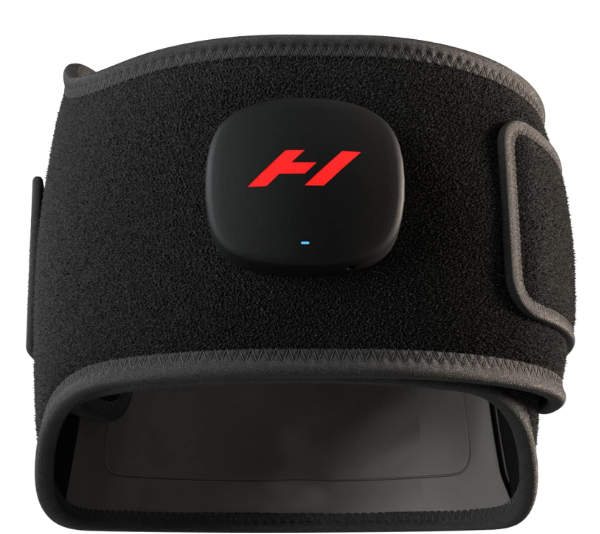
The Hyperice Venom 2 is a massive upgrade over the standard heating pad. Most traditional pads take minutes to warm up and often have "hot spots" that can irritate the skin. The Venom 2 uses a graphene heating element that covers the entire surface area of the wrap, reaching its target temperature in about 90 seconds. This even heat distribution means your lower back muscles relax more quickly, allowing the built-in vibration patterns to penetrate deeper into the tissue.
What sets this apart practically is the "wearability." It’s a compression wrap that stays tight against your body, allowing you to walk around or sit at a desk while receiving treatment. It features three levels of heat and three distinct vibration patterns (steady, wave, and pulse). By combining heat with vibration, the device uses the "Gate Control Theory" of pain - essentially distracting your nerves with vibration while the heat increases blood flow to flush out metabolic waste from sore muscles.
The trade-off is the battery life and the specific fit. While the lithium-ion battery lasts for about 2.5 hours, the high-heat setting can drain it faster than you’d expect. Also, because it is designed specifically for the back, it isn't the most versatile tool for shoulders or knees (though Hyperice does sell specific versions for those areas). It’s the best choice for office workers or athletes who suffer from chronic lower back stiffness and need a "hands-free" solution.
Graphene is a carbon-based material that is 200 times stronger than steel but incredibly thin. In the Venom 2, it acts as a superior thermal conductor. Because graphene allows electrons to move at high speeds with little resistance, it converts nearly 100% of the electrical energy into heat almost instantly. This "HyperHeat" system ensures the wrap maintains a constant 131°F (55°C) without the fluctuations common in copper-wire heating elements.
Best Percussive Therapy: Therabody Theragun PRO (Gen 5)
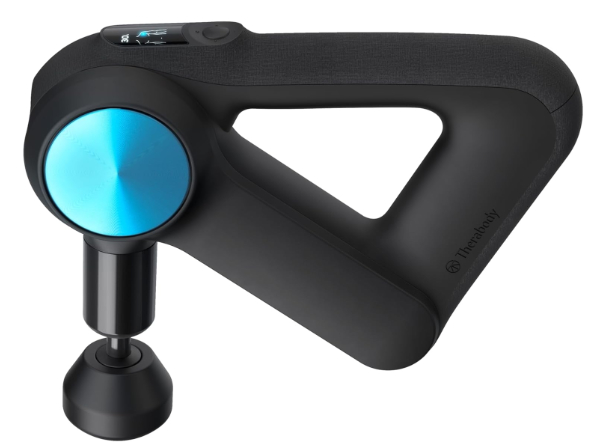
If you have deep muscle knots that feel like rocks, a standard vibratory massager won't cut it. The Theragun PRO Gen 5 is a percussive therapy device, meaning it doesn't just buzz on the surface; it physically hammers the muscle 16 millimeters deep. This high "amplitude" is what makes it a professional-grade tool. It creates a "neurological distraction" that allows you to work on extremely sore areas without the intense pain of a traditional deep-tissue massage.
The Gen 5 model finally addressed the biggest complaint of older versions: noise. It uses a proprietary brushless motor that is 20% quieter while maintaining 60 lbs of "stall force" - meaning you can push very hard against a tight glute or hamstring without the motor stopping. It also features a built-in OLED screen that guides you through specific routines (like "Lower Back" or "Sleep Preparation") so you don't have to guess how to use it effectively.
The primary hurdle here is the price and the learning curve. This is an expensive, high-powered machine. If used incorrectly on bony areas like the spine or shins, it can be very uncomfortable. It is designed for someone who is physically active and needs a tool that can handle "industrial" levels of muscle tension. The ergonomic triangle handle is a massive plus, allowing you to reach 90% of your own back without straining your wrists.
Amplitude refers to how far the massage head travels. Most budget massagers have an 8mm-10mm amplitude, which feels like "buzzing." The Theragun's 16mm depth reaches the deep fascia. Combined with 60 lbs of stall force (the amount of pressure needed to stop the motor), this ensures the device continues to provide therapeutic percussion even when you are leaning into a large muscle group.
Best Smart Muscle Stimulation: Therabody PowerDot 2.0
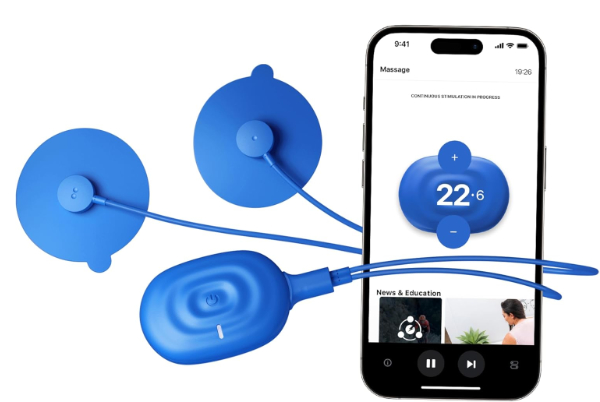
The PowerDot 2.0 takes "electric shocks" and makes them smart. It combines two technologies: TENS (which blocks pain signals to the brain) and NMES (which actually makes the muscle contract to increase blood flow). Unlike the cheap, wired TENS units you might find at a local pharmacy, the PowerDot is completely wireless and controlled by your smartphone. The app is the real star here; you tell it where you hurt, and it shows you exactly where to place the pads for the best result.
This is an incredible tool for injury rehab or "lazy" recovery. If you have a swollen ankle or a strained calf, you can stick these pods on while you're lying in bed. The NMES programs will gently pump the muscle, which acts like a "second heart" to move fluid and inflammation out of the area without you having to actually move the joint. It is FDA-cleared and uses very high-quality adhesive pads that don't leave a sticky residue on the skin.
The friction point for some will be the "ecosystem lock-in." You have to use the smartphone app to control the device - there are no buttons on the pods themselves. If your phone is dead, you can't use the device. Also, the adhesive pads are a recurring cost, as they need to be replaced after about 20-25 uses to maintain good electrical conductivity. It’s perfect for the tech-comfortable user who wants a data-driven approach to pain management.
Lower-end muscle stimulators use "Monophasic" waves, which can cause a buildup of electrical charge under the skin, leading to "stinging" or chemical burns. PowerDot uses a Biphasic Symmetrical Waveform, where the electricity alternates directions perfectly. This balances the charge, allowing for a much more comfortable and powerful muscle contraction without the harsh skin irritation.
Best Targeted Red Light: Joovv Go 2.0
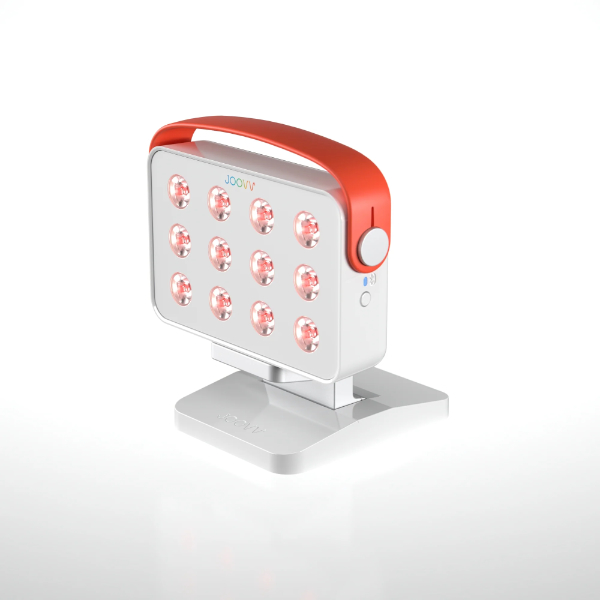
Red Light Therapy (Photobiomodulation) is a silent healer. The Joovv Go 2.0 is a handheld device that uses specific wavelengths of light to penetrate the skin and reach your cells' "power plants" (the mitochondria). Unlike the other devices on this list, you won't feel anything happening while you use it - no heat, no shocks, no vibrations. However, over a 10-minute session, the light helps your cells produce more energy (ATP), which speeds up the natural healing process of damaged tissue.
The Go 2.0 is specifically designed for "spot treatments." If you have a sore wrist from typing or an inflamed "tennis elbow," you hold the device close to the area. It features two types of light: Red (for skin-level healing) and Near-Infrared (which travels deeper into the muscles and joints). It’s remarkably well-built, with a cooling fan and a rechargeable battery that makes it easy to use while traveling or sitting on the couch.
The "trade-off" is patience. This isn't a "magic wand" that makes pain disappear instantly like a Theragun might. It works on a cellular level, so you usually won't notice a significant difference for 2 to 4 weeks of consistent use. It’s also important to wear the included eye protection, as the LEDs are incredibly bright. This is the ideal tool for someone with chronic inflammatory conditions like arthritis who wants a gentle, long-term healing solution.
The Joovv Go 2.0 delivers light at 660nm (Red) and 850nm (Near-Infrared). The effectiveness is determined by "Irradiance" - the power of the light hitting your skin. Joovv ensures a high milliwatt-per-square-centimeter (mW/cm²) output, which is necessary to ensure the light actually reaches the joint capsule rather than just bouncing off the surface of the skin.
Best for Chronic Recovery: Oska Pulse
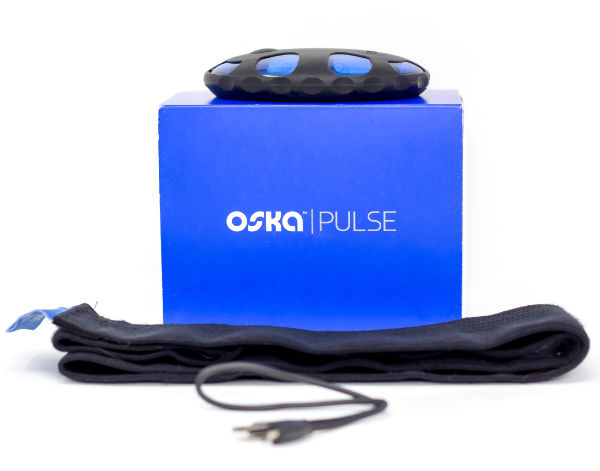
The Oska Pulse uses Pulsed Electromagnetic Field (PEMF) therapy, a technology that was originally used by NASA to keep astronauts' bones and muscles healthy in space. It works by emitting a very low-frequency electromagnetic field that "resets" the electrical charge in your cells. When your body is in pain or injured, the cells lose their electrical balance; the Oska Pulse helps restore that balance to reduce inflammation and pain without any physical sensation at all.
This is arguably the most "convenient" device on the market. It’s about the size of a large computer mouse and has no wires, no pads, and no app. You simply turn it on and place it near the area that hurts - you can even keep it in your pocket or strap it on with the included compression band. It’s designed to be used throughout the day. Because PEMF travels through clothing and even through casts, it's perfect for post-surgery recovery or long-term chronic conditions like fibromyalgia.
The downside is that it feels like "doing nothing." Because you can't feel the magnetic field, many users find it hard to believe it’s working until they realize their pain has significantly decreased after a few days. It is also quite expensive for such a small, simple-looking device. It is a "scientific investment" for someone who has tried everything else and needs a non-drug, non-contact way to manage persistent, deep-seated pain.
The Oska Pulse uses a proprietary "Sequential Pulsing" method. Instead of just one frequency, it cycles through four different frequencies that target different stages of the healing process: inflammation reduction, increased blood flow, tissue repair, and finally, pain signal modulation. This ensures a comprehensive recovery rather than just hitting one biological pathway.
How We Chose These Products
We evaluated dozens of pain management tools based on three critical pillars: Clinical Foundation, Build Quality, and User Compliance.
- Clinical Foundation: We only chose devices that use technologies (TENS, PEMF, PBM) with significant peer-reviewed research or FDA clearances for pain management.
- Build Quality: Recovery tools take a beating. We looked for high-torque motors, medical-grade silicone, and long-lasting lithium-ion batteries.
- User Compliance: The best device is the one you actually use. We prioritized products that are easy to set up, comfortable to wear, and (where applicable) have helpful companion apps.
Comparison Overview
| Device | Technology | Primary Feel | Best For | Portability |
|---|---|---|---|---|
| Hyperice Venom 2 | Heat + Vibration | Soothing/Warm | Lower Back Stiffness | Wearable |
| Theragun PRO G5 | Percussion | Deep/Hammering | Muscle Knots | Handheld |
| PowerDot 2.0 | TENS / NMES | Tingly/Contracting | Injury Rehab | Pocket-sized |
| Joovv Go 2.0 | Red/NIR Light | None (Light) | Inflammation/Joints | Handheld |
| Oska Pulse | PEMF | None (Magnetic) | Chronic/Deep Pain | Pocket-sized |
Buying Guide: What to Look For
- Sensation vs. Results: Don't assume a device isn't working because you can't "feel" it. PEMF and Red Light work on a cellular level, while TENS and Percussion provide immediate physical feedback.
- Battery Life & Charging: Look for USB-C charging for convenience. Wearables should last at least 2 hours to cover multiple sessions throughout the day.
- Recurring Costs: Factor in the price of adhesive pads (for TENS units) or replacement attachments. Wireless "pod" systems often have the highest long-term maintenance costs.
- Amplitude and Torque: For massage guns, 16mm amplitude is the pro standard. Anything less is generally "vibration" rather than "percussion."
- Safety Clearances: Always ensure a device is FDA-cleared for pain management. This ensures the electrical or magnetic outputs are within safe biological limits.
General Pro / Cons
| General Strengths |
|---|
| Reduces or eliminates the need for OTC pain medications. |
| Allows for professional-level recovery in your own home. |
| Most devices are portable enough for travel or office use. |
| Improves local blood circulation to speed up natural healing. |
| Non-invasive with zero "downtime" after treatment. |
| Can be used multiple times a day as symptoms flare up. |
| Helps break the cycle of chronic muscle guarding and tension. |
| Targeted treatment avoids "whole body" side effects of pills. |
| General Weaknesses |
|---|
| High-quality medical technology is a significant upfront cost. |
| Requires consistency (daily use) to see long-term results. |
| Some devices (like TENS) can be uncomfortable if set too high. |
| Wearable batteries eventually degrade and may not be replaceable. |
| Learning curve for proper pad placement or massage technique. |
| "Passive" therapies (Light/PEMF) show results very slowly. |
| Not suitable for individuals with pacemakers or during pregnancy. |
| Can lead to a "gadget-heavy" lifestyle for chronic sufferers. |
Final Summary
The landscape of non-invasive pain management has never been more diverse or effective. For those dealing with immediate muscle knots and athletic recovery, the Theragun PRO Gen 5 remains the gold standard for deep-tissue work. If your struggle is more about chronic, deep-seated inflammation or post-surgical healing, the Oska Pulse and Joovv Go 2.0 offer sophisticated, "silent" healing that works on a cellular level. Ultimately, the best setup often involves a combination: a "physical" tool like the Hyperice Venom 2 for daily stiffness and an "electrical" tool like the PowerDot 2.0 for targeted rehab. Aggregate rating of the products reviewed: 4.7 out of 5.