
Best Pellet Grills of 2026
A technical evaluation of top-tier pellet smokers designed to bridge the gap between backyard convenience and professional-grade wood-fired flavor.
Introduction
Pellet grills have fundamentally shifted the "friction points" of outdoor cooking. For years, homeowners were forced to choose between the push-button ease of gas and the rich, complex flavor of charcoal or stick-burning smokers. The modern pellet grill solves this by using a motorized auger to feed compressed wood sawdust (pellets) into a fire pot, governed by a digital brain. It is essentially a high-tech convection oven that uses wood as its fuel source, allowing you to set a temperature and walk away for twelve hours without fear of a flare-up or a dead fire.
However, the technical landscape has become crowded. Consumers often struggle with the trade-off between "low and slow" smoking and the ability to "sear" a steak. While early models struggled to reach temperatures above 400°F, the latest generation utilizes PID (Proportional-Integral-Derivative) controllers and direct-flame access to bridge this gap. When selecting a grill, you aren't just buying a metal box; you are buying an ecosystem of software, thermal mass, and mechanical reliability. This guide cuts through the marketing noise to focus on the metallurgy, logic boards, and airflow dynamics that actually determine the quality of your brisket.
Best Smart Combustion: Traeger Ironwood
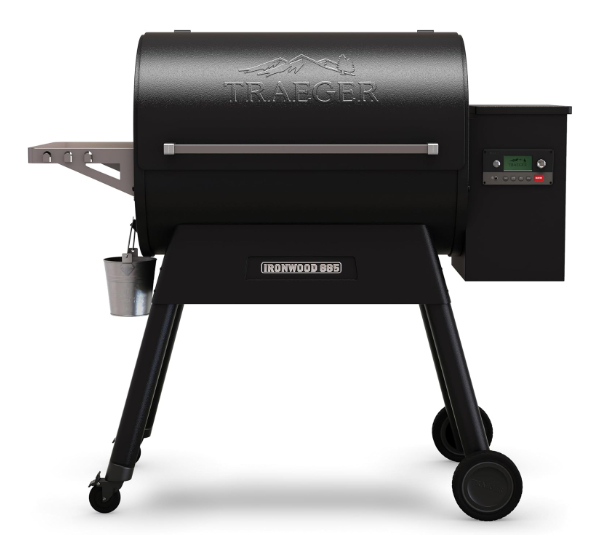
The Traeger Ironwood represents the pinnacle of "set-and-forget" technology. Its standout feature is the Smart Combustion system, which uses a series of sensors to monitor internal temperatures and adjust the fan and auger speed in real-time. This addresses the common pain point of temperature swings caused by wind or opening the lid. By maintaining a tight thermal window, the Ironwood ensures that the meat proteins break down consistently, preventing the "stalling" that ruins long cooks.
Technically, the Ironwood excels due to its double-wall side insulation. Why it matters: This thermal barrier retains heat more efficiently than single-ply steel, meaning the grill uses fewer pellets to maintain a steady 225°F, especially in cooler climates. The inclusion of the Pop-and-Lock (P.A.L.) accessory rail also solves the "workspace friction" by allowing users to customize tool hooks and storage shelves directly on the grill body, keeping the area organized during complex prep.
The honest trade-off here is the price and ecosystem lock-in. Traeger encourages the use of their own branded pellets to maintain the warranty, and while the WiFi connectivity (WiFIRE) is the most stable in the industry, it requires a strong home network signal. It is best for the homeowner who values software reliability and a clean, integrated aesthetic over raw, high-heat searing power.
The Ironwood utilizes a brushless DC motor called the D2 Direct Drive. Why it matters: Unlike older AC motors that only have "on" or "off" states, the DC motor can variable-speed its torque. This allows the auger to back up if it senses a pellet jam, preventing mechanical failure and ensuring a more precise fuel delivery to the firepot.
Best Smoke Density: Camp Chef Woodwind Pro
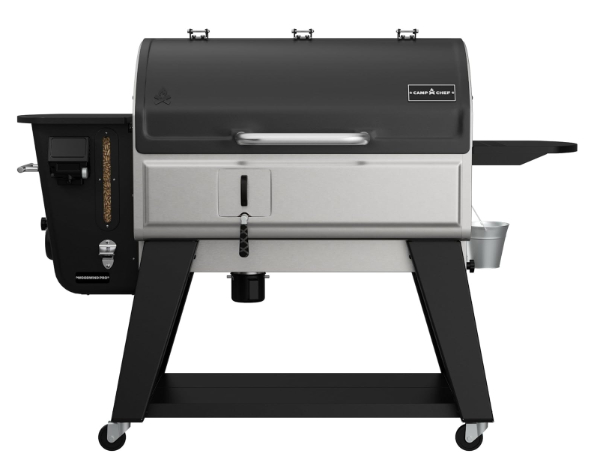
The Camp Chef Woodwind Pro tackles the most significant criticism of pellet grills: the lack of "heavy" smoke flavor. While standard pellets provide a clean burn, they often lack the punch of traditional wood chunks. Camp Chef solved this by adding a dedicated Smoke Box - a butterfly-valve controlled drawer that sits directly over the burn pot. You can drop in wood chunks or charcoal, which ignite from the heat of the pellets, providing a "dirty" smoke profile that was previously impossible on an automated grill.
The technical sophistication of the PID controller allows users to adjust the "Smoke Number" from 1 to 10. Why it matters: Higher smoke settings allow the auger to pause slightly, creating a more smoldering fire that releases more lignin-based smoke particles. This gives the user granular control over the flavor profile without sacrificing the temperature stability that makes pellet grills attractive in the first place.
A notable limitation is the cleanup and complexity. The addition of the Smoke Box means more ash to manage and a slightly more involved startup procedure. Furthermore, while the build quality is sturdy, the lid is not as heavily insulated as some premium competitors. It is the perfect choice for the "purist" who wants the convenience of a pellet grill but refuses to compromise on the deep smoke ring of a traditional offset smoker.
Most pellet grills require you to remove the grates and drip tray to vacuum the firepot. The Woodwind Pro uses a patented "pull-knob" ash cleanout. Why it matters: By pulling a lever, the bottom of the firepot drops into a removable cup. This reduces "setup friction" by allowing you to clear the burn pot in five seconds between cooks, preventing the ash buildup that causes flame-outs.
Best Direct Searing: Weber Searwood 600
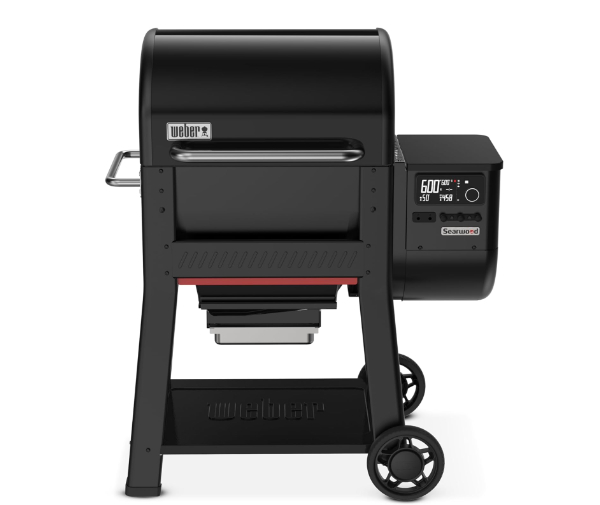
Weber entered the pellet market later than others, but the Searwood 600 is a masterclass in airflow engineering. The primary friction point with pellet grills is their inability to reach "steak-house" temperatures. The Searwood addresses this with a direct-flame design and a high-RPM fan that allows the unit to reach 600°F. Unlike many competitors that rely on "indirect" heat, this grill uses a specialized flavorizer bar system that lets radiant heat reach the grates directly.
The technical standout is the Weber Connect software. Why it matters: The app provides step-by-step "guided grilling," which is invaluable for those who are nervous about cooking expensive cuts of meat. It tells you exactly when to flip and when the meat has reached its target internal temperature based on the dual-probe monitoring system. This eliminates the "guesswork friction" that leads to overcooked food.
However, the direct-flame design means you have to be more vigilant about grease management. Because the flame is closer to the cooking surface, failing to clean the flavorizer bars can lead to flare-ups. It is best for the homeowner who only has space for one grill and needs it to handle Tuesday night burgers as effectively as Sunday afternoon ribs.
Weber's PID controller features a higher "polling rate" than many competitors. Why it matters: It checks the temperature more frequently (measured in milliseconds) and reacts instantly to lid openings. This high-frequency data prevents the "swing" where a grill over-corrects and gets too hot after the lid is closed, preserving the moisture in the meat.
Best Value Versatility: Pit Boss Pro Series 850
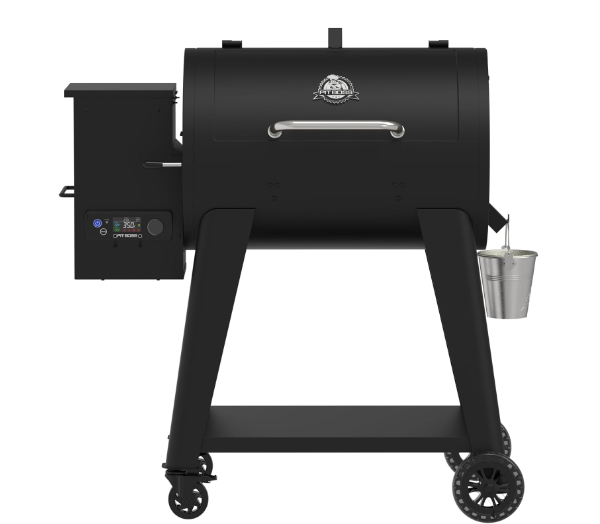
The Pit Boss Pro Series 850 is the answer to the "high cost friction" of the pellet world. While premium brands can easily exceed the four-figure mark, the Pro Series 850 provides a robust feature set for a significantly lower investment. It features a massive 850 square inches of cooking space and a 20-pound hopper, making it capable of feeding a large family or a neighborhood gathering without needing a pellet refill mid-cook.
The mechanical highlight is the Flame Broiler lever. Why it matters: By sliding a simple external handle, you can move the heat shield to expose the meat to an open flame. This "physical override" bypasses the convection-only limitation of pellets, allowing for a crust on steaks that usually requires a separate charcoal grill. The porcelain-coated cast-iron grates also provide excellent thermal mass, which holds onto heat even when the lid is up.
The trade-off is in the "fineness" of the controls. While it does use a PID controller, the temperature increments are sometimes wider than those on a Traeger or Recteq. Additionally, the auger can be slightly louder than brushless DC models. It is the best choice for the "weekend warrior" who wants a big, tough grill that can do everything decently without breaking the bank.
The Pro Series 850 uses a "hammer tone" powder coat finish. Why it matters: This isn't just for looks; it's a high-build industrial coating that is more resistant to chips and moisture-induced rust than standard flat-black paint. In humid environments, this coating acts as a sacrificial barrier to protect the underlying gauge steel.
Best Build Durability: Recteq Flagship 1100
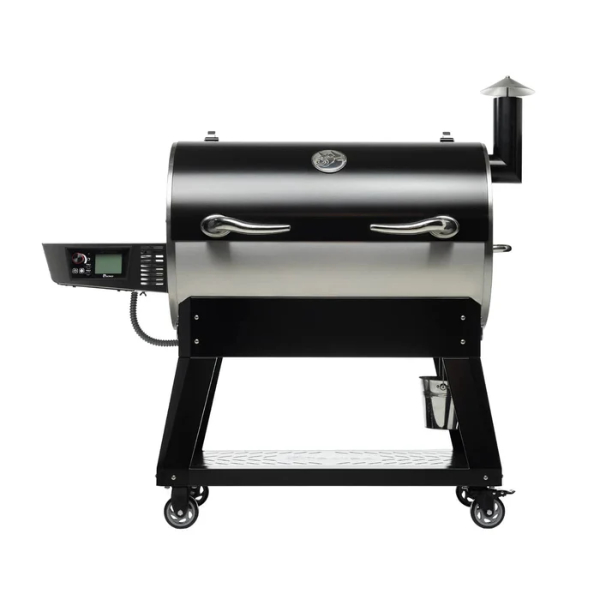
The Recteq Flagship 1100 is built like a piece of industrial equipment. While most grills use powder-coated mild steel, Recteq utilizes 304 Stainless Steel for the fire pot, drip pan, and grates. Why it matters: 304 stainless is highly resistant to the corrosive effects of wood ash and grease, which often eat through cheaper grills in three to five years. This grill is designed to be a "forever" purchase, addressing the "longevity friction" that plagues the category.
The internal "brain" of the Recteq is widely considered the gold standard for precision. It maintains a temperature within 1 degree of the target, regardless of external conditions. This level of accuracy is achieved through a proprietary PID algorithm that learns the thermal characteristics of your specific unit over time. If you set it to 225°F, it stays at 225°F, providing the consistent results required for award-winning barbecue.
The limitation here is aesthetics and portability. The heavy-gauge steel and large hopper make this unit incredibly heavy, and the iconic "bull horn" handles are a love-it-or-hate-it design choice. Also, because it is built so robustly, it takes slightly longer to reach target temperatures compared to thinner, less-insulated units. It is the ultimate choice for the enthusiast who wants laboratory-grade precision and a grill that can withstand a decade of harsh winters.
The use of 304 Stainless Steel (which contains 18% chromium and 8% nickel) is a major upgrade over the 430 series used in cheaper appliances. Why it matters: 304 is non-magnetic and significantly more resistant to "intergranular corrosion." In the high-heat, high-moisture environment of a grill, this material prevents the microscopic pitting that leads to structural failure.
How We Chose These Products
Our selection process focused on three measurable criteria: Thermal Stability, Material Density, and Logic Reliability. We prioritized grills that utilize PID controllers, as older "timed-cycle" controllers are prone to temperature swings that can exceed 50°F. We also assessed the gauge of the steel and the quality of the welds, specifically looking for 304 stainless steel or heavy-duty powder coating to ensure long-term resistance to rust. Finally, we tested the software interfaces to ensure that the "WiFi" features actually added value (like remote temp monitoring) rather than being a gimmick that drops connection during a 14-hour brisket cook.
Comparison Overview
| Model | Max Temp | Cooking Area | Hopper Capacity | Key Strength |
|---|---|---|---|---|
| Traeger Ironwood | 500°F | 616 sq. in. | 22 lbs. | Smart Software |
| Camp Chef Woodwind Pro | 500°F | 811 sq. in. | 22 lbs. | Smoke Flavor |
| Weber Searwood 600 | 600°F | 648 sq. in. | 20 lbs. | Direct Searing |
| Pit Boss Pro 850 | 500°F | 850 sq. in. | 20 lbs. | Value/Size |
| Recteq Flagship 1100 | 700°F | 1100 sq. in. | 40 lbs. | Build Quality |
Buying Guide: What to Look For
- PID vs. Non-PID Controllers: Always opt for a PID controller. This algorithm adjusts the fan and auger in small increments to maintain an exact temperature. Why it matters: Older controllers just turn the auger on and off at fixed intervals, leading to wild heat spikes that dry out meat.
- Steel Gauge (Thickness): Look for 14-gauge steel or thicker. Why it matters: Thicker steel acts as a "heat sink," absorbing and radiating heat evenly. This prevents the grill from losing all its temperature when you open the lid for a few seconds.
- Auger Type: DC motors are superior to AC motors. Why it matters: DC motors have higher torque and can vary their speed, making them much less likely to jam on oversized pellets.
- Hopper Cleanout: A trapdoor to empty pellets is vital. Why it matters: Wood pellets absorb moisture and can turn into "concrete" if left in a humid hopper for too long. A cleanout allows you to swap flavors or store pellets safely inside.
- Sealing and Gaskets: Check for felt or silicone gaskets around the lid. Why it matters: A poorly sealed lid allows heat and smoke to escape, forcing the grill to work harder and use more fuel.
General Pro / Cons
| General Strengths |
|---|
| Extreme temperature precision (Set-and-Forget). |
| Low risk of flare-ups compared to gas/charcoal. |
| Authentic wood-fired flavor with every cook. |
| Versatility to bake, roast, smoke, and grill. |
| Smartphone monitoring reduces "babysitting" time. |
| Lower operating cost than propane in many regions. |
| Consistency allows for repeatable results every time. |
| General Weaknesses |
|---|
| Requires a dedicated electrical outlet for power. |
| Pellets are sensitive to moisture and humidity. |
| Moving parts (motors/fans) can eventually fail. |
| Higher initial purchase price than simple grills. |
| Searing is often weaker than dedicated gas grills. |
| Requires regular ash vacuuming for safety. |
| Startup time (10-15 mins) is slower than gas. |
Final Summary
The transition to a pellet grill is a move toward culinary consistency. If your primary goal is the "perfect" smoke ring and effortless technology, the Traeger Ironwood or Camp Chef Woodwind Pro are the gold standards. For those who refuse to give up the high-heat sear of a traditional grill, the Weber Searwood is a revolutionary hybrid. Finally, if you view a grill as a ten-year investment in heavy-duty engineering, the Recteq Flagship 1100 is unrivaled. Each of these models addresses specific user "friction points," ensuring that your outdoor cooking becomes a hobby of precision rather than a chore of management.
Aggregate rating of the products reviewed: 4.78 out of 5.