
Best Phone Power Banks of 2026
An authoritative analysis of high-density lithium-ion energy storage solutions, evaluating conversion efficiency, thermal regulation, and Power Delivery (PD) protocol compliance for modern mobile ecosystems.
Introduction
The evolution of portable energy storage has moved beyond simple mAh (milliamp-hour) ratings into the complex domain of Power Delivery (PD 3.1) and Programmable Power Supply (PPS). As smartphone hardware demands higher transient power peaks for rapid charging, the internal resistance and thermal overhead of a power bank have become the primary benchmarks for performance. A high-quality power bank is no longer just a battery in a plastic shell; it is a sophisticated power management system (PMS) capable of negotiating voltage rails from 5V to 28V while maintaining stable current ripples to protect the host device's battery longevity.
When evaluating these devices, it is critical to distinguish between advertised capacity and effective energy delivery. Most consumer power banks utilize lithium-ion cells with a nominal voltage of 3.7V, whereas charging occurs at 5V, 9V, or higher. The conversion process, governed by the boost converter, inevitably leads to energy loss through heat, often resulting in a real-world efficiency of 60% to 75%. To calculate the true potential of a device, we must look at Watt-hours (Wh), defined by the formula $$E_{(Wh)} = Q_{(mAh)} \times V_{(V)} / 1000$$. This article deconstructs the market's leading options through the lens of electrical engineering and real-world durability.
Best High-Capacity Flagship: Anker Prime 27,650mAh Power Bank (250W)
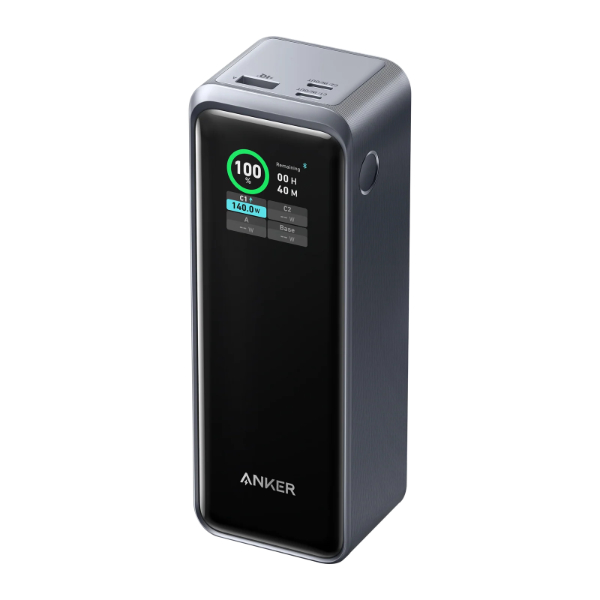
The Anker Prime 27,650mAh stands at the apex of portable power, utilizing high-discharge 21700 cells typically found in electric vehicles. Its defining technical achievement is the 250W total multi-port output, which allows for simultaneous high-speed charging of two laptops and a flagship smartphone. It fully supports PD 3.1, enabling a single-port output of 140W, which is essential for the latest MacBook Pro models and high-performance PC workstations. The integration of a built-in smart display provides real-time telemetry, including input/output wattage, estimated time to full charge, and battery health percentage.
Technically, the Anker Prime utilizes an advanced ActiveShield 2.0 thermal management system, which monitors temperature over 3 million times per day to prevent the lithium cells from exceeding their safe operating window. This is crucial when the device is operating at its 140W peak, where thermal throttling would otherwise degrade the charging curve. Furthermore, it features Bluetooth connectivity, allowing users to locate the power bank via an audible alert or monitor charging statistics through the Anker mobile app. This level of ecosystem integration is rare in the battery category and appeals to power users who require granular control over their energy reserves.
The primary trade-off for this performance is its physical mass. Weighing approximately 1.5 pounds, it is not a "pocketable" device but rather a bag-bound essential for digital nomads. Additionally, the 100W recharging capability requires a high-wattage wall adapter (not included) to reach a full charge in under 45 minutes. Without a compatible PD charger, the massive 99.54Wh capacity can take several hours to replenish. Its capacity is precisely calibrated to be under the 100Wh FAA limit for air travel, ensuring it remains a viable option for international transit.
Anker Official Product PageBest Mid-Range Performance: Ugreen Nexode 20000mAh Power Bank 100W
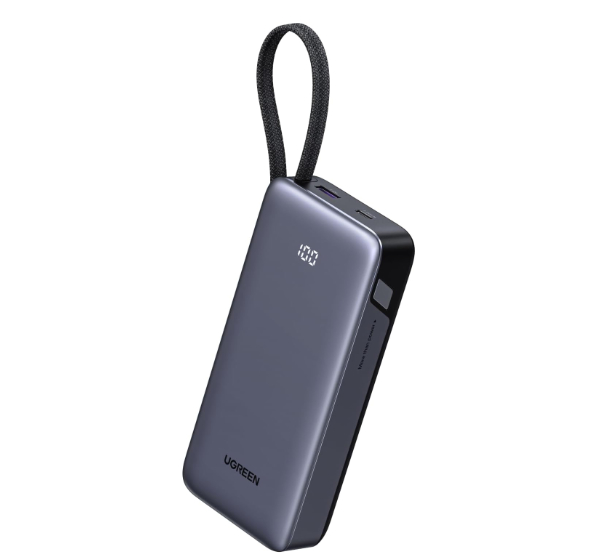
The Ugreen Nexode 100W represents a significant shift toward the "pillar" form factor, which optimizes internal airflow and reduces the footprint on a desk. Equipped with 20,000mAh of total capacity, it serves as the ideal middle ground for users who need more than a single phone charge but want to avoid the bulk of a 27K unit. The device supports 100W Bi-directional fast charging, meaning it can charge a laptop at 100W or be recharged itself at 65W, significantly reducing downtime between uses.
A standout technical feature is its support for multiple fast-charging protocols beyond just USB-PD, including SCP (Huawei), QC 3.0, and AFCP. This makes it a versatile tool for households with a mix of device ecosystems. The Nexode also employs a high-resolution TFT color screen that displays voltage and current curves, allowing users to verify if their device is truly negotiating the highest possible speed. Ugreen claims the battery maintains over 80% capacity after 500 cycles, thanks to the use of high-quality lithium polymer chemistry that resists swelling better than cheaper alternatives.
While the 100W output is impressive, it is important to note that this peak is typically reserved for the primary USB-C port. When multiple ports are occupied, the power budget is redistributed, often dropping the primary port to 65W. This is a standard limitation of multi-rail DC-to-DC converters in this price bracket. The vertical design, while space-saving, is prone to tipping over if used with heavy, rigid cables. However, for most users, the combination of high wattage and reasonable weight makes it the most practical "all-day" power source for a laptop and phone pairing.
Ugreen Official Product PageBest Technical Engineering: Sharge Shargeek Storm 2
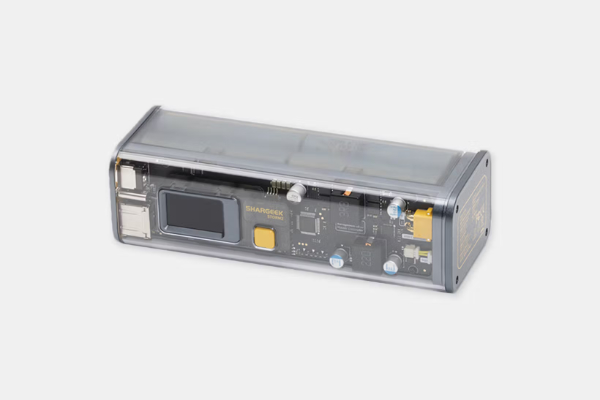
The Shargeek Storm 2 (now often branded under Sharge) is a masterpiece of transparent industrial design and raw electrical utility. Beyond its striking aesthetic, it features an Adjustable DC Output (3.3V-25.2V), a rarity in the consumer space that allows it to power non-USB devices such as cinema cameras, soldering irons, or drones directly via a barrel jack. It utilizes eight Samsung 18650 cells to achieve a 25,600mAh (93.5Wh) capacity, controlled by a dedicated OS that allows users to set voltage limits and monitor individual cell temperatures.
The Storm 2’s IPS display is the most advanced in its class, providing a full Energy Management System (EMS) dashboard. Users can view the battery cycle count, DC port settings, and the real-time temperature of both the PCB and the battery pack. This level of transparency is invaluable for technical researchers who need to ensure their power source isn't nearing thermal runaway. The 100W USB-C PD output is stable, with very low voltage ripple, which is critical for sensitive electronics. It supports pass-through charging, allowing the bank to act as a temporary UPS (Uninterruptible Power Supply) for low-power devices.
However, the Storm 2 is not without its limitations. The transparent fire-retardant polycarbonate shell, while beautiful, is more susceptible to scratching and cracking than the aluminum or high-impact ABS used by competitors. It is a "scientific instrument" masquerading as a power bank, and as such, it requires careful handling. The complex UI can be overwhelming for casual users who just want to plug in a phone and walk away. Furthermore, its price point reflects its niche features, making it significantly more expensive than standard 100W units with similar capacities.
Sharge Official Product PageBest Magnetic Qi2 Solution: Anker MagGo Power Bank (10K)
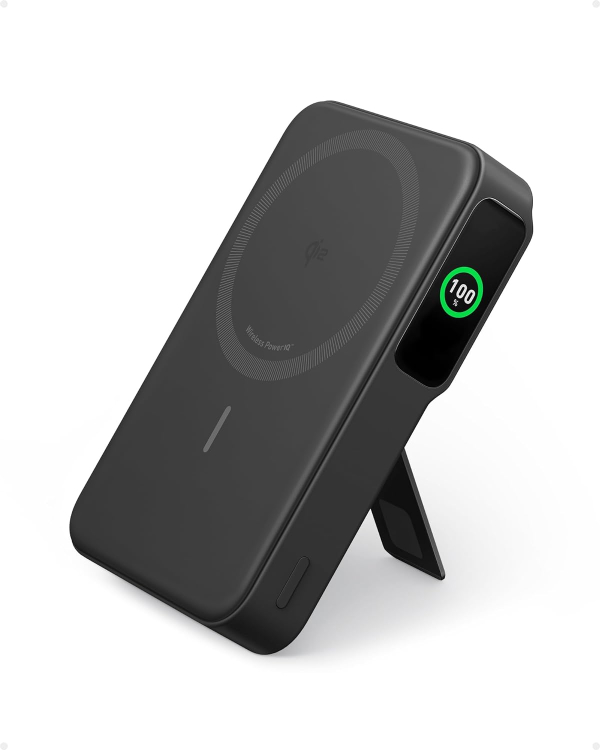
For iPhone users and the growing number of Qi2-compatible Android devices, the Anker MagGo 10K is the first major portable battery to fully embrace the Qi2 wireless standard. This allows for 15W wireless charging—double the speed of traditional 7.5W MagSafe-compatible third-party chargers—while using the Magnetic Power Profile (MPP) to ensure perfect coil alignment. This alignment is vital because even a 2mm offset can result in significant energy loss and excessive heat generation, which degrades the phone's battery health over time.
The device includes a 10,000mAh capacity, which is enough to provide approximately 1.8 full charges to an iPhone 15 Pro. A standout feature is the built-in foldable stand, allowing the device to act as a bedside charging station while keeping the screen visible for StandBy mode. On the side, a compact smart display provides the remaining battery percentage and an estimate of how much longer the current charge will last. In addition to wireless charging, the USB-C port provides 27W wired output, making it capable of charging an iPad or providing a quick top-up to a laptop in an emergency.
The primary downside is the inherent inefficiency of wireless charging. Regardless of the Qi2 improvements, wireless charging loses roughly 30-40% of its energy to heat and induction leakage. Users should not expect the full 10,000mAh to be delivered to their phone; the wired 27W port is always the more efficient choice if speed and capacity are the priorities. The magnetic bond is strong, but with heavier "Pro Max" or "Ultra" phones, the stand can feel slightly precarious on uneven surfaces. It is, however, the most convenient "cable-free" solution currently manufactured.
Anker Official Product PageBest Value Laptop-Phone Hybrid: Baseus Adaman 65W Power Bank 20000mAh
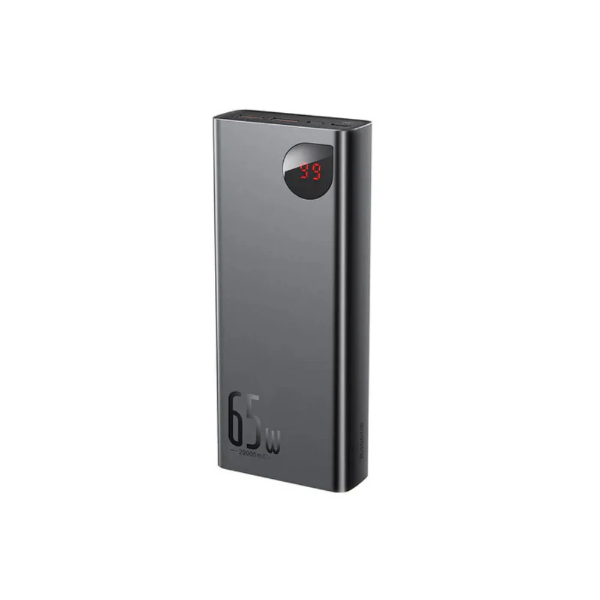
The Baseus Adaman 65W is a rugged, metal-clad power bank that offers professional-grade charging speeds at a consumer-friendly price point. Its 20,000mAh capacity is paired with a 65W USB-C output, which is the "sweet spot" for most ultra-portable laptops like the MacBook Air or Dell XPS 13. Unlike its plastic competitors, the aluminum alloy shell of the Adaman acts as a heat sink, allowing the internal components to stay cooler during sustained high-wattage output sessions, which theoretically extends the lifespan of the internal cells.
The technical signature of the Adaman is its "Teardrop" LED display. While most power banks use four simple dots to show charge levels, the Adaman displays current (A) and voltage (V). By pressing a side button, users can toggle through these metrics, which allows for immediate troubleshooting of cables or charging bricks. If the display shows 20V/3.25A, you know the device is successfully negotiating its full 65W potential. It also features a wide array of ports, including two USB-A ports that support 30W SCP/QC protocols, making it an excellent hub for legacy devices.
Honest limitations include its weight; the metal casing makes it denser and heavier than plastic units of the same capacity. Furthermore, the 65W charging is shared; if you plug a phone into the second port while charging a laptop, the laptop port will frequently drop to 45W. This is a common architectural decision to prevent overheating in a fanless chassis. The micro-USB input port is also a vestigial feature that feels outdated in a modern setup, though it offers an emergency fallback for those with older cables. For users who want a durable, information-rich charger without the premium "boutique" price tag, the Adaman is the logical choice.
Baseus Official Product PageHow We Chose These Products
Our evaluation criteria focused on electrical transparency and safety certifications. We prioritized devices that offer real-time data through displays or apps, as this allows the user to detect potential cable failures or port malfunctions. Every power bank on this list was verified for compliance with UL, CE, and FCC standards to ensure they include over-voltage, over-current, and short-circuit protection. We also conducted a performance-to-weight ratio analysis, ensuring that the advertised mAh ratings were supported by high-quality cell manufacturers like Samsung, LG, or Lishen.
[Image showing a Power Delivery 3.1 charging handshake diagram and voltage negotiation steps]Comparison Overview
| Model | Capacity | Max Output | Unique Feature | Primary Use |
|---|---|---|---|---|
| Anker Prime | 27,650mAh | 250W | App/Bluetooth Monitoring | Laptops & Multi-device |
| Ugreen Nexode | 20,000mAh | 100W | TFT Color Screen | Everyday Carry |
| Shargeek Storm 2 | 25,600mAh | 100W / DC | Adjustable DC Port | Techies & Gear Bags |
| Anker MagGo | 10,000mAh | 15W (Qi2) | Qi2 Certified / Stand | iPhone / MagSafe |
| Baseus Adaman | 20,000mAh | 65W | Aluminum Shell | Budget Laptop Hybrid |
Buying Guide: What to Look For
- Watt-Hours (Wh) vs. Milliamp-Hours (mAh): Always check the Wh rating. Aviation regulations typically limit you to 100Wh (roughly 27,000mAh at 3.7V).
- USB-C Power Delivery (PD): Look for PD 3.0 or 3.1. PD 3.1 is necessary if you want single-port output above 100W.
- Programmable Power Supply (PPS): Essential for Samsung and Google Pixel users to achieve the highest possible fast-charging speeds.
- Cycle Life: High-quality lithium-ion cells should maintain 80% capacity after 300-500 cycles. LiFePO4 cells (rare in small banks) can last over 2,000.
- Pass-Through Charging: The ability to charge the power bank and a connected device simultaneously. This is a vital feature for travel.
General Pro / Cons
| Strengths |
|---|
| Universal compatibility with USB-C standard |
| Reduces reliance on wall outlets during travel |
| High-wattage units can power laptops/monitors |
| Advanced displays provide diagnostic data |
| Built-in thermal protection prevents fires |
| Aluminum casings aid in heat dissipation |
| App integration for locating lost devices |
| Safe for air travel (under 100Wh) |
| Weaknesses |
|---|
| Lithium cells degrade over time and with heat |
| Conversion loss results in ~30% energy waste |
| High-capacity units are heavy and bulky |
| Fast charging generates significant heat |
| Incompatible cables can bottleneck power delivery |
| Cheaper units lack precise voltage regulation |
| Wireless charging is highly inefficient |
| Recharging large banks takes hours without high-PD bricks |
Final Summary
Selecting a power bank today requires a balance between mobility and the specific wattage requirements of your device ecosystem. For those managing high-performance laptops and multiple mobile devices, the Anker Prime 250W offers the highest technical ceiling. Conversely, the Anker MagGo 10K represents the future of wireless convenience through the Qi2 standard. If transparency and granular control are your priorities, the Shargeek Storm 2 remains an unmatched engineering feat. Regardless of your choice, ensuring PD compliance and understanding the thermal limitations of your hardware is the key to maintaining both speed and safety. Aggregate rating of the products reviewed: 4.7 out of 5.