
Best Pizza Ovens of 2026
Achieving the perfect Neapolitan char requires temperatures that standard kitchen ranges simply cannot reach. We have vetted the top-performing portable and stationary ovens to find the machines that balance thermal mass with user-friendly fuel management.
Introduction
The gap between a "good" home pizza and a "great" pizzeria-quality pie usually comes down to 400 degrees. Most domestic ovens max out at 500�F, which bakes dough rather than searing it. Professional-grade pizza ovens utilize specialized burners and thick ceramic stones to reach 950�F (500�C), enabling the "Leopard spotting" and airy crust structure that defines authentic Neapolitan style. However, high heat brings high friction: fuel management, stone recovery times, and the learning curve of a 60-second bake can be intimidating for beginners.
When selecting an oven, the primary decision rests on fuel type and thermal capacity. Gas offers the "set it and forget it" convenience of a backyard grill, while wood provides the traditional smoky profile and a more hands-on experience. We have focused our selection on ovens that demonstrate superior insulation. An oven that can reach 900�F is useless if it loses 200 degrees the moment you launch a cold pizza. These picks were chosen for their ability to maintain "stone saturation" - the technical term for a base that stays hot enough to crisp the bottom of the dough instantly.
Best for Gas Convenience: Ooni Koda 16
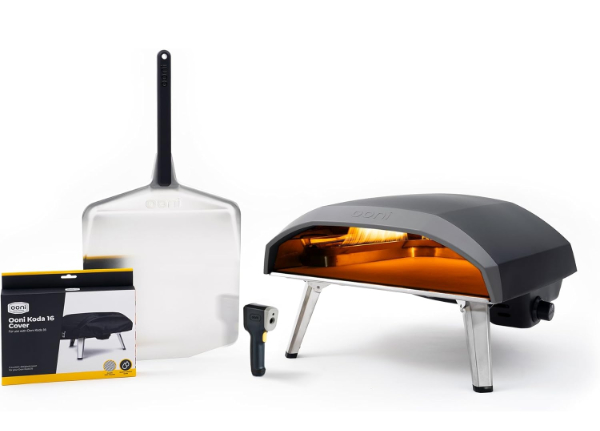
The Ooni Koda 16 is widely considered the benchmark for consumer gas-powered ovens due to its unique L-shaped burner architecture. This design creates a "waterfall" of flame that covers two sides of the pizza simultaneously, reducing the frequency of turns required during the bake. For a beginner, this is a massive benefit; it provides a more forgiving environment where you are less likely to burn one side of the crust while the other remains raw.
Technically, the Koda 16 excels in its power-to-weight ratio. Despite its large 16-inch cooking surface, the oven is surprisingly portable, featuring folding legs and a powder-coated carbon steel shell that retains heat effectively. The 15mm cordierite stone is thick enough to handle back-to-back bakes without significant temperature drops, provided you give it a few minutes of "recovery time" between pies. This makes it the ideal workhorse for backyard parties where speed and volume are the priority.
The trade-off for this convenience is the lack of a door. Because the front is permanently open to allow for oxygen intake and easy access, the oven is susceptible to wind. On a gusty day, the internal temperature can fluctuate, requiring a bit more vigilance with the gas dial. It is an ecosystem-focused product, designed to work seamlessly with Ooni's proprietary peels and covers, but its standard 28 mbar gas connection means it works with any standard propane tank right out of the box.
The Koda 16 uses an 8.49kWh gas burner. Why it matters: Most ovens have a single rear burner, forcing you to rotate the pizza 180 degrees perfectly. The L-shape provides multi-directional convective heat, meaning you only need to make small 90-degree turns. This results in a more even "rise" or "cornicione" around the entire circumference of the dough.
Best for Durability: Gozney Roccbox
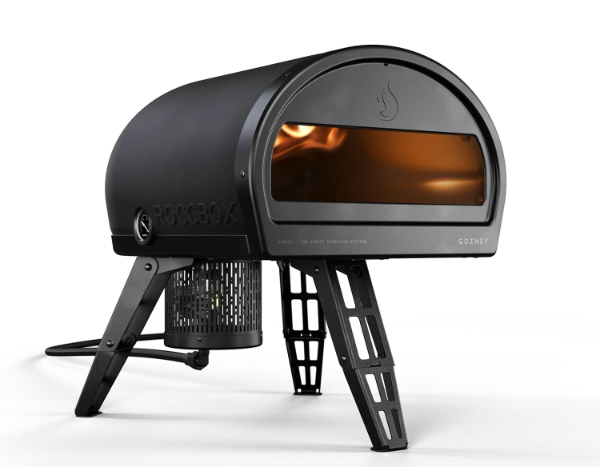
The Gozney Roccbox is the "tank" of the portable pizza oven world. While other brands prioritize lightweight materials, Gozney emphasizes professional-grade insulation. The oven features a calcium silicate insulation layer and a high-grade silicone "Safe-Touch" jacket. For the user, this means the outside of the oven is significantly cooler to the touch than its competitors, a critical safety feature if you have children or pets nearby while cooking at 950�F.
Technically, the Roccbox stands out for its "Rolling Flame" technology. The burner is engineered to mimic the flame of a wood-fired floor oven, arching the fire across the ceiling of the dome. This maximizes radiant heat, ensuring that toppings cook at the same rate as the crust. It also comes with both a gas burner and a detachable wood burner as standard, offering a level of out-of-the-box versatility that usually requires an extra purchase with other brands.
The honest downside is its size and weight. The 12-inch cooking surface is restrictive if you prefer large, New York-style pies, and at nearly 44 lbs, it is "portable" only in the sense that it has a handle and folding legs. You won't want to carry it far from the car. However, for those who want a commercial-quality bake in a compact, indestructible frame, the Roccbox is virtually peerless.
The Roccbox uses a dense layer of calcium silicate between its inner and outer shells. Why it matters: This material has incredibly low thermal conductivity. It keeps the heat trapped inside the dome, allowing the stone to reach 950�F in as little as 20 minutes and keeping it there, even after you launch a cold, heavy pizza.
Best Multi-Fuel Versatility: Ooni Karu 16
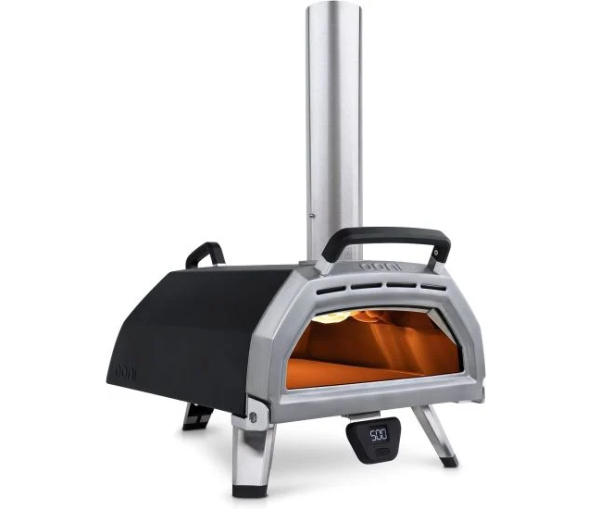
The Ooni Karu 16 is the first home pizza oven to be "Recommended for Domestic Use" by the Associazione Verace Pizza Napoletana (AVPN). This is a significant technical endorsement, signifying that the oven can maintain the specific thermal conditions required for true Neapolitan pizza. Its primary innovation is the "ViewFlame" glass door, which uses airflow technology to stay clear even when burning wood or charcoal. This allows you to monitor your pizza without opening the door and losing vital heat.
The Karu 16 is a true multi-fuel machine. Out of the box, it is optimized for wood and charcoal, providing that authentic high-heat char and subtle smoke flavor. With an optional gas burner attachment, it converts to propane in seconds. The internal ceiling is higher than the Koda series, which improves airflow and allows for roasting larger items like cast-iron steaks or whole vegetables. This versatility transforms it from a single-purpose pizza tool into a genuine outdoor oven.
However, the Karu 16 represents a significant investment in both cost and space. It is much larger than the Koda 16 and requires a dedicated, sturdy table. The assembly is also more complex due to the chimney and door components. This is the oven for the "prosumer" who enjoys the ritual of fire management but wants the safety net of a digital thermometer and a gas backup for busy weeknights.
The AVPN requires ovens to hit 485�C (905�F) and bake a pizza in 60-90 seconds. Why it matters: The Karu 16 achieves this through a specialized chimney baffle that controls the "draw" of oxygen. It ensures the flame "licks" the top of the pizza rather than just sitting at the back, creating the essential top-down radiant heat.
Best Indoor Electric: Breville Smart Oven Pizzaiolo
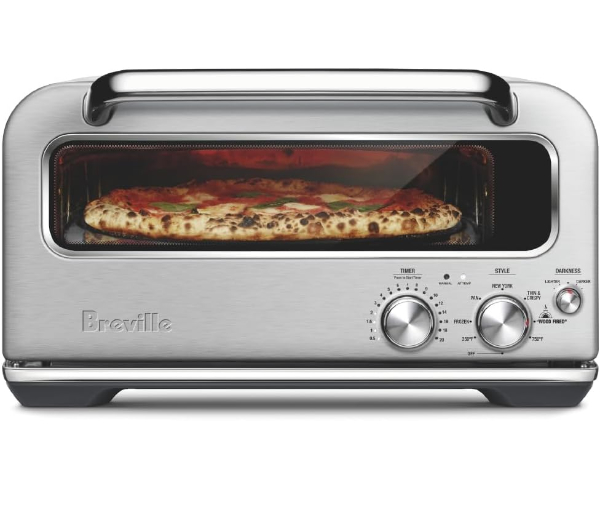
The Breville Pizzaiolo is a technical marvel that solves the "apartment dweller" problem. Most indoor electric ovens are incapable of reaching the temperatures needed for pizza, but the Pizzaiolo uses specialized heating elements to hit 750�F (400�C) while remaining safe for kitchen countertop use. It mimics the three types of heat found in a brick oven: conductive (from the stone), radiant (from the top elements), and convective (from the air movement within the small cavity).
The "Smart" in the name refers to Breville’s Element IQ system. This protocol automatically adjusts which heating elements are active based on the style of pizza you select (Neapolitan, Thin & Crispy, Pan, etc.). For a user who doesn't want to learn the physics of fire, this machine is a dream. You simply turn a dial, wait for the "ready" beep, and launch your pizza. It is the most consistent oven on our list because it removes the variables of wind, ambient temperature, and fuel quality.
The limitation is primarily the maximum pizza size (12 inches) and the high price for a single-purpose kitchen appliance. It also lacks the "smoky" depth of a wood-fired oven. However, if you live in a climate where outdoor cooking is impossible for six months of the year, or if you simply prefer the comfort of your kitchen, this is the only electric oven that delivers a "real" charred crust.
The Pizzaiolo uses 1800W of power distributed across three PID-controlled elements. Why it matters: A PID controller monitors the temperature hundreds of times per second. Unlike a standard oven that fluctuates wildly, the Breville stays within a few degrees of its target, ensuring the bottom of your pizza doesn't burn before the cheese melts.
Best Luxury Performance: Gozney Dome S1
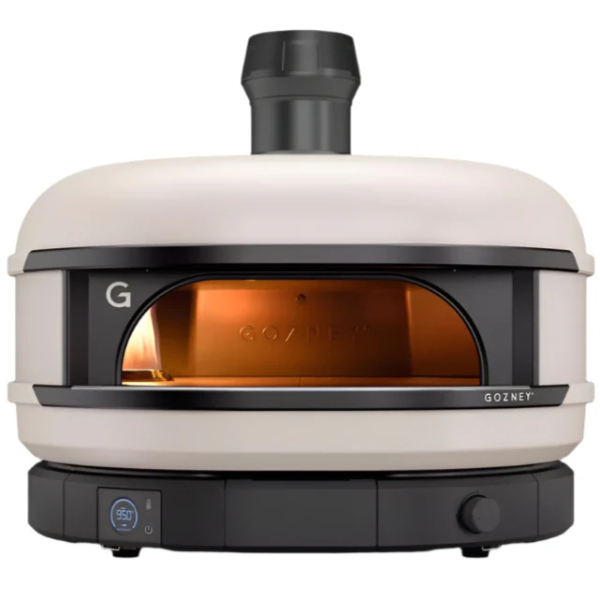
The Gozney Dome S1 is a streamlined version of the original Dome, focusing purely on high-performance gas cooking. It is designed for those who want a permanent outdoor kitchen centerpiece. The most striking technical feature is the 30mm double-layered stone floor. This is nearly double the thickness of standard portable ovens, providing an enormous amount of thermal mass. Once this oven is hot, it stays hot, allowing you to cook 20+ pizzas in a row with virtually no recovery time.
The S1 features a high-fidelity digital thermometer and an extra-wide mouth, which makes launching and turning pizzas much easier for beginners. The internal dome shape is engineered to maximize the "Coanda effect," where the flame follows the curve of the ceiling perfectly. For the user, this means more efficient fuel use and a more even radiant heat distribution. It’s an oven that feels "roomy" - you have space to move the pizza away from the flame if the crust is browning too quickly.
The friction point is its weight and lack of versatility compared to the multi-fuel Dome. At over 100 lbs, this is a permanent installation. You need a dedicated stand and ideally a second person to help move it. It is also significantly more expensive than the Ooni Koda 16. However, if you are building an outdoor living space and want the absolute best-performing gas oven that looks as good as it cooks, the Dome S1 is the professional's choice.
Standard stones are 10-15mm. The S1 uses 30mm of cordierite. Why it matters: Thermal mass is like a battery for heat. A thicker stone stores more energy, meaning the temperature doesn't "crash" when a room-temperature dough is placed on it. This is the secret to a crispy, non-soggy bottom in a 90-second bake.
How We Chose These Products
Our evaluation process centered on three primary metrics: Thermal Recovery Time, Ease of Rotation, and Portability vs. Stability. We specifically excluded "oven inserts" or cheap single-walled steel ovens that fail to maintain the 800�F+ threshold required for authentic crust development. Every product selected has a verifiable manufacturer warranty and a robust ecosystem of third-party testing from culinary professionals. We prioritized ovens that utilize Cordierite stone, as its thermal shock resistance is superior to standard ceramic or clay floors in outdoor environments.
Comparison Overview
| Model | Fuel Type | Max Temp | Pizza Size | Primary Strength |
|---|---|---|---|---|
| Ooni Koda 16 | Gas | 950�F | 16" | Easiest 16" Bake |
| Gozney Roccbox | Gas/Wood | 950�F | 12" | Indestructible Build |
| Ooni Karu 16 | Multi-Fuel | 950�F | 16" | Versatility & View |
| Breville Pizzaiolo | Electric | 750�F | 12" | Indoor Consistency |
| Gozney Dome S1 | Gas | 950�F | 16" | High Thermal Mass |
Buying Guide: What to Look For
- Stone Thickness: Look for at least 15mm of cordierite. Thinner stones lose heat too quickly, leading to "soggy bottom" syndrome during back-to-back bakes.
- Fuel Flexibility: Gas is best for weeknights; wood is best for flavor-chasers. If you are undecided, a multi-fuel oven like the Karu 16 is a safer long-term investment.
- Internal Height: A low-ceiling oven is great for pizza but terrible for anything else. A taller dome (like the Gozney Dome) allows for roasting chicken or baking sourdough.
- Weight and Footprint: Ensure your outdoor table can handle the weight. An oven like the Dome S1 requires a specialized stand, whereas a Koda 16 can sit on a standard folding table.
- Recovery Time: Check how long the oven takes to return to 900�F after a pizza is removed. Professional-grade ovens should recover in 3-5 minutes.
General Pro / Cons
| Top Strengths |
|---|
| 950�F capability allows for 60-second bakes. |
| High-quality cordierite stones resist cracking from thermal shock. |
| Gas models provide instant heat control and minimal cleanup. |
| Modern insulation allows ovens to reach temp in under 20 mins. |
| Multi-fuel options provide a "safety net" for long parties. |
| Powder-coated shells protect against outdoor rust and weather. |
| Honest Weaknesses |
|---|
| Significant learning curve; first-time users often burn dough. |
| Propane models require a steady supply of gas and a heavy tank. |
| Wood-fired models require constant attention to air dampers. |
| 16-inch models have a large footprint and are hard to store. |
| Indoor electric models are significantly more expensive than gas. |
| High-end models (Gozney Dome) are heavy and non-portable. |
Final Summary
Transitioning to a dedicated pizza oven is the single most significant upgrade a home cook can make to their culinary repertoire. For the vast majority of users, the Ooni Koda 16 offers the perfect balance of size, ease of use, and heat distribution. Those prioritizing longevity and safety will find the Gozney Roccbox to be an heirloom-quality tool. If you require the ultimate in flexibility and don't mind the footprint, the Ooni Karu 16 is a professional's dream, while the Breville Pizzaiolo remains the only viable high-heat solution for indoor living. Finally, for the ultimate outdoor kitchen build, the Gozney Dome S1 provides industrial-level thermal stability that cheaper portables cannot match. Aggregate rating of the products reviewed: 4.78 out of 5.