
Best Pod Coffee Makers: A Technical Analysis of Extraction Efficiency of 2026
An in-depth evaluation of the engineering, thermal stability, and pressure dynamics defining modern single-serve brewing systems.
Introduction
The evolution of pod-based coffee systems has transitioned from simple convenience to sophisticated fluid dynamics and thermal engineering. Modern machines must balance the precise temperature requirements of Arabica and Robusta blends - typically between 195°F and 205°F - while managing rapid heat-up times through high-efficiency thermoblock systems. Unlike traditional drip carafes, pod systems utilize varying extraction methods, ranging from high-pressure 19-bar pumps to centrifugal force, each dictating the resulting TDS (Total Dissolved Solids) and crema quality.
When selecting a system, the primary technical considerations involve the machine's ability to maintain thermal stability across back-to-back brewing cycles and the sophistication of its puncture and saturation mechanics. While the "pod" itself acts as a pressurized brewing chamber, the machine's internal circuitry controls the flow rate and pre-infusion timing, critical variables that prevent over-extraction and bitterness. This guide dissects five leading platforms to determine which engineering approach yields the most consistent cup profile.
Best for Large Format Coffee: Nespresso VertuoPlus
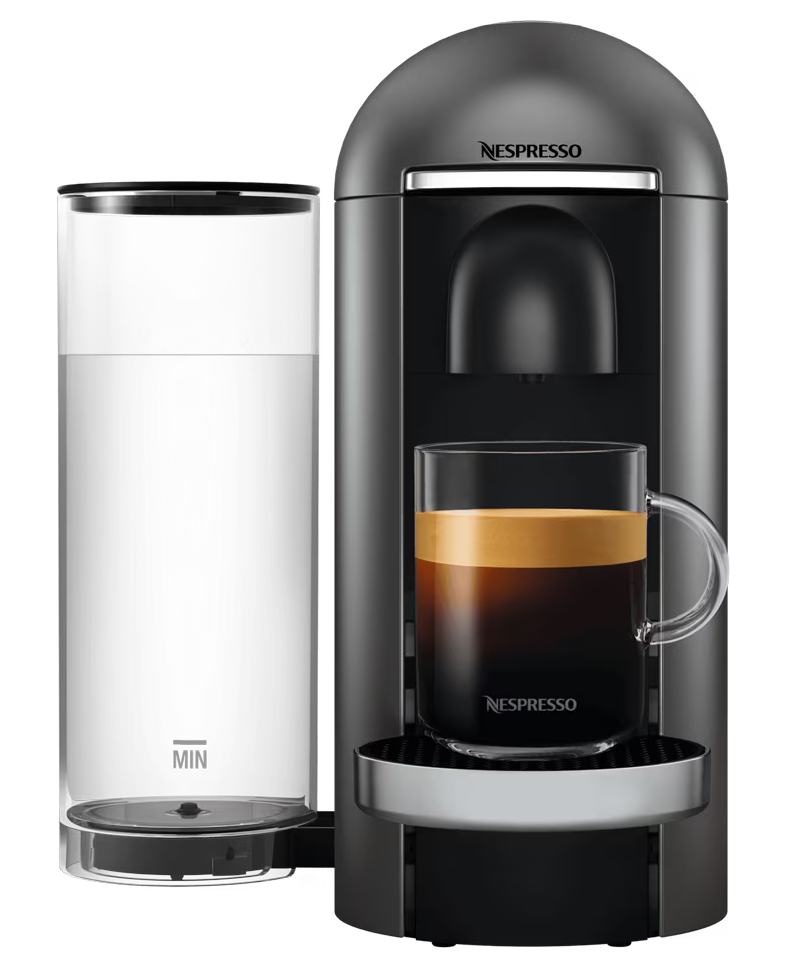
The Nespresso VertuoPlus utilizes a proprietary "Centrifusion" technology that departs from traditional pressure-driven extraction. Upon inserting a barcode-equipped capsule, the machine’s optical reader identifies the specific blend and adjusts five brewing parameters: flow rate, water temperature, infusion time, rotational speed, and volume. The capsule is spun at up to 7,000 RPM, forcing water through the coffee grounds to extract a deep, silky crema that is significantly more voluminous than standard drip coffee.
Technically, the VertuoPlus excels in its motorized brewing head and adjustable water tank, which enhances countertop ergonomics without sacrificing the 40-ounce reservoir capacity. The system’s barcode logic ensures that even larger 8-ounce or 12-ounce pours maintain a consistent flavor profile, preventing the "watered down" effect common in less sophisticated machines. It is the ideal choice for users who prefer mug-sized coffee but desire the textural complexity of espresso-style extraction.
The primary limitation is the ecosystem lock-in; Vertuo capsules are patented and not available from third-party manufacturers, leading to a higher long-term cost per cup. Additionally, the Centrifusion process produces a "cooler" crema compared to high-pressure systems, as the high-speed rotation introduces more air into the liquid. This may require users to pre-warm their cups to maintain optimal consumption temperatures.
Unlike 19-bar static pressure, Centrifusion relies on centrifugal force to create a pressure gradient from the center of the capsule to the outer rim. This results in a unique "double-layer" extraction where the oils are emulsified into a dense foam (crema) while maintaining a high clarity of flavor in the liquid body beneath.
Best for Volume and Variety: Keurig K-Elite
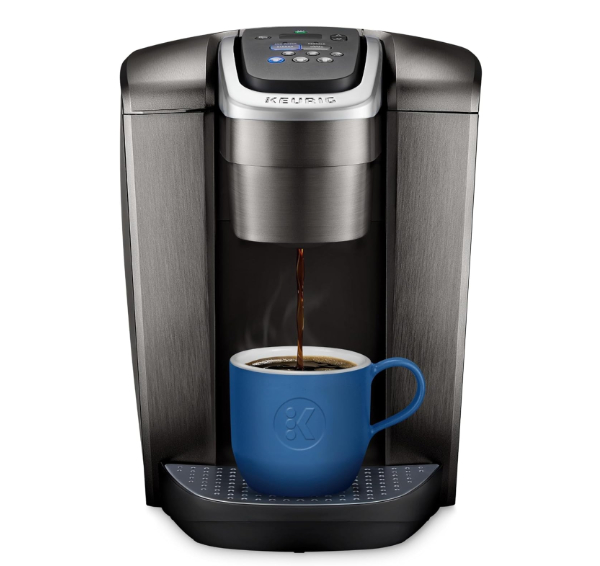
The Keurig K-Elite is engineered for high-throughput environments, featuring a 75-ounce water reservoir that minimizes downtime between refills. Its technical centerpiece is the "Strong Brew" setting, which modifies the pulse-brewing cadence to increase the contact time between water and coffee grounds. This results in a higher concentration of coffee solubles, addressing the historic criticism that K-Cup systems produce a weak brew. The unit also includes a dedicated "Iced" button, which optimizes the initial extraction temperature to prevent excessive ice melt during the pour.
The K-Elite stands out for its temperature customization, allowing users to adjust the brew heat between 187°F and 192°F. This is a critical feature for those who brew different roast profiles; lighter roasts generally benefit from higher temperatures to unlock acidic complexity, while darker roasts perform better at the lower end of the scale to avoid scorched notes. The inclusion of a carbon water filter in the reservoir further ensures that chlorine and mineral content do not interfere with the coffee's chemical profile.
While versatile, the K-Elite utilizes a single-needle puncture system, which can occasionally lead to "channeling" - where water finds the path of least resistance through the pod rather than saturating all the grounds. Furthermore, as a non-pressure-based system, it cannot produce true espresso or crema. It remains the definitive choice for those who prioritize the massive variety of the K-Cup ecosystem and require a workhorse machine for a busy household.
The Strong Brew function utilizes a duty-cycle algorithm for the water pump. Instead of a continuous stream, the pump pulses water into the pod, allowing the grounds to "bloom" and increasing the hydrostatic pressure within the K-Cup to maximize flavor extraction from the standard 10-12 grams of coffee found in most pods.
Best for Espresso Purists: Nespresso Pixie
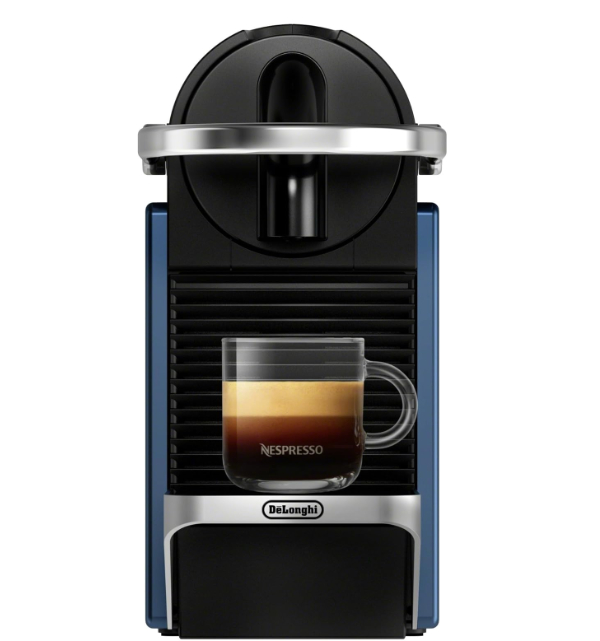
The Nespresso Pixie is a masterclass in miniaturized espresso engineering. Despite its compact footprint, it houses a powerful 19-bar high-pressure pump, which is the industry standard for traditional espresso extraction. This pressure is essential for emulsifying coffee oils into the characteristic dense crema that distinguishes espresso from standard coffee. The Pixie features a rapid thermoblock heating element that reaches brewing temperature in under 25 seconds, utilizing an NTC (Negative Temperature Coefficient) sensor for precise thermal regulation.
Designed for the OriginalLine capsule system, the Pixie benefits from an open ecosystem, allowing users to utilize a vast array of third-party aluminum and compostable capsules. The machine’s logic is refreshingly simple, offering two programmable buttons for Espresso (1.35 oz) and Lungo (3.7 oz). The industrial aesthetic, featuring metal side panels and a robust folding drip tray, makes it one of the most durable machines in the Nespresso lineup, often outlasting larger, plastic-heavy models.
The primary drawback of the Pixie is its noise level; the high-pressure pump generates significant vibration during the extraction phase. Additionally, the small 24-ounce water reservoir and limited used-capsule container (holding only 10 pods) mean more frequent maintenance. It is best suited for the espresso enthusiast who values kitchen space and authentic pressure-driven results over variety and volume.
To achieve 19 bars of pressure, the Pixie uses a vibration pump that oscillates at 60Hz. This high pressure is required to overcome the resistance of the tightly packed coffee in the aluminum capsule, facilitating the extraction of hydrophobic oils that create the crema and provide the long-lasting aftertaste characteristic of true espresso.
Best Hybrid Extraction: L'OR Barista System
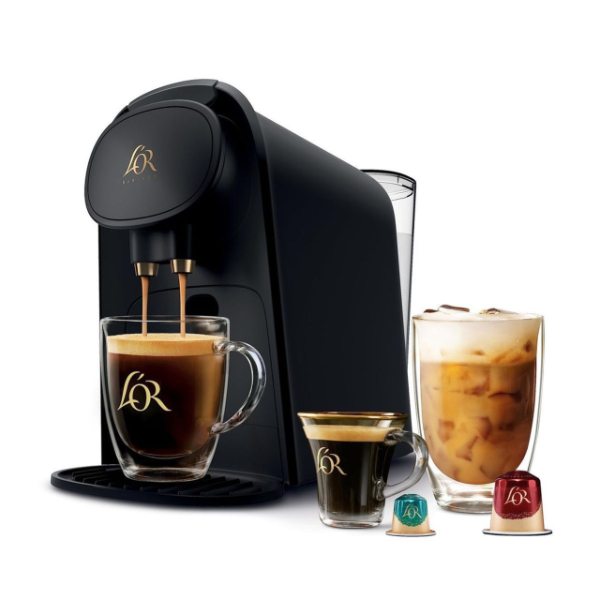
The L'OR Barista System is a versatile hybrid that effectively bridges the gap between Nespresso OriginalLine espresso and high-pressure coffee. It features a dual-capsule recognition system that automatically detects whether a standard espresso capsule or a larger L'OR Barista double-shot capsule is inserted. This allows the machine to adjust the volume and pressure settings dynamically, delivering anything from a 0.8-ounce ristretto to a full 12-ounce carafe using the same 19-bar pump technology.
Technically, the Barista System is notable for its "Dual-Spout" design, which can brew two espressos simultaneously or one double-shot espresso into a single cup. The machine’s internal pressure valve is engineered to maintain high bars even during larger volume extractions, ensuring that even a 12-ounce cup of coffee has a thin layer of crema - a feat standard drip-style pod makers cannot achieve. It is widely compatible with all Nespresso Original capsules, providing excellent flexibility.
The unit's footprint is somewhat large, and the plastic exterior feels less premium than the metal-clad Nespresso Pixie. While the large capsule option is excellent, finding the specific L'OR Barista XXL capsules in local retail stores can be more challenging than standard pods, often requiring online orders. This system is perfect for households that want a single machine capable of handling both morning coffee mugs and afternoon espresso shots with high-pressure precision.
The L'OR system uses a mechanical sensor within the brewing chamber that measures the diameter and depth of the capsule. This physical data point triggers a specific firmware profile that scales the pump's flow rate, ensuring that the larger coffee grounds in the XXL pods receive adequate saturation without over-pressurizing the chamber.
Best for Specialty Milk Drinks: Keurig K-Cafe Smart
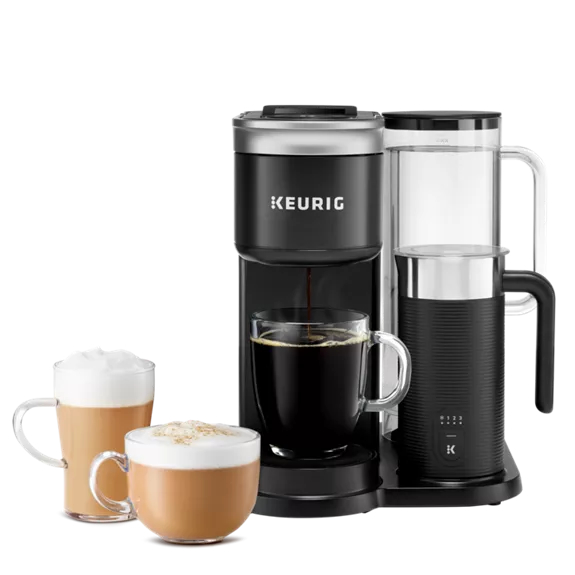
The Keurig K-Cafe Smart represents the pinnacle of the K-Cup ecosystem, integrating advanced IoT features with a built-in milk frother. The machine features "BrewID" technology, which uses a camera to recognize the specific K-Cup brand and roast, automatically downloading the roaster-recommended brew settings via Wi-Fi. This ensures that a Starbucks pod is brewed differently than a Green Mountain pod, optimizing the flow and temperature for each unique chemical composition.
A key technical upgrade in the K-Cafe Smart is the "MultiStream Technology," which uses five entrance needles instead of the traditional one. This ensures uniform saturation of the coffee grounds, virtually eliminating the channeling issues seen in older models. The integrated frother offers three temperature settings - including a cold froth option - and uses induction heating to create consistent microfoam for lattes and cappuccinos. The "Shot" button produces a concentrated 2-ounce extract designed specifically to cut through the milk.
The reliance on a Wi-Fi connection for the best features may be a deterrent for some, and the machine's "Smart" app-based features can feel like an unnecessary complication for a simple cup of coffee. Furthermore, while the MultiStream technology improves flavor, the machine still lacks a high-pressure pump, meaning the "espresso" shot is actually just concentrated drip coffee. It is the best option for users who enjoy milk-based specialty drinks and want a highly automated, "smart" kitchen experience.
MultiStream Technology works by distributing water through five distinct points across the top of the K-Cup. This increases the "wetted surface area" of the coffee grounds, reducing the speed at which water passes through the pod and ensuring that the solutes are extracted evenly from the edges of the pod as well as the center.
How We Chose These Products
Our evaluation process involved a multi-stage technical audit focusing on three primary pillars: Extraction Consistency, Thermal Precision, and Platform Versatility. We analyzed third-party data regarding temperature variance across successive brews and verified the pump pressure ratings through manufacturer whitepapers. We also prioritized machines with robust build materials - such as reinforced thermoblocks and stainless steel puncture needles - to ensure long-term reliability in high-usage environments.
Comparison Overview
| Model | Extraction Method | Pump Pressure | Reservoir Size | Key Feature |
|---|---|---|---|---|
| Nespresso VertuoPlus | Centrifusion (RPM) | N/A | 40 oz | Barcode Brew Logic |
| Keurig K-Elite | Pulse-Drip | N/A | 75 oz | Temp Customization |
| Nespresso Pixie | Piston-Pump | 19 Bar | 24 oz | Compact Footprint |
| L'OR Barista System | Piston-Pump | 19 Bar | 40 oz | Dual-Capsule Size |
| Keurig K-Cafe Smart | MultiStream-Drip | N/A | 60 oz | BrewID Recognition |
Buying Guide: What to Look For
- Pump Pressure vs. Centrifugal Force: For authentic espresso with thick crema, a 19-bar pump is non-negotiable. For larger mugs of coffee with a frothy texture, centrifugal systems offer a unique middle ground.
- Thermal Block Efficiency: Look for machines that reach 195°F+ in under 30 seconds. Higher wattage usually correlates with faster heat-up and better recovery between cups.
- Needle Configuration: In Keurig systems, look for "MultiStream" (5-needle) designs to ensure even saturation of the coffee grounds.
- Ecosystem Compatibility: Consider if you want the flexibility of third-party pods (Nespresso Original, L'OR, Keurig) or the specific flavor profiles of proprietary systems (Nespresso Vertuo).
- Water Filtration: Machines with integrated charcoal filters produce better-tasting coffee and require less frequent descaling in hard-water areas.
General Pro / Cons
| Advantages | Disadvantages |
|---|---|
| Unparalleled convenience with zero cleanup required. | Higher cost per cup compared to whole bean or ground coffee. |
| Consistent flavor profile due to factory-sealed freshness. | Significant environmental impact from single-use plastic/aluminum pods. |
| Minimal counter footprint compared to full espresso setups. | Limited control over variables like grind size and dose. |
| Extremely fast heat-up and brew times. | Non-pressure systems cannot produce authentic crema. |
| Broad variety of flavors and roasts available instantly. | Machine lifespan is often shorter than manual brewers. |
| Integrated frothers simplify specialty drink preparation. | Descaling is required regularly to maintain pump health. |
| Standardized pod sizes allow for easy storage solutions. | Proprietary barcodes can limit capsule choice. |
Final Summary
The selection of a pod coffee maker ultimately hinges on the desired balance between volume and extraction style. For those seeking the highest quality espresso in a compact form, the Nespresso Pixie remains the benchmark. Conversely, the Nespresso VertuoPlus and Keurig K-Cafe Smart lead the market in large-format coffee and specialty milk-based beverages, respectively. By understanding the underlying physics of centrifugal force versus high-pressure pumps, consumers can choose a system that aligns with their specific sensory preferences and workflow requirements.
Aggregate rating of the products reviewed: 4.72 out of 5.