
Best Portable Generators of 2026
A technical evaluation of high-performance power solutions ranging from silent digital inverters to high-capacity battery ecosystems and dual-fuel industrial units.
Introduction
The portable generator market has undergone a significant bifurcated evolution. On one side, traditional internal combustion engines have become "smarter" with digital inverter technology, producing clean power that rivals the stability of a wall outlet. On the other, the rise of large-scale Lithium Iron Phosphate (LiFePO4) power stations has created a segment of "silent generators" that operate without emissions, relying on rapid solar charging and high-density energy storage. Selecting the correct unit requires an understanding of your specific "load profile" - the sum of running watts and the high-surge "starting watts" required by inductive loads like air conditioners or sump pumps.
Technical considerations today extend beyond raw wattage. Total Harmonic Distortion (THD) is the primary metric for power quality; sensitive electronics require a THD of less than 3% to prevent long-term component degradation. Furthermore, fuel flexibility has become a critical resilience factor, with dual-fuel carburetors allowing users to switch between energy-dense gasoline and the long shelf-life of propane. This guide analyzes five distinct leaders in these categories, evaluating them on their thermal management, voltage regulation, and energy conversion efficiency.
Best Portable Inverter: Honda EU2200i Companion
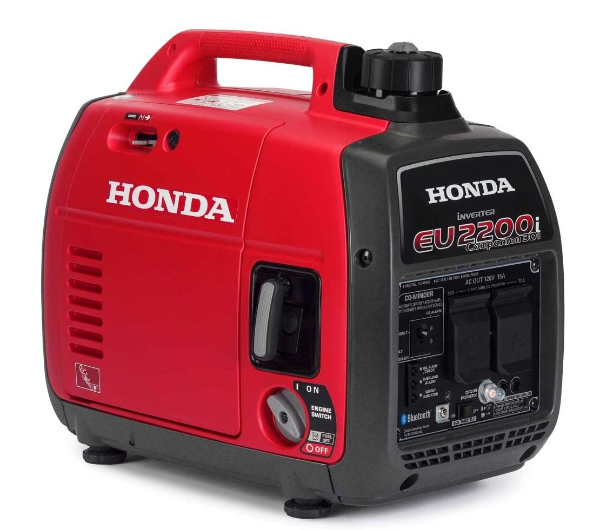
The Honda EU2200i remains the industry benchmark for portable gasoline inverters, primarily due to the GXR120 commercial-grade engine. Unlike residential-grade engines found in budget models, the GXR120 is designed for high-duty cycles and features an overhead cam (OHC) design that improves fuel efficiency while reducing mechanical noise. Its primary strength is its exceptionally low noise floor - operating as quietly as 48 dBA - making it the preferred choice for environments where sound pollution is a regulatory or practical concern.
Practically, the "Companion" model features a built-in 30A outlet, allowing for direct connection to smaller RVs or parallel synchronization with another EU2200i unit to double the output to 4400 peak watts. The integration of Honda's CO-Minder system provides a critical safety layer by continuously monitoring carbon monoxide levels and automatically shutting down the engine if concentrations reach dangerous thresholds. The fuel shut-off valve is a notable mechanical feature that allows the engine to run until the carburetor is dry, preventing fuel gumming during long-term storage.
The limitation of the EU2200i is its strictly gasoline-based architecture and its price-to-wattage ratio. Users looking for high-capacity home backup will find the 2200 surge watts insufficient for large appliances. However, for charging medical equipment, running sensitive audio gear, or supporting a small field office, its clean sine wave output is unmatched in reliability. Maintenance is straightforward but required; the lack of a fuel gauge on the tank itself is a minor ergonomic oversight in an otherwise flawless technical design.
Technical Deep-Dive: Pure Sine Wave Inverters
Standard generators use a rotating magnetic field to produce AC power directly, which can result in "dirty" power with high Total Harmonic Distortion (THD). The Honda EU2200i uses a multi-stage process: it generates high-frequency AC, converts it to DC, and then uses a microprocessor-controlled inverter to "re-build" a 60Hz AC wave. This results in a Pure Sine Wave with THD below 3%, preventing the heat buildup and electrical noise that can destroy the microprocessors found in laptops, CPAP machines, and high-efficiency appliances.
Best Solar Power Station: EcoFlow DELTA Pro
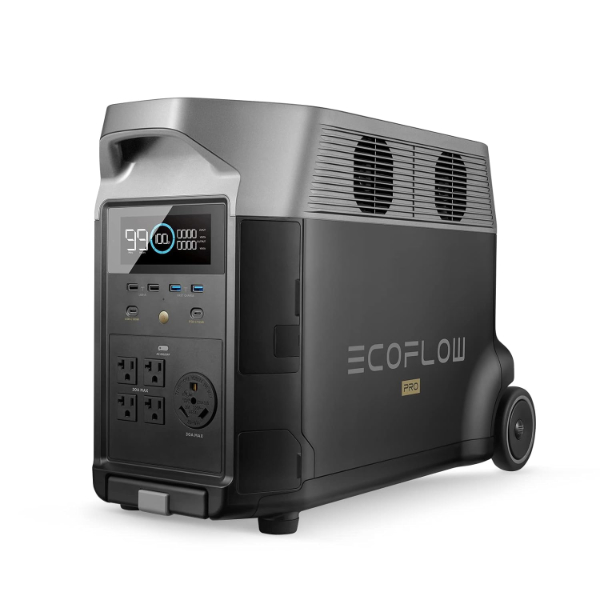
The EcoFlow DELTA Pro represents the pinnacle of "silent" portable power, utilizing a massive 3.6kWh Lithium Iron Phosphate (LiFePO4) battery. Unlike traditional generators, the DELTA Pro can be safely used indoors, making it an ideal solution for apartment dwellers or emergency indoor backup. Its X-Stream charging technology is a significant engineering feat, allowing the unit to charge from 0% to 100% in roughly 1.8 hours from a standard wall outlet - a speed that outpaces almost every other high-capacity battery on the market.
Technically, the unit is more than a battery; it is a modular ecosystem. It provides 3600W of continuous AC output, which can be expanded to 4500W via X-Boost mode to handle high-draw resistive loads. For users invested in solar, the integrated MPPT controller supports up to 1600W of solar input, allowing for a full recharge in 2.8 to 5.6 hours under optimal conditions. The LiFePO4 chemistry is a critical upgrade over older NMC batteries, offering 3,500+ cycles before reaching 80% capacity, translating to nearly a decade of daily use.
The primary downside is its weight; at 99 pounds, it is "portable" only in the sense that it has wheels and a handle. While it can power a full-sized refrigerator for over 24 hours, it remains an expensive investment compared to gas units. However, for those requiring zero-emission power that can integrate into a home's electrical panel via a Smart Home Panel, the DELTA Pro offers a level of technical sophistication and expansion (up to 25kWh) that combustion generators simply cannot match.
Technical Deep-Dive: LiFePO4 Chemistry vs. NMC
Most early portable stations used Nickel Manganese Cobalt (NMC) batteries, which are energy-dense but have a shorter lifespan (approx. 500 cycles). The EcoFlow DELTA Pro uses Lithium Iron Phosphate (LiFePO4). While heavier, LFP cells are chemically more stable and significantly more durable. They are less prone to thermal runaway and maintain their health across thousands of discharge cycles, making them the preferred choice for long-term home energy storage systems.
Best Dual-Fuel Inverter: Champion 4500-Watt Dual Fuel Inverter (Model 200988)
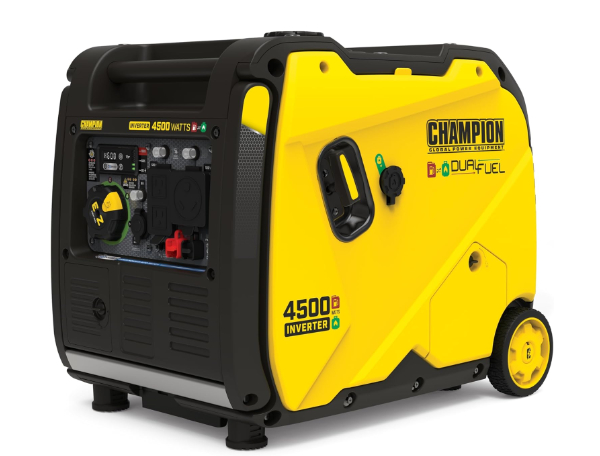
The Champion 200988 addresses the most common point of failure for portable generators: fuel stability. By featuring an integrated dual-fuel carburetor, this unit can run on standard gasoline or liquid propane (LPG). Propane is a superior fuel for emergency preparedness because it does not degrade over time or gum up the carburetor, allowing the generator to sit for years and start on the first pull. The unit provides 4500 starting watts and 3500 running watts on gasoline, with a slight (approx. 10%) reduction in output when switched to propane.
Technically, this unit excels in "Cold Start Technology," which utilizes a modified ignition timing curve to ensure reliable turnover in sub-freezing temperatures. The digital Intelligauge display provides real-time monitoring of voltage, frequency, and operating hours, which is critical for tracking maintenance intervals. Despite its high output, it maintains inverter-level power quality, making it safe for the microprocessors found in modern HVAC controllers and refrigerators.
While extremely versatile, the Champion is louder than the Honda EU series, operating at 61 dBA. It also lacks a built-in fuel pump, meaning it relies on gravity feed for gasoline, which can occasionally lead to vapor lock in extremely hot climates. However, for users who want the flexibility of running off a standard 20lb propane tank during a power outage without the hassle of storing stabilized gasoline, this model provides the best balance of power, price, and fuel versatility.
Technical Deep-Dive: Dual-Fuel Carburetion
A dual-fuel generator uses a specialized carburetor with a secondary venture or a high-pressure regulator for propane. Propane is stored as a liquid but enters the engine as a gas, which requires a different air-to-fuel ratio than atomized gasoline. Propane has a lower energy density than gasoline (approx. 91,330 BTUs per gallon vs 114,000 BTUs), which explains the power drop-off when switching fuels, but its cleaner combustion results in significantly less carbon buildup on the spark plugs.
Best Compact Power Station: Jackery Explorer 1000 v2
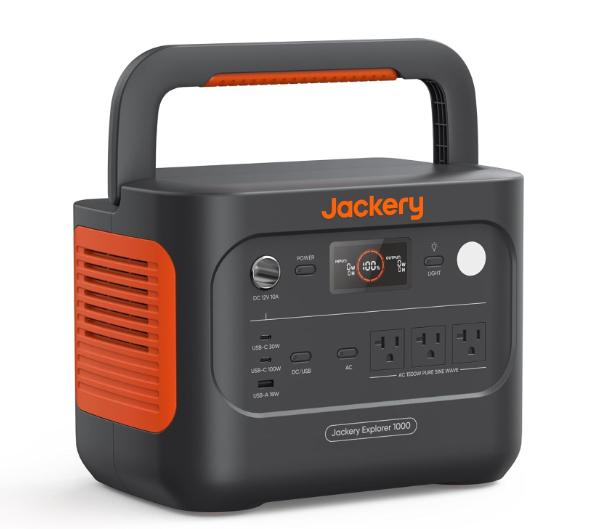
The Jackery Explorer 1000 v2 is the definitive "mid-range" power station, redesigned to transition from older NMC chemistry to the much more durable LiFePO4 cells. This version provides 1070Wh of capacity and a 1500W AC inverter, capable of handling 3000W surges. Its primary appeal is the ergonomics; Jackery has mastered the balance between a rugged build and a lightweight chassis (23 lbs), making it the most practical choice for car camping, mobile photography, or as a dedicated UPS for a home office.
Technically, the v2 features an upgraded MPPT (Maximum Power Point Tracking) solar charge controller that is significantly more efficient in low-light conditions. It can be paired with Jackery's SolarSaga panels to create a fully off-grid loop. The inclusion of a 100W USB-C PD (Power Delivery) port allows for high-speed charging of modern laptops without the energy loss associated with using a standard AC brick. The unit also features an ultra-fast UPS mode, switching to battery power in under 20ms during a grid failure.
The main trade-off for its portability is the limited capacity. While it can run a CPAP machine for multiple nights, it will struggle to run high-wattage kitchen appliances for more than a few minutes. Additionally, while the app integration is useful for monitoring, the unit lacks the expandability of the EcoFlow ecosystem. It is designed to be a "stand-alone" solution for moderate power needs, where ease of transport and thermal stability are prioritized over raw capacity.
Technical Deep-Dive: MPPT Solar Efficiency
Maximum Power Point Tracking (MPPT) is an electronic DC-to-DC converter that optimizes the match between the solar array and the battery bank. As solar intensity fluctuates, the MPPT controller "tracks" the voltage and current to find the point where maximum power is generated. High-end controllers like the one in the Jackery 1000 v2 can extract up to 30% more power from solar panels compared to older PWM (Pulse Width Modulation) controllers, especially in overcast or changing conditions.
Best High-Output Dual-Fuel: Westinghouse WGen9500DF
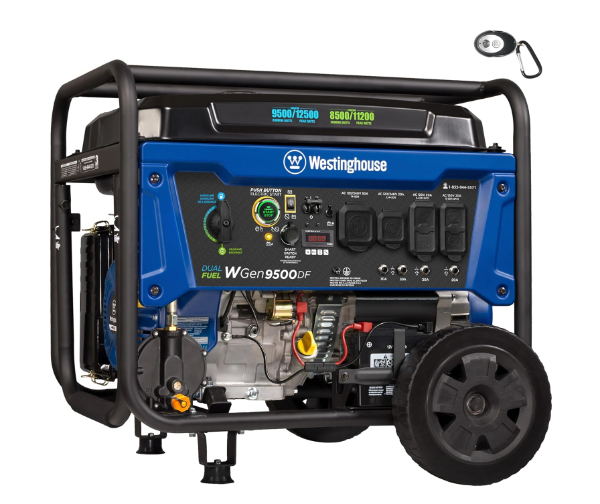
When the requirement is whole-home backup including central air conditioning, the Westinghouse WGen9500DF is the necessary industrial-grade solution. This unit is not an inverter; it is a heavy-duty synchronous generator capable of 12,500 peak watts and 9,500 running watts on gasoline. It is designed to interface directly with a home's transfer switch via its heavy-duty L14-30R or 14-50R outlets, providing enough current to run multiple 240V appliances simultaneously.
Technically, the WGen9500DF uses a massive 457cc 4-stroke OHV engine with a cast-iron sleeve for long-term cylinder durability. It features a remote electric start with a key fob, allowing users to activate the unit from inside their home during a storm. The unit’s Automatic Voltage Regulator (AVR) keeps voltage fluctuations within a narrow range, though it should be noted that the THD is higher than the inverters reviewed above (typically around 10-15%), making it less ideal for direct connection to unprotected high-end computers without a UPS.
The trade-offs are noise and fuel consumption. At 74 dBA, it is significantly louder than any inverter, and it can consume an entire 6.6-gallon tank of gas in 12 hours at 50% load. However, for users who need to power a well pump, an electric water heater, and an A/C unit simultaneously, there is no substitute for this level of raw torque and amperage. Its dual-fuel capability allows for the use of propane for cleaner storage, though wattage drops to 8,500 running watts on LPG.
Technical Deep-Dive: Automatic Voltage Regulation (AVR)
Unlike inverters that digitally synthesize power, synchronous generators like the WGen9500DF use an Automatic Voltage Regulator (AVR) to maintain a steady 120V/240V output. The AVR senses the output voltage and adjusts the DC excitation current to the rotor. While effective at preventing voltage sags when a large motor starts, it cannot correct for frequency variations or eliminate the harmonic distortion inherent in the physical rotation of the generator head, which is why THD is higher than in inverter models.
How We Chose These Products
Our selection process was based on three primary technical metrics: Total Harmonic Distortion (THD), Energy Density, and Reliability over Time. We prioritized units that offer Pure Sine Wave output for the safety of modern electronics. For combustion models, we evaluated the quality of the engine (Commercial-grade OHC vs. Residential OHV) and the availability of safety features like CO-monitoring. For battery-based stations, we strictly recommended LiFePO4 chemistry due to its superior cycle life and thermal stability. Finally, we analyzed manufacturer warranty support and the availability of replacement parts to ensure long-term serviceability.
Comparison Overview
| Model | Type | Running Watts | Peak Watts | Fuel Type |
|---|---|---|---|---|
| Honda EU2200i | Inverter | 1800W | 2200W | Gasoline |
| EcoFlow DELTA Pro | Solar Station | 3600W | 7200W | Electric (LiFePO4) |
| Champion 200988 | Dual Fuel Inverter | 3500W | 4500W | Gas / Propane |
| Jackery Explorer 1000 v2 | Solar Station | 1500W | 3000W | Electric (LiFePO4) |
| Westinghouse WGen9500DF | Traditional Dual Fuel | 9500W | 12500W | Gas / Propane |
Buying Guide: What to Look For
- Surge vs. Running Watts: Always calculate the starting (surge) watts of your largest appliance. A refrigerator might run at 200W but require 1200W for a few seconds to start the compressor.
- Total Harmonic Distortion (THD): If you plan to charge laptops or use LED TVs, look for an inverter with less than 3% THD. Standard generators can exceed 15% THD, which causes electrical "noise."
- Battery Chemistry (LFP vs. NMC): In power stations, always choose Lithium Iron Phosphate (LiFePO4/LFP). It offers 3-6 times the lifespan of Lithium Ion (NMC) batteries.
- CO-Minder/Safety: Combustion generators must be operated at least 20 feet from a home. Ensure yours has an automatic CO shutoff sensor.
- Propane Versatility: Propane is less energy-dense but much cleaner for the engine and lasts indefinitely in a tank, unlike gasoline which degrades in 3-6 months.
General Pro / Cons
| General Strengths |
|---|
| Inverters provide grid-quality power safety |
| Solar stations allow for safe indoor operation |
| Dual-fuel units offer better fuel logistics |
| Remote/Electric start improves accessibility |
| LiFePO4 batteries last 10+ years |
| Compact units are highly portable for recreation |
| General Weaknesses |
|---|
| Gasoline requires stabilizers for storage |
| Synchronous generators have high THD |
| Power stations have high upfront costs |
| Cold weather reduces battery efficiency |
| Heavy-duty units generate significant noise |
| Combustion units require regular oil changes |
Final Summary
Modern power backup is no longer a one-size-fits-all solution. For silent, indoor-safe power, the EcoFlow DELTA Pro and Jackery Explorer 1000 v2 offer maintenance-free operation and high longevity through LiFePO4 cells. For those requiring portable and reliable gasoline power, the Honda EU2200i remains the engineering benchmark. Finally, for heavy industrial loads or dual-fuel resilience, the Champion 4500 and Westinghouse 9500 provide the raw wattage needed for critical infrastructure. Your choice should ultimately be dictated by your specific balance of noise tolerance, fuel storage capabilities, and the sensitivity of your electronics.
Aggregate rating of the products reviewed: 4.74 out of 5.