
Best Pressure Washers of 2026
A technical guide to the most reliable high-pressure cleaning equipment for residential and professional maintenance.
Introduction
Selecting a pressure washer requires balancing raw cleaning units (CU) with the practical limitations of power sources and water flow. Whether you are stripping decades of stain from a cedar deck or performing a contactless wash on a ceramic-coated vehicle, the hardware must provide consistent Pounds per Square Inch (PSI) without sacrificing the Gallons per Minute (GPM) necessary to flush away debris. Professional testing benchmarks, such as those published by TechGearLab and Reviewed, emphasize that a machine's effectiveness is not merely its peak pressure, but its ability to maintain that output under continuous load.
The current market is sharply divided between internal combustion engines and electric induction motors. Gas-powered units remain the gold standard for autonomy and high-volume output, while the latest generation of brushless electric motors offers a maintenance-free alternative that operates at significantly lower decibel levels. This guide identifies the five most reliable models currently available, evaluated for their pump longevity, frame durability, and nozzle versatility.
Best for Smart Cleaning: Kärcher K5 Premium Smart Control
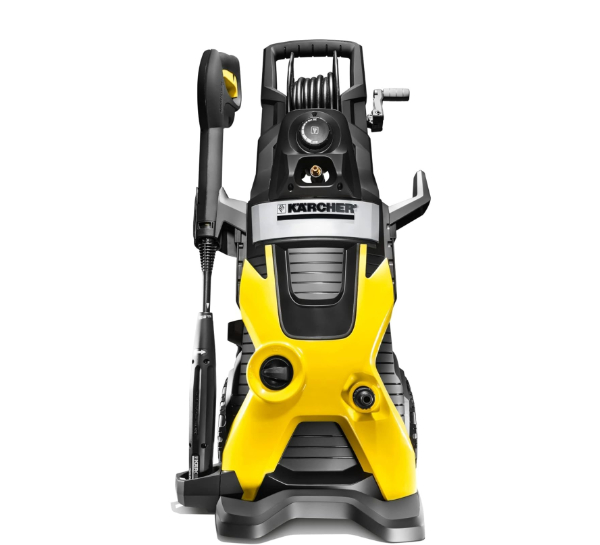
The Kärcher K5 Premium Smart Control represents the pinnacle of consumer-grade electric pressure washing technology. Its defining feature is the water-cooled induction motor, which circulates water around the motor housing before it reaches the pump. This engineering choice, as noted by Expert Reviews, significantly extends the machine's lifespan and allows for longer run times without the thermal shutdown risks associated with air-cooled competitors. The G 180 Q Smart Control spray gun features an LCD display that allows users to toggle through pressure levels and detergent dosage settings directly from the handle.
For users who prefer guided maintenance, the K5 integrates with the Kärcher Home & Garden App via Bluetooth. This app acts as a technical advisor, suggesting the optimal pressure for specific surfaces like delicate wood or hardy stone. The 3-in-1 Multi Jet spray lance eliminates the need for manual nozzle swaps, housing the flat stream, rotary, and detergent jets in a single rotating barrel. While the unit is exceptionally versatile, the high-pressure hose is notoriously stiff and prone to tangling, a common trade-off for its reinforced durability. This model is ideal for homeowners who prioritize precision and quiet operation over the raw, unbridled power of gas engines.
Kärcher Official Product PageBest for Heavy-Duty Power: Simpson MSH3125 MegaShot
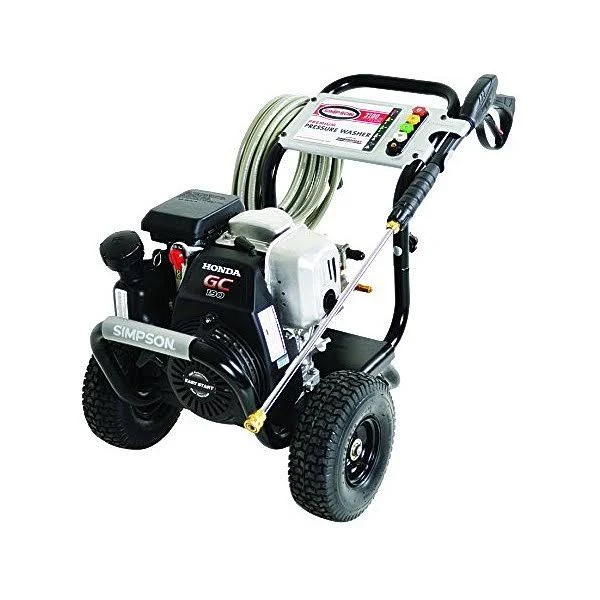
The Simpson MSH3125 MegaShot is designed for those who view pressure washing as a task of efficiency rather than a weekend hobby. Powered by a Honda GC190 residential engine, this gas-driven unit delivers a consistent 3200 PSI at 2.5 GPM. According to technical assessments from TechGearLab, the MegaShot consistently outperforms electric models in stripping stubborn paint and deep-cleaning porous concrete driveways. The power is managed by an OEM Technologies axial cam pump, featuring a thermal relief valve to protect the internal components from overheating during bypass mode.
The construction is utilitarian, utilizing a welded steel frame and 10-inch premium pneumatic tires that allow for easy transport across uneven terrain like gravel or thick grass. However, the trade-off for this industrial-level power is the noise and maintenance associated with internal combustion. Users must manage oil levels, fuel stabilizers, and air filters. It lacks an onboard detergent tank, relying instead on a siphon tube system for soap application. For large-scale properties or professional-level grime, the Simpson remains the most reliable high-output option available for under $500.
Simpson Cleaning Official Product PageBest Value Electric: Sun Joe SPX3000
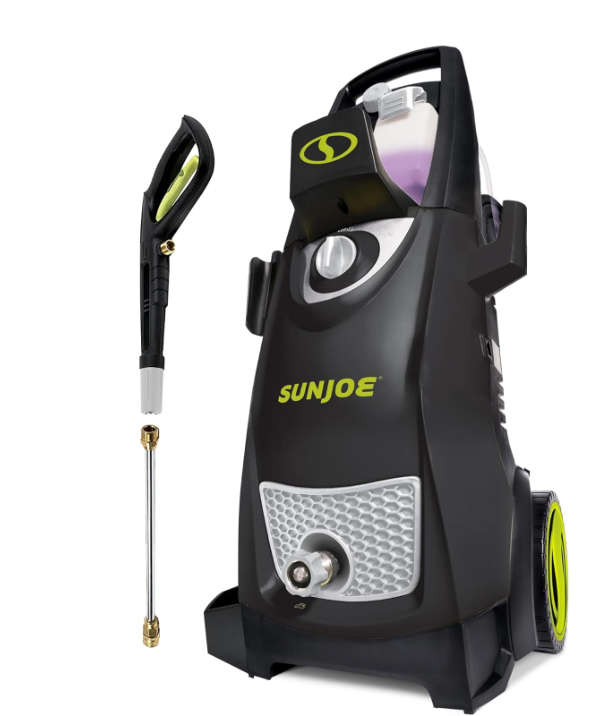
The Sun Joe SPX3000 has earned its reputation as a reliable entry-point into power washing. It utilizes a 14.5-amp/1800-watt motor to produce a rated pressure of 2030 PSI. What sets this model apart in the budget category is the dual detergent tank system. Two removable 0.9L tanks allow the user to carry different cleaning agents simultaneously—such as a specialized vehicle soap and a deck cleaner—switching between them with a simple selection dial. This feature is particularly useful for varied weekend chores where stopping to refill tanks would be inefficient.
The SPX3000 includes five Quick-Connect spray tips (0°, 15°, 25°, 40°, and soap), providing a range of spray patterns for everything from heavy-duty blasting to gentle rinsing. Safety is handled by the Total Stop System (TSS), which automatically shuts off the pump when the trigger is not engaged, preserving the motor's lifespan and reducing energy consumption. As noted by Forbes, while it lacks the refinement of higher-end European models, its performance-to-price ratio is exceptional for typical suburban maintenance. Its primarily plastic construction and lightweight build mean it can tip over if the high-pressure hose is pulled too aggressively.
Sun Joe Official Product PageBest Electric Power: Greenworks Pro 3000 PSI Brushless
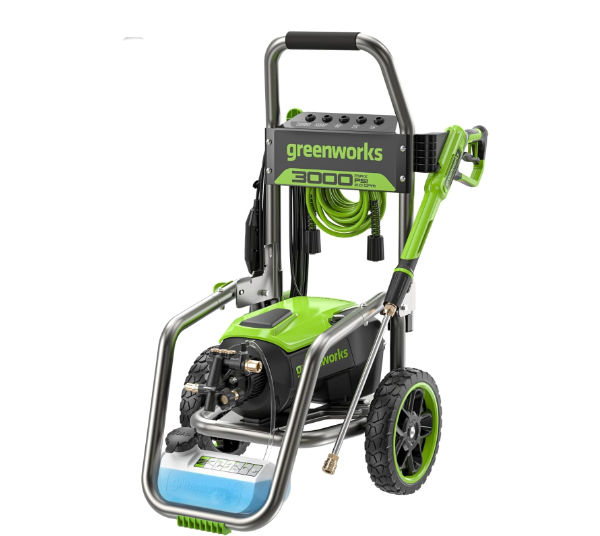
The Greenworks Pro 3000 PSI is one of the most powerful electric units ever certified by the Pressure Washer Manufacturers' Association (PWMA). It leverages a heavy-duty brushless motor to bridge the gap between traditional electric washers and entry-level gas machines. This digital motor technology provides higher torque and efficiency, allowing for a 1.1 GPM flow rate at its maximum 3000 PSI setting. This makes it capable of tackling tasks usually reserved for gas units, such as deep-cleaning second-story siding or large driveways, without the fumes or pull-starts.
Built on a rugged "hand-truck" style frame, it features 10-inch never-flat wheels and a 35-foot power cord with inline GFCI. The build quality is noticeably more robust than entry-level electrics, weighing in at approximately 50 pounds. This weight provides stability during operation, preventing the "skipping" common in lighter units. The primary limitation is the electrical requirement; to achieve this level of power, it pulls a high amperage that may trip older household breakers if other appliances are running. For those committed to an electric ecosystem but unwilling to compromise on pressure, this Greenworks Pro model is the definitive choice.
Greenworks Official Product PageBest for Quiet Durability: Ryobi RY142300 2300 PSI Brushless
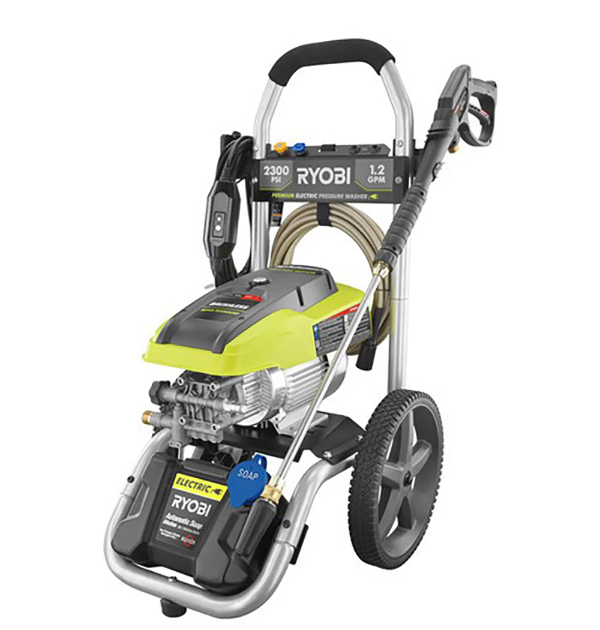
The Ryobi RY142300 is engineered for longevity and user comfort. By utilizing a brushless induction motor, Ryobi has created a machine that is significantly quieter than standard universal motor electrics. The brushless design also reduces internal friction, meaning the motor runs cooler and lasts longer over years of seasonal use. Delivering 2300 PSI at 1.2 GPM, it hits the "sweet spot" for most residential users: powerful enough for concrete but gentle enough for vehicles when used with the appropriate nozzle.
One of its most practical features is the compact frame design. Unlike taller units that can be awkward to store, the RY142300 has a low center of gravity and a folding handle, making it easy to tuck under a workbench. It includes a turbo nozzle, which provides up to 50% faster cleaning for hard surfaces by creating a rotating high-pressure spray. While it is highly rated for reliability, some users have noted that the soap siphoning system is less consistent than dedicated onboard tanks. It is best suited for the discerning homeowner who values a quiet workspace and a tool that will last for many seasons.
Ryobi Official Product PageHow We Chose These Products
Our selection process involves analyzing technical specifications, manufacturer reliability, and long-term performance data from trusted industry sources like Reviewed and TechGearLab. We prioritized products that meet the following criteria:
- Pump Construction: Preference was given to induction and brushless motors over universal motors for electric models, and Honda-powered engines for gas models.
- Cleaning Units (CU): We calculated the effective cleaning power (PSI x GPM) to ensure each recommendation provides real-world utility.
- Serviceability: We selected brands with established parts networks for replacement nozzles, hoses, and seals.
- Safety Compliance: All recommended units are certified by relevant safety organizations (CSA, ETL, or PWMA).
Comparison Overview
| Model | Power Source | Max Pressure | Flow Rate | Best For |
|---|---|---|---|---|
| Kärcher K5 Smart | Electric | 2100 PSI | 1.4 GPM | Precision & App Guidance |
| Simpson MegaShot | Gas | 3200 PSI | 2.5 GPM | Heavy Grime & Paint Prep |
| Sun Joe SPX3000 | Electric | 2030 PSI | 1.76 GPM | Budget-Friendly Tasks |
| Greenworks Pro 3000 | Electric | 3000 PSI | 1.1 GPM | Maximum Electric Power |
| Ryobi 2300 Brushless | Electric | 2300 PSI | 1.2 GPM | Quiet & Reliable Use |
Buying Guide: What to Look For
- PSI vs. GPM: PSI provides the "stripping" force, while GPM provides the "rinsing" speed. For cleaning driveways, higher GPM is often more important than max PSI.
- Motor Type: Induction motors (electric) are heavier and more expensive but last significantly longer and run quieter than cheaper universal motors.
- Hose Quality: Look for non-marring, steel-braided, or high-density plastic hoses. Low-end hoses often "kink" easily, restricting flow.
-
Nozzle Degrees:
- 0° (Red): Pinpoint jet; can damage wood and tires.
- 15° (Yellow): Heavy-duty stripping.
- 25° (Green): General cleaning (decks/patios).
- 40° (White): Vehicles and windows.
General Pros / Cons
Strengths:
- Efficiency: Uses up to 80% less water than a standard garden hose.
- Versatility: Can be used for everything from siding to automotive detailing.
- Value: Extends the life of outdoor surfaces by removing corrosive salt and mold.
Weaknesses:
- Risk of Damage: High pressure can easily etch wood or strip paint if used incorrectly.
- Maintenance: Gas models require fuel/oil management; electric models require winterization to prevent pump freezing.
- Storage: Units can be bulky and require significant garage real estate.
Final Summary
Choosing the right pressure washer depends on the scale of your outdoor projects. For those needing industrial-level power to strip large decks or clean expansive driveways, the Simpson MegaShot remains the gold standard. However, for most residential users, the Kärcher K5 or Ryobi Brushless offer a quieter, lower-maintenance experience without sacrificing the pressure needed for seasonal cleaning. If budget is the primary concern, the Sun Joe SPX3000 provides reliable performance for light-duty tasks like car washing and patio rinsing.
Aggregate rating of the products reviewed: 4.64 out of 5.