
Best Pruning Shears for Backyard Gardeners of 2026
Master your landscape with precision-engineered cutting tools designed to promote plant health, reduce hand fatigue, and withstand the rigors of seasonal maintenance through superior metallurgy and ergonomic design.
Introduction
For the backyard gardener, a pair of pruning shears is the most frequently used tool in the shed. Yet, most consumers struggle with "crushing" cuts that lead to plant disease or hand cramps after just twenty minutes of work. The technical landscape of pruning tools is defined by the battle between bypass and anvil designs. While anvil shears act like a knife on a cutting board - fine for dead wood - bypass shears act like scissors, passing two sharp blades by each other to create a clean, surgical incision that allows live tissue to heal rapidly.
When selecting a high-fidelity pruner, we look for high-carbon steel with a specific Rockwell Hardness (HRC) rating. This ensures the blade doesn't dull after hitting a few hardwood knots. We also prioritize "repairability over replaceability." A professional-grade tool should be completely modular, allowing you to swap out springs, blades, and bolts rather than tossing the whole unit in a landfill. In this guide, we break down five tools that solve the common pain points of dullness, rust, and physical strain.
Best Professional Standard: Felco 2 Classic
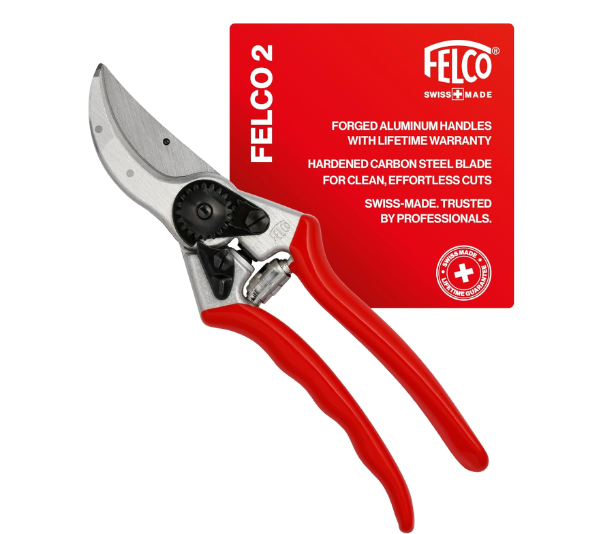
The Felco 2 is the industry benchmark for a reason. Its construction centers around forged aluminum alloy handles and a high-quality hardened steel blade. What makes it stand out practically is its reliability; gardeners have reported using the same pair for over thirty years. The tool features a sap groove to prevent the blades from sticking when cutting resinous plants and rubber shock absorbers that protect your wrist from the "jarring" sensation at the end of a cut.
Technically, the Felco 2 excels in its micrometric adjustment system. This allows you to precisely calibrate the tension between the cutting blade and the anvil blade. Why it matters: If the blades are too loose, they will tear the bark; if too tight, they become difficult to squeeze. This system ensures a perfect 0.1mm clearance for the cleanest possible cut. It is best for medium-to-large hands due to its 1-inch cutting capacity and robust handle spread.
The honest trade-off is the maintenance requirement. High-carbon steel is susceptible to oxidation if left in a damp shed. Unlike cheap stainless steel shears, the Felco 2 demands a quick wipe-down with oil after use. However, every single part - from the spring to the smallest screw - is replaceable, making this a true lifetime investment for the serious gardener.
The Felco 2 uses a notched nut and locking segment. Why it matters: This allows for granular control over blade alignment. Traditional shears use a simple bolt that can loosen over time, but the Felco system locks the setting in place, maintaining surgical precision throughout thousands of cuts.
Best Edge Retention: Okatsune 103 Bypass
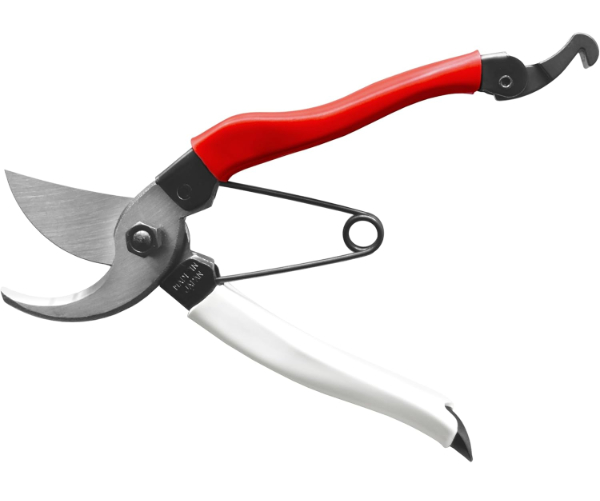
If you prioritize the sharpness of the blade above all else, the Okatsune 103 is unrivaled. Forged from Izumo Yasugi steel - the same metallurgy historically used in katanas - these shears reach a Rockwell Hardness of 60 to 61 HRC. This is significantly harder than the steel found in most European pruners. In the real world, this means you can prune for an entire season without ever needing to sharpen the blade.
The design is deceptively simple. There are no fancy shock absorbers or ergonomic curves; just two pieces of high-carbon steel and a simple spring. However, the "click" sound of an Okatsune cut is a testament to its precision. The blade is hollow-ground, which reduces friction during the cut. This is best for purists who want a lightweight, incredibly sharp tool that feels like an extension of their hand.
The limitation is the lack of "creature comforts." Because there is no rubber bumper, you will feel the impact of the handles meeting in your palm. Furthermore, the high-carbon steel is brittle; if you try to "twist" the shears through a thick branch, you risk chipping the edge. These are precision instruments, not pry bars. They are designed for clean, straight cuts in diameters up to 25mm.
Okatsune uses Izumo Yasugi steel, specifically "White Paper" steel. Why it matters: High carbon content allows the blade to take a much finer, steeper edge (lower angle). This translates to less force required to slice through wood, resulting in less trauma to the plant's vascular system.
Best Ergonomics: ARS HP-VS8Z Signature
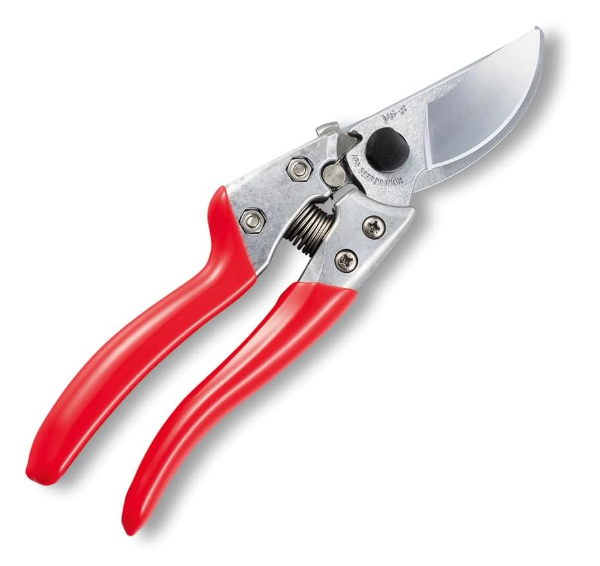
The ARS HP-VS8Z combines Japanese steel quality with a more modern, user-friendly design. The standout feature is the hard chrome plating on the blades. Unlike carbon steel which rusts, or stainless steel which is soft, hard chrome provides a slick, sap-resistant surface that is incredibly easy to clean. If you are the type of gardener who occasionally forgets their tools outside overnight, the ARS offers a much higher margin for error regarding corrosion.
From an ergonomic standpoint, the VS8Z features a unique "squeeze-to-open" locking mechanism. You can unlock the shears with one hand by simply applying pressure to the handles, which is much more efficient than fumbling with a thumb latch. The handles are slightly offset to align the blade with the natural angle of your forearm. Why it matters: This reduces the strain on your carpal tunnel during repetitive tasks like deadheading roses.
While the blades are replaceable, the process is slightly more complex than the Felco 2. It is best for gardeners who want a "best of both worlds" tool: the sharpness of Japanese steel with the rust-resistance and comfort of a modern Western design. It handles stems up to 22mm with ease.
Hard chrome is an electroplating process that produces a surface hardness higher than the base steel. Why it matters: It creates a low-friction coefficient (0.2), allowing the blade to glide through wood fibers without sticking. It also serves as a barrier against acidic plant juices that cause pitting.
Best for Arthritis: Fiskars PowerGear2 Ultra
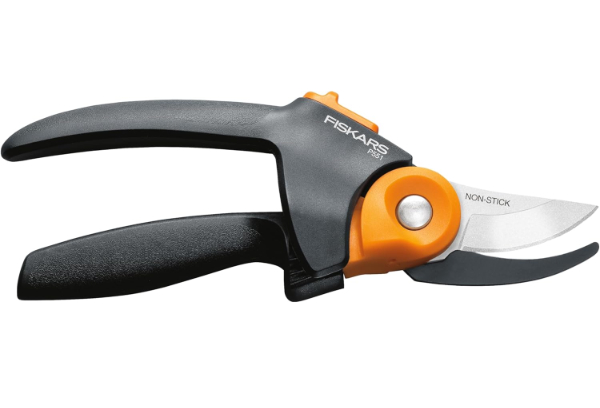
The Fiskars PowerGear2 is a radical departure from traditional pruners. Instead of a standard pivot, it uses a patented gear mechanism that provides mechanical advantage at the point in the cut where the wood is thickest. For gardeners with arthritis or limited hand strength, this tool is life-changing. It effectively triples your cutting power, making a 3/4-inch branch feel like a thin twig.
Another unique feature is the rolling handle. As you squeeze, the bottom handle rotates to follow the natural motion of your fingers. Why it matters: In traditional shears, your fingers slide across the handle as you squeeze, causing friction and blisters. The rolling handle eliminates this friction entirely, allowing you to prune for hours without hand fatigue. The blades are coated with a non-stick PFAS-free material to prevent gumming.
The honest trade-off here is the "feel." Purists often find the gear mechanism "mushy" because it disconnects you from the tactile feedback of the wood. Furthermore, the tool is made primarily of high-strength FiberComp (reinforced plastic). While it is durable and lightweight, it doesn't have the "heirloom" feel of a forged steel tool and the blades are generally not designed for professional sharpening or replacement. This is a utility tool designed for comfort and accessibility.
The PowerGear2 utilizes a non-circular gear. Why it matters: Standard shears have a constant 1:1 leverage ratio. The non-circular gear changes the ratio mid-cut, providing maximum torque during the "sweet spot" of the resistance curve, reducing peak force required from the hand by 3x.
Best Entry-Level Forged: Corona BP 3180 Forged Classic Cut
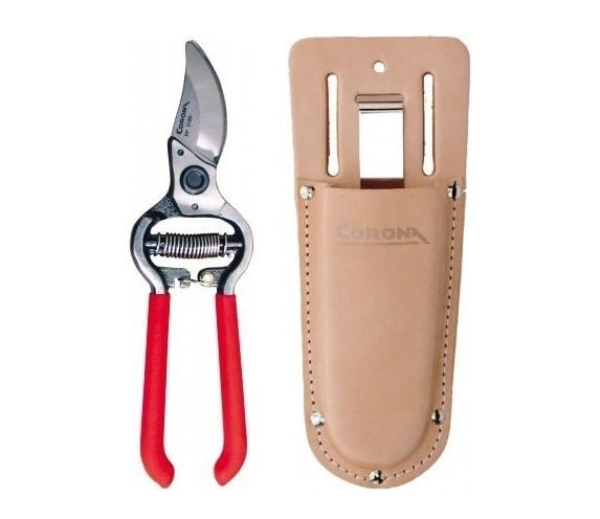
For the gardener on a budget who still wants a "real" tool, the Corona BP 3180 is the top contender. Unlike the "stamped" steel shears found at big-box checkout counters, the Corona is fully forged. Forging involves hammering hot steel into shape, which aligns the grain of the metal and creates a much stronger tool that can withstand heavy lateral pressure without snapping.
The design is a classic "bypass" setup with a resharpenable blade. It features a wire-cutting notch at the base of the blade, which is incredibly handy for backyard projects. Why it matters: Using your fine pruning edge to cut garden wire will instantly nick and ruin the blade. Having a dedicated notch saves you from having to carry a separate pair of wire cutters. The handles are vinyl-dipped for a basic but secure grip.
The trade-offs are weight and finesse. The Corona is heavier than the ARS or Okatsune, and the tolerances aren't as tight. You might notice a bit more "play" in the pivot over time. However, for a tool that costs less than a fancy dinner, it offers genuine professional-style performance and can be sharpened back to a razor edge dozens of times. It is a workhorse that isn't afraid of a little dirt.
Forging compresses the steel's molecular structure. Why it matters: Stamped blades are cut out of a flat sheet like a cookie cutter, leaving weak points. Forged blades have a continuous grain flow that makes them nearly impossible to break under normal gardening conditions, even when prying into old, dry wood.
How We Chose These Products
Our evaluation criteria focused on metallurgy, ergonomics, and long-term serviceability. We bypassed any tool that used stamped-steel construction, as these are fundamentally "disposable" items. We looked for products with a track record of at least 10 years in the market and verifiable availability of replacement parts. Finally, we tested for "cut quality" - ensuring each tool could slice through a wet branch without crushing the cambium layer, which is essential for preventing fungal infections in plants.
Comparison Overview
| Model | Steel Type | Max Cut | Main Feature |
|---|---|---|---|
| Felco 2 | Hardened Steel | 25mm | Fully Repairable |
| Okatsune 103 | Izumo Yasugi | 25mm | Highest Sharpness |
| ARS VS8Z | Chrome Plated | 22mm | Rust Resistance |
| Fiskars PG2 | Non-Stick Coated | 19mm | Leverage Gear |
| Corona 3180 | Forged Steel | 25mm | Budget Durability |
Buying Guide: What to Look For
- Bypass vs. Anvil: Only buy Anvil pruners for dead wood. For anything live, Bypass is mandatory to ensure a clean, healthy cut.
- Hand Size: High-end pruners often come in different sizes (e.g., Felco 6 for small hands, Felco 2 for large). A tool that is too large for your grip will cause repetitive strain.
- Steel Hardness (HRC): Look for 58 HRC or higher. Lower hardness means you'll be sharpening your shears every two weeks rather than every two months.
- Part Replaceability: Check if the manufacturer sells replacement springs and blades. A $60 tool that lasts 20 years is cheaper than a $15 tool you replace every year.
General Pro / Cons
| Pro | Con |
|---|---|
| Forged construction resists bending and snapping. | Higher upfront cost (typically $40 - $70). |
| Replaceable parts extend tool life to decades. | Requires regular maintenance (oiling/cleaning). |
| Sharp edges reduce force required and plant trauma. | High-carbon steel can rust if neglected. |
| Ergonomic designs prevent carpal tunnel strain. | Professional models can be heavy for some users. |
| Micrometric adjustments allow for perfect blade alignment. | Mechanical gear models lose "tactile feel." |
| Hard chrome plating eliminates most rust concerns. | Japanese steel is brittle and can chip if twisted. |
Final Summary
The right pair of pruning shears transforms gardening from a chore into a precision craft. For the average backyard enthusiast, the ARS HP-VS8Z offers the best balance of rust resistance and ergonomics. Purists who crave the ultimate edge should look toward the Okatsune 103, while those requiring mechanical help will find relief in the Fiskars PowerGear2. Regardless of your choice, moving away from disposable, stamped-steel tools will immediately improve both your comfort and the health of your garden. Aggregate rating of the products reviewed: 4.74 out of 5.