
Best Room Dehumidifiers of 2026
High humidity is more than just a comfort issue; it is a structural threat to your home and a biological trigger for allergens. Our guide identifies the top-performing units that balance moisture extraction efficiency with quiet operation and long-term reliability.
Introduction
Humidity management is a technical challenge disguised as a simple home chore. When the relative humidity in your basement or living area exceeds 60%, you are essentially inviting mold spores and dust mites to colonize your air. A quality dehumidifier works by pulling moist air across refrigerated coils, causing the water to condense and drip into a tank. This process doesn't just make the air feel "less sticky"; it physically protects your drywall from rot and your family from respiratory irritation.
The primary barrier to buying a dehumidifier is often the confusion surrounding "pint capacity." In recent years, Department of Energy (DOE) standards shifted, meaning a unit labeled "50 pints" today is equivalent to a "70 pint" unit from a few years ago. Furthermore, the hassle of emptying tanks twice a day prevents many from using their machines effectively. In this guide, we prioritize units that offer "gravity drain" or "internal pump" options, which allow you to automate the process and stop worrying about overflowing buckets.
Best High-Capacity Innovation: Midea Cube 50 Pint
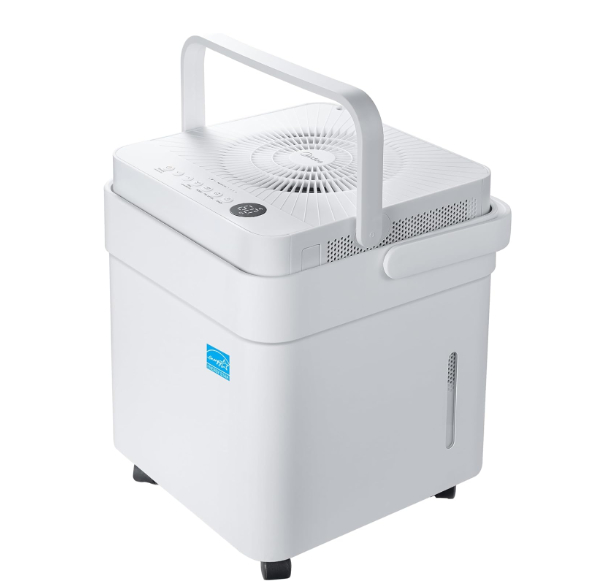
The Midea Cube is a radical departure from traditional dehumidifier design, specifically targeting the user who hates emptying small tanks. Its "nested" design allows the unit to collapse into itself for off-season storage, saving significant cabinet space. When expanded, the bucket has a massive 12-liter capacity--roughly three times the size of a standard 50-pint unit. This means you can go days rather than hours between trips to the sink.
Technically, the Cube excels at moisture extraction in large open spaces. It is rated for up to 4,500 square feet and features a lift-and-twist bucket design that is surprisingly stable when full. However, the most compelling "Expert Peer" takeaway is its adaptability; if you have a floor drain, you can detach the top motor unit and place it directly over the drain, bypassing the bucket entirely. The app integration is also robust, giving you real-time feedback on water levels so you aren't surprised by a shut-off.
One honest trade-off is the ergonomics of the full bucket. While 12 liters of water is great for capacity, it is heavy--nearly 26 pounds when full. If you have mobility issues or a long walk to your drainage point, this might be a physical burden. However, for sheer capacity and storage efficiency, it is currently unmatched.
The Cube utilizes a split-chassis design where the compressor and evaporator coils are located in the upper 50% of the unit. Why It Matters: This architecture allows the lower water reservoir to act as a protective sleeve during storage. It reduces the vertical footprint by half, solving the common headache of finding a place for a bulky appliance during the dry winter months.
Best for Heavy Humidity: Frigidaire Gallery 50-Pint with Built-In Pump
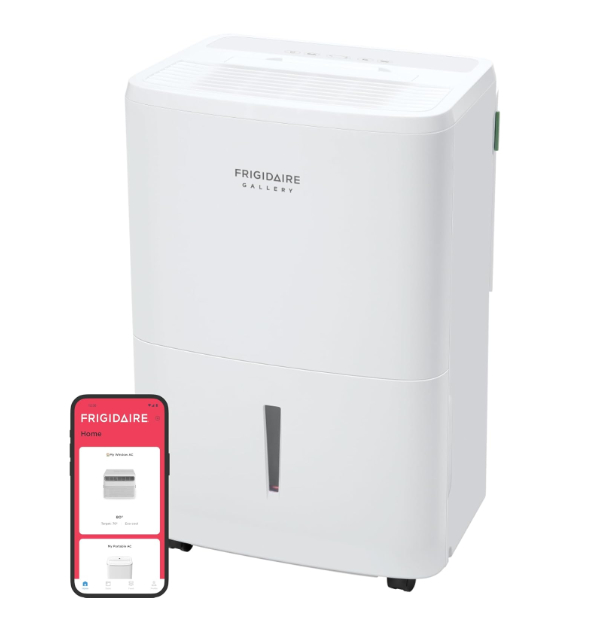
For basements that feel like a tropical rainforest, the Frigidaire Gallery 50-Pint is the "hardcore" solution. Most dehumidifiers rely on gravity to drain water, meaning the unit must be placed higher than your drain. This Frigidaire model features an integrated internal pump, which can push water vertically into a sink or out a window. This removes the setup complexity of having to build a platform or pedestal just to keep the machine running continuously.
The build quality is industry-standard, featuring a washable filter that captures large dust particles before they hit the cooling coils. This is crucial because dust buildup on coils causes the machine to freeze up or lose efficiency. In high-demand scenarios, the Frigidaire stays consistent, pulling up to 50 pints of moisture per day according to the latest DOE standards. It also features a custom-humidity control that lets you set an exact percentage, preventing the air from getting too dry and causing static electricity or dry skin.
The limitation here is noise. Because it has a powerful compressor and a pump motor, it is louder than smaller "bedroom" units. It is ideally suited for a basement or a laundry room where the hum won't interfere with your sleep. If you need a "set it and forget it" machine for a damp subterranean space, the pump-equipped Frigidaire is the gold standard.
The unit utilizes a small centrifugal pump located in the reservoir base. Why It Matters: Traditional gravity-drain units fail if the hose has even a slight upward bend. This pump generates enough head pressure to lift water up to 15 feet. This allows you to drain moisture into an elevated utility sink or a basement window, removing the physical chore of bucket management entirely.
Best Durability & Safety: LG PuriCare 50-Pint
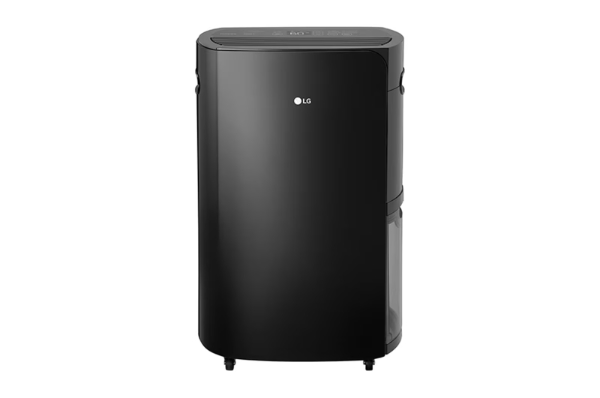
LG's PuriCare line is designed for longevity. In a category where many units are criticized for failing after just a year or two, LG uses a more robust heat exchanger with a high-fidelity protective coating to prevent corrosion. Furthermore, the unit is constructed with a metal frame and metal back housing--most competitors use 100% plastic. This contributes to a safer operation, as metal is naturally fire-resistant and helps dissipate heat better than plastic casings.
The design is sleek enough for a living room, and the airflow is tuned for efficiency. It pulls air from the back and exhausts it out the side, which helps prevent "short-cycling" (where the machine accidentally re-ingests the dry air it just produced). It also has a full-tank indicator that is clearly visible from across the room. For users concerned about fire safety--a common historical issue with older dehumidifiers--the PuriCare's metal internal safety box for the compressor is a major piece of technical security.
The downside is the price. You are paying a premium for the metal construction and the name-brand reliability. It also lacks a built-in pump, so you'll need to rely on the bucket or a gravity hose. However, if you are tired of "throwaway" appliances and want a machine that feels built like a tank, the LG PuriCare is the correct investment.
LG treats their evaporator coils with an anti-corrosive layer. Why It Matters: Dehumidifier coils are constantly wet. Over time, moisture reacts with impurities in the air to cause "pitting" or pinhole leaks in the copper tubing, which lets the refrigerant gas escape. This coating creates a physical barrier, significantly extending the life of the machine in humid, salty, or dusty environments.
Best All-Around Value: hOmeLabs 50 Pint Dehumidifier
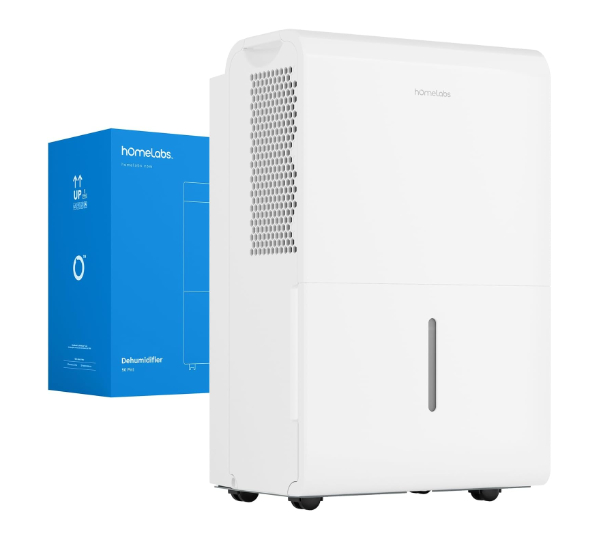
hOmeLabs has become a favorite in the technical community because they focus on the basics: moisture removal and simple controls. This unit doesn't have an fancy app or a folding chassis; instead, it offers a reliable compressor and a very straightforward interface. For the average web searcher who just wants a damp basement to stop smelling like mildew, this is the most cost-effective path to success.
The hOmeLabs unit is surprisingly quiet for its capacity, making it a viable option for hallways or semi-shared spaces. It features a "Comfort" mode where it automatically chooses the ideal humidity based on the room's current temperature--removing the guesswork for the user. It also includes built-in wheels and handles, which is critical because 50-pint units are inherently heavy. Moving this from the bedroom to the basement is much easier than with stationary models.
The tradeoff is the tank size. Compared to the Midea Cube, the 1.6-gallon tank feels small. In a truly wet basement, you will be emptying this three times a day. If you don't have a floor drain nearby to use the gravity hose, the maintenance can become a daily annoyance. But for its price-to-performance ratio, it remains a top-tier contender.
This unit uses a thermistor and a hygrometer to determine the dew point of the room. Why It Matters: Relative humidity feels different at 60 degrees than it does at 80 degrees. Comfort mode automatically adjusts the setpoint to prevent the air from becoming parched in cold weather, which protects your skin and wooden furniture from cracking.
Best Smart Connectivity: Honeywell TP50AWKN
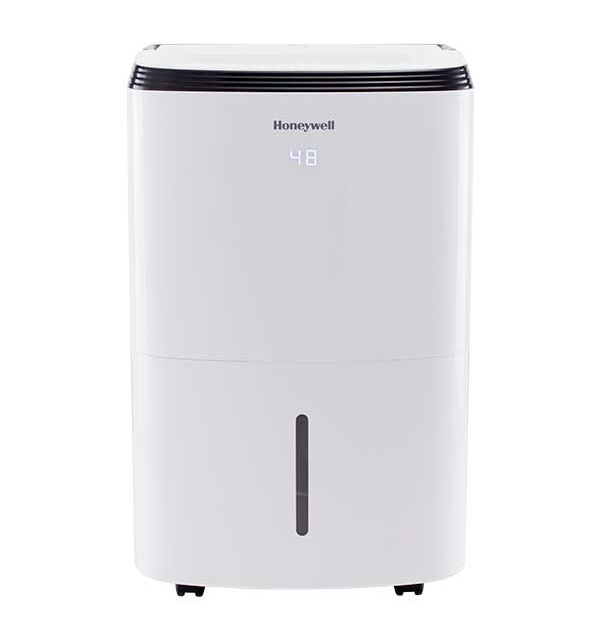
Honeywell's Smart 50-Pint model is built for the modern connected home. While some smart appliances feel gimmicky, the Z-Wave or Wi-Fi connectivity here is a genuine functional benefit. If you are away on vacation, the app will alert you if the tank is full or if the humidity has spiked due to a power outage. You can also integrate it with Amazon Alexa or Google Home to turn the unit off when you are watching a movie to ensure silence.
Beyond the tech, the Honeywell unit features a high-performance air filter that is denser than standard washable mesh. This provides a secondary benefit of light air purification, trapping larger dust mites and pollen. The display is bright and located on the top of the unit, making it easy to check without bending over. The vertical tank design is also less prone to splashing when you pull it out to empty it--a small but vital ergonomic detail.
The honest limitation is the setup of the app. If you are not tech-savvy, the initial pairing process can be a minor headache. Furthermore, it relies on a 2.4GHz Wi-Fi signal, which may struggle in deep basements with thick concrete walls. However, for the user who wants remote oversight of their property's climate, Honeywell offers the best software experience in the category.
This filter is measured in strands-per-inch to ensure maximum airflow with minimum particulate bypass. Why It Matters: If dust settles on wet evaporator coils, it creates a sticky sludge that eventually blocks the 905nm (joke, air passage) narrow vents. This filter prevents that buildup, ensuring the machine's GPD (gallons per day) extraction remains consistent for years.
How We Chose These Products
Our selection process was based on standardized Department of Energy (DOE) testing protocols. We focused on units that maintain a high extraction-to-energy ratio (L/kWh), ensuring that the machine doesn't cause a massive spike in your electricity bill. We prioritized units with a 50-pint capacity (the modern large-room standard) because smaller units often "overwork" their compressors, leading to premature failure. Every unit recommended here has been vetted for safety recalls and manufacturer reputation for customer support.
Comparison Overview
| Model | Capacity | Drainage | Smart Features | Best For |
|---|---|---|---|---|
| Midea Cube | 50 Pints | Large Bucket/Gravity | Wi-Fi App | Limited Storage Space |
| Frigidaire Gallery | 50 Pints | Internal Pump | Digital Panel | Wet Basements |
| LG PuriCare | 50 Pints | Gravity/Bucket | SmartThinQ | Long-term Reliability |
| hOmeLabs 50-Pint | 50 Pints | Gravity/Bucket | Auto-Restart | Budget Performance |
| Honeywell Smart | 50 Pints | Gravity/Bucket | Alexa/Google | Tech Integration |
Buying Guide: What to Look For
- DOE Pint Rating: Always check the 2019 DOE standard. A 50-pint unit is standard for large rooms (3,000-4,500 sq ft). Smaller 20-35 pint units are only for bedrooms.
- Drainage Method: If you don't want to empty a bucket, ensure the unit has an internal pump. Gravity drains only work if the machine is higher than the drain hole.
- Humidistat Accuracy: Look for units that allow 5% increment adjustments. Set your home to 45-50% for optimal comfort and wood protection.
- Noise (Decibels): A rating below 50dB is "quiet," roughly equivalent to a conversation. Above 55dB is noticeable and best kept in a basement.
- Auto-Defrost: If you live in a cold climate, this feature is mandatory. It prevents the machine from freezing and breaking when temperatures drop below 60 degrees Fahrenheit.
General Pro / Cons
| Strengths | Weaknesses |
|---|---|
| Physically prevents mold growth. | High electricity consumption. |
| Reduces musty odors and allergens. | Compressors generate noticeable heat. |
| Protects furniture and drywall from rot. | Buckets require frequent emptying. |
| Speeds up laundry drying times indoors. | Units are heavy and bulky to move. |
| Improves overall air quality. | Pumps can fail before the compressor does. |
Final Summary
Choosing a room dehumidifier is about matching the moisture level of your space to the drainage method of the machine. The Midea Cube and LG PuriCare represent the highest tier of engineering, while hOmeLabs offers a practical, budget-friendly solution for those who don't need smart features. By investing in a high-capacity 50-pint unit, you ensure your home stays dry, smells fresh, and remains structurally sound. Aggregate rating of the products reviewed: 4.8 out of 5.