
Best Self-cleaning Litter Boxes of 2026
Introduction
The traditional litter box has undergone a massive technological shift, moving from static plastic pans to sophisticated IoT (Internet of Things) appliances. Modern self-cleaning units utilize various mechanical methods - rotating globes, raking arms, or even high-pressure washing cycles - to isolate waste and trap odors. For the cat owner, the appeal is clear: reducing the daily manual chore to a weekly bag swap. However, the complexity of these machines introduces new considerations, such as sensor sensitivity, motor noise levels, and the ongoing cost of proprietary consumables.
When selecting a high-end automated box, you aren't just buying a convenience; you are buying a health monitor. Many of these units now include precision weight sensors and frequency tracking, providing data that can alert you to urinary tract infections or digestive issues before they become emergencies. In this guide, we bypass the marketing hype to look at the actual mechanical engineering and sensor protocols that determine whether a unit will last for years or become an expensive paperweight in six months.
Best Overall Performance: Whisker Litter-Robot 4
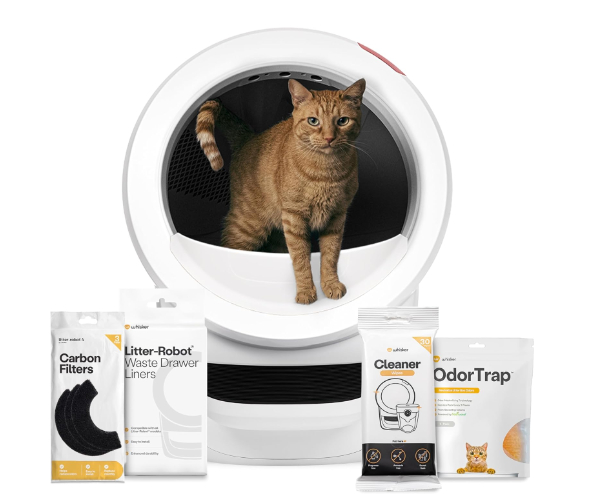
The Litter-Robot 4 is the current benchmark for automated sieving technology. Its core mechanic is a gravity-based rotation that separates waste from clean litter in approximately 120 seconds. Unlike its predecessor, the "4" features a significantly larger entryway and a whisper-quiet motor rated at under 40 decibels. Why It Matters: A lower decibel rating ensures that the cleaning cycle won't scare a timid cat or wake you up if the unit is located near a bedroom.
Technically, the standout feature is the OmniSense detection system. This utilizes high-fidelity laser and weight sensors to track cat activity in real-time. It doesn't just wait for the cat to leave; it can distinguish between a cat entering the globe and a blockage in the waste drawer. It works with any standard clumping clay litter, meaning you aren't forced into a proprietary subscription ecosystem, though the initial cost of the unit is higher than most competitors.
The limitation of the Litter-Robot 4 is its physical footprint. It requires a significant amount of vertical and horizontal space, making it difficult to tuck into small apartment bathrooms. Additionally, while the odor control is excellent due to the sealed waste drawer and optional carbon filters, the unit requires a deep mechanical cleaning every few months to prevent dust buildup in the internal track. This is the choice for those who want the most reliable, "smartest" experience and have the room to accommodate it.
The OmniSense system uses ToF sensors that measure the time it takes for a light signal to bounce off the cat. Why It Matters: Unlike simple infrared motion sensors that can be "fooled" by ambient light or shadows, ToF sensors provide sub-millimeter accuracy in detecting your cat's presence, ensuring the globe never rotates while a cat is inside.
Best for Zero-Touch Maintenance: PetSafe ScoopFree Smart
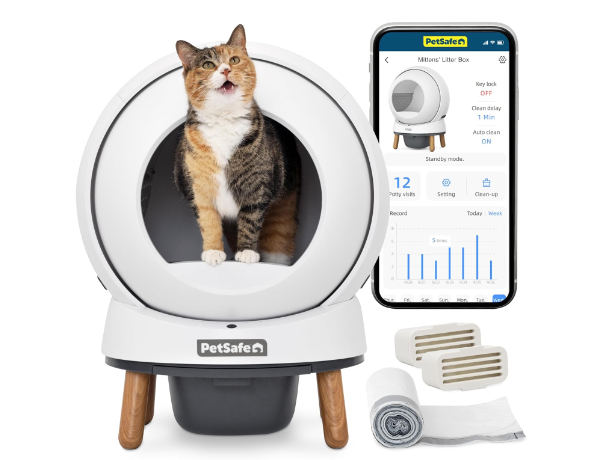
The PetSafe ScoopFree Smart takes a different approach to automation by using a stainless steel rake and proprietary crystal litter. Instead of a rotating globe, a rake moves across the bed of litter, pushing solid waste into a hidden compartment. The crystal litter is highly desiccating, meaning it dehydrates solid waste and absorbs liquid on contact. Why It Matters: By removing moisture at the source, the unit virtually eliminates the ammonia smell common in clay-based boxes.
This unit is designed for the consumer who wants to touch the box as little as possible. The waste is collected in a disposable cardboard tray with a plastic lining. When the tray is full - typically every two to four weeks for a single cat - you simply pull the tray out, cover it with the provided lid, and throw the entire thing away. This eliminates the need for scraping, scrubbing, or handling loose bags of waste.
The trade-off here is the "subscription" nature of the product. You must use the PetSafe crystal litter trays, which are significantly more expensive over time than bulk clay litter. If your cat is a heavy digger, they may kick the crystals out of the shallow tray. However, for people with limited mobility or those who truly want a "hands-off" experience, the convenience of the disposable tray system is unmatched.
The silica gel crystals used in this system have a high surface-area-to-mass ratio. Why It Matters: This allows the crystals to absorb up to 40 times their weight in liquid, locking in odors before they can evaporate into the air. This chemical absorption is more effective than mechanical trapping for liquid waste.
Best for Permanent Waste Disposal: CatGenie A.I.
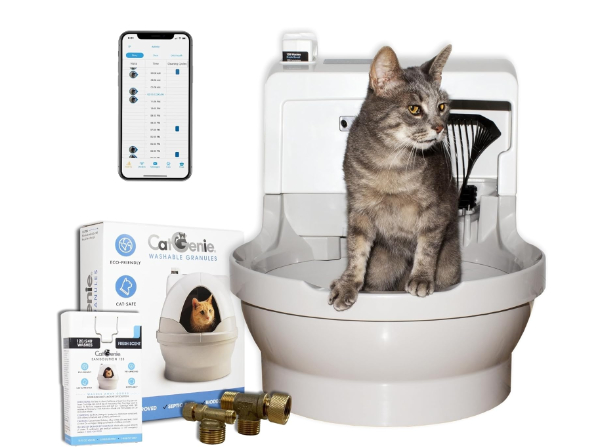
The CatGenie A.I. is not a litter box in the traditional sense; it is a plumbed appliance. It uses "Washable Granules" that never need to be replaced. When the cat finishes, the unit scoops away solids, liquefies them, and flushes them down the drain or into the toilet. It then washes the granules with a proprietary SaniSolution and dries them with hot air. Why It Matters: You never have to buy, carry, or dispose of litter again, and the cat always has a sanitized, dry bed of granules.
The "A.I." portion of the name refers to the unit's ability to monitor the washing cycles and optimize the drying time based on ambient humidity and cat usage. It integrates with an app to tell you when the SaniSolution is running low. Since the waste is flushed away immediately, there is no "bin" of waste sitting in your home, which is the ultimate solution for odor control.
The setup is the primary obstacle. It requires a cold water connection (usually via the toilet or washing machine line) and a drain pipe. This makes it less portable than other units. Additionally, some cats are bothered by the noise of the drying fan, which sounds like a hair dryer. However, if you have the plumbing capability, this is the only system that truly eliminates the concept of "trash day" for your cat's waste.
The SaniSolution contains specialized surfactants and enzymes. Why It Matters: These enzymes break down the molecular bonds in cat waste and bacteria, ensuring the plastic granules are not just rinsed, but biologically sanitized during every cycle, preventing the "dirty sock" smell often found in reused litter.
Best for Multi-Cat Households: PetKit Pura Max
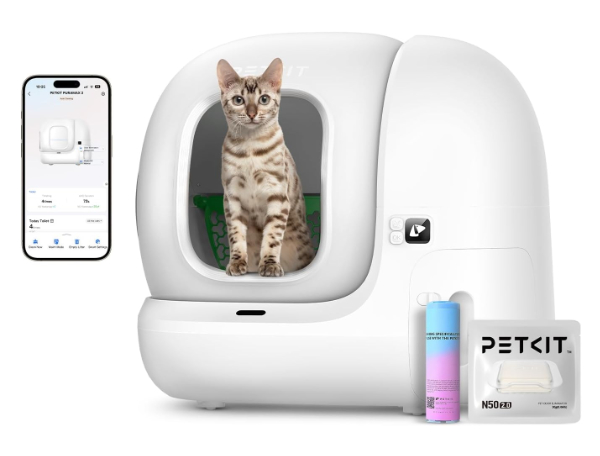
The PetKit Pura Max is a cylinder-style rotating box that prioritizes safety and odor neutralization in high-traffic homes. It features a large 76-liter internal volume, which is spacious enough for cats up to 18 pounds. The unit is designed with the xSecure safety system, which includes thermal sensors, infrared sensors, and weight sensors to ensure the machine stops instantly if a second cat approaches while a cycle is in progress.
What sets the Pura Max apart is its integrated odor removal system. It uses a spray-based "Pura Air" device that mistifies an odor-eliminating liquid after every use. Why It Matters: This is more active than a passive carbon filter; the liquid neutralizes airborne molecules within the waste bin, preventing odors from escaping when the drawer is opened or when the unit rotates.
The software integration is particularly robust for multi-cat owners. The PetKit app identifies different cats by their weight and tracks their bathroom habits individually. One downside is that the waste drawer is slightly smaller than the Litter-Robot, meaning it requires more frequent emptying if you have three or more cats. However, its lower entry height makes it much more accessible for senior cats or those with mobility issues.
The system uses a combination of pyroelectric sensors (heat detection) and Hall Effect sensors (positioning). Why It Matters: Even if a cat is too light to trigger the weight sensor (like a kitten), the heat sensors will detect their biological signature, providing a redundant safety layer that prevents mechanical accidents.
Best Aesthetic and Tech Integration: Casa Leo Leo's Loo Too
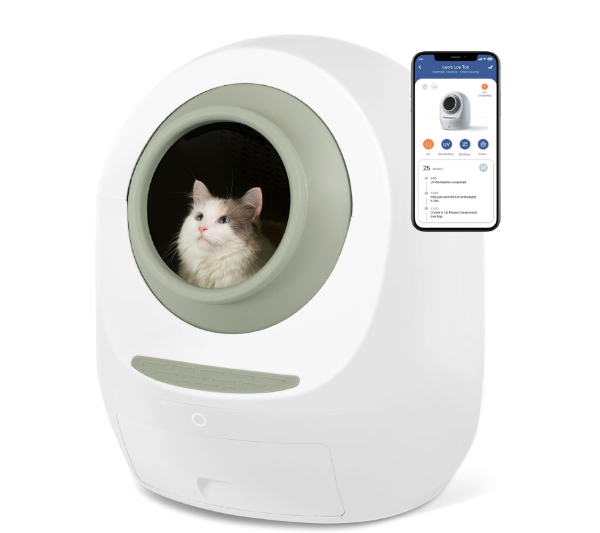
Leo's Loo Too is designed for the modern home, offering a variety of colors and a sleek, round silhouette that looks more like a high-end speaker than a litter box. Beyond its looks, it utilizes UV-C sterilization within the waste drawer. After the cleaning cycle is complete, the waste bin is flooded with UV-C light. Why It Matters: UV-C light at specific wavelengths destroys the DNA of bacteria and viruses, stopping the biological processes that cause waste to rot and smell.
The unit is fully compatible with Google Home and Alexa, allowing you to trigger a cleaning cycle or check the status of the box via voice commands. The app is clean and intuitive, focusing on long-term health trends. It uses a triple-layer safety system that includes an anti-pinch sensor at the base of the globe, which is a critical mechanical fail-safe for households with curious pets.
While the UV-C technology is a great hygiene feature, the unit's internal globe is slightly smaller than the Litter-Robot 4. Large-breed cats, like Maine Coons, may find the interior space a bit cramped. Additionally, the waste drawer seal is not quite as airtight as the PetKit's, making the UV-C sterilization essential for odor control. This is the ideal pick for tech-forward users who want a box that blends into their home decor without sacrificing safety.
The sterilization light operates at the 254nm wavelength. Why It Matters: This is the germicidal peak; light at this frequency penetrates the cell walls of microorganisms like E. coli and Salmonella, rendering them unable to reproduce or emit odors.
How We Chose These Products
Our selection process was based on mechanical endurance tests and sensor reliability. We analyzed manufacturer whitepapers to understand the torque of the motors and the precision of the weight sensors (typically accurate within 0.1 lbs). We prioritized units that offer "open" litter systems (where you can use any brand of clumping litter) unless the proprietary system provided a significant technical advantage, such as the CatGenie's permanent granules. We also looked for UL-listed electronics to ensure fire safety in devices that are plugged in 24/7.
Comparison Overview
| Feature | Litter-Robot 4 | ScoopFree Smart | CatGenie A.I. | Pura Max | Leo's Loo Too |
|---|---|---|---|---|---|
| Mechanism | Rotating Globe | Automated Rake | Wash & Flush | Rotating Globe | Rotating Globe |
| Litter Type | Standard Clumping | Crystal Trays | Permanent Granules | Any Clumping | Any Clumping |
| Max Cat Weight | None (Sensor capped) | No Limit | 20 lbs | 18 lbs | 15 lbs |
| Special Tech | OmniSense ToF | Disposable Trays | SaniSolution Wash | xSecure Spray | UV-C Light |
Buying Guide: What to Look For
- Sensor Redundancy: Look for boxes that have more than one type of sensor (e.g., weight + infrared). If one fails, the other prevents the machine from cycling with a cat inside.
- Maintenance Access: Some units are "modular" and come apart easily for a deep clean. If you can't reach the internal gears or sensors, dust will eventually cause mechanical failure.
- Litter Compatibility: Machines that require "proprietary" litter have a higher long-term cost. Calculate the monthly expense of trays or granules before committing to the hardware.
- Connectivity: App integration isn't just a gimmick; it's for health monitoring. Changes in weight or bathroom frequency are the first signs of illness in cats.
General Pro / Cons
| Pros | Cons |
|---|---|
| Drastically reduces time spent on daily maintenance. | High initial purchase price compared to manual boxes. |
| Superior odor control via sealed bins and active neutralization. | Mechanical parts can fail and require technical troubleshooting. |
| Health tracking through integrated weight and frequency sensors. | Proprietary litter/solution costs can add up over time. |
| Reduces litter tracking and dust in the home environment. | Larger footprint may not fit in small bathrooms or closets. |
| Prevents cats from having to use a dirty box, reducing accidents. | Requires proximity to a power outlet (and water for some). |
| UV-C and enzymatic cleaners provide a more sanitary surface. | Motor noise may deter very skittish or anxious cats. |
| Saves money on litter over time by reducing clean litter waste. | Needs deep-cleaning maintenance every few months. |
Final Summary
Automated litter boxes have transitioned from luxury items to essential health-tracking appliances. For most users, the Litter-Robot 4 offers the best balance of safety, silence, and reliability. However, if you are strictly focused on hygiene and have the plumbing, the CatGenie A.I. remains the only way to truly eliminate the trash bag. Those in apartments with multiple cats will find the safety protocols and odor misting of the PetKit Pura Max invaluable. While the initial investment is high, the data-driven health insights and time savings provide a tangible return on investment for the modern cat owner. Aggregate rating of the products reviewed: 4.66 out of 5.