
Best Skillets for Gas Stoves of 2026
A technical guide to navigating open-flame cooking, focusing on thermal conductivity, BTU responsiveness, and structural integrity for the modern kitchen.
Introduction
Cooking on a gas stove is an exercise in managing raw, immediate heat. Unlike induction or electric coils, gas burners produce an open flame that can wrap around the sides of a pan, creating "hot spots" where the flames lick the metal directly. To master this, a skillet needs more than just a brand name; it needs a physical construction capable of "smoothing out" that aggressive heat profile. We look for materials with high thermal conductivity and heavy bases that won't warp when exposed to the high-BTU output of a professional-grade home range.
The technical "Expert Peer" perspective focuses on the trade-off between Thermal Mass (how much heat the pan can hold) and Responsiveness (how quickly the pan changes temperature when you turn the knob). Cast iron wins on mass, while multi-ply stainless steel wins on responsiveness. For a gas stove, you generally want "fully-clad" construction, where heat-conducting layers extend from the base all the way up the sidewalls to catch the heat climbing from the flames below.
Best Stainless Steel: All-Clad D3 Stainless Fry Pan
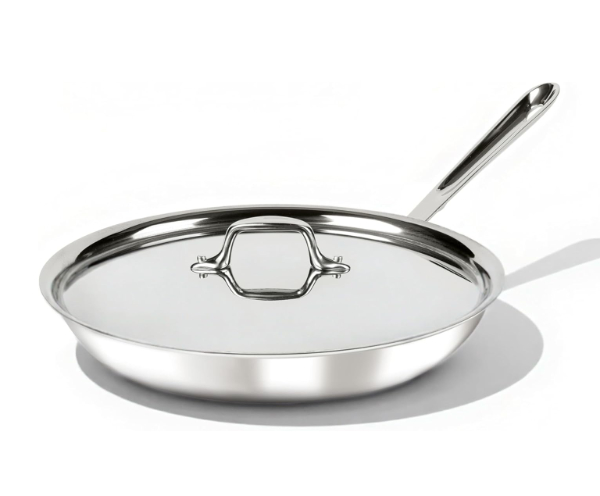
The All-Clad D3 is the industry benchmark for gas cooking due to its "Tri-Ply" bonded construction. It features a heavy-gauge aluminum core sandwiched between two layers of 18/10 stainless steel. Why it matters: Aluminum conducts heat significantly faster than steel, acting as a "heat highway" that spreads the flame's energy across the entire cooking surface, preventing that scorched ring in the center of your pan.
Because gas burners create localized heat, the D3's fully-clad walls are essential. On cheaper pans with only a disc on the bottom, the sides stay cold while the bottom burns. The All-Clad ensures the temperature remains uniform, which is vital for delicate tasks like sauteing shallots or reducing a pan sauce. Its star-shaped rivet pattern and high-wall geometry make it rugged enough for high-heat searing without the risk of the bonding layers separating over time.
The primary hurdle for many users is the handle design - a deep U-shaped groove that can feel sharp in the palm if you aren't used to it. However, this is a safety feature; the groove makes it nearly impossible for the pan to rotate in your hand when pouring heavy liquids. While the price is high, this pan is widely considered a "buy it for life" heirloom tool that handles the thermal shock of gas flames without warping.
All-Clad D3 uses a core of 1050-grade aluminum. Why it matters: This material has high thermal diffusivity, meaning it moves heat through its mass faster than the 304-grade stainless exterior. This "pulls" heat away from the hot spots created by gas flames, distributing it evenly before it hits your food.
Best Cast Iron: Lodge Classic Cast Iron Skillet (12-inch)
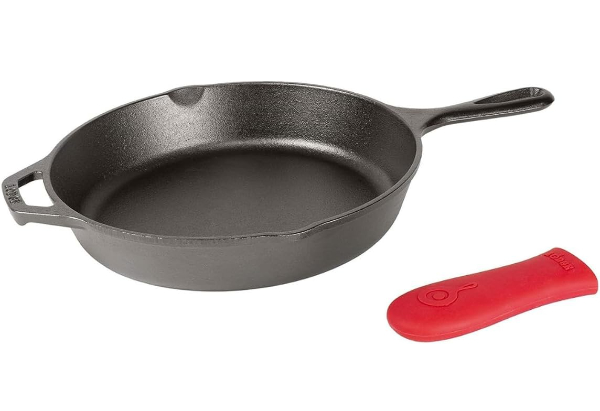
Lodge cast iron is the undisputed champion of Thermal Mass. On a gas stove, where temperatures can fluctuate, the sheer density of a Lodge skillet acts as a "battery" for heat. Why it matters: Once this pan is hot, it stays hot. When you drop a cold steak onto the surface, the temperature doesn't plummet, ensuring you get a crusty, professional-grade sear rather than gray, steamed meat.
Technically, cast iron is a poor conductor compared to aluminum (it heats unevenly at first), but it excels in emissivity. On a gas range, you should preheat a Lodge on a low flame for 5-10 minutes. This allows the heat to "soak" through the metal. Once preheated, the open flame helps maintain that intense heat for frying or baking. It is virtually indestructible; you can move it from a high-BTU burner directly into a 500?F oven without fear of structural failure.
The trade-offs are weight and maintenance. At nearly 8 pounds, it's a workout for the wrists. It also requires "seasoning" - a layer of polymerized oil - to remain non-stick and rust-free. For a gas stove user who values a heavy sear and doesn't mind a little extra cleanup, there is no better value-to-performance ratio in the world.
Cast iron has an emissivity of nearly 0.64 compared to 0.07 for polished stainless steel. Why it matters: This pan doesn't just cook what it touches; it radiates heat upward into the food. On a gas stove, this helps cook thick cuts of meat through to the center while the flame sears the outside.
Best Professional Non-Stick: Made In Non Stick Frying Pan
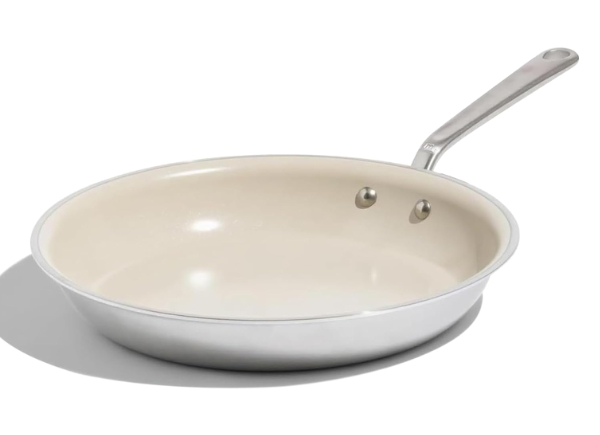
Most non-stick pans are built cheaply and warp on gas stoves because the metal is too thin to handle the flame's intensity. Made In solves this by using a 5-ply stainless cladding as the base for their non-stick coating. Why it matters: You get the even heating of a professional stainless pan with the easy release of a modern coating, allowing for delicate omelets or fish without the cleanup nightmare.
Technically, the pan uses multiple layers of PTFE (Polytetrafluoroethylene) that are cured at high temperatures to ensure durability. On a gas stove, you must be careful not to use "high" heat, as temps above 500?F can degrade non-stick surfaces. However, because the 5-ply base is so efficient at conducting heat, "medium" on a gas burner performs like "high" on a lesser pan. It's a sophisticated tool that bridges the gap between home convenience and restaurant performance.
The limitation is longevity. No non-stick pan lasts forever; even the best ones typically need replacement every 3-5 years as the coating wears. Made In's premium price reflects the high-quality stainless steel base, which prevents the pan from "bowing" (where the center pops up) over a gas flame - a common failure in cheaper aluminum non-stick pans.
This pan uses 5 distinct layers: 304 Stainless, Aluminum, Aluminum Alloy, Aluminum, and 430 Stainless. Why it matters: The extra aluminum layers create a massive "buffer zone" for heat. This prevents the gas flame from creating "hot spots" that would otherwise scorch the non-stick coating and cause it to fail prematurely.
Best Carbon Steel: Matfer Bourgeat Black Carbon Steel Fry Pan
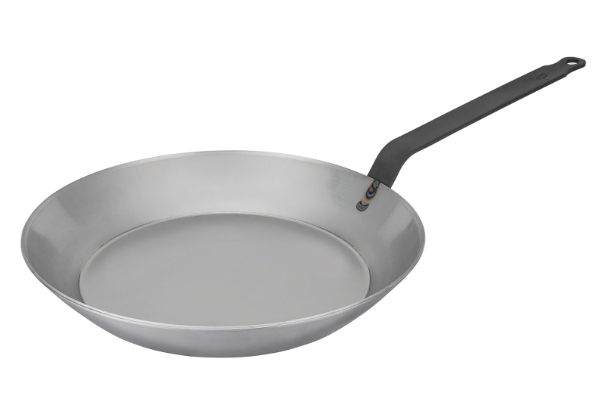
Carbon steel is the "chef's secret" for gas stoves. It combines the heat retention of cast iron with the responsiveness of stainless steel. The Matfer Bourgeat stands out because it features a rivetless handle design. Why it matters: Rivets are the little bumps inside a pan where the handle attaches; food and grease get stuck around them. A rivetless pan is perfectly smooth, making it more hygienic and easier to clean after a messy saute.
Technically, this pan is made of high-density black steel. It is lighter and more agile than cast iron, allowing you to "toss" vegetables or flip pancakes with a flick of the wrist. On gas, it reacts quickly to the flame; if your pan is getting too hot, turning the dial down results in a near-instant drop in cooking temperature. Like cast iron, it must be seasoned, but it develops a slick, dark patina over time that is naturally non-stick.
The trade-off is the initial setup. Matfer pans come coated in a thick layer of shipping wax to prevent rust, which requires a vigorous scrubbing with hot water before your first use. It is also susceptible to rust if left in a damp sink. This is a "prosumer" tool for the enthusiast who wants a pan that performs better the more you use it.
When you heat oil in carbon steel, the fats undergo polymerization, turning into a hard, plastic-like solid that bonds to the metal. Why it matters: Because gas stoves provide direct, high-intensity heat, they are the best environment for maintaining this "seasoning" layer, creating a pan that performs like non-stick without the chemicals.
Best Budget Stainless: Tramontina Gourmet Tri-Ply Clad Fry Pan
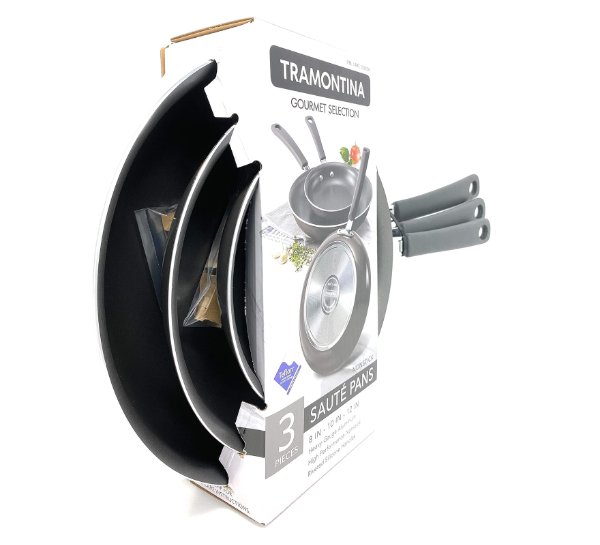
The Tramontina Gourmet line is the "great equalizer" in the cookware world. It offers nearly identical technical specs to All-Clad but at a fraction of the cost. It is a "fully-clad" pan, meaning the aluminum core runs from rim to rim. Why it matters: Many budget pans only have a heavy plate on the bottom (impact-bonded); these plates can eventually pop off due to the uneven expansion of metal on a gas stove. Tramontina's bonded construction eliminates this risk.
Technically, it uses 18/10 stainless steel which is highly resistant to the corrosive environment of a kitchen. Its performance on gas is remarkably stable, providing even browning for chicken thighs or vegetables. The handle is ergonomic and stay-cool, though the overall weight is slightly lighter than its premium competitors. Why it matters: A lighter pan heats up faster, but it also has slightly less "thermal inertia," meaning the temperature may drop more when you add food.
The only real downside compared to high-end brands is the finishing. The edges of the pan aren't "sealed" or rolled as smoothly as an All-Clad, so you may see the layers of aluminum and steel at the rim. This is purely aesthetic and doesn't affect the cooking performance. For anyone starting a kitchen or looking to upgrade from cheap non-stick, this is the best ROI (Return on Investment) available.
Clad cookware bonds the layers across the entire sheet of metal. Impact-bonded cookware only attaches a disc to the bottom. Why it matters: Gas flames often lick the sides of the pan. In impact-bonded pans, the sides remain cold while the bottom burns; in clad pans like Tramontina, the whole pan cooks.
How We Chose These Products
Our evaluation criteria focused on Thermal Uniformity and BTU Responsiveness. We prioritized pans that could survive a "dry heat" test - heating an empty pan over a high gas flame to check for warping or base deformation. We also looked for "rim-to-rim" cladding, which is non-negotiable for gas stoves where heat travels vertically up the sidewalls. Finally, we considered handle ergonomics and balance, ensuring these pans remain stable on grate-style gas ranges.
Comparison Overview
| Model | Material | Construction | Weight (12") | Maintenance |
|---|---|---|---|---|
| All-Clad D3 | Stainless/Aluminum | 3-Ply Fully Clad | ~3.0 lbs | Dishwasher Safe |
| Lodge Classic | Cast Iron | Monoblock Cast | ~8.0 lbs | Hand Wash/Season |
| Made In | Stainless/PTFE | 5-Ply Fully Clad | ~3.2 lbs | Hand Wash Only |
| Matfer Bourgeat | Carbon Steel | Pressed Steel | ~4.5 lbs | Hand Wash/Season |
| Tramontina Gourmet | Stainless/Aluminum | 3-Ply Fully Clad | ~2.8 lbs | Dishwasher Safe |
Buying Guide: What to Look For
- Fully-Clad vs. Disc-Bottom: Always choose fully-clad for gas. It prevents scorching at the edges where the flame meets the pan's curve.
- BTU Sensitivity: High-output gas burners can warp thin pans. Look for a thickness of at least 2.5mm to 3.0mm in stainless steel.
- Handle Length: Gas flames create radiant heat around the pan. A longer handle (8 inches or more) stays cooler and keeps your hand away from the heat zone.
- Rim Design: Flared rims allow for drip-free pouring of liquids and fats. Straight-sided rims are better for deep-frying but can be messy for sauces.
General Pro / Cons
| Pro | Con |
|---|---|
| Instant temperature response on gas burners. | Exposed flames can disfigure polished exteriors over time. |
| High-heat capability for superior searing and browning. | Uneven grates can cause lighter pans to tip or slide. |
| Durable enough for metal utensils (Stainless/Iron). | Heavier pans (Cast Iron) can be difficult to maneuver. |
| Versatile: Most can go from stovetop to oven to grill. | Requires a learning curve for heat management (Stainless). |
| No "cycling" of heat like electric/induction coils. | Gas heat is less efficient (lots of heat escapes into the air). |
| Visible flame makes it easier to judge heat intensity. | Carbon steel and Iron require active maintenance. |
Final Summary
Investing in a high-quality skillet for your gas stove is less about the brand and more about the metal's ability to tame a flame. For the ultimate balance of speed, weight, and precision, the All-Clad D3 remains the technical king. If you crave the best sear money can buy and don't mind the weight, the Lodge Cast Iron is a timeless essential. For the budget-conscious, Tramontina provides pro-level cladding that respects your wallet. Regardless of your choice, remember that gas cooking rewards patience and preheating - let the metal reach its steady state before you start cooking. Aggregate rating of the products reviewed: 4.7 out of 5.