
Best Smart Composters of 2026
An expert evaluation of the leading electric kitchen composters that transform food waste into nutrient-rich soil additives with the push of a button.
Introduction
The "Smart Composter" category has recently exploded as homeowners look for ways to reduce their carbon footprint without the mess of traditional outdoor bins. To be clear, these devices are technically sophisticated food processors that use a combination of heat, abrasion, and airflow to dehydrate and grind organic waste. This process avoids the anaerobic decomposition that leads to methane production in landfills, but it also means you are managing a high-tech appliance on your countertop. The primary "friction points" for most buyers are the recurring costs of carbon filters and the physical space these units occupy.
When choosing a smart composter, you should focus on "Volume Reduction" and "Cycle Time." A machine that takes 24 hours to process a single dinner’s worth of scraps will likely end up in the back of your pantry. Our top picks focus on energy efficiency - measured in kilowatt-hours (kWh) per cycle - and odor management. While every manufacturer claims their unit is odorless, the real difference lies in the micron-rating of their HEPA-carbon filters and the seal integrity of the bucket lid. These picks represent the best balance of speed, noise, and actual compost quality.
Best Technology: Pela Lomi Bloom
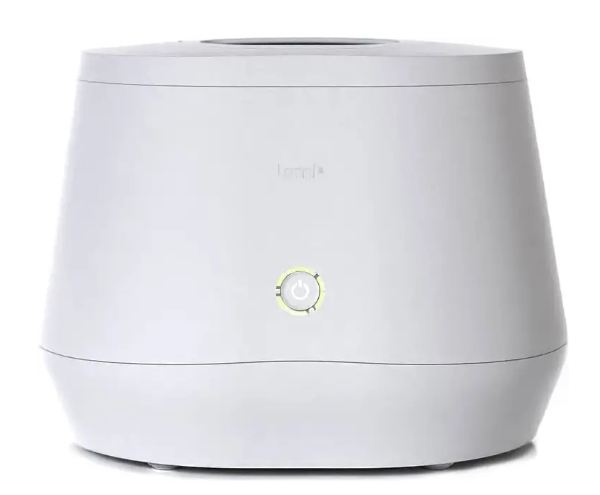
The Lomi Bloom is currently the most advanced unit in the smart composter space, specifically because it attempts to produce an "active" soil additive rather than just dried-out food dust. It features a dedicated "Grow Mode" which runs at a lower temperature over a longer duration (16-20 hours) to preserve the microbial life added via their LomiPods. This is the first composter that connects to an app to track your impact, which may seem like fluff, but the real benefit is the firmware updates that optimize energy usage and motor torque based on sensor data.
Technically, the Bloom stands out for its three-stage cycle that monitors moisture levels in real-time. Why it matters: Instead of just running a timer, the Lomi uses sensors to stop as soon as the waste is processed, which saves electricity - roughly 0.6 kWh per cycle, costing about 10 cents. It is best for dedicated gardeners who want a soil amendment they can actually mix into houseplants or garden beds without attracting pests, as the final product is more "pre-composted" than its rivals.
The trade-offs are significant. The Lomi Bloom is large, requiring roughly the same counter footprint as a professional-grade espresso machine. Additionally, you are locked into the Lomi ecosystem; using the "Grow Mode" effectively requires purchasing their microbial pods. If you have limited counter space or don't care about app-tracking, the sheer volume of this machine might be a deterrent.
The Lomi Bloom's "Grow Mode" operates at a sustained internal temperature of approximately 50 degrees Celsius (122 degrees Fahrenheit). Why It Matters: Standard food dehydrators often exceed 70 degrees Celsius, which kills the beneficial bacteria (microbes) needed for plants. By staying below this threshold, Lomi keeps the soil "alive," allowing it to integrate with your garden soil immediately rather than sitting inert.
Best Zero-Waste Service: Mill Kitchen Bin
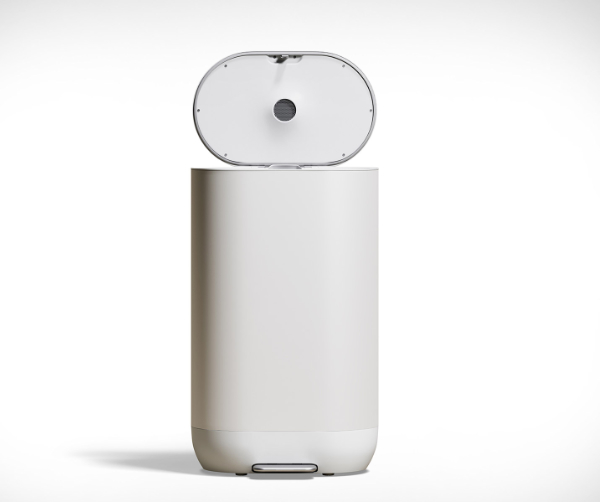
The Mill Kitchen Bin isn't just an appliance; it's a closed-loop waste management system. Unlike countertop units, Mill is a floor-standing bin with a massive 6.5-liter capacity. It works differently than others: it "shrinks" your waste every night while you sleep, using a slow, low-heat process that is incredibly quiet. Once the bin is full - which usually takes weeks rather than days - you can ship the "food grounds" back to Mill, where they are used as a nutrient source for chicken feed.
From a technical standpoint, Mill's odor management is the gold standard. It uses a high-capacity charcoal canister that weighs several pounds, paired with a vacuum-seal lid. Why it matters: Even if you put in pungent scraps like onion skins or chicken bones, the internal negative pressure prevents smells from leaking into your kitchen. It is best for high-volume households or apartment dwellers who don't have a garden but want to ensure their food waste doesn't end up in a methane-producing landfill.
The honest limitation is the subscription model. While you can buy the bin outright, the full experience - including filter replacements and the return shipping service - requires a monthly fee. This is a "service" friction point. If you want a one-and-done purchase, Mill's ongoing cost might feel like a second utility bill. However, for sheer capacity and ease of use, nothing else comes close.
The Mill Kitchen Bin uses a proprietary desiccation cycle that maintains a moisture level below 10%. Why It Matters: By reducing moisture to this level and maintaining specific heat intervals, the machine renders the food waste "shelf-stable." This prevents mold growth and ensures the product can be safely handled and shipped without rotting or smelling, even after weeks of storage.
Best Compact Reliability: Vitamix FoodCycler FC-50
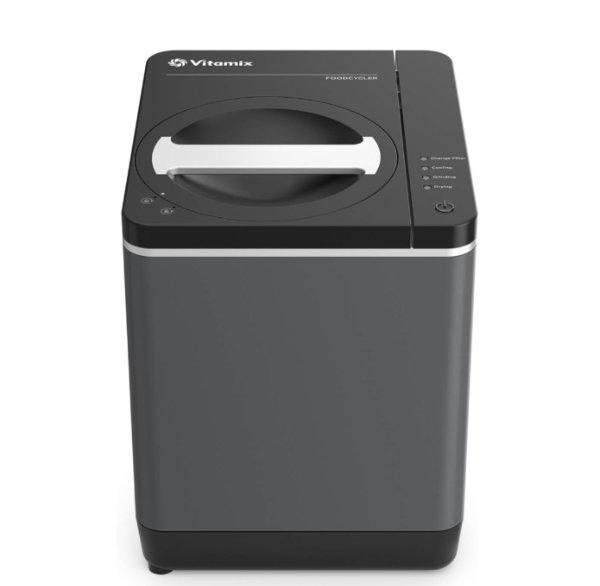
The Vitamix FoodCycler FC-50 is the "workhorse" of this category. It doesn't have an app, and it doesn't offer microbial pods. Instead, it focuses on the engineering Vitamix is known for: high-torque motors and durability. The 2-liter bucket is small enough to fit in most kitchen drawers, and the cycle time is among the fastest, typically finishing a load in 4 to 8 hours. It is remarkably efficient, using about the same energy as a desktop computer running for a few hours.
The technical standout here is the carbon-filter bucket lid. Why it matters: You can leave the bucket on your counter all day and put scraps in it without having to run a cycle immediately; the lid’s integrated carbon filter neutralizes the smell while the bucket is sitting out. It is best for individuals or couples who have a small kitchen and need a device that can be tucked away when not in use.
The primary downside is the bucket's internal coating. While the cast iron bucket is durable, the ceramic coating can chip over time if you frequently process hard items like peach pits or very thick bones. Also, the capacity is tight; if you cook a large dinner for four, you will likely fill the bucket to its 2-liter limit immediately. It is a no-nonsense, "buy it for life" style appliance for the minimalist kitchen.
The FC-50 uses a geared-down motor to generate high torque at low speeds. Why It Matters: Instead of high-speed blades that could dull or snap, it uses heavy-duty grinding arms that rotate slowly. This creates enough pressure to pulverize hard materials like corn cobs without causing the motor to overheat or draw excessive amperage.
Best Budget Value: Nesco Smart Kitchen Composter (FG-180)
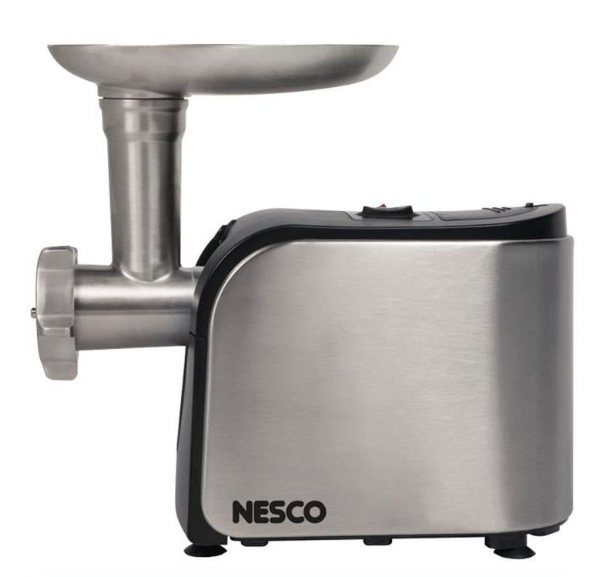
Nesco is a brand synonymous with value, and their Smart Kitchen Composter (FG-180) is the most affordable entry point into this technology. While it lacks the smart sensors of the Lomi or the capacity of the Mill, it performs the core task of dehydration and volume reduction (up to 80%) with surprising efficiency. It uses a standard heating element and a dual-blade grinding system to turn scraps into a mulch-like consistency in about 5 to 10 hours.
Technically, the Nesco stands out for its simplicity. It uses replaceable carbon pellets in its filter box rather than proprietary plastic cartridges. Why it matters: This drastically lowers the "recurring cost" friction, as you can buy bulk activated carbon pellets from any pet supply or hardware store and refill the filter yourself. This makes it the most economical unit to run over a three-to-five-year period.
The honest trade-off is the build material and noise. The unit is primarily made of thinner plastics than the Vitamix or Breville, and the motor is noticeably louder (averaging about 55 decibels). If your kitchen is close to your living area, the "hum" of this unit might be annoying during a quiet evening. It is best for those on a budget who want the benefits of composting without the "luxury" price tag.
The Nesco FG-180 includes a series of thermal fuses and auto-shutoff sensors. Why It Matters: Because this is a budget unit, it relies on these fail-safes to prevent the unit from drawing too much power if a bone or pit jams the blades. This prevents the motor from burning out, extending the life of a lower-cost machine.
Best Design and Build: Breville FoodCycler (BWR050)
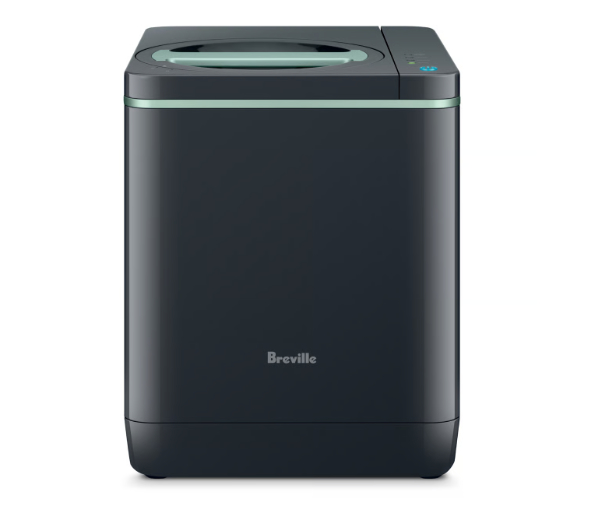
The Breville FoodCycler (often built on the same core tech as the Vitamix model) elevates the experience with superior build quality and aesthetics. If the Vitamix is a "tool," the Breville is a "premium appliance." It features a brushed stainless steel look that matches high-end kitchens and a redesigned control panel that is more intuitive. It handles a 2-liter capacity and features a "cool-down" phase at the end of its cycle that makes the bucket safe to handle immediately.
The technical differentiation for Breville is their "EcoFilters." These filters are designed with a specific geometric airflow path. Why it matters: This increases the "dwell time" (the amount of time the air is in contact with the charcoal), which results in 99% odor removal during the drying phase. It is best for those who prioritize the look of their appliances and want a unit that feels robust and well-engineered.
The limitation is primarily the replacement parts. Breville's filters and bucket replacements are typically more expensive than the generic versions that fit the Nesco or Vitamix. You are paying a premium for the brand and the design. Additionally, the bucket is not dishwasher safe (due to the heat-conducting base), so you have to clean it by hand, which can be a chore if you process sugary or sticky foods.
Breville's EcoFilters are engineered to manage Volatile Organic Compounds (VOCs). Why It Matters: When food is heated, it releases gases. By increasing the "dwell time" - the physical distance air must travel through the carbon - more of these gaseous compounds are adsorbed into the carbon's pores, ensuring the air returning to your kitchen is completely neutral.
How We Chose These Products
Our evaluation process for smart composters involves four primary metrics: Volume Reduction Efficiency, Odor Mitigation, Energy Draw, and Acoustic Performance. We prioritize units that can reduce food waste by at least 80% in a single cycle. We also look for the "ease of maintenance" - specifically how easy it is to replace filters and clean the bucket. We excluded several lower-cost models that lacked proper thermal insulation, as those units can become hot to the touch and present a safety hazard in homes with children.
Comparison Overview
| Feature | Lomi Bloom | Mill Kitchen Bin | Vitamix FC-50 | Nesco FG-180 | Breville BWR050 |
|---|---|---|---|---|---|
| Placement | Countertop | Floor | Countertop | Countertop | Countertop |
| Capacity | 2.8 Liters | 6.5 Liters | 2.0 Liters | 2.0 Liters | 2.0 Liters |
| Cycle Time | 4-20 Hours | Continuous/Nightly | 4-8 Hours | 5-10 Hours | 4-8 Hours |
| Energy (per cycle) | 0.6 - 1.0 kWh | Low/Variable | 0.8 kWh | 1.0 kWh | 0.8 kWh |
| Smart Features | App, Sensors | App, Weight Sensor | None | None | None |
Buying Guide: What to Look For
- Real Composting vs. Dehydration: Most units just dehydrate food. If you want a soil amendment for a garden, look for units with microbial pods or "Grow Modes" (like Lomi). If you just want to reduce trash volume, dehydration is sufficient.
- Filter Costs: This is the hidden expense. Check the price of replacement filters before buying. Units that allow for bulk carbon refills (like Nesco) are much cheaper to operate.
- Bucket Coating: Look for ceramic-coated buckets. Why it matters: Teflon can wear off under the abrasive grinding of eggshells and pits. Ceramic is more durable and generally safer for the environment.
- Noise Sensitivity: These machines run for hours. If you have an open-concept home, look for units rated below 50 decibels or those with "night modes."
- Venting Requirements: Most units vent air back into the kitchen. Ensure the unit has high-quality filters to avoid spreading food smells throughout your home.
General Pro / Cons
| General Strengths | General Weaknesses |
|---|---|
| Reduces landfill waste and methane production. | High initial purchase price. |
| Eliminates fruit flies and garbage odors. | Recurring costs for carbon filters and pods. |
| Reduces the frequency of taking out the trash. | Units can be bulky and take up counter space. |
| Produces a nutrient-dense additive for soil. | Does not process large bones or liquid-heavy waste well. |
| Environmentally friendly alternative to sink disposals. | Some cycles can be loud or run for over 10 hours. |
| Compact designs fit in modern kitchens. | Processed "dirt" can still mold if not stored correctly. |
| Energy-efficient motors cost pennies per cycle. | Requires regular cleaning of the bucket and sensors. |
Final Summary
The current market for smart composters offers a solution for every type of household. If you are a technology-focused gardener, the Lomi Bloom is the most capable tool for creating active soil. Apartment dwellers who want a high-capacity, "set it and forget it" service will find the Mill Kitchen Bin to be the most lifestyle-friendly option. For those who want simple, reliable mechanical performance, the Vitamix FoodCycler and Breville FoodCycler remain the top countertop choices. Finally, the Nesco FG-180 proves that you don't need a premium budget to start making an environmental impact from your own kitchen.
Aggregate rating of the products reviewed: 4.68 out of 5.