
Best Smart Locks of 2026
Upgrade your home security with precision-engineered deadbolts that offer keyless entry, remote monitoring, and seamless ecosystem integration without compromising on physical safety.
Introduction
The transition from a traditional metal key to a smart lock often feels like a leap of faith. We worry about battery failures, Wi-Fi outages, and the nightmare scenario of being digitally locked out of our own homes. However, the modern smart lock landscape has matured significantly. Today’s top picks aren’t just gadgets; they are robust security devices that combine the mechanical strength of hardened steel with the convenience of encrypted wireless protocols. By eliminating the "hide-a-key" under the mat, you actually close a major security gap while gaining the ability to grant temporary access to guests or service workers from anywhere in the world.
When evaluating these locks, we look beyond the glossy finishes. We prioritize hardware that carries high BHMA (Builders Hardware Manufacturers Association) ratings, which tell us exactly how much physical force a lock can withstand before failing. We also weigh "ecosystem lock-in" heavily. Whether you use Apple Home, Google Home, or Amazon Alexa, your lock needs to speak the right language—specifically through protocols like Thread or Matter—to ensure it reacts instantly when you tap your phone. The following five locks represent the best in class for security, reliability, and ease of use.
Best Overall: Schlage Encode Plus
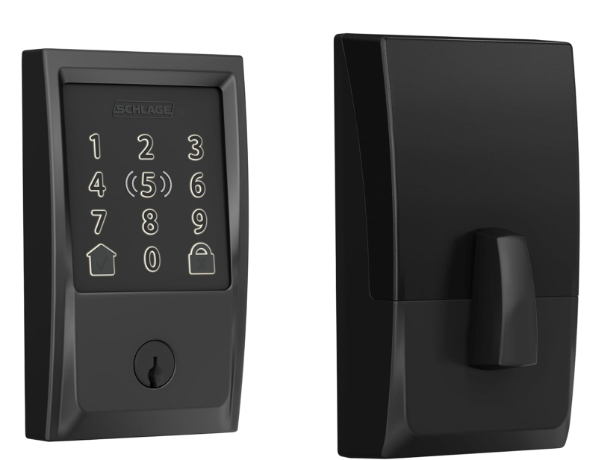
The Schlage Encode Plus is the gold standard for anyone seeking a "set it and forget it" security solution. Its standout feature is Apple Home Key support, which uses Near Field Communication (NFC) to let you unlock your door by simply tapping your iPhone or Apple Watch against the lock—even if your phone’s battery has died. For non-Apple users, the built-in Wi-Fi and capacitive touchscreen provide equally reliable entry. Unlike many competitors that feel like plastic toys, the Encode Plus feels substantial, carrying a BHMA Grade 1 rating, the highest level of residential security against picking, drilling, and blunt force.
Technically, this lock shines because of its support for Thread. While it has Wi-Fi for basic setup, Thread is a low-power mesh networking protocol that allows the lock to communicate with your smart home hub without draining the batteries. This results in an "instant" response time compared to older Bluetooth locks that often lag for several seconds. The physical installation is straightforward, fitting most standard door preps with just a screwdriver, though the internal housing is quite large and might interfere with decorative trim on some doors.
The primary trade-off is the price and the size. It is one of the more expensive units on the market, and the interior portion of the lock is bulky, which might clash with minimalist decor. However, you are paying for the peace of mind that comes with a century of Schlage mechanical expertise paired with cutting-edge wireless technology. It is best for homeowners who want the most secure physical bolt combined with the most effortless digital entry currently available.
The Encode Plus is certified BHMA Grade 1. Why It Matters: This means the lock has been tested to withstand 250,000 cycles (opening and closing) and 10 strikes of 75 foot-pounds of force. In plain English: it is significantly harder to kick in or wear out than the Grade 2 or 3 locks found in most big-box stores.
Best Retrofit: August Wi-Fi Smart Lock (4th Gen)
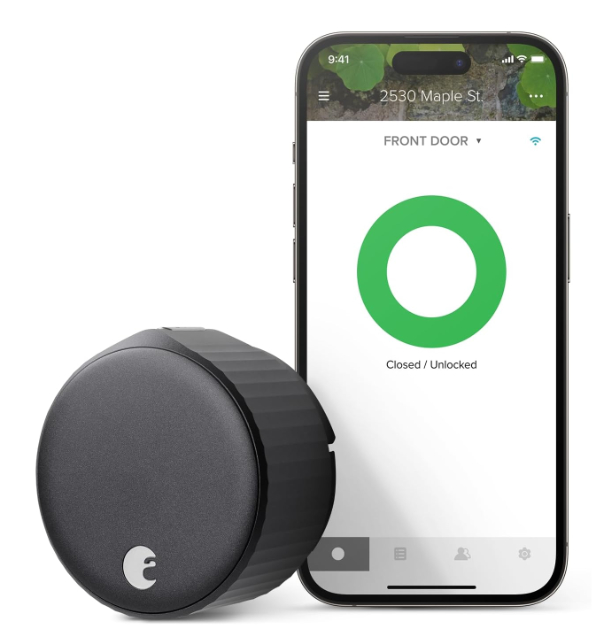
If you live in a rental or simply love your current deadbolt, the August Wi-Fi Smart Lock is the ideal choice. It only replaces the interior thumbturn of your existing lock, meaning the outside of your door remains exactly the same and you can still use your original physical keys. This makes it a "stealth" upgrade that is perfect for apartment dwellers who need to maintain a uniform exterior appearance or homeowners who don’t want to rekey their entire house.
The 4th generation model is significantly smaller than its predecessors and includes Wi-Fi built-in, eliminating the need for an external bridge. It features "Auto-Unlock," which uses a combination of Bluetooth and Geofencing to detect when you arrive home and pull the bolt back automatically. For security, it uses AES 128-bit and TLS encryption—the same level of protection used by banks—to ensure that your digital "handshakes" cannot be intercepted by hackers.
The main downside is battery life. Because it is so compact and uses Wi-Fi directly, the two CR123 batteries usually need replacing every 3 to 6 months depending on usage. It also lacks a built-in keypad, though you can purchase one separately. Despite these minor hurdles, its ease of installation (usually under 10 minutes) and the clever DoorSense feature that tells you if your door is actually shut or just left ajar make it a top-tier contender.
August uses a Hall effect sensor (magnetometer) to detect door position. Why It Matters: Most smart locks only know if the "bolt" is extended. August knows if the door is physically in the frame. This prevents the lock from extending the bolt into the door trim if the door is still swinging open, which could damage the motor and the door.
Best Biometric: Ultraloq U-Bolt Pro WiFi
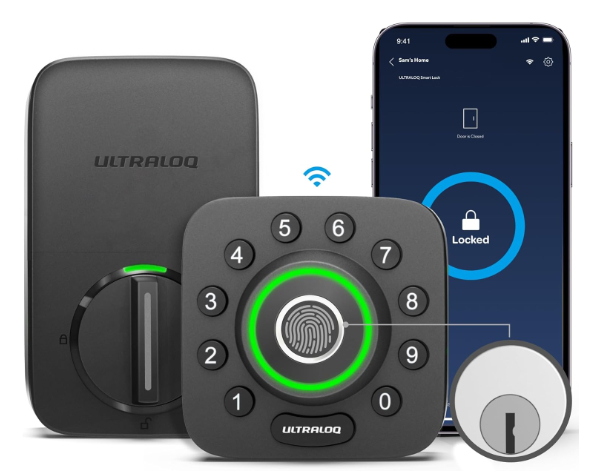
For those who want every possible way to enter their home, the Ultraloq U-Bolt Pro WiFi offers a "6-in-1" entry system. The star of the show is the 360-degree capacitive fingerprint scanner, which is fast and accurate enough to recognize your print even if your finger is slightly damp or dusty. It also includes a keypad with "anti-peep" technology, auto-unlock via geofencing, and a hidden physical keyhole for emergencies. It is a highly versatile lock that works well for families with children who might forget a code or lose a phone.
Under the hood, the Ultraloq uses a 2.4GHz Wi-Fi chip for direct cloud connectivity. While this allows for remote management without a hub, it does mean the lock is slightly more power-hungry than Thread-enabled rivals. The mechanical bolt is zinc-alloy with a weather-resistant IP65 rating, meaning it can handle heavy rain and extreme temperatures without the electronics seizing. The "Magic Shake" feature allows you to unlock the door by simply shaking your phone, which is surprisingly helpful when your hands are full of groceries.
Honest limitations include a slightly "techy" aesthetic that might not fit traditional architecture and an app that can be a bit cluttered compared to the streamlined August or Apple Home experiences. Also, because it has so many moving parts and sensors, proper door alignment is critical; if your door requires a "tug" to lock properly, the motor may struggle. It is best for tech-forward users who prioritize biometric speed and multiple redundancy options.
Ultraloq uses capacitive sensors rather than optical ones. Why It Matters: Optical sensors just take a picture of your finger, which can be fooled by a high-res photo. Capacitive sensors use electrical currents to map the ridges and valleys of your skin, making it much more secure and reliable in varying lighting conditions.
Most Versatile: Yale Assure Lock 2
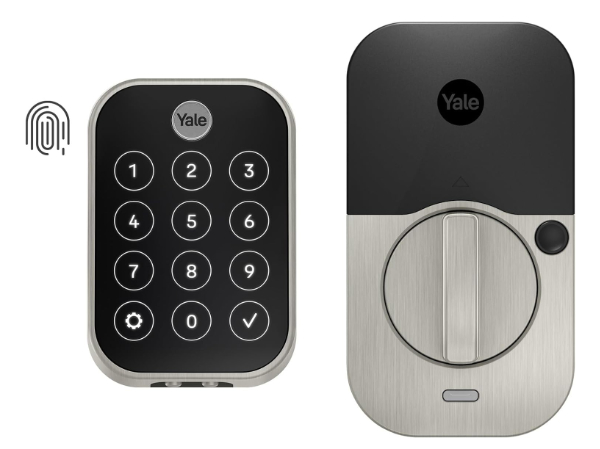
The Yale Assure Lock 2 is the most modular smart lock available. It comes in several varieties—touchscreen or physical buttons, and keyed or key-free exterior. Its biggest strength is its future-proofing; the lock uses swappable "Smart Modules" that allow you to change the connectivity from Bluetooth to Wi-Fi, Z-Wave, or even Matter/Thread by simply plugging in a new cartridge. This means if you change your smart home hub next year, you don’t have to replace the whole lock.
This lock is significantly slimmer than the previous Yale models, addressing the common complaint about bulky interior housings. It uses Bluetooth by default for local control and integrates perfectly with the Apple Home ecosystem. If you opt for the key-free version, the lock is physically impossible to "pick" because there is no keyhole. In the event of a total battery failure, you can hold a 9V battery to the contacts at the bottom of the lock to provide enough temporary power to enter your code.
One drawback is that the Wi-Fi module, while useful, is a major battery drain and can occasionally lose connection if your router is far away. The installation also requires a bit more care than the August lock, as you are replacing the entire deadbolt assembly. However, its clean design and the ability to upgrade its "brain" over time make it a smart long-term investment for any homeowner.
Yale offers a Matter-compatible module for the Assure 2. Why It Matters: Matter is a new industry standard that allows devices from different brands to work together locally without the cloud. This means if your internet goes down, your lock can still talk to your other smart home sensors over your local network.
Best Minimalist: Level Lock+
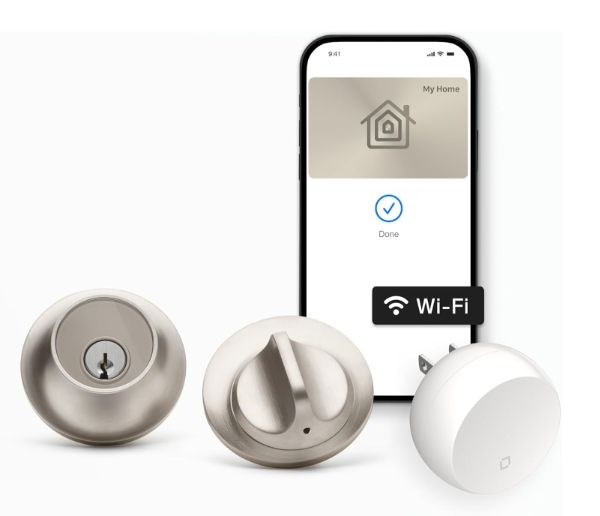
The Level Lock+ is the only smart lock that truly disappears. By engineering the entire motor and battery into the actual bolt and circular housing within the door, Level has created a lock that looks exactly like a traditional, high-end mechanical deadbolt from the inside and outside. It is the perfect choice for design-conscious homeowners or anyone who finds the "techy" look of most smart locks eyesore-inducing.
Despite its small size, it supports Apple Home Key, allowing for the same "tap-to-unlock" convenience as the Schlage Encode Plus. It connects via Bluetooth to your phone or a smart home hub. Because the battery (a single CR2) is hidden inside the bolt itself, changing it is as easy as unscrewing the bolt faceplate. It is BHMA Grade AAA certified, indicating top-tier performance in security, durability, and finish.
The main trade-off is the Bluetooth range. Because there is no external antenna or large Wi-Fi radio, the lock needs to be relatively close to your home hub (like an Apple TV or HomePod) to work reliably with remote commands. It also doesn’t have a keypad or fingerprint sensor, so you are reliant on your phone, watch, or the included NFC keycards. It is best for those who value aesthetics above all else and are already within the Apple ecosystem.
Level uses a patent-pending 2nd-stage gearbox. Why It Matters: To fit a motor into a 1-inch bolt, the motor must be tiny. A multi-stage gearbox multiplies the torque (turning force) of that tiny motor, allowing it to move a heavy deadbolt with the same authority as much larger locks.
How We Chose These Products
Our selection process involved analyzing hardware from every major manufacturer, focusing on three core criteria: Mechanical Integrity, Connectivity Reliability, and Battery Management. We prioritized locks with BHMA certifications to ensure they provide actual physical protection. We then filtered for connectivity, favoring locks that support low-energy protocols like Thread or Bluetooth 5.0 to ensure long-term stability. Finally, we looked at real-world usability, such as how easily the app handles guest codes and how well the "Auto-Unlock" features work across different mobile operating systems.
Comparison Overview
| Model | Connectivity | Security Grade | Key Entry |
|---|---|---|---|
| Schlage Encode Plus | Wi-Fi, Thread, NFC | BHMA Grade 1 | Yes |
| August Wi-Fi (4th Gen) | Wi-Fi, Bluetooth | N/A (Retrofit) | Yes (Original) |
| Ultraloq U-Bolt Pro | Wi-Fi, Bluetooth | Zinc Alloy | Yes |
| Yale Assure Lock 2 | Bluetooth, Matter | BHMA Grade 2 | Optional |
| Level Lock+ | Bluetooth, NFC | BHMA Grade AAA | Yes |
Buying Guide: What to Look For
- Deadbolt Replacement vs. Retrofit: Full replacements like Schlage are more secure, while retrofits like August are better for renters.
- Ecosystem Compatibility: Check if the lock works with Apple Home Key if you have an iPhone, or Google Home if you use Android.
- Battery Requirements: Wi-Fi locks eat batteries faster than Thread or Z-Wave locks. Check if the lock uses standard AAs or specialty CR123s.
- IP Ratings: Look for IPX5 or higher if your door is exposed to direct rain and wind.
- The "Lock Jam" Factor: Ensure your door latches easily. If you have to push the door hard to lock it, no smart lock motor will last long.
General Pro / Cons
| Pros |
|---|
| No more lost keys or "hiding" keys outside. |
| Grant temporary access to cleaners or dog walkers remotely. |
| Auto-unlocking allows for hands-free entry when carrying bags. |
| Audit logs let you see exactly when people enter/exit. |
| Increased physical security with BHMA Grade 1/2 designs. |
| Cons |
|---|
| Requires semi-regular battery maintenance. |
| Higher upfront cost compared to standard deadbolts. |
| Can be sensitive to door warping or misalignment. |
| Setup can be intimidating for non-technical users. |
| Dependency on Wi-Fi/Bluetooth for remote features. |
Final Summary
Selecting a smart lock is a balance between physical security and digital convenience. For most users, the Schlage Encode Plus offers the best middle ground by providing industry-leading mechanical strength and the newest wireless protocols. If you prioritize aesthetics, the Level Lock+ is unrivaled, while the August Wi-Fi remains the king of the retrofit world. No matter which you choose, you are moving toward a more secure and convenient home environment.
Aggregate rating of the products reviewed: 4.7 out of 5.