
Best Smart Rings: Technical Analysis of Biometric Wearables of 2026
An in-depth evaluation of the current landscape of smart ring technology, focusing on sensor accuracy, battery chemistry, and data-processing ecosystems.
Introduction
The smart ring category has transitioned from a niche hardware experiment into a mature technological segment. Unlike wrist-based wearables, smart rings utilize the arterial blood flow in the fingers, which offers a significantly higher signal-to-noise ratio for photoplethysmography (PPG) sensors. This anatomical advantage allows for more precise Heart Rate Variability (HRV) and SpO2 readings, especially during sleep. As the demand for screen-free, passive health monitoring grows, these devices have become the primary choice for users seeking deep metabolic and recovery insights without the bulk of a traditional smartwatch.
Selecting the appropriate smart ring requires an understanding of the trade-offs between hardware constraints and data ecosystems. Factors such as the material science of the inner mold (typically medical-grade epoxy or hypoallergenic resins), the power management of the Bluetooth Low Energy (BLE) stack, and the sophistication of the proprietary algorithms determine the long-term utility of the device. In this guide, we analyze five industry-leading products that define the current state of ring-based biometrics, examining their technical specifications and real-world performance limitations.
Best for Sleep Algorithms: Oura Ring Gen3
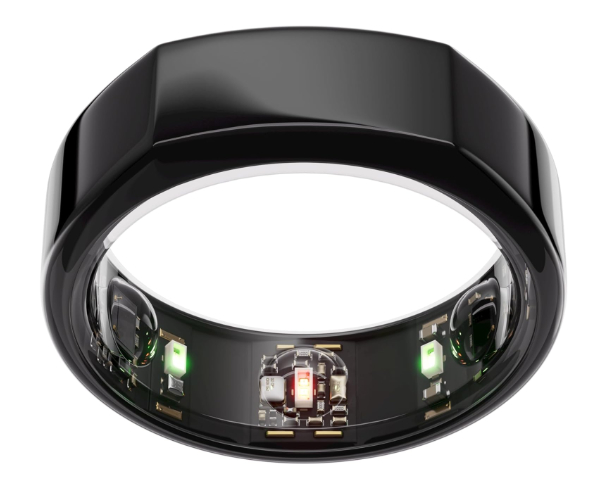
The Oura Ring Gen3 remains the benchmark for sleep staging and recovery analysis. Its hardware array includes research-grade infrared PPG sensors, three NTC (Negative Temperature Coefficient) thermistors, and a 3D accelerometer. By measuring temperature deviations directly from the skin rather than ambient air, Oura provides highly sensitive cycle tracking and early illness detection. The device is constructed from lightweight titanium with a PVD coating, ensuring durability while maintaining a mass of under 6 grams.
Technically, Oura stands out due to its "Readiness Score," which synthesizes HRV, sleep quality, and previous day activity using a multi-variate algorithm. Unlike many competitors, Oura’s sleep staging has been validated against polysomnography in multiple peer-reviewed studies. It excels in capturing the subtle nuances of the parasympathetic nervous system during rest, providing actionable data on how lifestyle choices affect cardiovascular recovery.
The primary tradeoff with Oura is its ecosystem lock-in. While the hardware is top-tier, full access to historical data and detailed insights requires a monthly subscription. Without this subscription, the device functions merely as a basic daily tracker. It is best suited for users who prioritize validated sleep data and are comfortable with a recurring software cost.
Oura utilizes three NTC thermistors capable of detecting changes as small as 0.1°C. These sensors measure the distal skin temperature, which is a key indicator of the body's circadian rhythm and metabolic state. This precision is vital for the device's ability to predict menstrual cycles and detect the onset of physiological stress before symptoms appear.
Best Ecosystem Integration: Samsung Galaxy Ring
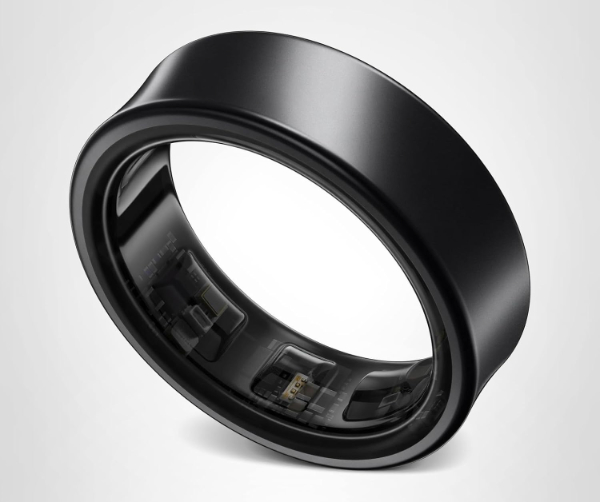
The Samsung Galaxy Ring is a marvel of miniaturization, bringing the robust Samsung Health ecosystem to a screenless form factor. It features a concave design that helps protect the titanium exterior from scratches. The device leverages Galaxy AI to provide an "Energy Score," which analyzes physical activity, sleep, and heart rate to give users a daily snapshot of their capacity for exertion. One of its standout features is the integration with Galaxy smartphones, allowing for gesture controls like dismissible alarms via a double-pinch gesture.
Technically, the Galaxy Ring uses a dual-sensor array to ensure data continuity. When worn alongside a Galaxy Watch, the devices use "Dual Wear" logic to intelligently switch between sensors, optimizing battery life and data precision. It supports continuous heart rate monitoring and automatic workout detection, which is often a challenge for rings due to the motion artifacts generated during high-intensity exercise.
The significant limitation here is the Android-only compatibility, with the most advanced AI features restricted to Samsung Galaxy device owners. There is no iOS support, making this an ecosystem-locked choice. However, for those already in the Samsung environment, the lack of a subscription fee makes it a highly attractive long-term investment.
Samsung employs a sophisticated power-management algorithm that adjusts the sampling frequency of the PPG sensors based on detected movement. This ensures high-resolution data during rest and sleep while conserving battery during periods of inactivity, contributing to its consistent 6-7 day battery life.
Best for Real-Time Analysis: Ultrahuman Ring AIR
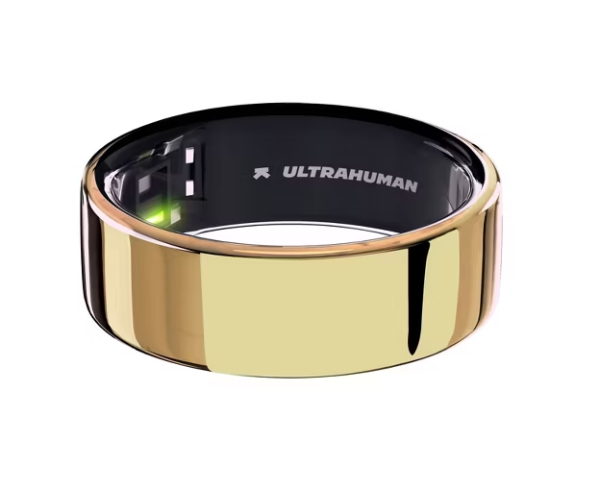
The Ultrahuman Ring AIR distinguishes itself by focusing on the "Movement Index" and "Metabolic Health." It is one of the lightest smart rings on the market, constructed from fighter-jet grade titanium and reinforced with a tungsten carbide carbon coating. The internal molding is made of medical-grade epoxy, which creates a smooth, frictionless interface with the skin. Its application provides real-time "Nudges" to help users align their caffeine intake and sunlight exposure with their circadian rhythm.
Technical enthusiasts will appreciate the Ultrahuman ecosystem’s ability to correlate ring data with Continuous Glucose Monitor (CGM) data. While the ring does not measure glucose directly, the app integrates with the Ultrahuman M1 sensor to show how sleep and activity levels impact glucose variability. The ring’s firmware is designed for low latency, ensuring that data syncs quickly via BLE 5.0.
While the AIR provides exceptional insights into circadian biology, its step-tracking algorithm can be overly sensitive to hand movements, occasionally leading to inflated activity counts. Furthermore, the sheer volume of data in the app can be overwhelming for casual users. It is the ideal choice for "biohackers" who want deep metabolic correlations without a subscription wall.
Ultrahuman’s proprietary engine analyzes light exposure (via the phone's ambient light sensors combined with ring data) and skin temperature to map the user's "Phase Response Curve." This allows the system to recommend the optimal "stimulant window" for caffeine to minimize interference with adenosine receptors during the evening sleep cycle.
Best Battery Longevity: RingConn Gen 2
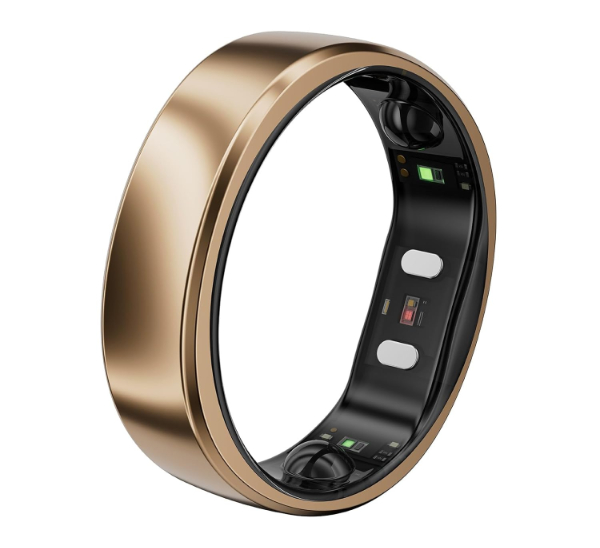
RingConn has rapidly carved a space for itself by prioritizing battery efficiency and portability. The Gen 2 model offers a significant hardware refinement, reducing the thickness to a mere 2mm while extending the battery life to 10-12 days on a single charge. This is achieved through a custom-designed Micro-Controller Unit (MCU) that optimizes the duty cycle of the PPG sensors without sacrificing data resolution.
One of RingConn’s unique technical features is its "Sleep Apnea Screening" capability. By analyzing SpO2 levels and heart rate fluctuations at high frequencies throughout the night, the ring can flag potential breathing irregularities. The device comes with a portable charging case that contains its own internal battery, allowing for up to 150 days of use without needing a wall outlet.
The limitations of the RingConn Gen 2 lie primarily in its "squircle" shape. While designed to prevent the ring from rotating on the finger, some users find the ergonomic feel less natural than a perfect circle. Additionally, the companion app’s social and coaching features are not as developed as those found in the Oura or Samsung ecosystems. It is best for travelers and users who suffer from "charging anxiety."
RingConn uses a dual-LED configuration (Green and Infrared) paired with a high-performance photodiode. Their algorithm uses the accelerometer data to actively cancel out motion artifacts from the PPG signal. This is critical for maintaining SpO2 accuracy during sleep, as hand movement can often create false "dips" in oxygen saturation readings in lower-quality sensors.
Best for Athletes: Amazfit Helio Ring
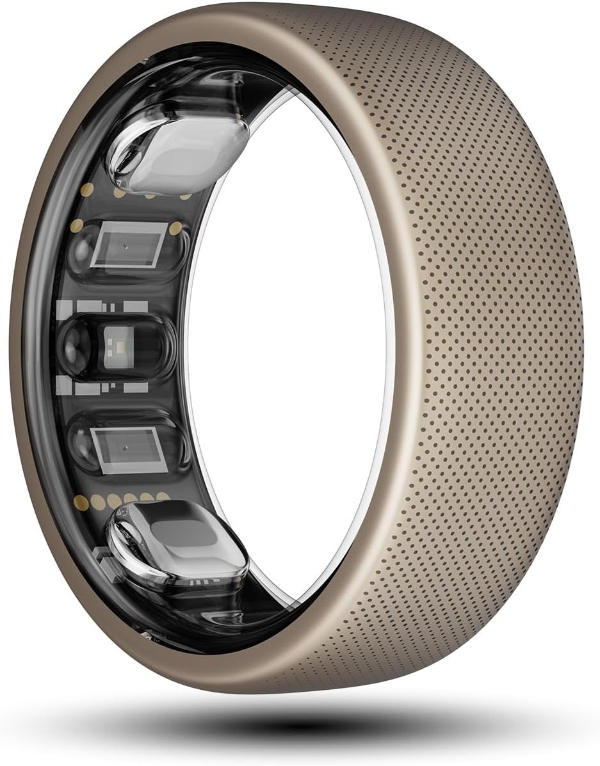
The Amazfit Helio Ring is purpose-built for competitive athletes who require detailed "Readiness" insights to peak for events. It is unique in its category for including an EDA (Electrodermal Activity) sensor. EDA measures the microscopic changes in sweat gland activity on the surface of the skin, which serves as a direct proxy for the sympathetic nervous system's activation levels. This allows for a more nuanced understanding of psychological stress compared to HRV alone.
Technically, the Helio Ring integrates seamlessly with the Zepp OS ecosystem. For athletes already using Amazfit T-Rex or Cheetah watches, the ring acts as a complementary data source. The Zepp app provides a "Training Readiness" score that factors in VO2 Max, training load, and sleep quality. The ring itself is extremely durable, made from a titanium alloy that is water-resistant up to 10 ATM, making it suitable for competitive swimming.
A notable downside is the relatively short battery life compared to RingConn, typically requiring a charge every 4 days. Additionally, while the EDA sensor is a powerful inclusion, it requires the user to remain still for a dedicated measurement, rather than providing continuous background data. It is the best choice for endurance athletes looking for a robust recovery tool.
Electrodermal Activity (EDA) measures "skin conductance." When the body is under stress, the autonomic nervous system increases sweat production. Even before it's visible, the increased moisture increases the skin's ability to conduct electricity. The Helio Ring's ability to capture this at the finger - one of the densest areas for sweat glands - provides a high-fidelity window into the user's "fight or flight" status.
How We Chose These Products
Our selection process is governed by a rigorous technical rubric that evaluates four primary dimensions: sensor fidelity, material biocompatibility, battery duty-cycling, and algorithm validation. We prioritized products that provide raw data transparency and those that have been subjected to independent verification. Devices that utilize medical-grade resins and titanium were favored for their long-term durability and hypoallergenic properties. Furthermore, we assessed the maturity of each brand’s software ecosystem, ensuring that the insights provided are not just data points, but actionable physiological guidance.
Comparison Overview
| Model | Material | Sensors | Battery Life | Subscription |
|---|---|---|---|---|
| Oura Gen3 | Titanium | Infrared PPG, NTC | Up to 7 Days | Yes (Required) |
| Galaxy Ring | Titanium | Bio-Active, Temp | Up to 7 Days | No |
| Ring AIR | Fighter-Grade Titanium | PPG, Accelerometer | Up to 6 Days | No |
| RingConn Gen 2 | Titanium | High-Res PPG | Up to 12 Days | No |
| Helio Ring | Titanium Alloy | PPG, EDA, NTC | Up to 4 Days | No (Opt. Zepp Aura) |
Buying Guide: What to Look For
- PPG Sensor Placement: Ensure the ring has interior bumps that align the sensors with the palmar side of the finger, where blood flow is most accessible.
- Sampling Frequency: High-fidelity HRV tracking requires a high sampling rate. Look for devices that offer night-time resolution of at least 1-minute intervals.
- Biocompatibility: Since these are 24/7 wearables, the inner coating must be medical-grade and hypoallergenic (like Epoxy or Tungsten Carbide) to prevent dermatitis.
- Data Ownership: Determine if you want a one-time purchase or if you are willing to pay for "insights as a service" through a subscription model.
- Water Resistance: Most rings are rated to 50m or 100m. If you are a swimmer, a 10 ATM (100m) rating is preferable for high-velocity water impact.
General Pro / Cons
| Advantages |
|---|
| Screen-free design reduces digital fatigue. |
| Superior PPG accuracy compared to wrist wearables. |
| Passive tracking promotes long-term adherence. |
| Discreet form factor for professional settings. |
| Advanced sleep staging algorithms. |
| Early detection of metabolic stress and illness. |
| Seamless integration with health dashboards. |
| Lightweight titanium construction. |
| Limitations |
|---|
| No real-time display for live workout metrics. |
| Sizing process is more complex than watch straps. |
| Potential for "pocket shots" or motion artifacts. |
| Subscription walls on certain leading models. |
| Limited space for GPS or cellular components. |
| Difficult to repair if battery capacity degrades. |
| Requires frequent manual data synchronization. |
| Limited Haptic feedback capabilities. |
Final Summary
The evolution of the smart ring has reached a point where accuracy and reliability are no longer in question. The Oura Ring Gen3 continues to lead in data validation and sleep science, while the Samsung Galaxy Ring and RingConn Gen 2 offer compelling subscription-free alternatives with impressive hardware longevity. For biohackers and competitive athletes, the Ultrahuman Ring AIR and Amazfit Helio Ring provide unique metabolic and stress-response markers that were previously only available in clinical settings. Ultimately, the best smart ring is one that aligns with your mobile ecosystem and your specific physiological monitoring goals.
Aggregate rating of the products reviewed: 4.6 out of 5.