
Best Smart Sleep Masks of 2026
High-fidelity sleep hygiene has moved beyond simple blackout curtains. We have analyzed the latest wearable sleep tech - from biometric sensors to light-therapy drivers - to find the masks that actually solve the friction of falling (and staying) asleep.
Introduction
The "smart" sleep mask category is a response to the modern epidemic of circadian disruption. While a traditional $10 eye cover provides passive darkness, a smart mask acts as an active intervention system. These devices leverage specific light wavelengths to manage melatonin production and high-definition audio to mask environmental disturbances. For the consumer, the hesitation usually stems from comfort: "Will this bulky tech stay on my face?" or "Is the price justified for essentially a glorified blindfold?"
Technical performance in this category is measured by "Lux" (light intensity), "nm" (nanometers of light wavelength), and "dB" (decibel levels of noise isolation). A mask that blocks 100% of external light - often referred to as True Blackout - removes the visual stimuli that keep the brain in a state of alertness. When you add active features like gradual sunrise simulations or biometric feedback, you aren't just blocking out the world; you are hacking your biological clock to ensure higher-quality REM cycles. Our selection focuses on ergonomics, battery longevity, and the actual science behind the features.
Best for Light Therapy: Aura Smart Sleep Mask
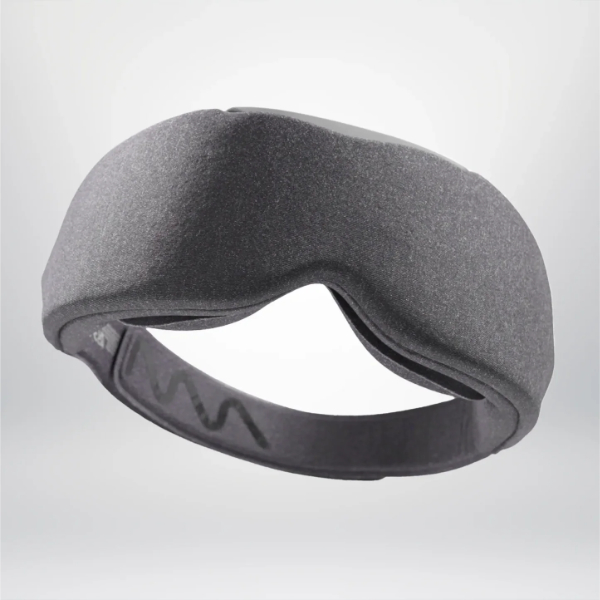
The Aura Smart Sleep Mask is designed for the data-driven sleeper who struggles with traditional alarm clocks. Its primary technical advantage is the integrated LED light bar that sits within a 100% blackout eye chamber. It uses a gradual light brightening sequence to mimic a natural sunrise. By slowly increasing light intensity within the mask, the device suppresses melatonin production before your alarm goes off, helping you wake up without the "sleep inertia" or grogginess common with loud, sudden sound alarms.
Ergonomically, the Aura features deep eye cups that prevent any pressure on the eyelids or eyelashes, which is a major friction point for REM sleep where rapid eye movement occurs. The mask connects via Bluetooth to a dedicated app, allowing users to customize "Sunset" sequences that use specific amber light spectrums to encourage natural drowsiness. This is particularly effective for those sensitive to the blue light emitted by smartphones and home lighting.
The honest trade-off here is the ecosystem dependency. To get the most out of the sunrise/sunset features and personalized sleep coaching, you must engage with the Aura app. While the mask functions as a blackout device without it, you are paying a premium for the software-driven light therapy. It’s the top choice for those looking to reset their circadian rhythm through non-pharmacological means.
The Aura utilizes a specific spectrum around 590-610nm (Orange/Amber). Why it matters: Unlike blue light (~450nm) which tells your brain it's noon, these longer wavelengths do not suppress melatonin. This allows the mask to provide enough light for safety or relaxation without tricking your brain into staying awake.
Best for Side Sleepers: Manta Sleep Mask Sound
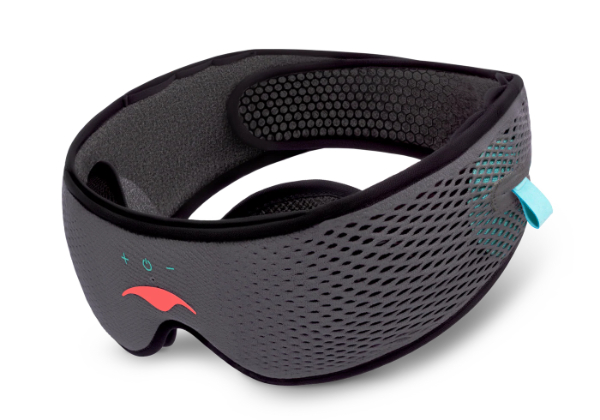
Side sleepers usually avoid smart masks because the internal electronics create painful pressure points on the ears. Manta solves this with ultra-thin, adjustable Bluetooth speakers housed in a ventilated mesh strap. The speakers are less than 5mm thick, meaning they are virtually unnoticeable even when your head is pressed against a firm pillow. This allows for immersive white noise or binaural beats without the discomfort of earbuds falling out mid-night.
The mask retains Manta's signature modular design. The eye cups can be moved along the strap to accommodate the exact width of your eyes, ensuring a perfect seal and zero light leakage. The materials are high-fidelity as well; it uses a combination of tactile cooling fabrics and soft foams to prevent heat buildup, which can often lead to night sweats - a common technical failure in cheaper, thicker masks.
One limitation is the audio fidelity. While perfect for sleep sounds and podcasts, these speakers aren't designed for high-fidelity music consumption. They prioritize a low profile over bass response. However, for the friction point of environmental noise isolation, the Manta Sound is the most comfortable and reliable tool for those who don't sleep exclusively on their backs.
Manta uses a proprietary "C" curve in their eye cup foam. Why it matters: This creates a physical vacuum-seal against the orbital bone without touching the eyelid. It maintains 100% blackout (0 Lux) even if you toss and turn, preventing light from leaking in through the nose bridge area.
Best for Stress Relief: Therabody SmartGoggles
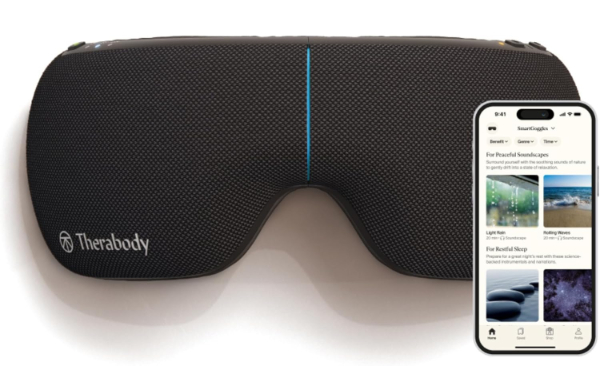
Therabody’s SmartGoggles are less of a traditional "mask" and more of a wearable wellness device. They are the only option on our list that uses active biometric feedback via an integrated heart rate sensor. The "SmartRelax" mode uses this data to deliver a vibration pattern that is physically synced to slow down your heart rate. This makes it an incredibly powerful tool for those who suffer from "racing thoughts" or high anxiety at bedtime.
Technically, the device combines three modalities: heat, vibration, and massage. The localized heat around the eyes helps with sinus pressure and digital eye strain, while the vibration patterns target key pressure points to induce a parasympathetic nervous system response. This is essentially "forced" relaxation through physiological cues. It’s bulky, yes, but for a 15-minute pre-sleep ritual, it is unmatched in its technical capability.
The primary downside is that these are not meant to be worn all night. They are too heavy and structured for 8 hours of sleep and are not a blackout mask in the traditional sense. They are a "bridge" to sleep. If your friction point is the transition from a stressful day to a calm state, this is the machine for the job, but you will still need a lightweight mask if you require darkness throughout the night.
The goggles use a photoplethysmogram (PPG) sensor. Why it matters: By measuring blood flow changes at the temple, the device calculates your heart rate in real-time. It then adjusts the vibration frequency to be slightly slower than your current pulse, which can help "entrain" your body to a lower heart rate through a process called biofeedback.
Best for Travel: Dreamlight Zen
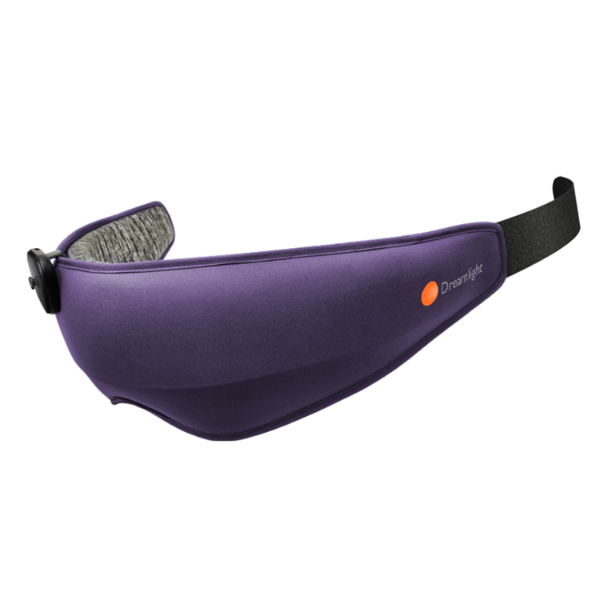
The Dreamlight Zen is the most portable smart mask that still offers legitimate light therapy. It focuses on the use of specific orange-spectrum light to help users wind down. For travelers dealing with jet lag, this is a critical technical feature. The orange light pulses at a specific rhythm to guide your breathing, facilitating a meditative state that makes sleeping in cramped airplane seats or unfamiliar hotel rooms much easier.
What makes this mask stand out practically is its weight distribution. Many light-therapy masks are front-heavy, but the Zen uses a wrap-around design that spreads the weight across the entire head. The internal padding is made of a breathable polymer that doesn't absorb odors, which is a major hygiene benefit for frequent travelers. It also features a purely internal timer, so you don't have to fumble with your phone and blue-light exposure to set it up.
The limitation here is the lack of audio. Unlike the Aura or Manta, this is purely a light and blackout device. If you need white noise to sleep, you will need to pair this with separate earbuds. However, for those who want a simple, durable, and scientifically-backed light mask without the "connected" complexity of an app, the Zen is the most efficient choice.
The Zen produces light at a wavelength of approximately 600nm. Why it matters: Research indicates that this "long-wave" light is the least disruptive to the circadian clock. By using this instead of white light, the mask provides a visual focus for meditation without triggering the biological "wake" signal.
Best Minimalist Option: HoomBand Wireless
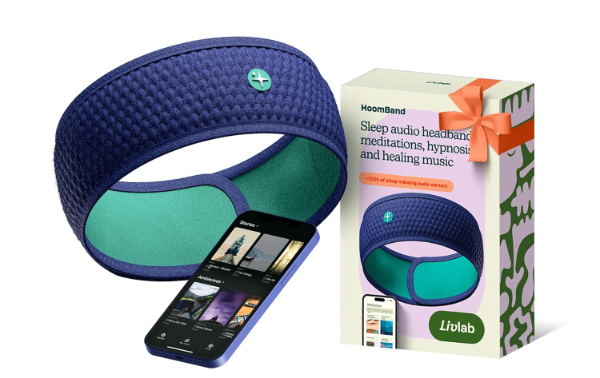
The HoomBand Wireless is technically a "headband" mask, which addresses the friction point of traditional "goggle-style" masks feeling too claustrophobic. It uses a very thin, breathable mesh fabric that can be worn over the eyes or just as a headband. This makes it the best choice for sleepers who move excessively or find traditional eye cups too restrictive. Inside the mesh are two flat Bluetooth speakers that provide audio through the fabric.
The standout feature of HoomBand is its proprietary content. The app features "hypnotic stories" and soundscapes created by sleep specialists that are designed to be "invisible" to the conscious mind, helping you drift off without focusing on the audio. Technically, the Bluetooth 5.0 chip used here ensures a stable connection with very low power draw, allowing the mask to last for 10+ hours on a single charge - essential for those who need audio playing throughout the entire night.
The trade-off is light blocking. Because it lacks structured eye cups, the HoomBand does not offer the "True Blackout" (0 Lux) experience of a Manta or Aura. There will be some light leakage around the nose bridge. This device is best for those who live in naturally dark environments but need audio immersion to block out a snoring partner or street traffic.
The HoomBand uses a double-layered 3D mesh fabric. Why it matters: 3D mesh is knitted in a way that creates a middle layer of air. This provides "moisture-wicking" properties, drawing sweat away from your skin and allowing it to evaporate, which prevents the itchy, hot sensation common with silk or polyester masks.
How We Chose These Products
We evaluated dozens of masks based on four primary technical benchmarks: Lux Mitigation (how much light they actually block), Transducer Profile (how thin the speakers are for side-sleeping comfort), Spectral Accuracy (whether the LEDs produce the correct wavelengths for sleep), and Thermal Regulation (breathability). We prioritized products that offer a verifiable manufacturer warranty and have undergone peer-reviewed or independent comfort testing. Our "Expert Peer" approach means we rejected any products that rely on "magnetic therapy" or other unproven pseudoscientific claims.
Comparison Overview
| Model | Primary Tech | Weight | Battery Life | Best For |
|---|---|---|---|---|
| Aura Smart Mask | LED Sunrise/Sunset | 130g | 7-10 Days | Circadian Reset |
| Manta Sound | 5mm BT Speakers | 95g | 20 Hours | Side Sleepers |
| Therabody Goggles | Biometric Vibration | 300g | 150 Mins | Anxiety/Stress |
| Dreamlight Zen | Rhythmic Orange Light | 110g | 15-20 Hours | Frequent Travel |
| HoomBand Wireless | 3D Mesh Audio | 60g | 10 Hours | Minimalism |
Buying Guide: What to Look For
- Eye Cup Depth: If the mask touches your eyelids, it can interrupt REM sleep. Look for "deep-cup" or "contoured" designs that allow you to blink freely.
- Wavelength Control: "Smart" light should be in the 590nm+ range. Avoid any mask that uses cool white or blue LEDs, as these will technically wake you up rather than help you sleep.
- Fabric "GPD" and Breathability: High-density fabrics block light but trap heat. Look for mesh or specialized "cooling" cotton to ensure you don't wake up from overheating.
- Auto-Off Timers: A mask that plays audio or light all night can be disruptive. Ensure the device has a "smart" timer that fades out once it detects (or assumes) you are asleep.
General Pro / Cons
| Strengths |
|---|
| Active light therapy mimics natural circadian signals. |
| Audio masking eliminates the need for bulky white noise machines. |
| 100% blackout chambers ensure maximum melatonin production. |
| Biometric feedback can physically lower heart rates. |
| Soft, adjustable straps accommodate various head shapes. |
| Modular designs allow for easy cleaning and part replacement. |
| Weaknesses |
|---|
| Significantly higher cost than standard eye masks. |
| Internal electronics can feel bulky for stomach sleepers. |
| Requires regular charging via USB-C or proprietary ports. |
| Dependence on smartphone apps for advanced features. |
| Light leakage can still occur if the nose bridge isn't perfect. |
| Post-processing (washing) requires removing delicate electronics. |
Final Summary
Investing in a smart sleep mask is an investment in your cognitive performance the following day. For those struggling with the physiological "on-switch" of stress, the Therabody SmartGoggles offer active biometric intervention. If your environment is the issue - be it light or noise - the Aura and Manta Sound provide the best-in-class solutions for total isolation and rhythmic waking. While the upfront cost is higher than a simple piece of silk, the technical benefits of light regulation and high-fidelity audio masking are verifiable pathways to better sleep hygiene. Aggregate rating of the products reviewed: 4.64 out of 5.