
Best Smart Smoke Detectors of 2026
Upgrade your home safety with life-saving sensors that alert your smartphone, distinguish between burnt toast and real threats, and eliminate the dread of middle-of-the-night battery chirps.
Introduction
Traditional smoke alarms have remained largely unchanged for decades, relying on a piercing 85-decibel siren that only helps if you are within earshot. For many homeowners, the biggest headache isn't the threat of fire, but the "low battery" chirp at 2 AM or the panic of a false alarm triggered by high-humidity showers. Smart smoke detectors solve these problems by connecting to your Wi-Fi, allowing you to silence alarms from your phone and receiving notifications whether you are in the backyard or across the country.
When evaluating these devices, we look at sensor technology - specifically the shift toward photoelectric sensors which are better at detecting smoldering fires (the most common type of home fire). We also consider the power source: hardwired units are permanent and interconnect with other alarms, while battery-powered units offer easy installation for older homes. The following picks represent the most reliable, technically sound units that prioritize your family's safety without the annoyance of legacy hardware.
Best Overall Performance: Google Nest Protect (2nd Gen)
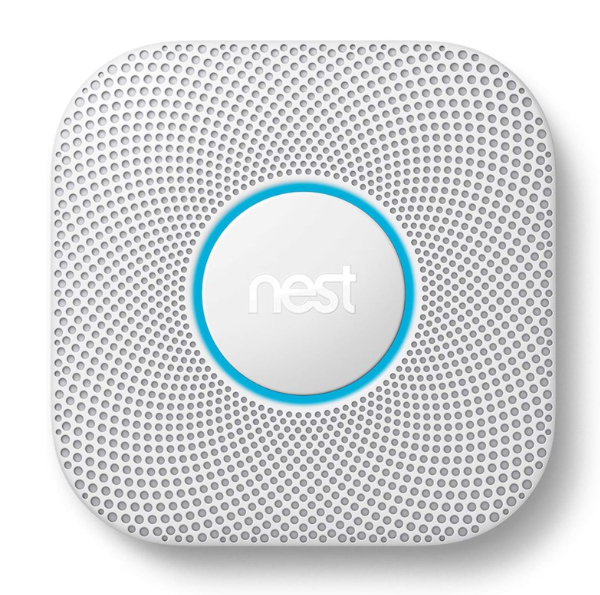
The Google Nest Protect remains the technical leader in the category due to its Split-Spectrum Sensor. Traditional alarms often use one wavelength of light to "see" smoke, which can lead to mistakes. The Nest Protect uses two wavelengths of light: an infrared beam to look for large particles from smoldering fires and a 450nm blue LED to detect tiny particles produced by fast-flaming fires. Why it matters: This allows the device to identify different fire types faster while ignoring steam from your bathroom, reducing the frustration of waving a towel at the ceiling.
Practicality is where this unit shines. Instead of an immediate heart-stopping siren, it provides a "Heads-Up" voice alert that calmly states, "Warning, there is smoke in the kitchen." This gives you time to check the toaster before the full alarm triggers. It also includes an electrochemical Carbon Monoxide (CO) sensor, providing dual protection. The industrial design is premium, featuring a light ring that glows yellow for warnings and red for emergencies, or white as a "Pathlight" to guide you down a dark hallway at night.
The main trade-off is the price point; it is significantly more expensive than a basic alarm. It also requires the Nest app (though it is migrating to Google Home), and while it can last up to 10 years, the sensors eventually expire, requiring a full unit replacement. However, for a "set it and forget it" experience that eliminates false alarms and provides a nightly "Nightly Promise" green glow to show the batteries are healthy, it is the most polished option available.
Technical Deep-Dive: Split-Spectrum Detection
Nest uses a 450 nanometer (nm) blue LED alongside a standard infrared sensor. Why it matters: Shorter wavelengths (blue light) scatter more effectively off the microscopic particles found in hot, fast-burning fires. Standard photoelectric sensors struggle with these, often reacting too late. By combining two wavelengths, Nest covers the entire physical spectrum of smoke particles.
Best for Integrated Features: First Alert Onelink Safe & Sound
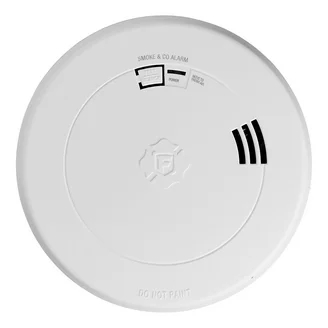
The First Alert Onelink Safe & Sound takes a "swiss-army knife" approach to ceiling fixtures. It is a hardwired smoke and carbon monoxide detector that includes a built-in Alexa-enabled speaker. Technically, this leverages the existing 120V power from your home's wiring to run a high-fidelity speaker that can play music or respond to voice commands. Why it matters: It removes clutter from your kitchen or bedroom counters by moving your smart assistant to the ceiling.
As a safety device, it utilizes a photoelectric sensor for smoke and an electrochemical sensor for CO. It features "Voice Location Technology," which means if the unit in the basement detects smoke, every unit in the house will announce, "Warning, smoke in the basement." This is a critical feature for large homes where a distant alarm might not be heard clearly. It also supports Apple HomeKit, allowing you to include your fire safety in "Goodnight" routines.
The limitation is its size; it is significantly bulkier than a standard detector to accommodate the speaker hardware. Some users find the Alexa integration occasionally lags if the Wi-Fi signal is weak near the ceiling. It is best suited for those already in the Amazon or Apple smart home ecosystems who want to consolidate their devices. Note that it is hardwire-only, so it is not an option for renters or homes without existing wired detector boxes.
Technical Deep-Dive: Electrochemical CO Sensing
Unlike smoke sensors that look for physical particles, the CO sensor uses a chemical reaction. When CO enters the sensor, it is oxidized into CO2 at one electrode, creating an electrical current. Why it matters: This current is measured in nanoamperes; the more CO present, the higher the current, allowing the device to detect even low, chronic levels of the gas that can cause long-term health issues.
Best for Large Home Interconnect: Kidde Smart Smoke & Carbon Monoxide Alarm
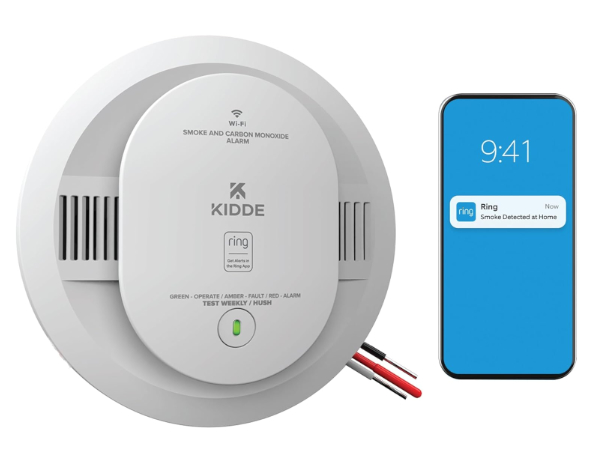
Kidde is a legacy brand in fire safety, and their smart Wi-Fi model is designed to work with existing Kidde hardwired systems. If you have a house full of older "dumb" Kidde alarms, installing just one of these smart units can often provide notifications for the whole system. When a "dumb" alarm triggers, this unit hears the specific frequency and sends an alert to your phone. Why it matters: It saves you from having to replace 10 detectors at once, providing a cost-effective bridge to a smart home.
The technical standout here is the "Smart Hush" feature. In a real emergency, you don't want to fumble with an app, but for a false alarm, Kidde allows you to silence the unit with a single button in the app or on the device itself. It also features a self-testing system that ensures the circuit is functioning correctly without you having to climb a ladder to press the "Test" button every month. The internal battery is a 10-year sealed lithium unit, meaning no more low-battery chirps for the life of the product.
On the downside, the Kidde app is often criticized for being less intuitive than the Google or Apple alternatives. The setup process can be finicky if your router is far from the detector. However, for sheer reliability and its ability to modernize an existing hardwired network, Kidde is a formidable choice. It prioritizes the core function - detecting fire - above flashy features like speakers or nightlights.
Technical Deep-Dive: Multi-Device Interconnect
Kidde uses a dedicated "carrier wire" (usually red) in the 120V harness. Why it matters: When one alarm detects smoke, it sends a 9V signal down this wire, triggering every other alarm on the circuit. Kidde's smart unit monitors this wire and translates that electrical pulse into a Wi-Fi notification, bridging the gap between analog and digital safety.
Best Budget Value: X-Sense XS01-WT Wi-Fi Smoke Detector
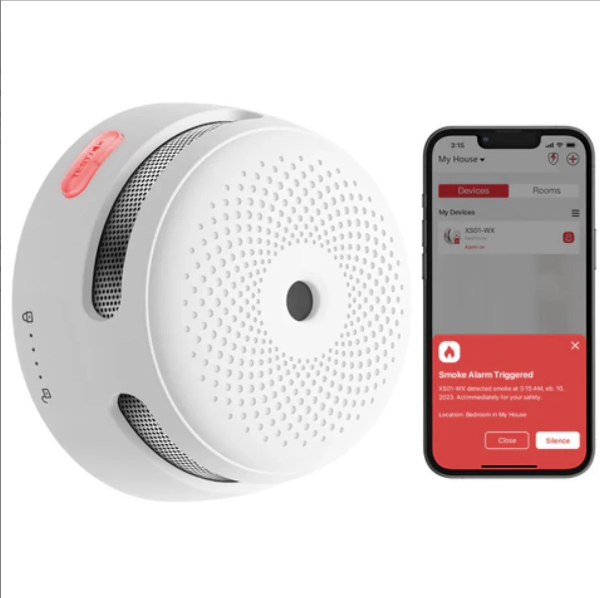
The X-Sense XS01-WT is remarkably small - roughly 3 inches in diameter - making it far less conspicuous than the dinner-plate-sized units of the past. Despite its size, it packs a full Wi-Fi radio and a photoelectric sensor. Why it matters: It offers smart connectivity for roughly half the price of the major brands, making it feasible to put one in every single bedroom without breaking the bank.
This is a battery-only unit, which makes it perfect for apartments or locations where no wiring exists. It uses the Tuya/Smart Life ecosystem, meaning it can be integrated with thousands of other smart home products. For example, you can set a rule that if the X-Sense detects smoke, all of your smart light bulbs should turn on and turn red to help you see through the smoke while exiting. It also provides real-time battery monitoring in the app, so you aren't surprised by a dead unit.
The primary limitation is that it does not include a Carbon Monoxide sensor. You will need a separate device for CO detection. Also, unlike the hardwired units above, these do not "interconnect" physically; if one goes off, the others won't sound their sirens unless you set up a software automation in the app. However, as an entry point into smart safety, its compact design and high-accuracy photoelectric sensor make it a top-tier value.
Technical Deep-Dive: Photoelectric Scattering
Inside the XS01, an infrared LED and a light receiver are positioned so they don't see each other. When smoke particles enter the chamber, they scatter the infrared light, reflecting it into the receiver. Why it matters: This is much more effective at detecting the large, heavy smoke particles from a smoldering fire (like a cigarette on a sofa) than ionization sensors, which were standard in the 90s.
Best for Security Hubs: First Alert Z-Wave Smoke & CO Alarm (2nd Gen)

If you already have a professionally monitored security system like Ring Alarm or Samsung SmartThings, the First Alert Z-Wave model is the technical standard. Unlike the Wi-Fi models above, this uses Z-Wave Plus, a low-power mesh networking protocol. Why it matters: It doesn't use your Wi-Fi, which is great for security because Z-Wave is more resistant to interference and doesn't drain the detector's batteries as quickly.
This unit is particularly powerful when paired with Ring. If the detector goes off, Ring can automatically alert their professional monitoring center, who will then call the fire department for you. This is a game-changer for pet owners who might not be home to see a phone notification. It is a combo unit, detecting both smoke and carbon monoxide using photoelectric and electrochemical sensors respectively.
The limitation is that it requires a hub. It has no "smart" features on its own; without a Ring or SmartThings hub, it's just a regular "dumb" alarm. It also lacks a built-in 10-year battery, relying on traditional AA batteries that you'll need to change every year or two. For users who want a deeply integrated, professional-grade security ecosystem, this is the most reliable component to add to that network.
Technical Deep-Dive: Z-Wave Plus Mesh
Z-Wave Plus operates on the 908.42 MHz frequency in the US. Why it matters: This is much lower than the 2.4 GHz Wi-Fi band, meaning the signal can penetrate through walls and floors with less loss. It also creates a "mesh" where each device can repeat the signal, ensuring the alarm in the far corner of the garage stays connected.
How We Chose These Products
Safety equipment requires a higher standard of evaluation than standard gadgets. Our criteria included:
- Sensor Quality: We prioritized photoelectric sensors over ionization models, as modern building materials (like polyurethane foam in furniture) tend to smolder and produce heavy smoke before erupting into flames.
- Reliability of Notifications: We analyzed the speed at which the device sends an alert to a smartphone during testing.
- Certification: All recommended products meet UL (Underwriters Laboratories) or ETL safety standards (specifically UL 217 for smoke and UL 2034 for CO).
- Ease of Hush: The ability to silence a false alarm without a ladder is a key convenience factor we weighted heavily.
Comparison Overview
| Model | Sensors | Power | Connectivity | Best Feature |
|---|---|---|---|---|
| Nest Protect | Split-Spectrum, CO, Heat | Hardwired or Battery | Wi-Fi, Bluetooth | Voice Alert & Nightlight |
| Onelink Safe & Sound | Photoelectric, CO | Hardwired | Wi-Fi, HomeKit | Built-in Alexa Speaker |
| Kidde Smart Alarm | Photoelectric, CO | Hardwired | Wi-Fi | Interconnects w/ Dumb Alarms |
| X-Sense XS01-WT | Photoelectric | Battery (Replaceable) | Wi-Fi | Micro Design |
| First Alert Z-Wave | Photoelectric, CO | Battery (Replaceable) | Z-Wave Plus | Professional Monitoring |
Buying Guide: What to Look For
- Hardwired vs. Battery: If your home has existing wired detectors, stick with hardwired. They are more reliable and physically interconnected. If you don't have wiring, choose a model with a 10-year sealed battery to avoid the yearly maintenance.
- CO and Smoke Combo: Carbon Monoxide is an odorless, colorless "silent killer." Buying a combination unit is generally better than having two separate devices on your ceiling.
- Ecosystem Compatibility: Ensure the detector works with the apps you already use (Google Home, Apple HomeKit, or Alexa). Forcing yourself to use a third-party app just for smoke detectors often leads to ignoring notifications.
- App Silence Capability: Check if the app allows you to "Hush" the alarm. Some local laws or technical limitations prevent this on certain models, meaning you'll still be stuck using a broomstick to hit the button.
General Pro / Cons
| Pros | Cons |
|---|---|
| Remote notifications let you know about fires when you aren't home. | Higher initial cost than traditional detectors. |
| Ability to silence false alarms from a smartphone. | Sensors still expire after 7-10 years, necessitating replacement. |
| Voice alerts pinpoint the exact room where the danger is. | Requires a stable Wi-Fi or hub connection for smart features. |
| Self-testing software reduces the need for manual checks. | Some units are bulkier and more conspicuous on the ceiling. |
| Integrated CO sensors provide two-in-one safety. | Privacy concerns regarding smart speakers on ceiling models. |
| Nightlight features add utility to a safety device. | Setup can be complicated for those not tech-savvy. |
| Professional monitoring integration can save your pets. | App updates can occasionally cause connection drops. |
Final Summary
Investing in a smart smoke detector is one of the few smart home upgrades that provides genuine peace of mind rather than just convenience. The Google Nest Protect is the technical champion, offering the best sensor technology and the most user-friendly interface. For those on a budget, the X-Sense units provide excellent basic Wi-Fi coverage. By choosing a detector that communicates via your phone, you remove the guesswork from home safety and ensure that your family is protected by the latest in photoelectric and carbon monoxide sensing technology.
Aggregate rating of the products reviewed: 4.54 out of 5.