
Best Smart Thermostats of 2026
An authoritative guide to the industry's top-performing climate control systems, evaluated for energy efficiency, ecosystem integration, and technical reliability.
Introduction
Modern climate control has evolved far beyond the simple mercury switches of the past. Today's smart thermostats serve as the central nervous system of the home, utilizing advanced occupancy sensors, machine learning algorithms, and utility-grade data analytics to optimize thermal comfort while significantly reducing waste. According to industry data from the EPA, Energy Star certified models can save homeowners an average of 8% on annual heating and cooling costs, though real-world performance varies based on local climate and system efficiency.
When selecting a smart thermostat, the decision typically hinges on three critical pillars: wiring compatibility (specifically the presence of a C-wire), ecosystem synergy (Alexa, Google Home, or Apple HomeKit), and sensor expandability. While entry-level models provide basic scheduling and remote access, flagship devices now incorporate indoor air quality (IAQ) monitoring and radar-based motion detection to ensure energy is only expended in rooms that are actively occupied. Our guide focuses on five distinct models that represent the pinnacle of reliability and technical capability in the current market.
Best Overall: Ecobee Smart Thermostat Premium
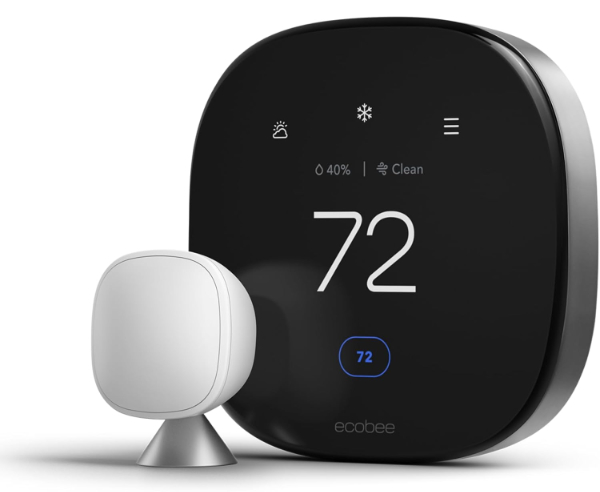
The Ecobee Smart Thermostat Premium remains the benchmark for the category, distinguished by its high-quality zinc construction and a vibrant, expansive touchscreen. Its technical superiority is anchored in radar-based occupancy sensing, which offers significantly better range and accuracy than traditional PIR sensors. As noted by TechGearLab, the interface is exceptionally responsive, allowing for granular control over fan speeds and multi-stage HVAC equipment that cheaper models often struggle to manage effectively.
This model stands out for its holistic approach to home health, featuring a built-in Indoor Air Quality (IAQ) monitor that tracks VOCs and estimated carbon dioxide levels. It is also a rare "bridge" device, containing a high-quality speaker and microphone that allows it to function as a native Alexa or Siri smart speaker (provided you have an Apple HomePod for the latter). For those with uneven heating, the included SmartSensor is invaluable for eliminating cold spots by prioritizing the temperature in bedrooms or home offices rather than just the hallway.
The primary downside is the premium price point and the push toward subscription-based security features. While the thermostat works excellently without a monthly fee, advanced features like professional monitoring or automatic pause-on-open (when paired with door sensors) require the Ecobee Smart Security plan. It is best suited for tech-forward homeowners who want a centralized hub for both climate and air quality management.
Ecobee Official Product PageBest Automated Learning: Google Nest Learning Thermostat (4th Gen)
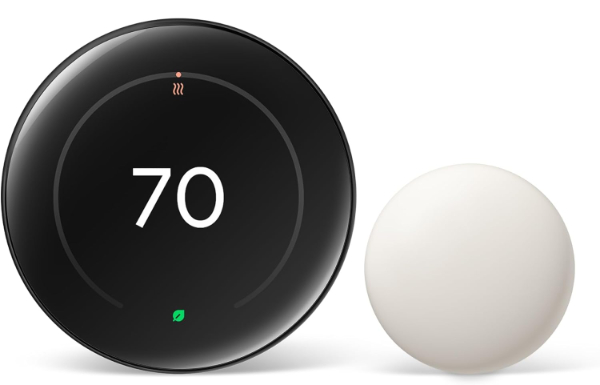
The Google Nest Learning Thermostat (4th Gen) is a masterclass in aesthetic and algorithmic design. Featuring a 60% larger domed crystal display than its predecessor, it uses a "bezel-less" look that mimics high-end jewelry. Beyond the looks, it is the only device on this list that actively "learns" your schedule without manual input, adjusting its cooling and heating curves based on how you interact with the physical dial during the first two weeks of use. According to PCMag, its new Farsight technology is remarkably crisp, showing the time, weather, or outdoor air quality from across a room.
Technically, the 4th Gen model is a massive leap forward due to its Matter certification. This allows it to integrate seamlessly into Apple Home or Amazon Alexa ecosystems, breaking the historical "Google-only" lock-in of previous Nest generations. It also includes Adaptive Recovery, which calculates exactly how long it takes your home to reach a specific temperature, ensuring it starts the furnace at the precise moment required to have your house at 72 degrees by 7:00 AM.
However, the Nest requires the Google Home app for initial setup and advanced settings, which some users find less intuitive than the old Nest app. Furthermore, while it supports most 24V systems, homes with extremely old wiring may still require the Nest Power Connector (sold separately) if a C-wire is absent. It is the ideal choice for those who prefer a "set it and forget it" experience with a high-end physical interface.
Google Official Product PageBest Value: Amazon Smart Thermostat
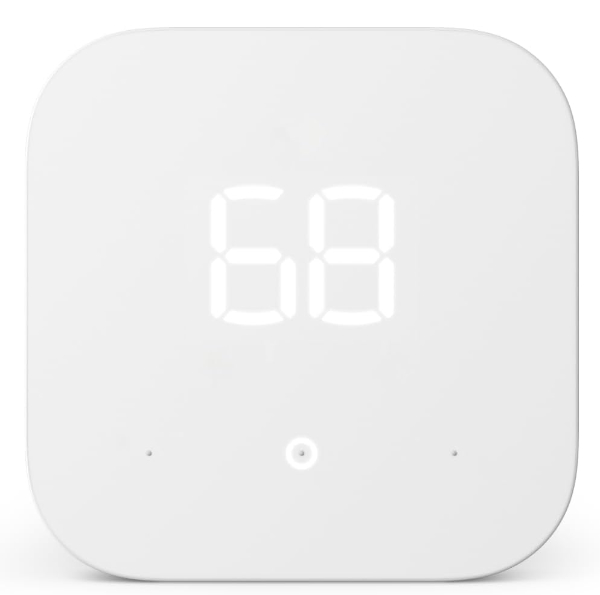
For budget-conscious homeowners, the Amazon Smart Thermostat offers an unbeatable price-to-performance ratio. Developed in partnership with Honeywell Home, it leverages proven HVAC control logic in a minimalist, square-shaped chassis. Its most impressive feature is Alexa Hunches, an AI capability that can automatically lower the heat if Alexa "suspects" you are away based on interactions with other Echo devices or smart lights. As CNET points out, it provides about 90% of the functionality of a Nest or Ecobee for less than half the cost.
The device prioritizes simplicity, with a basic LED display that shows the current temperature and mode. It is Energy Star certified, meaning it qualifies for the same utility rebates as flagship models. Installation is notably user-friendly, with the Alexa app providing a step-by-step guided walkthrough that even novices can follow. It supports most 24V systems but strictly requires a C-wire or a separate power adapter kit.
The trade-offs are strictly ecosystem-based. This thermostat does not support Google Assistant or Apple HomeKit. It also lacks a built-in speaker and does not support native remote sensors (though some Echo Dots can be used as makeshift occupancy sensors). If you are already committed to the Alexa ecosystem and want a reliable, no-frills way to save on energy bills, this is the logical choice.
Amazon Official Product PageBest for Large Homes: Honeywell Home T9
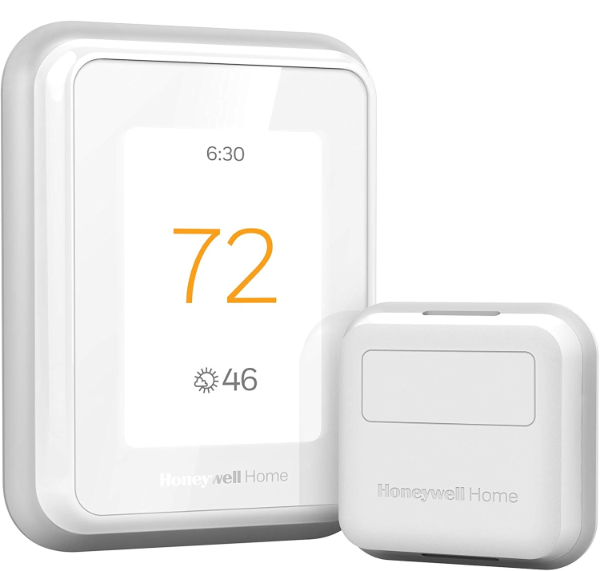
The Honeywell Home T9 is specifically engineered for multi-story residences where Wi-Fi signals might struggle to reach every corner. It utilizes a proprietary 900 MHz radio for its remote sensors, which has a 200-foot range and can penetrate thick walls much more effectively than the Bluetooth-based sensors used by competitors. Popular Mechanics highlights its "Active Room" prioritization, which uses motion data from up to 20 sensors to follow you through the house, ensuring the room you are currently in is always the right temperature.
The T9 features a large, high-contrast color touchscreen that is easy to read even in direct sunlight. It supports dual-band Wi-Fi (2.4 and 5 GHz), which reduces congestion issues in modern smart homes. For those who prefer traditional scheduling, the T9 offers a highly flexible 7-day system that can be managed entirely on the device without needing to open the Resideo app. It also supports geofencing, allowing it to switch to "Away" mode based on your smartphone's GPS location.
The primary limitation is the Resideo app interface, which lacks some of the modern polish found in Google or Ecobee's software. Additionally, while it works with Alexa and Google Home, its Apple HomeKit support has been noted by GearBrain as occasionally being more difficult to configure. It is the premier choice for large, complex floor plans where signal reliability is the top priority.
Honeywell Home Official Product PageBest Budget Alternative: Wyze Smart Thermostat
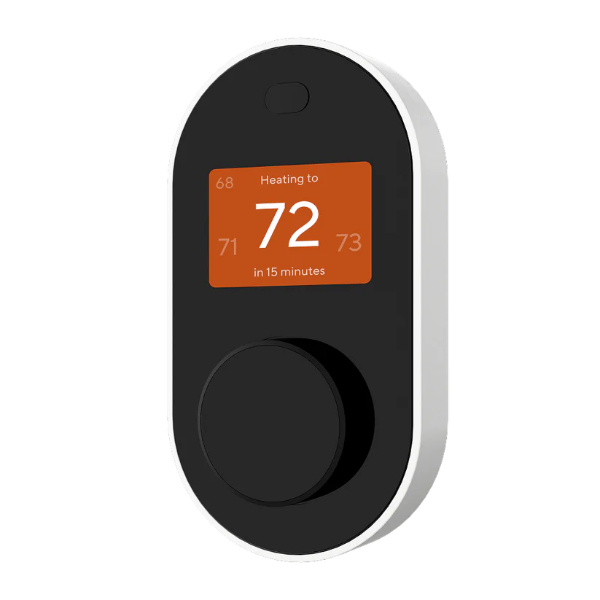
The Wyze Smart Thermostat targets the entry-level market without sacrificing essential smart features. It features a distinctive rotary dial interface and an IPS color display that changes background color—orange for heating and blue for cooling—providing immediate visual feedback. Unlike the Amazon model, Wyze supports both Alexa and Google Assistant natively, making it more versatile for households that haven't committed to a single ecosystem. PCMag awarded it an Editors' Choice for its "flawless" performance during testing despite its low cost.
One of its standout technical features is the Coast to Cool setting. This intelligently shuts off the compressor before the target temperature is reached, using the remaining cold air in the vents and the system fan to finish the job, which reduces wear on the HVAC unit. It also includes a C-wire adapter in the box, a value-add that competitors often charge $20 or $30 for separately. This makes it the most "complete" budget package for older homes with 4-wire setups.
The downsides include a lack of Matter or HomeKit support, and the construction is primarily plastic, lacking the premium feel of the Nest or Ecobee. Some users have also reported that the Wyze app can be cluttered with advertisements for other Wyze products. However, for a straightforward, responsive thermostat that provides detailed energy usage reports and scheduling for under $100, it is a formidable contender.
Wyze Official Product PageHow We Chose These Products
Our selection process involves cross-referencing manufacturer specifications with long-term reliability data from Consumer Reports and TechGearLab. We prioritized devices that offer Matter compatibility or strong native ecosystem support, as interoperability is the most common failure point for smart home tech. We also evaluated the "total cost of ownership," factoring in whether essential items like C-wire adapters or remote sensors are included in the base price or hidden as secondary purchases.
Comparison Overview
| Feature | Ecobee Premium | Nest Learning 4th | Amazon Smart | Honeywell T9 | Wyze Smart |
|---|---|---|---|---|---|
| Sensor Type | Radar (Long Range) | Solenoid/PIR | None (Native) | 900MHz (Wall Penetrating) | PIR |
| Primary Control | Touchscreen | Physical Dial | Touch Buttons | Touchscreen | Physical Dial |
| Matter Support | Yes (via HomeKit) | Yes (Native) | No | No | No |
| C-Wire Required | Yes (Adapter Inc.) | Optional/Recommended | Yes (Required) | Yes (Adapter Inc.) | Yes (Adapter Inc.) |
| Extras | Air Quality/Speaker | AI Learning | Alexa Hunches | Dual-Band Wi-Fi | Coast to Cool |
Buying Guide: What to Look For
- Check Your Wiring First: Open your current thermostat. If you don't see a blue or black wire labeled "C," you will need a model that includes a Power Extender Kit (PEK) or C-wire adapter. Models like the Ecobee and Wyze include these, whereas Amazon does not.
- Identify Your Ecosystem: If you use Apple devices, prioritize HomeKit or Matter-enabled devices. If you are a Google-centric home, the Nest's integration with Google Home routines is vastly superior to third-party options.
- HVAC Stages: If you have a complex system (heat pump with auxiliary heat, or multi-stage cooling), ensure the thermostat supports 2H/2C or 3H/2C configurations. The Ecobee Premium and Nest 4th Gen have the best support for these high-end systems.
- Remote Sensor Needs: If your thermostat is in a drafty hallway but you spend most of your time in a back bedroom, choose a model that supports remote temperature sensors. Honeywell's 900MHz sensors are best for range, while Ecobee's are best for motion-tracking.
General Pro / Cons
Strengths
- Significant energy savings (typically 8–15% on HVAC costs).
- Remote access via smartphone from anywhere in the world.
- Detailed energy reports help identify system inefficiencies.
- Utility rebates often cover 50–100% of the purchase price.
Weaknesses
- Privacy concerns regarding occupancy and location tracking.
- Software dependency; if your Wi-Fi or the manufacturer's cloud goes down, smart features vanish.
- Initial setup can be daunting for those uncomfortable with basic electrical wiring.
Final Summary
The Ecobee Smart Thermostat Premium remains the definitive choice for those seeking a comprehensive, high-build-quality solution with air quality monitoring. For homeowners who prioritize automation and aesthetics, the Google Nest Learning Thermostat (4th Gen) offers unmatched AI-driven scheduling. Budget seekers will find incredible value in the Amazon Smart Thermostat or Wyze, provided they can work within those specific ecosystems. Aggregate rating of the products reviewed: 4.64 out of 5.