
Best Snorkeling Equipment for Tourists of 2026
A technical evaluation of high-performance masks, snorkels, and fins designed for reliability, comfort, and ease of travel.
Introduction
For most vacationers, snorkeling equipment is a "once-a-year" purchase, leading many to settle for the leaky, ill-fitting rentals provided by tour boats. However, the technical gap between rental-grade plastic and prosumer-grade silicone is the difference between a relaxing afternoon and a stressful battle with salt water in your eyes. When evaluating gear, we look at material science - specifically the move from PVC (polyvinyl chloride) to high-grade Liquid Injection Silicone (LIS). LIS offers superior flexibility and UV resistance, ensuring your mask seals against your face rather than just resting on it.
Technical considerations for tourists often revolve around "dry-top" technology and optical clarity. We evaluate the physics of float valves in snorkels, which utilize buoyancy to seal the tube the moment it's submerged. Furthermore, we examine the refractive properties of tempered glass versus polycarbonate. Tempered glass is essential for safety and scratch resistance, but more importantly, it offers a higher Refractive Index, meaning the world underwater looks sharper and more true-to-life. Our top picks focus on gear that packs easily into a carry-on while providing the technical reliability of professional diving equipment.
Best Overall Set: Cressi Palau Mask Fin Snorkel Set
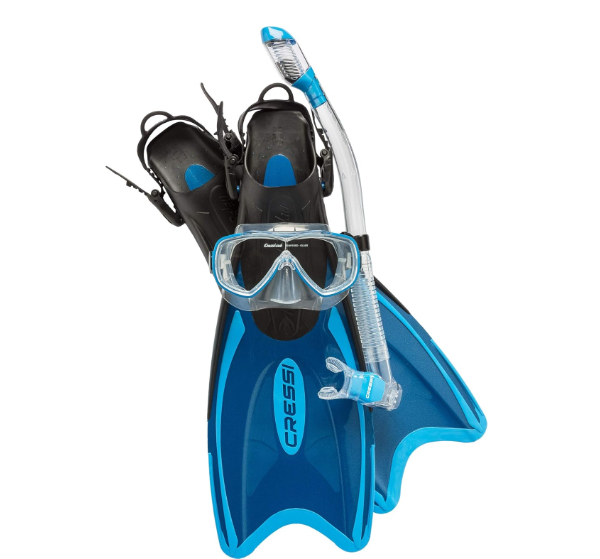
The Cressi Palau set is the benchmark for the "traveler's kit." It combines a low-volume tempered glass mask with short-blade adjustable fins. The mask uses a high-quality silicone skirt that conforms to various face shapes without needing a tight strap, which prevents the "mask face" red rings that cheaper PVC masks leave behind. The snorkel is a semi-dry design, featuring a splash guard that minimizes water entry from surface waves while maintaining a wide bore for effortless breathing.
Technically, the Palau fins are the standout component. They utilize an open-heel design with an adjustable strap, allowing them to fit multiple foot sizes - perfect if you're sharing gear with family or wearing neoprene socks. The blade is made of a lightweight yet reactive material that provides surprising thrust given its compact size. This set is best for the casual tourist who wants a "plug-and-play" solution that fits comfortably in a backpack but doesn't compromise on the quality of the seal or the durability of the materials.
Honest limitations include the semi-dry nature of the snorkel; it will not seal completely if you dive fully underwater. Additionally, because the fins are shorter for travel, you won't get the same power as you would from a full-sized scuba fin. However, for surface snorkeling in calm to moderate conditions, the efficiency-to-size ratio is excellent. It bypasses the "rental germ" problem while providing a significantly better field of vision than standard boat gear.
The mask skirt is manufactured using a process where liquid silicone is injected into a mold under high pressure. Why it matters: This results in a skirt with variable thickness - thinner and softer where it touches your skin for a better seal, and thicker at the frame for structural support. It's significantly more durable than the plastic "silitex" used in budget sets.
Best Full-Face Innovation: WildHorn Outfitters Seaview 180
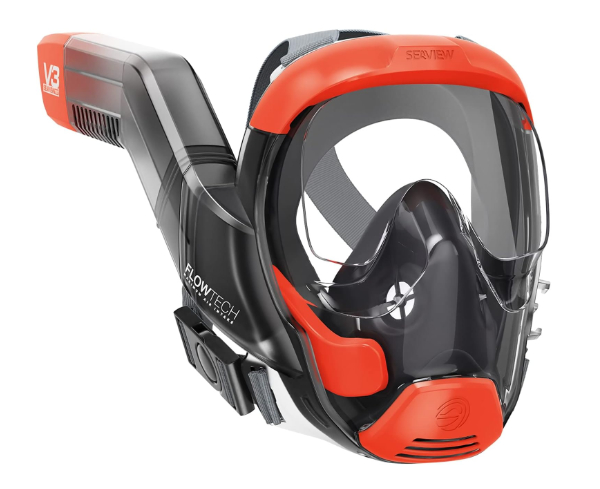
The Seaview 180? V2 is designed for the tourist who finds traditional snorkels uncomfortable or claustrophobic. By integrating the mask and snorkel into a single unit, it allows for natural breathing through both the nose and mouth. The "Flowtech" breathing system is the technical heart of this product, utilizing one-way valves to separate fresh air from exhaled CO2. This drastically reduces the risk of gas buildup, a common safety concern in older, generic full-face designs.
The field of vision is literally twice as wide as a standard mask, offering a panoramic 180-degree view without a frame blocking your periphery. The snorkel portion features a reliable dry-top buoy that shuts out water the moment you go below the surface. This is best for beginner snorkelers or those who struggle with "jaw fatigue" from biting down on a traditional mouthpiece. It makes the underwater world feel much more like a glass-bottom boat experience rather than a sport.
However, there are honest trade-offs. You cannot "equalize" your ears with this mask, meaning it is for surface swimming only - diving down more than a few feet will result in painful pressure on your face. It is also significantly bulkier than a traditional mask and snorkel combo, taking up more room in your luggage. Lastly, it requires a very precise fit to prevent fogging; if your face shape doesn't match the silicone mold exactly, the separate breathing chamber may leak moisture into the eye area.
The V2 uses a 4-valve system to ensure fresh air enters through the top and exhaled air exits through separate side and bottom channels. Why it matters: This prevents "re-breathing" exhaled air, which can cause dizziness. It ensures you are always inhaling oxygen-rich air, making it much safer for long sessions.
Best Premium Mask: Scubapro Synergy Twin Trufit
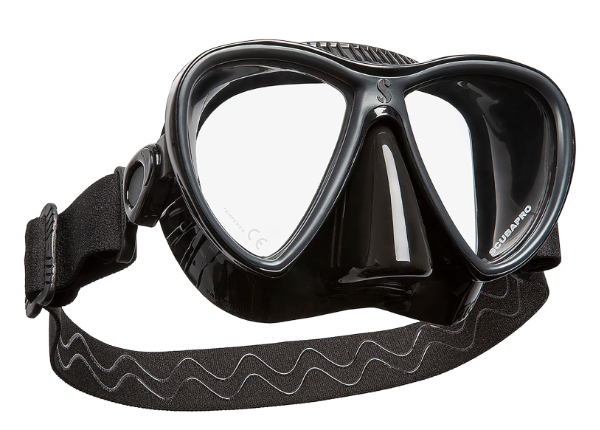
For the traveler who wants the "best of the best," the Scubapro Synergy Twin is a professional-grade mask that feels like a second skin. Its defining feature is the Trufit technology, which consists of a uniquely ribbed silicone skirt. This ribbing allows the silicone to flex and thin out where it needs to contour to the face (like the cheekbones) while remaining rigid near the frame to maintain a watertight seal. It is frequently the only mask that successfully seals on people with facial hair or "difficult" bridge shapes.
The "Twin" design refers to the dual-lens configuration, which places the tempered glass closer to the eyes. Technically, this creates a "low-volume" mask. Why it matters: Lower volume means there is less air trapped inside. This makes the mask easier to clear if water does get in, and it reduces the "buoyant pull" that can make your head feel like it wants to float up. The glass is Ultra-Clear, which eliminates the green tint found in standard glass, providing better color saturation of coral and fish.
The downside is the price point; it is significantly more expensive than "tourist sets." It also doesn't come with a snorkel or fins, meaning you'll need to purchase those separately. However, if you have ever suffered through a vacation with a mask that constantly leaks or fogged up, the investment in a Scubapro mask is a permanent solution to those frustrations. It is built to last a decade of dive trips.
Scubapro uses two different "Shore Hardness" levels (durometers) of silicone in a single skirt. Why it matters: The firmer silicone near the frame prevents the mask from collapsing under pressure, while the softer silicone at the edges provides a velvet-like seal against the skin, reducing pressure points during long swims.
Best Dry Snorkel: TUSA Hyperdry Elite II SP-250
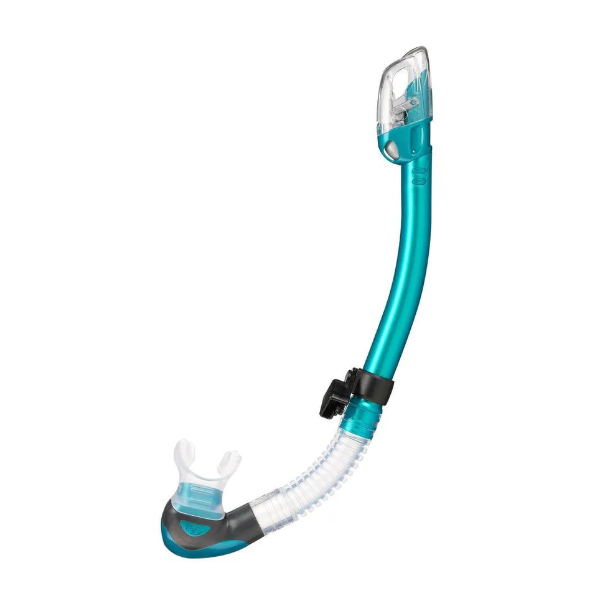
The TUSA Hyperdry Elite II is arguably the most advanced dry snorkel on the market. For tourists, the biggest fear is "inhaling the ocean" when a wave splashes over the tube. TUSA solves this with their patented Hyperdry Elite dry top, which uses a high-buoyancy float that snaps shut instantly upon contact with water. Unlike cheaper snorkels where the valve can stick or leak, TUSA's mechanism is refined to work reliably even in choppy conditions.
Comfort is a major factor here. The mouthpiece is made of orthopedic-grade silicone and is set on a swivel. Why it matters: This allows the mouthpiece to sit naturally in your mouth regardless of where the snorkel is clipped to your mask, preventing the jaw ache that comes from fighting a stiff plastic tube. At the bottom, a high-flow purge valve and an oversized purge chamber make it incredibly easy to blast out the tiny amount of water that might enter when you switch from your mask to the snorkel.
The only real limitation is that "dry" snorkels are slightly more buoyant than "wet" ones, which can feel like the snorkel is pulling on your mask strap when you dive down. Some advanced free-divers prefer a simpler tube for this reason, but for 95% of tourists, the confidence of knowing you won't swallow salt water far outweighs the slight increase in buoyancy. It's a technical upgrade that replaces anxiety with relaxation.
The bottom of the snorkel features a thin silicone membrane. Why it matters: Gravity keeps water in the lower "sump" area away from your airway. A simple, sharp exhale creates enough internal pressure to force water through the valve, clearing the tube with about 30% less effort than standard snorkels.
Best Travel Fins: Aqua Lung Sport Trek Fins
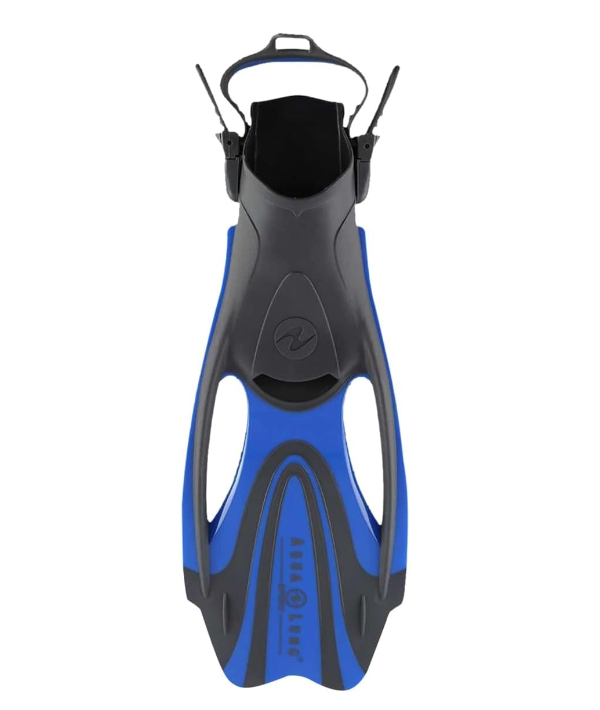
Fins are often the most difficult item for tourists to pack, frequently leading them to leave them behind and rely on rentals. The Aqua Lung Sport Trek Fins are specifically engineered to solve the "space vs. power" problem. These are ultra-short fins (averaging about 15 inches) that can fit inside even the smallest carry-on luggage. Despite their diminutive size, they utilize a dual-composite blade with "vortex" channels that move water more efficiently than a flat plastic board.
The foot pocket is soft and ergonomic, designed to be worn either barefoot or with a thin fin sock. Why it matters: In many tropical locations, the sand can be hot or full of coral fragments. The Trek fin allows you to keep your feet protected while providing enough propulsion to swim against mild currents. The adjustable strap uses a quick-release buckle system, making them incredibly easy to get on and off while sitting on the edge of a boat or in the surf.
The honest limitation is raw speed. If you are trying to keep up with a fast-moving sea turtle or swimming in high-surge areas, these fins will require much more leg work than a traditional long blade. They are "exploration" fins, not "performance" fins. They are best for the tourist who values luggage space and wants a comfortable, reliable way to navigate around a reef without the drag of bare feet.
The blade features flexible rubber "channels" between stiffer plastic ribs. Why it matters: As you kick, the rubber stretches to capture a volume of water, then snaps back to "channel" that water straight off the tip of the fin. This creates more thrust with less effort compared to a flat fin that lets water spill off the sides.
How We Chose These Products
Our selection process focused on the Technical Reliability of the seals and the Portability of the gear. We prioritized products that use 100% hypoallergenic silicone over cheaper PVC blends. We also looked for safety innovations, particularly in the full-face mask category, to ensure that CO2 buildup was technically addressed through air-separation valves. Each product was cross-referenced against diver feedback to ensure that "marketing features" translated into real-world benefits like reduced fogging and effortless breathing.
Comparison Overview
| Product | Core Tech | Material | Best For | Travel Rating |
|---|---|---|---|---|
| Cressi Palau Set | Adjustable Open-Heel | Liquid Silicone | Most Vacationers | Excellent |
| WildHorn Seaview V2 | Flowtech Breathing | Polycarbonate/Silicone | Beginners/Claustrophobia | Fair |
| Scubapro Synergy | Trufit Ribbed Skirt | Dual-Hardness Silicone | Hard-to-fit faces | Good |
| TUSA Hyperdry Elite | Dry-Top Buoy Valve | Ortho-Silicone | Water-Averse Swimmers | Excellent |
| Aqua Lung Trek Fins | Vortex Channels | Dual-Composite | Minimalist Packing | Best in Class |
Buying Guide: What to Look For
- Tempered Glass vs. Plastic: Always check for the "T" mark on the lens. Why: Tempered glass won't shatter into sharp shards and is much harder to scratch than plastic.
- Dry Top vs. Splash Guard: A "dry" snorkel has a valve that closes underwater. A "semi-dry" only has a splash guard. Why: If you plan on diving below the surface, a dry snorkel is essential to avoid swallowing water.
- Low Volume: This refers to how close the lens is to your face. Why: Low-volume masks are easier to clear and provide a better field of vision.
- Silicone Quality: Look for "Food Grade" or "Liquid" silicone. Why: Cheap silicone (silitex) turns yellow and gets hard over time, causing leaks. High-grade silicone stays soft for years.
General Pro / Cons
| Category Pro | Category Con |
|---|---|
| Personal fit leads to far less leaking. | Initial cost is higher than a one-day rental. |
| Better hygiene than shared rental mouthpieces. | Requires luggage space and post-use rinsing. |
| Tempered glass provides superior optical clarity. | Masks can fog if not treated properly with anti-fog. |
| Dry-top tech prevents choking on salt water. | Fins can be heavy and awkward to pack. |
| Silicone masks are much more comfortable on the skin. | Full-face masks cannot be used for deep diving. |
| Panoramic views increase safety and awareness. | Cheap plastic fins can cause blisters without socks. |
Final Summary
Investing in your own snorkeling gear is the single best way to upgrade a tropical vacation. For the average tourist, the Cressi Palau Set offers the best mix of reliability and value. If you want to eliminate the stress of mouth-breathing, the WildHorn Seaview V2 is a fantastic entry point. Those with hard-to-fit faces should look no further than the Scubapro Synergy Twin. By choosing high-grade silicone and tempered glass, you ensure that your view of the underwater world is crystal clear and leak-free. Aggregate rating of the products reviewed: 4.7 out of 5.