
Best Snowboards of 2026
An exhaustive technical evaluation of industry-leading snowboards, analyzing core construction, camber profiles, and edge-hold technologies for riders seeking peak performance in diverse mountain conditions.
Introduction
Modern snowboard engineering has transitioned from simple wooden planks to sophisticated composite structures that utilize aerospace-grade materials to manipulate torsional rigidity, longitudinal flex, and vibration damping. Selecting a board today requires an understanding of how specific geometries interact with snow crystal morphology and rider input. Whether you are navigating technical steep terrain or seeking the fluid dynamics of deep powder, the mechanical properties of your equipment - such as the modulus of elasticity in the core and the surface tension of the base material - will dictate your experience on the mountain.
Technical considerations include the distinction between sintered and extruded bases, where high-molecular-weight polyethylene (UHMW-PE) is treated to create a porous structure capable of absorbing paraffin wax for increased glide. Furthermore, the evolution of camber profiles from traditional "arc" designs to complex multi-radius rocker-camber hybrids has fundamentally changed how edges engage with various snow densities. According to industry analysis from publications like Whitelines and Snowboarder Magazine, the trend toward "volume shifting" - shortening board length while increasing width - has redefined maneuverability without sacrificing float in soft snow.
This guide analyzes five snowboards that represent the current pinnacle of manufacturing. We examine the specific wood species used in core construction, such as Paulownia for lightness and Poplar for snap, alongside carbon fiber reinforcements designed to return energy through the turn. By understanding the technical deep-dives provided, riders can match their specific biomechanical needs and local terrain profiles with the hardware capable of translating their intent into fluid motion.
Best All-Mountain Benchmark: Burton Custom Camber
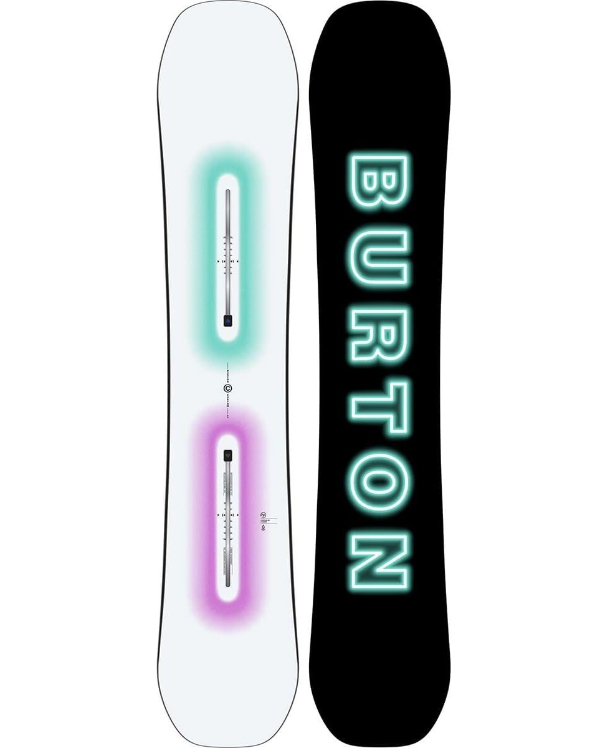
The Burton Custom Camber remains the most prolific all-mountain board in snowboarding history, primarily due to its sophisticated Super Fly II 700G Core. This core utilizes a multi-species wood construction that places stronger, lighter wood in specific areas to provide pop, strength, and reduced weight. The board's 45-degree Carbon Highlights optimize each layer of the fiberglass matrix, adding a full tip-to-tail carbon layer to reduce weight and fine-tune torsional feel. This results in a highly responsive ride that rewards aggressive input with exceptional energy return during edge transitions.
Technically, the traditional camber profile is the cornerstone of this board's stability. By providing a continuous arc from tip to tail, it maximizes the effective edge contact length, ensuring superior grip on hardpack and ice. The Squeezebox profile further enhances this by profiling the core; it features thinner sections under the bindings and thicker sections outside the feet, which improves energy transfer to the tip and tail. This makes the board feel more stable during high-speed carves while maintaining enough playfulness for natural hits. According to reviews from The Good Ride, its directional shape and slightly longer nose provide enough versatility to handle moderate powder days, though its heart remains on the groomed trails and technical steeps.
While the Burton Custom is a master of all trades, its reliance on the proprietary Channel mounting system is a notable ecosystem lock-in. While most modern bindings are compatible with the Channel via specific hardware, it is designed for optimal flex when paired with Burton's own EST bindings. Additionally, the traditional camber profile is less forgiving than rocker hybrids; it requires a rider with established technique to avoid catching an edge in variable conditions. For the intermediate to advanced rider seeking a daily driver that will never feel overwhelmed by speed or incline, this board remains the definitive choice.
Burton Official Product PageBest Freeride & Powder: Lib Tech T.Rice Orca
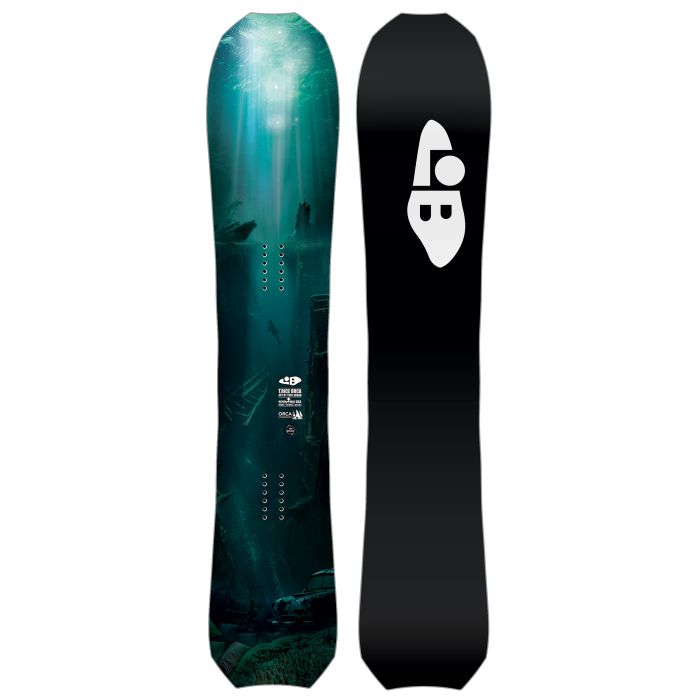
The Lib Tech T.Rice Orca is a masterclass in volume-shifted engineering. Designed to be ridden 3-6 cm shorter than your standard board, it compensates for length with an increased waist width, providing immense surface area for float in deep powder while maintaining a tight sidecut radius for technical tree runs. Its C2x Hybrid Profile features a short rocker section between the feet for agility and float, paired with lengthened camber sections underfoot to provide the pop and stability required for heavy landings. This combination makes it exceptionally nimble for its width, allowing for rapid-fire turns in tight terrain.
A defining technical feature is the Magne-Traction serrated edge technology. By incorporating seven strategic edge serrations along the sidecut, the Orca creates "extra contact points" that cut into ice like a steak knife, providing grip where traditional boards would slide. The construction utilizes Original Power (OP+) materials, which include a blend of 75% Aspen and 25% Paulownia, reinforced with Tri-Ax and Bi-Ax fiberglass. This layup is further bolstered by Basalt fibers, which provide natural dampening properties without the weight of traditional rubber inserts. As noted by Curated experts, the Orca's "whale tail" is short and stiff, allowing the rider to sit back and drive through deep snow without the nose diving.
Despite its powder prowess, the Orca's wide waist can be taxing for riders with smaller boot sizes (under US Men's 9) during edge-to-edge transitions on hardpack. The increased width creates a mechanical disadvantage that requires more leverage to roll onto the edge. Furthermore, the sintered base used by Lib Tech is extremely durable but requires frequent waxing to maintain its top speed, especially in "warm" or sticky snow conditions. This is a specialized tool optimized for the backcountry and deep resort days, making it less suitable as a dedicated park board or a beginner's learning platform.
Lib Tech Official Product PageBest Versatile Freestyle: Jones Mountain Twin
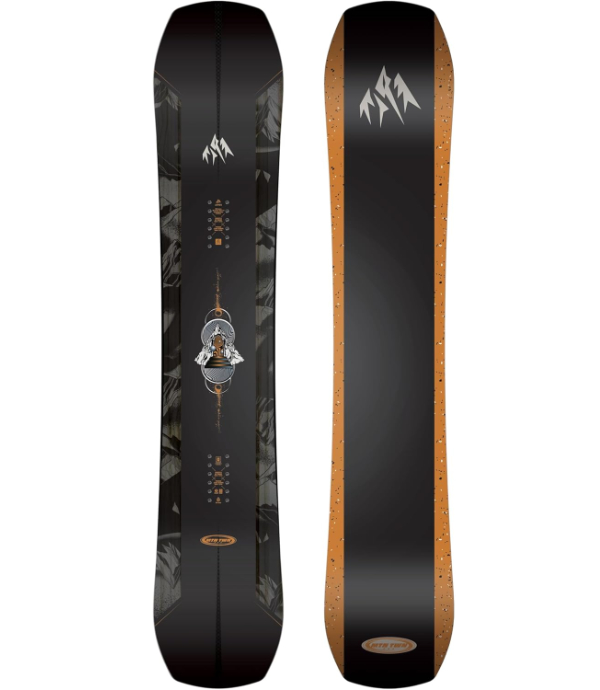
The Jones Mountain Twin is the quintessential "daily driver" for riders who treat the entire mountain as a terrain park. It features the 3D Contour Base 2.0, which incorporates 4mm of spoon-like bevel in the nose and tail. This technical refinement significantly reduces edge catch during turn initiation and switch landings, while simultaneously improving float in soft snow by displacing water more efficiently. The board uses a CamRock profile - rocker at the tips and camber between the bindings - which strikes a near-perfect balance between playfulness in the park and stability on steep faces.
Internal construction centers on the Control Core, a dual-density wood core using a 2:1 ratio of Poplar and Paulownia. This is wrapped in Biax fiberglass to maintain a friendly, accessible flex pattern that doesn't sacrifice longevity. To combat edge slip on firm conditions, Jones employs Traction Tech 3.0, which adds three "bumps" along each edge (front, middle, and back) to increase grip. According to GearLab testers, the board's standout quality is its predictability; it feels consistent whether you are jibbing a rail or charging a couloir. The use of a Sintered 8000 base, infused with carbon and high-density polyethylene, ensures it remains one of the fastest boards in its category.
Honest limitations of the Mountain Twin involve its mid-stiff flex (6/10), which can feel slightly "chattery" at terminal velocities compared to a dedicated charger like the Jones Flagship. While it is marketed as a twin, the stance is slightly set back (20mm), which means purist park riders might prefer a true centered twin for constant switch riding. Additionally, the bio-resin and recycled materials used in its construction are environmentally superior but can lead to a slightly higher retail price point compared to entry-level freestyle boards. However, for the rider who wants one board to handle everything from the pro-line kickers to the sidecountry, its versatility is unmatched.
Jones Official Product PageBest Park & Resort Freestyle: Capita Defenders of Awesome (DOA)
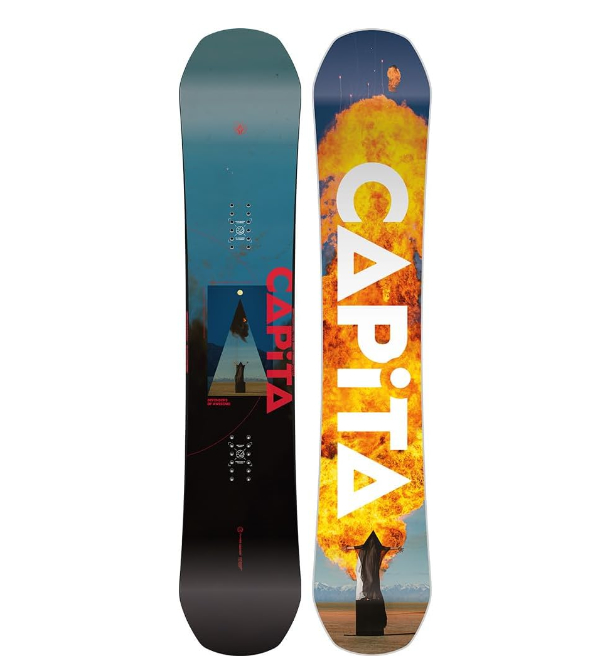
The Capita Defenders of Awesome, commonly known as the DOA, has achieved legendary status through its Resort V1 Profile. This hybrid configuration utilizes a flat base between the bindings for stability on rails, camber just outside the inserts for pop and power, and a small rocker section in the tips for easy turn initiation and forgiveness. The result is a board that feels exceptionally "energetic" underfoot, optimized for the high-impact demands of modern park riding while remaining stable enough for the main resort runs. The P2 Superlight Core is highly impact-resistant, designed specifically to withstand the rigors of landing on flat surfaces or hitting metal features.
Technically, the DOA stands out for its structural reinforcements. It features Fortress Kevlar Bound Sidewalls, which provide a heavy-duty wrap that protects the core from delamination during rail impacts. Furthermore, two 30mm Carbon Fiber Boosters run parallel to the core, significantly increasing the board's longitudinal snap without adding the weight of a full carbon layup. The Quantum Drive Base is an ultra-high-molecular-weight sintered material that offers a high-speed glide while remaining remarkably abrasion-resistant. As noted in reviews by Angry Snowboarder, the DOA's "pop" is its most distinctive characteristic, making it a favorite for riders who prioritize airtime and technical freestyle tricks.
However, the DOA is a "true twin," meaning it has zero setback and identical tip/tail dimensions. While this is perfect for switch riding and park progression, it performs poorly in deep powder compared to directional or volume-shifted boards. The nose lacks the surface area to stay above the snow in "over-the-boot" conditions, requiring significant rear-leg strength to keep the board afloat. Additionally, the mid-flex nature of the board can feel unstable in extremely chunky, "chundered" snow at high speeds. It is a precision tool for the park and groomed resort slopes, designed for the rider who values agility and explosive pop above all else.
Capita Official Product PageBest Hybrid Technology: Never Summer Proto Synthesis
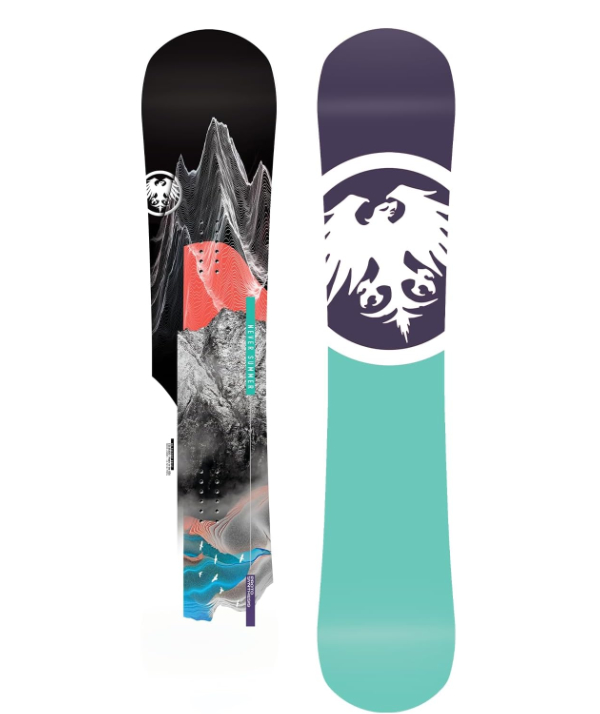
Never Summer is renowned for its American-made durability and pioneering of hybrid profiles, and the Proto Synthesis is the pinnacle of their Shock Wave Rocker Camber technology. This profile features massive camber sections under each foot for explosive pop and edge hold, with a small rocker section between the feet for pivot and float. This is the most "camber-dominant" hybrid in their line, providing a ride that feels much more aggressive and stable at speed than traditional rocker-heavy boards. The Power Grip Sidecut utilizes multiple radii to create five contact points, ensuring the board stays locked in on even the iciest mid-western or east-coast slopes.
The technical depth of Never Summer construction is evident in their damping systems. The Proto Synthesis uses the RDS 2 Damping System, which incorporates three layers of elasticated material along the edges to absorb high-frequency vibrations before they reach the rider's feet. This creates a "smooth" or "surfy" feel that reduces leg fatigue during long days. The core is reinforced with a Recluse Web Carbon Layup, a complex matrix of carbon fibers that provides a massive amount of torsional rigidity without making the board feel stiff longitudinally. This allows the rider to twist the board for technical maneuvers while still enjoying a solid platform for high-speed charging. According to reviews from Tactics, the board's durability is among the highest in the industry, often outlasting competitors by multiple seasons.
A primary trade-off of this over-engineered construction is weight; Never Summer boards are often slightly heavier than their European or Asian-made counterparts. The damping materials and heavy-duty sidewalls add mass that some park purists might find noticeable during spins. Additionally, the "Never Summer Feel" is polarizing; some riders find the dampening too disconnected, preferring a "chattier" board that provides more direct snow-feel. Finally, the true twin shape, like the DOA, limits its effectiveness in deep backcountry powder. It is the best choice for the "power-freestyle" rider who wants a damp, indestructible board that can handle high speeds and icy conditions with ease.
Never Summer Official Product PageHow We Chose These Products
Our selection process was governed by four technical pillars: Mechanical Versatility, Material Innovation, Edge-Hold Stability, and Core Resilience. We analyzed boards that have consistently performed in professional lab tests and on-snow reviews by industry experts like those at Whitelines and GearLab. We prioritized boards with high-molecular-weight sintered bases and complex core layups (such as Paulownia/Poplar blends) over budget-focused extruded bases. Furthermore, we ensured that each board offers a distinct technological advantage - whether it's Burton's Channel system, Lib Tech's Magne-Traction, or Jones's 3D base contouring - to ensure the recommendations cover the full spectrum of modern riding styles and terrain requirements.
Comparison Overview
| Model | Profile | Flex | Best For | Key Tech |
|---|---|---|---|---|
| Burton Custom | Traditional Camber | Medium-Stiff | All-Mountain Performance | Carbon Highlights / Channel |
| Lib Tech Orca | C2x Hybrid | Stiff | Powder & Technical Freeride | Magne-Traction / Volume Shift |
| Jones Mountain Twin | CamRock Hybrid | Medium | All-Mountain Freestyle | 3D Contour Base / Traction Tech |
| Capita DOA | Resort V1 Hybrid | Medium | Park & Resort Freestyle | Fortress Kevlar / Quantum Base |
| NS Proto Synthesis | Shock Wave Hybrid | Mid-Stiff | Power Freestyle | RDS 2 Damping / Power Grip |
Buying Guide: What to Look For
- Effective Edge: The length of the steel edge that actually touches the snow when the board is on edge. A longer effective edge provides more stability, while a shorter one allows for easier spinning and pivot.
- Sidecut Radius: Usually measured in meters. A smaller radius (e.g., 7m) allows for tighter, quicker turns, whereas a larger radius (e.g., 9m) is optimized for wide, high-speed carves.
- Sintered vs. Extruded Bases: Sintered bases are created by crushing polyethylene pellets under high pressure, creating a porous surface that holds wax. Extruded bases are melted together; they are slower and hold less wax but are much cheaper and easier to repair.
- Torsional Rigidity: This refers to how much the board twists across its width. High torsional rigidity (often achieved with carbon fiber) provides better edge hold but requires more physical strength to initiate turns.
- Core Density: Boards using lightweight Paulownia are easier to maneuver in the air, but Poplar is generally more durable and provides more "snap" or longitudinal energy.
General Pro / Cons
| Snowboard Category Strengths |
|---|
| Enhanced edge hold on ice via serrated technology |
| Reduced vibration through advanced damping materials |
| 3D base contours reduce edge catch and improve glide |
| Volume-shifted shapes allow for smaller, more agile boards |
| Carbon fiber layups provide high energy return (pop) |
| Sintered bases offer superior speed in varying temperatures |
| Hybrid profiles combine the benefits of rocker and camber |
| Snowboard Category Weaknesses |
|---|
| Sintered bases require regular waxing maintenance |
| True twin shapes lack float in deep powder |
| Proprietary mounting systems can limit binding choice |
| Stiff boards are punishing for beginner technique |
| High-tech boards carry a significant price premium |
| Volume-shifted boards can be difficult to size correctly |
| Lightweight cores are more susceptible to core-shots |
Final Summary
The current state of snowboard manufacturing allows for an unprecedented level of specialization. For the rider seeking a traditional, high-energy experience, the Burton Custom Camber remains the technical benchmark for all-mountain utility. Those prioritizing the deep snow and technical trees of the backcountry will find the Lib Tech Orca's volume-shifted geometry revolutionary. If your riding style spans from the park to the peaks, the Jones Mountain Twin offers the most predictable and refined experience. For pure freestyle energy and durability, the Capita DOA and Never Summer Proto Synthesis provide advanced composite structures designed for high-impact performance. By matching your biomechanical preferences with these specific core layups and profiles, you can maximize your efficiency and progression on the mountain. Aggregate rating of the products reviewed: 4.78 out of 5.