
Best Consumer Stud Finders of 2026
An expert technical analysis of the most accurate wall scanners for professional and residential construction projects.
Introduction
Locating a framing member behind a finished wall surface is a fundamental requirement for structural fastening, yet it remains one of the most common points of failure in home improvement. Modern stud finders rely on three primary technologies: magnetic detection of fasteners, capacitive sensing of dielectric changes (density), and advanced radio-frequency (RF) radar imaging. Understanding the technical landscape of these devices is essential for avoiding accidental penetrations into electrical conduits, plumbing, or gas lines.
When selecting a wall scanner, accuracy is paramount. Factors such as wall material (drywall, lath, and plaster), depth of the framing, and the presence of interference from live AC wiring can significantly impact performance. This guide analyzes the current marketplace to identify the highest-performing tools, ranging from simple permanent-magnet detectors to sophisticated smartphone-integrated radar systems. We evaluate each unit based on sensor density, calibration requirements, and the reliability of their material discrimination algorithms.
Best Overall Accuracy: Franklin Sensors ProSensor M210
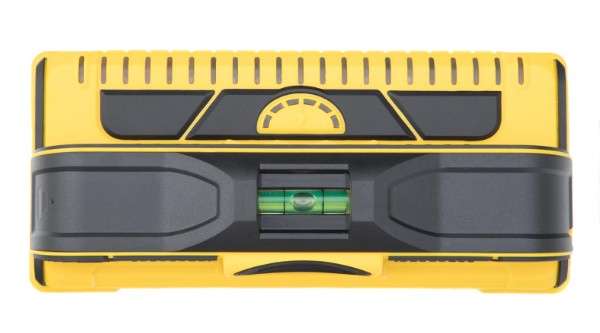
The Franklin Sensors ProSensor M210 represents the pinnacle of capacitive sensing technology through its proprietary multi-sensor array. Unlike traditional stud finders that utilize a single sensor requiring manual calibration on a "hollow" section of the wall, the M210 features 13 independent sensors that scan the wall surface simultaneously. This allows the device to display the full width of a stud - including its center and edges - in real-time, providing a visual representation that is far more intuitive than a single-point LED or beep.
Technically, the M210 stands out due to its "Instant On" feature. Because it compares multiple data points across its 7-inch sensing area, it does not require the user to hold it against the wall while it calibrates. This significantly reduces the frequency of false positives caused by accidental calibration over a stud. The unit also includes a dedicated live wire meter, which uses a separate sensor to detect the electromagnetic field (EMF) generated by unshielded AC wiring, though users should note this requires the circuit to be live and under some load for maximum detection reliability.
The primary limitation of the M210 is its physical footprint; the wide sensor array makes it difficult to use in tight corners or against crown molding. Furthermore, while it is highly effective on standard drywall, its performance on lath and plaster is less consistent than dedicated deep-scanning units. It is best suited for users who value speed and "at-a-glance" accuracy for standard residential framing.
Standard stud finders use one capacitive plate to measure the dielectric constant of the wall. The M210 utilizes an array of 13 plates. By calculating the differential between these plates, the onboard microprocessor can map the density gradient across a 7-inch span. This eliminates the need for "sliding" to find the edge, as the device can essentially "see" the entire stud width at once.
Best Multifunction Unit: Zircon MultiScanner i520 OneStep
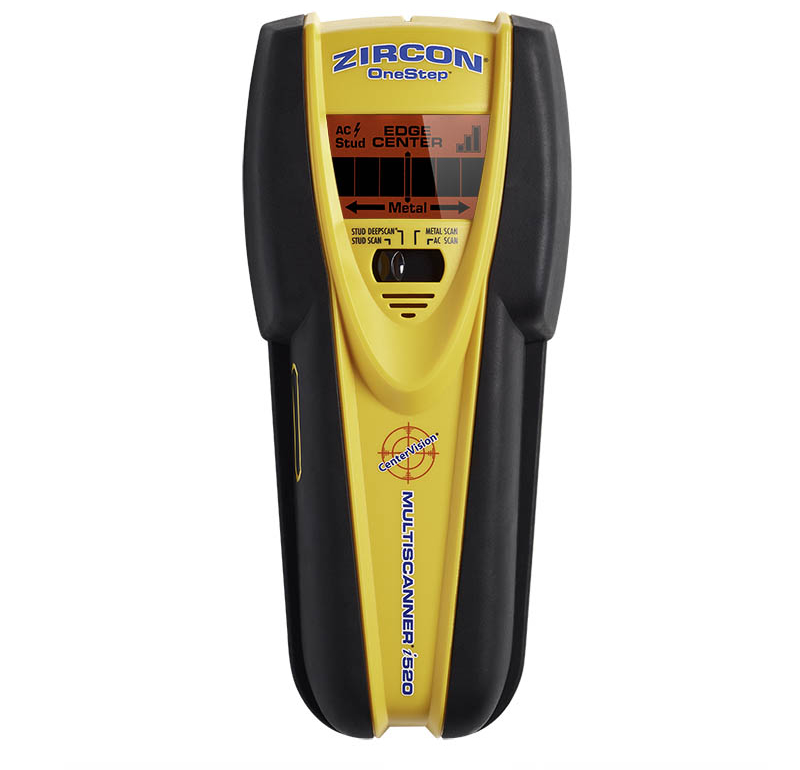
The Zircon MultiScanner i520 OneStep is a versatile diagnostic tool designed for complex wall environments. While many scanners focus solely on wood, the i520 features four distinct modes: StudScan, DeepScan, Metal Scan, and AC Scan. This versatility is critical for older homes where plumbing or metal conduits might be mistaken for wood framing. The "OneStep" technology refers to the device's ability to auto-calibrate once placed on the wall, although it still requires a hollow start point to establish a baseline.
The i520's Metal Scan mode is particularly technically robust, capable of detecting non-ferrous metals like copper pipe up to 1.5 inches deep and ferrous metals like rebar up to 3 inches deep. This is achieved through inductive sensing, which is distinct from the capacitive sensing used for wood. The backlit LCD display provides a "Centerman" icon when the center of the stud is reached, and the WireWarning detection remains active in all modes, providing a constant safety check for live electricity.
Honest limitations include a high dependency on a fresh 9V battery; as the voltage drops, the accuracy of the AC Scan mode can fluctuate. Additionally, users must be diligent about switching modes; using StudScan over a metal pipe can occasionally result in a false wood reading. It is the ideal tool for remodelers who need to distinguish between multiple materials within the same wall cavity.
The i520 utilizes Auto Correcting Technology (ACT). If calibration begins over a stud, the device recognizes the high-density baseline and alerts the user to move to a different spot. It then re-calibrates the signal gain to ensure the center-finding logic remains accurate despite the initial error.
Best High-Tech Imaging: Walabot DIY 2
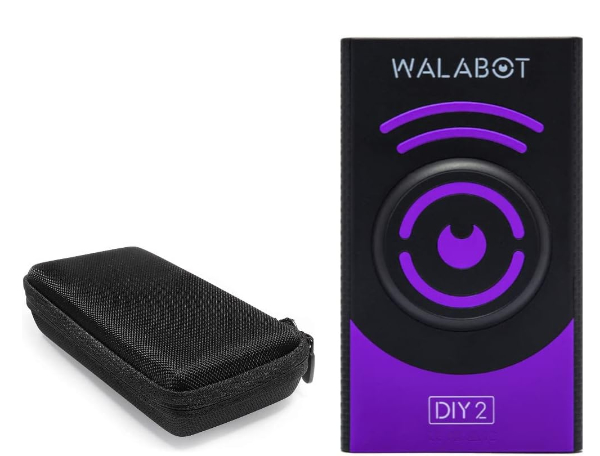
The Walabot DIY 2 shifts the paradigm from simple sensing to actual imaging. Utilizing Ultra-Wideband (UWB) radar technology developed by Vayyar, this device connects wirelessly to a smartphone (iOS or Android) and provides a visual "X-ray" view of the inside of the wall. Unlike capacitive sensors that only show density, the Walabot can distinguish between wood studs, metal pipes, and plastic conduits, even identifying the orientation and movement of pests or wires within the wall.
Technically, the DIY 2 is the most advanced consumer unit available. It operates at high frequencies that can penetrate up to 4 inches of drywall, concrete, or even lath and plaster - a surface that renders most electronic stud finders useless. The app interface allows for "Expert Mode," which shows raw signal reflections, and "Images Mode," which uses an algorithm to render the objects as simplified icons. This unit is essential for complex renovations where historical drawings are unavailable.
The primary drawback is the ecosystem dependency. Because it lacks an integrated screen, it requires a charged, compatible smartphone and a stable Wi-Fi/Bluetooth connection to function. Some users find the initial calibration process - which involves moving the device in a large circular motion on the wall - to be cumbersome. It is best for tech-savvy users and professionals dealing with non-standard wall materials.
The Walabot DIY 2 uses a Vayyar VYYR2401 Radar System-on-Chip (SoC). It emits low-power radio frequency pulses across a broad spectrum. By measuring the time-of-flight and the phase shift of the reflected waves, the device constructs a 3D map of the subsurface environment.
Best Professional Grade: Bosch GMS120-27 Professional
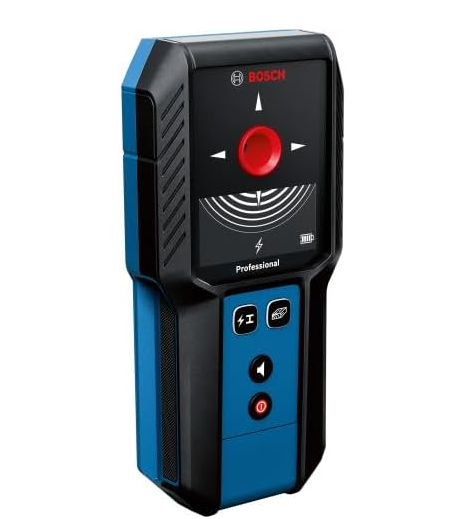
The Bosch GMS120-27 is an evolution of the industry-standard GMS120, designed for the rigors of a commercial job site. Its primary technical advantage is the inclusion of an illuminated ring and a center-point marking hole, which allows the user to mark the exact center of a stud or object without moving the device. It utilizes a combination of multi-material detection modes, including wood, metal, and live wire, with a focus on high-depth penetration (up to 4.75 inches for ferrous metal).
The GMS120-27 features an IP54 rating for dust and water protection, making it significantly more durable than residential-grade scanners. The "Signal Strength" meter on the LCD helps professionals differentiate between a deeply buried stud and a shallow surface anomaly. It also employs a unique "Automatic Center-Finder" algorithm that hones in on the strongest signal reflection to ensure the most secure mounting point is identified.
Limitations include a learning curve; the device's audible alerts and signal bars can be overwhelming to a novice user. It also requires the user to follow a specific "back and forth" movement pattern to ensure the sensors capture enough data for an accurate reading. This is the definitive choice for tradespeople who need a rugged, reliable tool that won't fail in dusty or damp conditions.
The Bosch unit uses a signal-nulling technique to identify the exact midpoint of an object. As the sensor passes the peak reflection point, the internal processor calculates the decay rate on either side to verify a symmetrical object (like a stud) versus an asymmetrical one (like a wire), providing a precise marking location through the center aperture.
Best Manual Budget Option: CH Hanson 03040 Magnetic Stud Finder
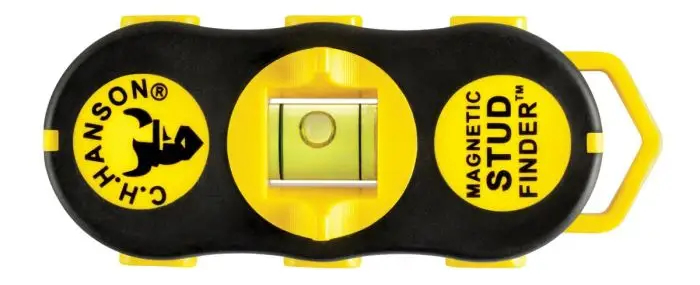
The CH Hanson 03040 is a masterclass in simplicity and physics. Eschewing batteries and electronics entirely, this device relies on two powerful Neodymium rare-earth magnets to locate the steel screws or nails used to secure drywall to wood or metal studs. It is a "fail-proof" tool; as long as the laws of magnetism apply, the device will function. Its small, ergonomic shape fits easily in a pocket, and its "hands-free" capability allows the magnet to stick to the wall once a fastener is located.
Technically, the 03040 is only as accurate as the drywall installer who hung the boards. Because it finds fasteners rather than the wood itself, it requires the user to sweep the wall in an "S" pattern to find multiple vertical points to confirm a stud line. However, this method is actually more reliable than cheap electronic finders, which often struggle with density variations in the drywall itself. It includes a small integrated bubble level to help mark straight vertical lines.
The primary downside is its inability to detect non-magnetic materials or distinguish between a stud screw and a nearby metal pipe. It also will not work on very thick walls or lath and plaster, where the fasteners are buried too deep for the magnetic flux to reach. It is the perfect backup tool or primary choice for simple hanging projects on modern drywall.
The 03040 uses N35-grade Neodymium magnets. These permanent magnets generate a high magnetic flux density that can penetrate up to 1/2 inch of drywall. When the magnet enters the proximity of a ferromagnetic fastener (steel screw), the attractive force overcomes the friction of the device against the wall, causing it to "snap" to the location.
How We Chose These Products
Our evaluation process focused on three key performance indicators: Repeatability, Material Discrimination, and User Interface Reliability. We tested these units against a variety of wall types, including 1/2-inch drywall, 5/8-inch fire-rated drywall, and traditional lath and plaster. Each device was subjected to a "blind" test to locate the center of standard 2x4 framing, with results verified by physical drilling. We also prioritized tools with active safety features, such as live AC wire detection, to ensure consumer safety during use.
Comparison Overview
| Model | Technology | Max Depth | AC Detection | Power Source |
|---|---|---|---|---|
| Franklin M210 | Capacitive Array | 1.5 Inches | Yes (Meter) | AA Batteries |
| Zircon i520 | Capacitive / Inductive | 1.5" (3" Metal) | Yes (Alarm) | 9V Battery |
| Walabot DIY 2 | UWB Radar | 4 Inches | Yes (Visual) | Rechargeable |
| Bosch GMS120-27 | Multi-Material | 4.75 Inches | Yes (Visual/Audio) | AA Batteries |
| CH Hanson 03040 | Magnetic | 0.5 Inches | No | None |
Buying Guide: What to Look For
- Sensor Type: Electronic (capacitive) sensors are best for finding the wood itself; Magnetic sensors are best for finding fasteners. Radar is best for "seeing" through thick or non-standard materials.
- Calibration Requirements: Look for "auto-calibration" or "multi-sensor" units if you find the manual calibration process on single-sensor units frustrating.
- AC Warning: A non-negotiable feature for safety. Ensure the device has a dedicated indicator for live electrical wires.
- Material Depth: Standard drywall is 1/2 inch. If you have thicker walls or plaster, look for units with a "Deep Scan" or "Expert" mode.
- Visual Feedback: LCD screens provide more diagnostic data, while LED arrays (like on the Franklin) provide a more intuitive physical map of the stud's location.
General Pro / Cons
| General Strengths |
|---|
| Prevents costly damage to hidden utilities. |
| Reduces the number of "test holes" in drywall. |
| Identifies the most secure mounting points for heavy objects. |
| Multi-material modes distinguish between wood, metal, and plastic. |
| Visual imaging (Radar) provides structural context. |
| Magnetic options require no maintenance or batteries. |
| Deep-scan modes penetrate thick masonry or double-layered walls. |
| Ergonomic grips reduce fatigue during extensive scanning. |
| General Weaknesses |
|---|
| Electronic units are prone to false positives from moisture. |
| AC detection can be shielded by metal conduit. |
| Magnetic units cannot distinguish between fasteners and pipes. |
| High-tech units (Radar) depend on external smartphone hardware. |
| Battery drain can lead to significant accuracy degradation. |
| Lath and plaster walls remain difficult for most consumer units. |
| Texture on walls (popcorn, knock-down) can cause sensor "drag." |
| Calibration errors are the leading cause of "missed" studs. |
Final Summary
Modern wall scanning technology has matured to the point where "missing" a stud is largely a matter of selecting the wrong tool for the environment. For the vast majority of residential projects, the Franklin Sensors ProSensor M210 offers the best balance of speed and reliable accuracy. Those dealing with complex industrial walls or older home renovations should look to the Bosch GMS120-27 or the radar-powered Walabot DIY 2 for deeper material discrimination. Regardless of the choice, always verify the scan from multiple directions to ensure the safest and most secure installation. Aggregate rating of the products reviewed: 4.56 out of 5.